How to Install a Back Rack With a Tonneau Cover
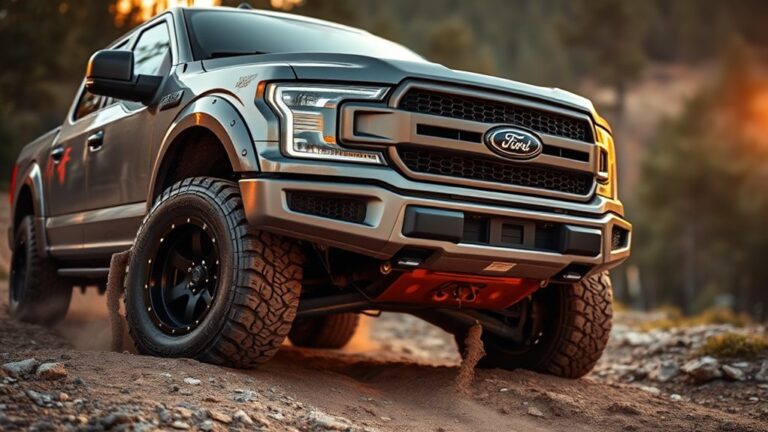
If you want to enhance your truck’s utility and protection, installing a back rack with a tonneau cover is a smart move. A back rack with a tonneau cover not only improves your truck’s functionality but also provides added security for your cargo.
You’ll need to prepare your truck bed carefully, ensuring all mounting points align correctly. Precise installation is essential to avoid leaks and maintain stability.
Before you start, gather the right tools and understand each step—because a poor fit can compromise durability and function. Here’s how to get it done right.
Key Takeaways
- Align back rack mounting holes with pre-drilled truck bed holes and tighten bolts evenly using a torque wrench to avoid damage.
- Clean the truck bed thoroughly and inspect for damage before installation to ensure proper fit and protection.
- Align the tonneau cover edges flush with the truck bed and use weatherproof fasteners to create a tight, sealed fit.
- Test the seal by spraying water along edges and adjust mounting brackets to ensure no leaks and uniform alignment.
- Regularly inspect and maintain bolts, fasteners, and surfaces to prevent corrosion and ensure long-term secure mounting.
Why Choose a Back Rack and Tonneau Cover for Your Truck?
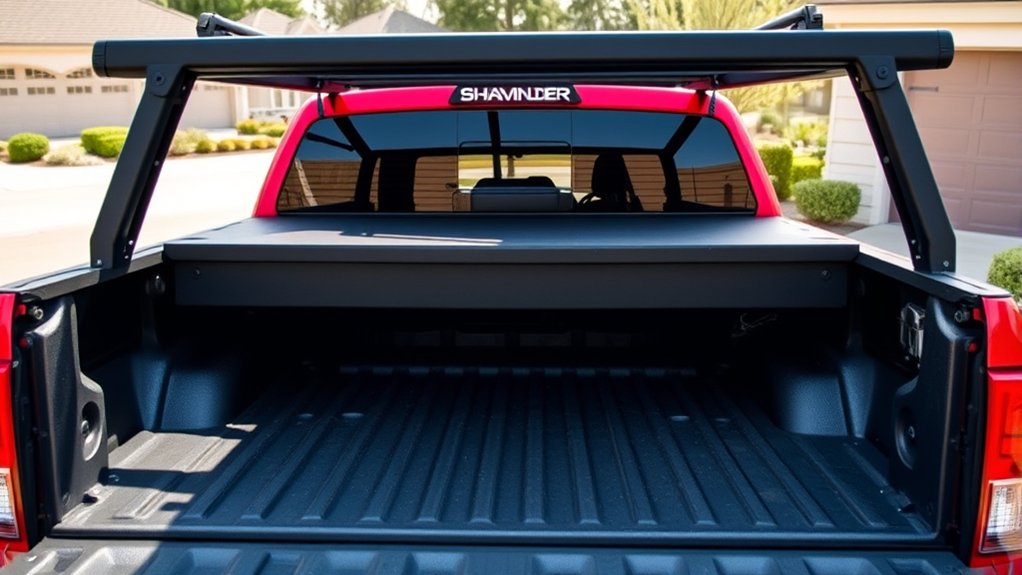
Why should you choose a back rack and tonneau cover for your truck? Installing these accessories enhances your truck’s functionality and protection. The back rack provides a sturdy mounting point for securing heavy or oversized cargo, improving load stability and safety during transit.
Meanwhile, the tonneau cover protects your bed from weather and theft, maintaining the integrity of your cargo. Together, they increase truck versatility by allowing you to carry diverse loads while safeguarding them.
The integration of a back rack with a tonneau cover optimizes space without compromising accessibility. Their combined design supports efficient weight distribution and secure attachment, essential for demanding tasks.
Choosing both ensures your truck adapts to various needs, from work-related hauling to everyday use, making it a reliable, multi-purpose vehicle.
Gather Tools and Prep Your Truck Bed for Installation
How do you guarantee a smooth installation of your back rack and tonneau cover? Start by gathering essential tools: a torque wrench, screwdrivers, socket set, and a rubber mallet.
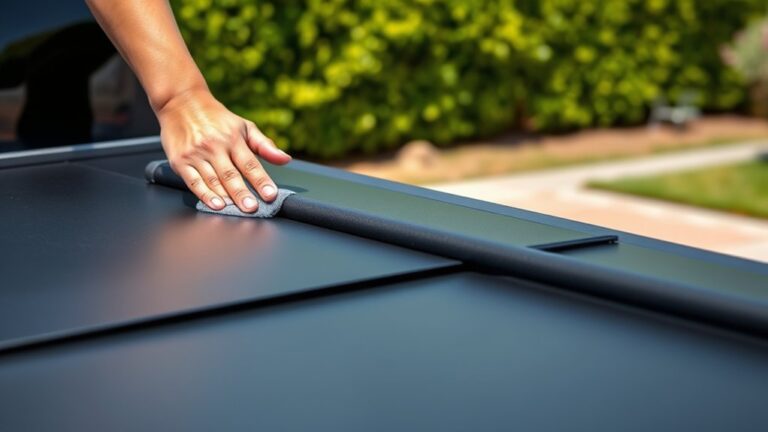
Before installation, thoroughly clean your truck bed to remove dirt and debris, ensuring proper gasket compatibility and preventing seal failure. Inspect the bed for scratches or dents, and apply paint protection where needed to avoid corrosion during installation.
Clean and inspect your truck bed to ensure gasket fit and prevent corrosion before installation.
Verify that your back rack’s mounting points align with your truck bed’s dimensions and that the gaskets are the right fit to maintain a watertight seal. Organizing all components and tools beforehand streamlines the process, helping you avoid delays and ensuring a secure, damage-free setup.
Proper preparation is critical for a precise, efficient installation.
Securely Install Your Back Rack Step-by-Step
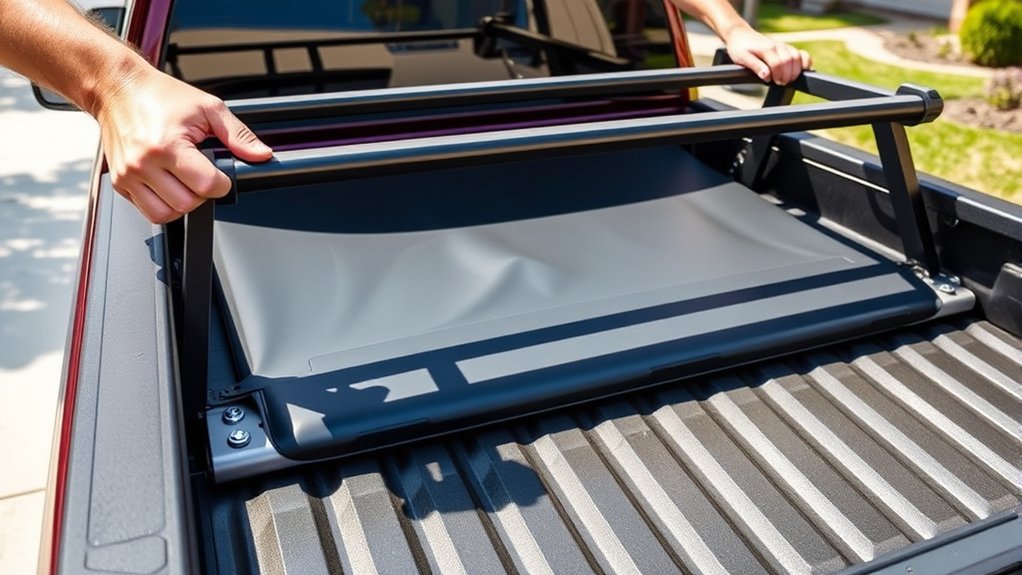
Where should you start when installing your back rack? Begin by aligning the rack’s mounting holes with the pre-drilled holes in your truck bed. Use discussion ideas from your prep stage to avoid common installation pitfalls like misalignment or loose fittings.
Secure the rack using the provided bolts and washers, tightening them evenly with a torque wrench to manufacturer specifications. Double-check that the rack is level and firmly seated to prevent future shifting. Avoid over-tightening, which can damage mounting points.
Next, connect any additional brackets according to the rack’s design, ensuring all components fit flush. Throughout installation, periodically inspect your work to catch errors early. Following this step-by-step approach ensures a secure, stable back rack ready for the next phase without risking structural integrity.
Attach the Tonneau Cover for a Weatherproof Seal
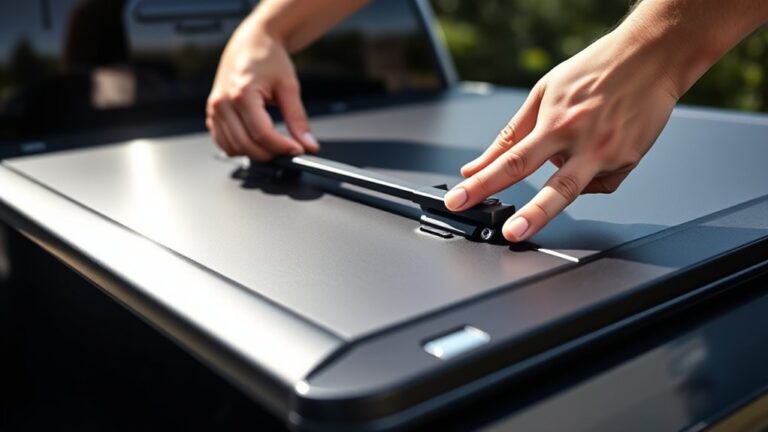
Start by carefully aligning the edges of the tonneau cover with the truck bed to ensure an even fit. Next, attach the weatherproof fasteners securely to create a tight seal against moisture.
This step is crucial for maintaining a durable, weather-resistant barrier.
Aligning Cover Edges
Why is precise alignment essential when attaching the tonneau cover? Proper edge consistency ensures a tight, weatherproof seal, preventing water infiltration and wind noise. Misaligned edges compromise the cover’s effectiveness and durability.
Use these alignment tips to guarantee accuracy:
| Step | Action | Tip |
|---|---|---|
| 1 | Position cover loosely | Check edges for even gaps |
| 2 | Adjust side edges | Ensure parallel alignment |
| 3 | Verify front and rear edges | Use a straightedge tool |
Focus on edge consistency by aligning the cover edges flush with the truck bed sides and tailgate. Small adjustments during this stage save time later and improve seal integrity.
Maintain steady pressure when aligning to avoid shifting the cover, and double-check all edges before proceeding.
Securing Weatherproof Fasteners
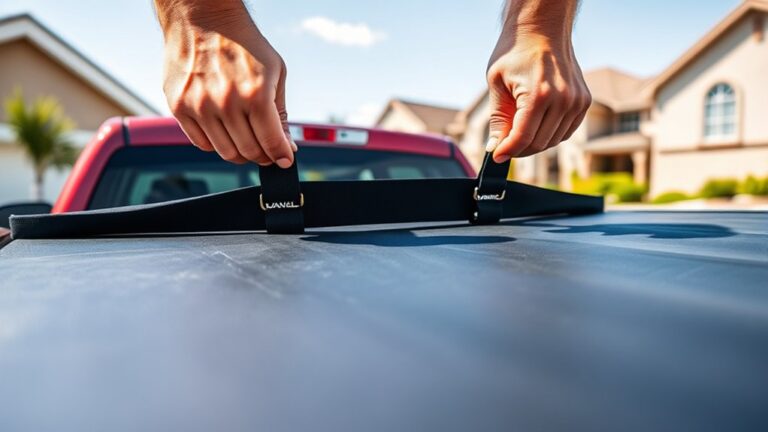
How do you ensure your tonneau cover stays securely sealed against the elements? Start by using weatherproof fasteners specifically designed for your back rack and tonneau cover setup. Position each fastener along the cover’s perimeter, aligning them precisely with the back rack mounting points.
Tighten the fasteners incrementally to avoid uneven tension that could compromise the seal. Use rubber gaskets or washers beneath the fastener heads to prevent water ingress and protect against corrosion.
Double-check that the cover edges compress uniformly against the truck bed and back rack. This compression ensures a tight, weatherproof barrier. Finally, test the seal by spraying water along the edges and inspecting for leaks.
Properly securing these weatherproof fasteners is critical for maintaining durability and protecting your cargo from rain, dust, and wind.
Test and Adjust Your Back Rack and Tonneau Cover Fit
Start by checking the alignment accuracy between the back rack and tonneau cover to ensure a seamless fit. Inspect all mounting points for stability and secure attachment.
Finally, adjust the tightness levels to eliminate gaps without over-tightening.
Check Alignment Accuracy
Ensuring proper alignment between your back rack and tonneau cover is crucial for optimal fit and function. To maintain the correct aligning tolerance and avoid damage or leaks, follow these steps:
- Measure gaps uniformly along the contact points between the back rack and tonneau cover using a precise gauge or ruler.
- Identify any deviations beyond the manufacturer’s recommended aligning tolerance, typically a few millimeters.
- Adjust mounting brackets or reposition components incrementally to reduce uneven spacing.
- Re-measure gaps after adjustments to confirm uniform alignment and secure fit.
Accurate measuring gaps help you prevent rattling, water intrusion, and premature wear. Maintaining tight, consistent alignment ensures your back rack and tonneau cover operate as intended, providing both protection and durability.
Inspect Mounting Stability
Why is it critical to inspect the mounting stability of your back rack and tonneau cover? Proper inspection guarantees secure attachment, preventing damage or detachment during use. You’ll want to verify inspection torque levels and confirm frame compatibility to maintain safety and functionality.
Perform a thorough check by applying moderate force to the assembly, observing for any movement or looseness. Use a torque wrench to verify bolts meet the manufacturer’s specified inspection torque. Frame compatibility ensures the mounting points align correctly, distributing stress evenly.
| Inspection Aspect | Key Checkpoint |
|---|---|
| Inspection Torque | Bolts tightened to spec |
| Frame Compatibility | Mount points align precisely |
| Stability Test | No movement under force |
Address any irregularities immediately before regular use.
Adjust Tightness Levels
How tightly should you fasten your back rack and tonneau cover to achieve ideal fit? Proper tightness levels are crucial for stability and longevity. Follow these steps:
- Refer to the manufacturer’s torque specs for initial tightening to avoid over-stressing bolts.
- Use a calibrated torque wrench to apply consistent force across all mounting points.
- Test the assembly by applying moderate pressure; check for any movement or gaps between components.
- Adjust torque incrementally if you detect looseness or excessive tension, ensuring secure yet flexible fit.
Balancing tightness levels prevents damage and maintains a solid connection. Regularly recheck torque specs after driving to accommodate settling or vibration-induced loosening. This precise approach ensures your back rack and tonneau cover perform optimally under varied conditions.
Maintain Your Back Rack and Tonneau Cover for Longevity
When was the last time you inspected your back rack and tonneau cover for wear or damage? Regular inspection is essential for preventing issues that compromise functionality.
Use these maintenance tips: check all bolts and fasteners for tightness, and tighten if necessary. Clean metal components with a mild detergent to avoid corrosion, and treat any rust spots immediately.
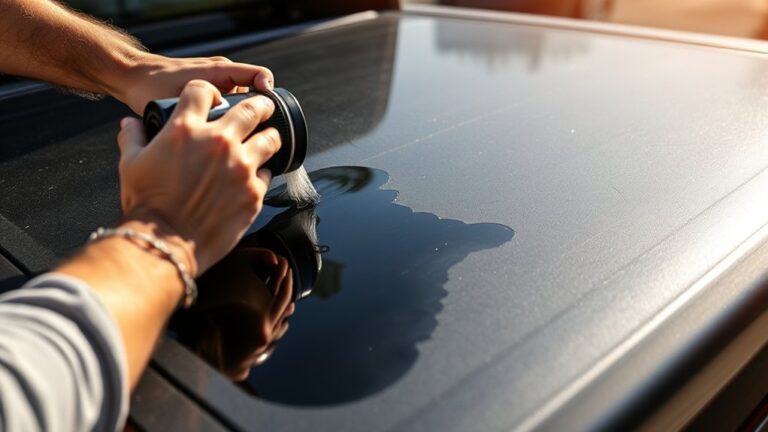
For the tonneau cover, clean the surface with a vinyl cleaner to maintain flexibility and prevent cracks. Lubricate hinges and moving parts quarterly to ensure smooth operation.
Store the cover properly when not in use to avoid deformation. These longevity strategies reduce wear and extend the life of both components.
Consistent care ensures your back rack and tonneau cover remain secure and functional for years.
Frequently Asked Questions
Can I Install a Back Rack and Tonneau Cover on Any Truck Model?
You can’t install a back rack and tonneau cover on every truck model due to truck compatibility differences. Check specific installation steps for your truck to ensure proper fit, alignment, and secure mounting before proceeding with installation.
Are There Weight Limits for the Back Rack?
Like a tightrope walker’s balance, your back rack has strict weight limits you shouldn’t exceed. Check your manufacturer’s specs carefully, as these limits ensure safety and prevent damage. This keeps your truck’s performance sharp and reliable.
How Do I Remove the Tonneau Cover if Needed?
To remove the tonneau cover, unlock and detach its clamps or fasteners carefully. For back rack removal, loosen mounting bolts systematically to avoid damage.
Always follow your vehicle’s manual for precise steps and tool recommendations.
Will the Back Rack Affect My Truck’s Fuel Efficiency?
You might see a slight drop in fuel efficiency; back rack aerodynamics can increase drag. For example, a 2022 study showed a 3% fuel loss with racks installed.
Tonneau efficiency considerations help, but don’t eliminate this impact.
Can I Paint or Customize the Back Rack After Installation?
You can paint your back rack after installation using durable, weather-resistant paint options. Consider powder coating or automotive spray paint.
Customization ideas for back rack include adding decals, reflective tape, or mounting accessories for enhanced functionality.
Conclusion
Installing a back rack with a tonneau cover not only enhances your truck’s utility but also improves cargo security—studies show that trucks with tonneau covers experience up to 50% less theft.
By carefully prepping, aligning, and sealing your components, you ensure a durable, weatherproof setup. Regular maintenance will keep your investment performing optimally.
Follow these precise steps to maximize protection and functionality, making your truck ready for any job or adventure with a back rack and tonneau cover.