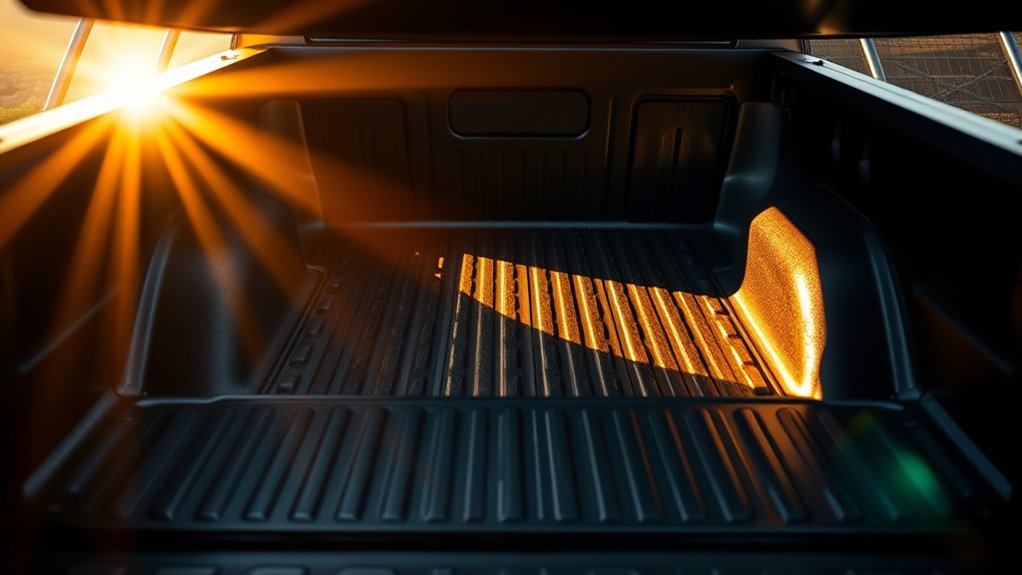
How Hot Does It Get Under a Tonneau Cover
Did you know temperatures under a tonneau cover can soar up to 40°F above ambient on sunny days?
The heat buildup under a tonneau cover is more significant than many realize.
While the cover shields your truck bed, solar gain and limited airflow create a substantial heat trap.
Understanding how different cover materials and designs influence this temperature rise is essential.
This is especially true if you transport heat-sensitive items.
Exploring these factors reveals why managing heat under your tonneau cover matters more than you might think.
Key Takeaways
- Sun exposure and limited ventilation can raise internal temperatures under tonneau covers significantly, sometimes exceeding ambient temperatures by 20-40°F.
- Hard covers made of fiberglass or aluminum retain more heat due to higher thermal mass compared to soft covers.
- Poor ventilation traps heat under the cover, causing temperature spikes and reducing airflow cooling effects.
- Insulated covers reduce heat transfer but can trap heat if ventilation is inadequate, potentially increasing bed temperature.
- Temperature under the cover varies with material, design, ventilation, color, and climate conditions, affecting cargo heat sensitivity.
How Hot Can It Get Under a Tonneau Cover?
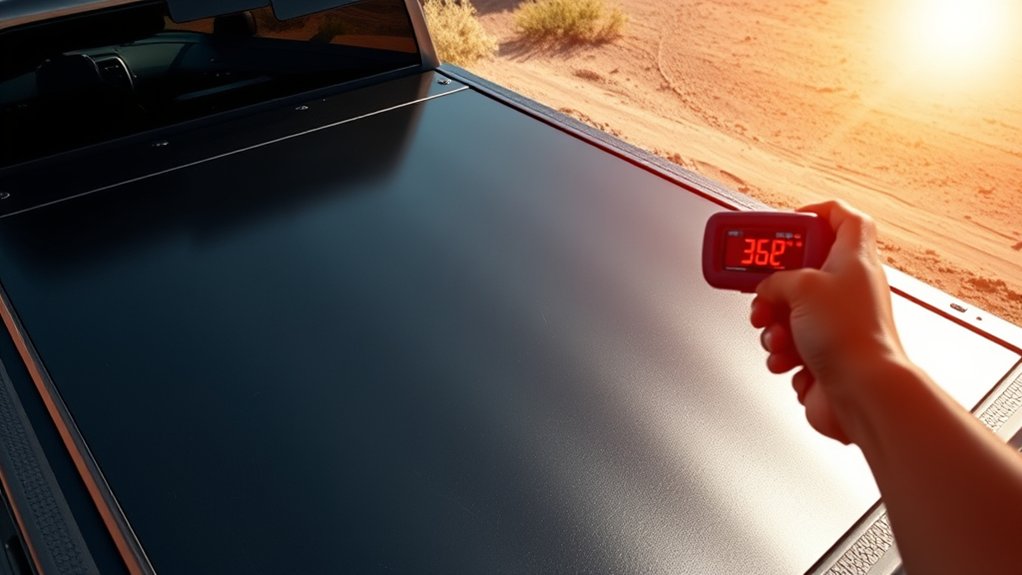
How hot can it actually get under a tonneau cover? Temperatures can soar beyond ambient levels due to limited ventilation and solar heat absorption. You need to consider the heat resilience of the cover material to understand its thermal performance.
Materials with higher heat resilience, like vinyl or aluminum, can reduce temperature spikes by reflecting sunlight or dissipating heat effectively. However, material pricing directly impacts your options. Premium heat-resistant fabrics or coatings often come at a higher cost but provide better thermal management.
When selecting a tonneau cover, balance heat resilience with material pricing to optimize protection without overspending. Understanding these technical parameters helps you predict potential heat buildup accurately and choose a cover that mitigates excessive temperatures under direct sunlight.
What Causes Heat to Build Up Under Tonneau Covers?
Why does heat accumulate beneath tonneau covers? You need to understand the primary factors contributing to this phenomenon. Heat buildup results from several interacting elements:
- Solar Radiation: The sun emits heat energy absorbed by the truck bed and cover, raising internal temperatures.
- Trapped Heat Sources: Residual warmth from the truck bed, combined with limited airflow, causes heat to linger beneath the cover.
- Insulation Benefits and Limitations: While insulation materials in some tonneau covers reduce temperature spikes by limiting heat transfer, they can also trap heat inside if ventilation is insufficient.
How Different Tonneau Covers Affect Bed Temperature
Which tonneau cover materials and designs influence the temperature inside your truck bed the most? Hard covers, like fiberglass or aluminum, tend to absorb and retain heat differently than soft vinyl covers. Hard surfaces often increase bed temperature due to lower reflectivity and higher thermal mass.
Conversely, soft covers allow marginally more heat dissipation but can trap heat if tightly sealed. Roll-up designs expose the bed intermittently, affecting temperature fluctuations, unlike rigid folding covers.
It’s an irrelevant topic to consider color alone without factoring in material properties and design. Similarly, discussing unrelated concepts such as external ambient temperature fails to isolate the cover’s direct impact.
Understanding these distinctions helps you select a cover that minimizes heat buildup effectively, optimizing bed temperature control based on your specific usage and climate conditions.
How Ventilation Helps Keep Your Truck Bed Cooler
Where does the trapped heat inside your truck bed go when you add ventilation? Ventilation integrates cooling design with airflow engineering to actively reduce temperature buildup. You’ll notice cooler conditions under the tonneau cover because ventilation facilitates continuous air exchange, preventing heat stagnation.
Adding ventilation to your truck bed enables continuous air exchange, reducing heat buildup and keeping conditions cooler.
Here’s how ventilation works:
- It creates pressure differentials that draw hot air out of the bed.
- It introduces cooler ambient air, diluting internal heat.
- It disrupts thermal layering, promoting uniform temperature distribution.
Why Heat Matters for Temperature-Sensitive Cargo
Managing airflow and ventilation under your tonneau cover directly impacts the internal temperature, a key factor when transporting temperature-sensitive cargo. Excessive heat transfer can degrade perishable goods, pharmaceuticals, or electronics.
Insulation materials and controlled airflow reduce thermal conductivity, preserving cargo integrity. Understanding how heat accumulates allows you to assess risk and select appropriate protection.
| Cargo Type | Heat Sensitivity Level |
|---|---|
| Pharmaceuticals | High |
| Fresh Produce | Moderate |
| Electronics | High |
| Tools/Hardware | Low |
Tips to Keep Your Truck Bed Cooler Under a Tonneau Cover
To keep your truck bed cooler under a tonneau cover, focus on selecting reflective materials that reduce heat absorption. You should also improve airflow ventilation to prevent heat buildup.
Additionally, using bed liners can provide an insulating layer that helps regulate temperature.
Choose Reflective Cover Materials
Why does the material of your tonneau cover matter so much for temperature control? The answer lies in how effectively it manages solar radiation and heat transfer. Choosing reflective materials significantly enhances insulation strategies, reducing heat buildup under the cover.
Here’s what you should focus on:
- Select covers with high solar reflectance to deflect sunlight and lower heat absorption.
- Opt for materials incorporating reflective coatings or finishes that bounce infrared radiation away.
- Ensure the cover has integrated insulation layers to minimize conductive and convective heat transfer.
Improve Airflow Ventilation
How can improving airflow ventilation substantially reduce heat buildup under your tonneau cover? Effective cooling strategies hinge on optimizing airflow design to facilitate continuous air exchange beneath the cover. By integrating vented panels or strategically placed gaps, you enhance convective heat dissipation, preventing stagnant hot air pockets.
You’ll want to ensure these ventilation points align with natural wind directions to maximize airflow efficiency. Additionally, using aerodynamic principles in the airflow design minimizes turbulence, promoting steady airflow that carries heat away from the truck bed.
This approach reduces internal temperatures by disrupting heat accumulation, maintaining a cooler microenvironment under your tonneau cover. Prioritizing airflow ventilation is a technical solution that complements material choices, significantly improving thermal regulation and protecting cargo from excessive heat.
Use Bed Liners
Where should you focus to reduce heat retention directly on your truck bed surface? The answer lies in selecting and installing the right bed liners. Bed liners provide essential cargo protection while minimizing heat buildup under a tonneau cover.
Here’s how to optimize their effectiveness:
- Material Choice: Opt for thermal-resistant materials like rubber or spray-on liners that absorb less heat and dissipate it faster.
- Thickness and Texture: Thicker liners with textured surfaces create air gaps, enhancing insulation and reducing heat conduction to the bed.
- Coverage: Ensure full bed coverage to avoid hot spots that can increase overall temperature and risk cargo damage.
When to Choose Alternatives to Tonneau Covers for Heat Control
Under what conditions should you consider alternatives to tonneau covers for managing heat? If your priority is precise thermal regulation, tonneau covers may fall short due to their non-heat properties, which often allow heat buildup underneath.
When you require effective heat dissipation, opting for ventilated bed liners or retractable covers with integrated airflow can be more efficient. Additionally, if environmental impact concerns you, evaluate disposal methods; some tonneau covers pose challenges in recycling or waste management due to complex materials.
Alternatives designed with recyclable components can mitigate this issue. Also, in extreme climates where temperature control is critical, you might need active cooling systems rather than passive tonneau covers.
Analyze your specific heat control requirements and environmental considerations before committing to a tonneau cover, ensuring optimal performance and sustainability.
Frequently Asked Questions
Can a Tonneau Cover Improve My Truck’s Fuel Efficiency?
Yes, you can improve your truck’s fuel efficiency by reducing drag with a tonneau cover. This aerodynamic enhancement decreases air resistance, leading to measurable fuel savings, especially during highway driving at higher speeds.
Are Tonneau Covers Waterproof or Weather-Resistant?
Though not like a knight’s armor, tonneau covers vary between waterproof vs weather-resistant materials. You’ll want waterproof for full protection, but weather-resistant covers still enhance bed security by repelling moisture and debris effectively.
How Do I Clean and Maintain a Tonneau Cover?
You should establish a regular cleaning routine using mild soap and water to prevent dirt buildup. This maintains the cover’s integrity, ensuring material longevity by avoiding harsh chemicals or abrasive tools that could degrade the surface or seams.
Can Tonneau Covers Prevent Theft From the Truck Bed?
Sure, tonneau covers considerably strengthen security, shielding your stuff from sneaky theft. Still, stay savvy: they can’t completely eliminate security risks.
Weigh cost considerations carefully to choose cover types that balance budget with robust protection.
What Materials Are Tonneau Covers Typically Made From?
Tonneau covers typically use polymer composites for rigidity and durability, combined with fabric coatings that enhance water resistance and UV protection.
You’ll find these materials optimized for strength, flexibility, and environmental resilience in various designs.
Conclusion
You’ll find temperatures under a tonneau cover can climb rapidly, much like a knight’s armor heating under the midday sun. Understanding how cover type, ventilation, and insulation interact lets you manage this heat buildup effectively.
By optimizing these factors, you protect your sensitive cargo and maintain cooler bed temperatures. When heat control is critical, consider ventilated or soft covers—or even alternative solutions—to prevent damage.
To ensure your truck bed stays within safe thermal limits, paying attention to how hot it gets under a tonneau cover is essential.