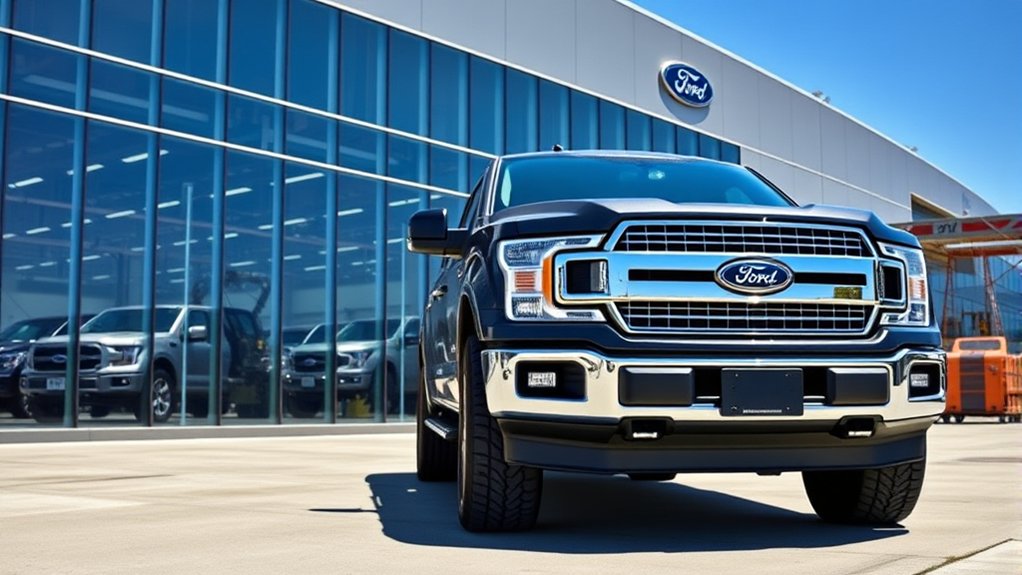
Where Is f150 Made
It’s no coincidence that the Ford F-150, America’s best-selling truck, is largely made in the heart of the Midwest. You might assume it’s just about tradition, but the reasons go deeper—spanning strategic plant locations, specialized labor forces, and a finely tuned supply chain.
Understanding where the F-150 is made reveals how Ford balances volume, quality, and innovation across several key facilities. What makes these sites so integral to production?
Key Takeaways
- The F-150 is primarily made at the Dearborn Truck Plant in Michigan.
- Kansas City Assembly Plant in Missouri handles high-volume F-150 production.
- The Rouge Complex in Dearborn supports heavy-duty and specialty F-150 models.
- Claycomo Assembly Plant in Missouri focuses on specific F-150 variants.
- Michigan plays a central role with key engineering, design, and advanced manufacturing facilities.
Where Is the Ford F-150 Built Today?
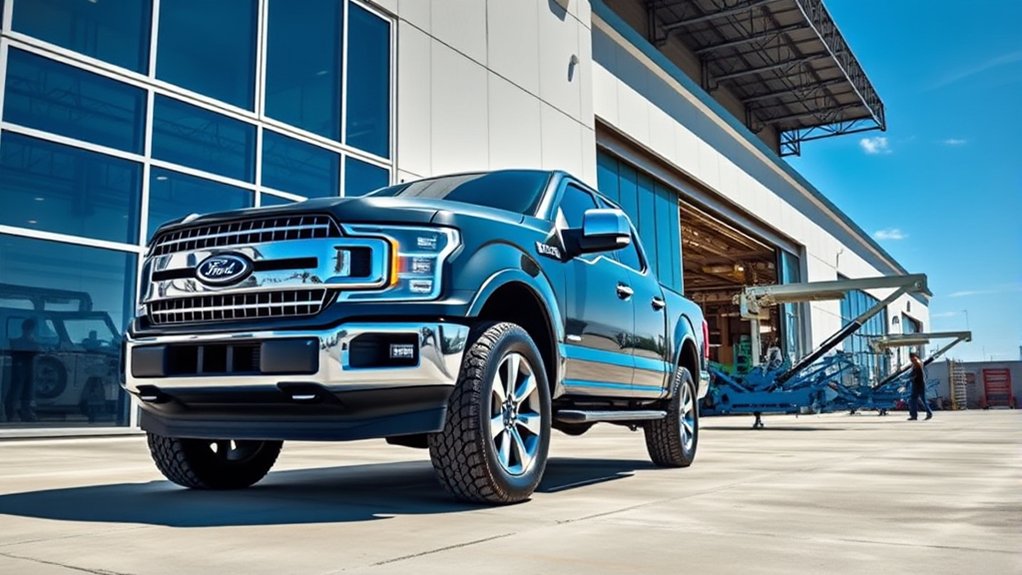
Where is the Ford F-150 built today? You’ll find that the production of this iconic truck involves intricate manufacturing complexity, requiring advanced technology and skilled labor. The assembly process integrates numerous components, demanding precise coordination to maintain quality and efficiency.
Understanding this complexity helps you appreciate why Ford invests heavily in state-of-the-art facilities. Labor relations also play a crucial role in the F-150’s production. Ford collaborates closely with unions and workforce representatives to ensure smooth operations and address worker concerns promptly.
This cooperation supports consistent output and fosters a positive work environment. By grasping these factors, you can better understand how the Ford F-150 maintains its reputation for reliability and innovation in today’s competitive automotive market.
Which Ford Plants Produce the F-150?
You’ll find the F-150 is produced at several key Ford plants across North America. Each facility handles specific assembly tasks and contributes varying production volumes.
Understanding which plants build the F-150 helps clarify the truck’s manufacturing footprint.
Primary Manufacturing Locations
How does Ford manage to meet the high demand for the F-150? It relies on efficient production scheduling and strong labor relations at key manufacturing sites.
You’ll find the primary F-150 production locations strategically placed to optimize output and maintain quality. These plants include:
- Dearborn Truck Plant in Michigan, the main hub with advanced assembly lines.
- Kansas City Assembly Plant in Missouri, known for high-volume production.
- Rouge Complex in Dearborn, supports heavy-duty and specialty models.
- Claycomo Assembly Plant in Missouri, focuses on specific F-150 variants.
Each facility uses coordinated scheduling to balance supply and demand, while labor relations ensure smooth operations. This network allows Ford to deliver millions of F-150 trucks annually without compromising efficiency or quality.
Regional Assembly Plants
Which Ford plants are responsible for assembling the F-150? The main assembly occurs at Ford’s Dearborn Truck Plant in Michigan and the Kansas City Assembly Plant in Missouri. These regional assembly plants operate under strict regional policy guidelines to optimize logistics and meet local market demands efficiently.
When you consider design patents, these plants must adhere closely to patented specifications to maintain the vehicle’s integrity and innovation standards. Each facility focuses on integrating components while ensuring compliance with Ford’s intellectual property protections.
Production Volume By Site
Where exactly does the bulk of F-150 production take place? Ford strategically distributes manufacturing to optimize frontier logistics and support regional relocalization efforts. The main plants responsible for F-150 production include:
- Dearborn Truck Plant, Michigan. The largest volume producer, handling most assembly.
- Kansas City Assembly Plant, Missouri. A key facility focusing on diverse F-150 variants.
- Rouge Complex, Michigan. Supports production with advanced manufacturing technologies.
- Claycomo Assembly Plant, Missouri. Contributes to regional output and logistics efficiency.
These sites collectively manage high production volumes, ensuring supply meets demand efficiently. By leveraging frontier logistics strategies and regional relocalization, Ford maintains a flexible, resilient manufacturing network that reduces transportation costs and enhances responsiveness to market changes. This approach solidifies the F-150’s position as America’s best-selling truck.
Why Is Michigan Key to Ford F-150 Manufacturing?
Why does Michigan play such an essential role in the manufacturing of the Ford F-150? You should know Michigan houses key engineering and design centers critical to the F-150’s development.
This state’s skilled workforce and proximity to suppliers streamline innovation and production. It’s important not to confuse this with unrelated topics or fall into random speculation about Michigan’s role.
The state’s infrastructure supports advanced manufacturing technologies, making it indispensable for prototype testing and component fabrication. When you consider the F-150’s complexity, Michigan’s integration of research and manufacturing creates efficiencies you won’t find elsewhere.
What Role Does the Kansas City Plant Play?
How does the Kansas City Plant influence Ford F-150 production? It plays a crucial role by focusing on:
- Manufacturing the F-150’s body and frame, ensuring quality and durability.
- Implementing the new design elements to meet evolving customer preferences.
- Supporting Ford’s marketing strategy by producing models aligned with market demands.
- Enhancing production efficiency through advanced manufacturing technologies.
You’ll find that the Kansas City Plant doesn’t just assemble parts; it integrates innovation with production. Its ability to adapt to new design updates directly impacts how well the F-150 competes. By aligning manufacturing with the marketing strategy, the plant helps Ford respond swiftly to market trends. This synergy makes the Kansas City facility vital in sustaining the F-150’s leadership in the truck segment.
How Does Ford’s Supply Chain Support F-150 Production?
You rely on Ford’s well-coordinated supplier network to ensure every component for the F-150 arrives on time. The company uses just-in-time delivery to minimize inventory and keep production running smoothly. This system helps maintain efficiency and meet demand without delays.
Supplier Network Coordination
Where does Ford source the thousands of parts that come together to build the F-150? The answer lies in a well-organized supplier network that plays a critical role in the supply chain. Ford coordinates with numerous suppliers to ensure timely and quality part delivery.
Here’s how the supplier network coordination supports F-150 production:
- Ford establishes clear communication channels with suppliers to align production schedules.
- It monitors supplier performance to maintain quality standards and address issues promptly.
- The company integrates supplier data into its supply chain management systems for real-time tracking.
- Collaborative planning allows Ford and suppliers to anticipate demand fluctuations and adjust accordingly.
Just-In-Time Delivery
Why is timing so essential in the production of the F-150? Ford’s just-in-time delivery system ensures parts arrive exactly when needed, minimizing inventory costs and preventing production delays.
You’ll see how this precision relies heavily on advanced technologies like drone delivery, which speeds up the transport of critical components from nearby suppliers directly to assembly lines.
Additionally, automated warehousing plays a vital role by efficiently organizing and dispatching parts in real-time, reducing human error and enhancing responsiveness.
This seamless integration allows you to trust that each F-150 is built without interruption, maintaining high quality and meeting demand promptly. Ford’s supply chain, supported by these innovations, exemplifies how just-in-time delivery keeps production smooth and cost-effective.
How Is Quality Controlled Across Ford F-150 Facilities?
How does Ford maintain consistent quality across its multiple F-150 manufacturing facilities? They implement rigorous quality control measures and emphasize strong supplier coordination to ensure uniform standards. Here’s how they do it:
- Standardized Procedures: Ford enforces uniform production protocols across all plants to minimize variability.
- Real-Time Monitoring: Advanced sensors and software track assembly line performance continuously.
- Supplier Coordination: Close collaboration with suppliers ensures parts meet strict specifications before arriving at plants.
- Regular Audits: Ford conducts frequent quality audits at each facility to identify and resolve issues promptly.
How Does Ford Mix Domestic and Global Parts for the F-150?
When assembling the F-150, Ford carefully integrates both domestic and global parts to optimize performance and cost-efficiency. You’ll find essential components like engines and transmissions sourced domestically to support local labor union dynamics, ensuring skilled workforce involvement.
At the same time, Ford incorporates specialized parts from global suppliers, enhancing technological innovation and access to alternative fuel system components. This strategic mix balances supply chain reliability and production flexibility.
It also allows Ford to respond efficiently to market demands and regulatory requirements, particularly for alternative fuel variants. By blending domestic labor expertise with global supplier strengths, Ford maintains high-quality standards while managing costs effectively, ensuring the F-150 remains competitive and adaptable across various markets.
What Future Changes Could Affect F-150 Production Locations?
Which factors will shape the future locations of F-150 production? You need to consider how Ford adapts to evolving market demands and operational efficiencies. Key influences include:
- Expansion to new plant locations to meet regional demand and reduce logistics costs.
- Adjustments in global sourcing strategies, balancing cost, quality, and supply chain resilience.
- Adoption of advanced manufacturing technologies requiring specialized facilities.
- Regulatory changes and trade policies impacting where production is most viable.
Frequently Asked Questions
What Engines Are Available for the Ford F-150?
You’ll find engines availability varies across F 150 trim differences, including a 3.3L V6, 2.7L and 3.5L EcoBoost V6s, a 5.0L V8, and a PowerBoost hybrid, fitting diverse performance needs.
How Fuel-Efficient Is the Ford F-150?
You’ll find the F-150’s fuel economy dances between efficiency and power, offering up to 25 MPG highway. Its horsepower comparison shows a balance, letting you tow heavy loads without guzzling gas like a thirsty beast.
What Are the Towing Capacities of the F-150?
You’ll find the F-150’s towing capacities vary up to 14,000 pounds, depending on the model. It combines advanced towing tech with solid fuel economy, letting you haul heavy loads efficiently and confidently every time you tow.
What Safety Features Come Standard on the F-150?
You’ll enjoy peace of mind with the F-150’s standard safety features like automatic emergency braking and lane-keeping assist.
Its factories guarantee quality, while interior materials and luxury trims complement global supply chains for reliability and comfort.
How Does the F-150 Compare to Other Pickup Trucks?
You’ll find the F-150 excels with strong resale value and versatile off-road variants, outperforming many competitors in durability and capability. Its balance of power, comfort, and technology makes it a top choice among pickup trucks.
Conclusion
You can think of Ford’s F-150 production as a finely tuned orchestra, with Michigan and Missouri plants playing lead roles. Each facility contributes unique skills and parts, seamlessly coordinated through an efficient supply chain. This collaboration ensures the F-150 meets high standards and local demands.
As you follow its manufacturing journey, you’ll see how Ford balances tradition and innovation, keeping the F-150 strong and ready for the road ahead. Understanding where the F-150 is made highlights the dedication behind every truck, combining craftsmanship and cutting-edge technology. This balance is key to the F-150’s continued success and reputation.