Is Jeep Grand Cherokee Reliable
If you’re considering a Jeep Grand Cherokee, reliability is a key factor to evaluate. Its performance can vary considerably depending on the model year, maintenance history, and how it’s been driven.
While newer models offer modern features and warranties, some earlier versions come with known issues that could affect ownership costs. Understanding these factors can help you decide if this SUV fits your needs and expectations.
Key Takeaways
- Jeep Grand Cherokee reliability varies by model year, with newer models offering improved technology but limited long-term data.
- Maintenance quality and driving habits significantly impact the vehicle’s overall reliability and durability.
- Common issues include air suspension failures, electrical glitches, and occasional engine hesitation.
- New models provide comprehensive warranties and advanced features, enhancing reliability and reducing repair costs.
- Well-maintained used Grand Cherokees can be reliable, but prior maintenance and service records are crucial for assessment.
Is the Jeep Grand Cherokee Reliable?
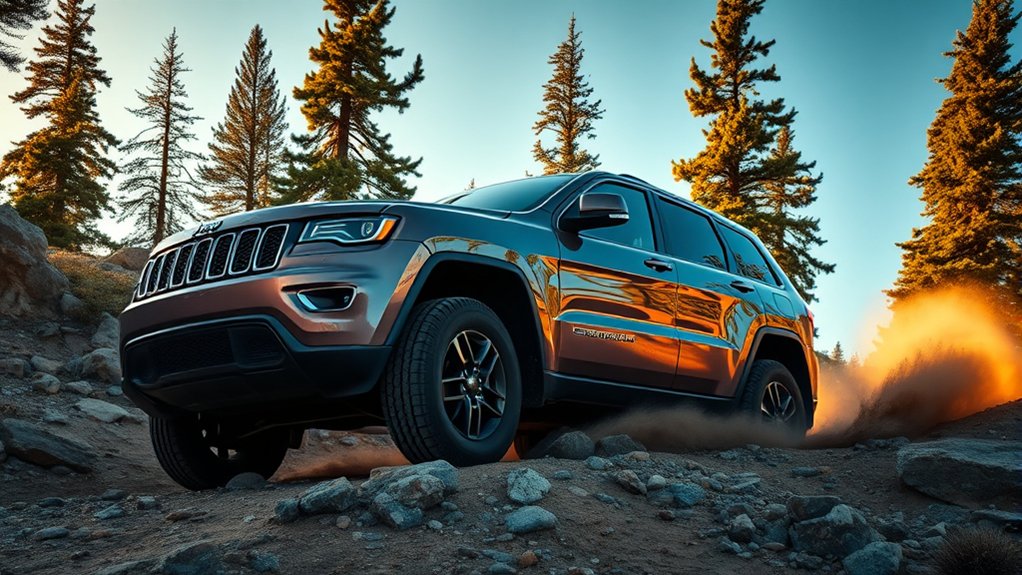
How reliable is the Jeep Grand Cherokee when it comes to everyday driving and long-term ownership? You’ll find that its reliability often depends on factors like maintenance and driving habits. While some owners report solid performance and durability, others encounter issues that affect dependability.
It’s important not to confuse unrelated topics like styling or off-road capability with reliability, as these don’t directly impact how the vehicle holds up over time. Consumer trends show mixed reviews, with some models praised for longevity and others criticized for mechanical problems.
To get a clear picture, you should consider detailed reliability reports and owner feedback rather than relying solely on brand reputation or unrelated topics. This approach helps you make a well-informed decision about the Jeep Grand Cherokee’s dependability.
Reliability Trends Across Jeep Grand Cherokee Model Years
When examining reliability trends across Jeep Grand Cherokee model years, you’ll notice significant variations that can influence your ownership experience. Some model years have proven more dependable, while others show mixed reviews.
- Early 2000s models often excel in ruggedness, but gas mileage and interior design lag behind newer iterations.
- Mid-2010s models improved gas mileage with updated engines, yet some owners reported inconsistent reliability.
- The 2021 redesign brought enhanced interior design and technology, but long-term reliability data remains limited.
- Recent models emphasize fuel efficiency and comfort, reflecting Jeep’s focus on balancing performance with everyday usability.
Understanding these trends helps you choose a model year that aligns with your priorities, balancing reliability, efficiency, and comfort.
Common Jeep Grand Cherokee Reliability Issues Owners Report
You might encounter engine performance problems, such as rough idling or hesitation during acceleration, in some Jeep Grand Cherokee models. Electrical system glitches, including issues with the infotainment and power accessories, are also commonly reported by owners.
Additionally, suspension and steering concerns like premature wear or alignment problems can affect your driving experience.
Engine Performance Problems
Why do some Jeep Grand Cherokee owners experience engine performance problems? Several factors contribute to this issue, affecting drivability and overall vehicle reliability. You may notice symptoms like rough idling, hesitation, or reduced power.
Common causes include:
- Insufficient engine oil levels or poor oil quality, which can damage internal components.
- Faulty transmission torque converters that disrupt smooth power delivery.
- Clogged fuel injectors or filters, restricting fuel flow and causing misfires.
- Malfunctioning sensors (such as the mass airflow sensor) leading to incorrect air-fuel mixture.
Regular maintenance, including timely oil changes and transmission checks, helps prevent these problems. Staying proactive ensures your Grand Cherokee maintains optimum engine performance and avoids costly repairs down the road.
Electrical System Glitches
Engine troubles aren’t the only reliability concerns reported by Jeep Grand Cherokee owners; electrical system glitches also frequently impact daily driving experiences. These issues range from malfunctioning infotainment systems to faulty wiring and battery drain, affecting overall vehicle usability.
Understanding these electrical system reliability trends helps you anticipate potential problems and maintenance needs.
| Issue Type | Common Symptoms | Impact on Driving Experience |
|---|---|---|
| Infotainment Errors | Screen freezing, unresponsive controls | Distracts driver, reduces convenience |
| Battery Drain | Unexpected battery failure | Vehicle may not start |
| Wiring Problems | Intermittent electrical faults | Unpredictable system behavior |
| Sensor Failures | Warning lights, incorrect readings | Safety systems compromised |
Staying informed on these glitches enables you to address them promptly and maintain your Grand Cherokee’s reliability.
Suspension And Steering Issues
How does the Jeep Grand Cherokee handle rough roads and tight turns? While it generally performs well, some owners report issues with suspension durability and steering alignment over time. These problems can affect ride comfort and vehicle control.
Common suspension and steering issues include:
- Premature wear of suspension components, leading to a rougher ride.
- Steering alignment problems causing uneven tire wear and pulling.
- Noises from worn bushings or shocks, indicating reduced suspension effectiveness.
- Occasional difficulty in maintaining precise steering response on uneven terrain.
If you’re considering a Grand Cherokee, keep in mind these potential concerns. Regular inspections and timely maintenance can help preserve suspension durability and ensure proper steering alignment, contributing to a safer, more reliable driving experience.
What Experts Think About the Grand Cherokee’s Durability
When assessing the Jeep Grand Cherokee’s durability, experts focus on its build quality, materials, and long-term performance under various conditions. They highlight its rugged frame and use of high-strength steel, which contribute to overall structural integrity.
Experts also note the quality of interior materials, balancing comfort with wear resistance. While the Grand Cherokee performs well on paved roads, experts emphasize its off-road durability due to reinforced suspension components and protective underbody features.
Two word discussion ideas like “component longevity” and “material resilience” often arise, reflecting the vehicle’s ability to withstand harsh environments. You’ll find that expert reviews consistently acknowledge the Grand Cherokee’s solid durability, though they recommend regular inspections to maintain its performance over time.
Jeep Grand Cherokee Maintenance Costs and Reliability
What should you expect in terms of maintenance costs and overall reliability when owning a Jeep Grand Cherokee? Understanding this helps avoid non relevant topics that often confuse buyers. Here are four key points to consider:
- Routine service costs tend to be moderate but can rise with advanced features.
- Repair frequency is slightly above average compared to similar SUVs.
- Parts availability is generally good, though some models may face delays.
- Long-term reliability varies by year and engine type, so targeted research is vital.
These two word discussion ideas, “maintenance expenses” and “reliability factors,” directly impact ownership satisfaction. While the Grand Cherokee offers strong off-road capability, you should weigh maintenance demands carefully. Staying informed about typical repairs and costs ensures you avoid surprises in your ownership experience.
How the Grand Cherokee Compares to Other SUVs for Reliability
You’ll want to compare the Grand Cherokee’s reliability ratings with those of similar SUVs to see how it stacks up. It’s important to contemplate common issues reported by owners across different models.
This comparison will help you understand where the Grand Cherokee excels and where it might fall short.
Reliability Ratings Comparison
How does the Jeep Grand Cherokee stack up against other SUVs regarding reliability? When comparing soundness benchmarks, the Grand Cherokee often ranks mid-pack, indicating average dependability.
You should consider these points:
- It scores lower than top-tier SUVs like the Toyota Highlander in reliability ratings.
- Maintenance budgeting tends to be higher due to occasional repairs and parts costs.
- Some competitors offer better long-term durability, impacting resale value positively.
- The Grand Cherokee excels in off-road capability but may sacrifice some reliability compared to road-focused SUVs.
Understanding these factors helps you set realistic expectations and plan maintenance budgeting effectively. While the Grand Cherokee offers strong performance, it doesn’t consistently meet the highest soundness benchmarks in its segment.
Common Issues Overview
When comparing common issues in the Jeep Grand Cherokee to other SUVs, you’ll notice certain recurring problems that affect its overall reliability. While some SUVs face unrelated topic concerns like infotainment glitches, the Grand Cherokee often struggles with air suspension failures and electrical system faults.
These issues impact long-term ownership costs and satisfaction but shouldn’t lead to irrelevant discussion about general reliability.
Here’s a quick comparison of common problems:
| Issue Type | Jeep Grand Cherokee |
|---|---|
| Air Suspension | Frequent failures |
| Electrical System | Occasional malfunctions |
| Engine Performance | Generally reliable |
Understanding these specifics helps you make informed decisions without getting sidetracked by unrelated topic complaints or irrelevant discussion.
Tips to Keep Your Jeep Grand Cherokee Running Smoothly
What steps can help you maintain your Jeep Grand Cherokee’s performance over time? Staying proactive is key. Here are four essential tips to keep your vehicle running smoothly:
- Regularly check and change fluids, such as engine oil, transmission, and coolant, to prevent wear and overheating.
- Inspect and replace air filters to maintain engine efficiency, especially if you use fun car accessories or off-road accessories that expose your vehicle to dust.
- Monitor tire pressure and tread wear to ensure safety and optimal handling, particularly after off-road adventures.
- Schedule routine maintenance with a trusted mechanic to address potential issues early and keep all systems in check.
Following these steps helps preserve your Grand Cherokee’s reliability and performance without sacrificing your enjoyment or customization options.
Should You Buy a New or Used Jeep Grand Cherokee for Reliability?
Maintaining your Jeep Grand Cherokee properly can substantially extend its lifespan and reliability, but deciding whether to buy new or used adds another layer to consider. If you opt for a new model, you’ll benefit from the latest advancements, including improved alternative fuel options and factory-tuned off road capabilities.
New vehicles also come with comprehensive warranties, reducing unexpected repair costs. On the other hand, a used Grand Cherokee might offer better value upfront, but its reliability depends heavily on prior maintenance and mileage.
You’ll want to review service records carefully, especially if the previous owner engaged in off road tuning, which can stress components. Ultimately, if reliability is your priority, a new model provides peace of mind, but a well-maintained used Jeep can still serve you well if chosen cautiously.
Frequently Asked Questions
What Are the Best Trim Levels for Off-Road Capability?
You’ll want the Trailhawk or Overland trims for the best off-road capability since they come with off-road tires and advanced systems.
Adding aftermarket lifts can boost clearance and performance for tougher trails.
How Does the Grand Cherokee Perform in Winter Weather?
You’ll find the Grand Cherokee’s winter weather performance solid, thanks to its 4WD system and traction control. For best results, use winter driving tips like slowing down, maintaining distance, and equipping proper winter tires.
What Are Common Interior Features of the Grand Cherokee?
When it comes to common interior features, the Grand Cherokee doesn’t beat around the bush. You get leather seats, a touchscreen infotainment system, dual-zone climate control, and plenty of storage, enhancing comfort and convenience during every drive.
How Fuel-Efficient Is the Jeep Grand Cherokee?
You’ll find the Jeep Grand Cherokee’s fuel economy varies by engine and model year, with two key discussion ideas being its V6 versus V8 performance. Generally, it’s average for its class, but not exceptionally fuel-efficient.
What Safety Ratings Does the Grand Cherokee Have?
Safety ratings show the Grand Cherokee performs well, but remember, “better safe than sorry.” Its danger ratings are solid, though higher maintenance costs may affect long-term safety upkeep.
Stay proactive with regular checks to minimize risks.
Conclusion
If you’re considering a Jeep Grand Cherokee, think of it as a rugged trail with both smooth paths and rocky spots. Its reliability depends on the model year and how well it’s maintained. Newer models offer modern tech and better warranties, while used ones can be solid if cared for properly.
Stay proactive with maintenance and watch for common issues. Regular check-ups and timely repairs are key to keeping it in good shape. By doing so, you’ll enjoy many years of dependable performance.
In conclusion, the Jeep Grand Cherokee can be a reliable choice if you pay attention to upkeep and choose the right model year.