
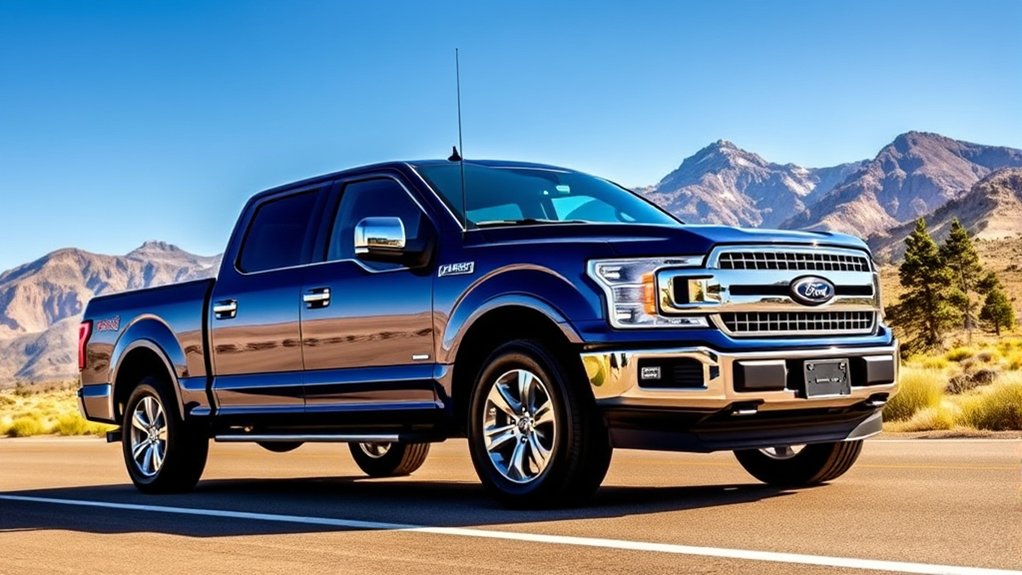
Does Ford f150 Qualify for Section 179 Colorado 2024
Did you know that over 70% of small business owners leverage Section 179 to offset vehicle expenses? If you’re considering a Ford F-150 for your business in Colorado, understanding whether the Ford F-150 qualifies for Section 179 in 2024 is essential.
Eligibility hinges on factors like the truck’s weight, purchase price, and business use percentage. For the Ford F-150, its gross vehicle weight rating (GVWR) typically meets the minimum requirement of 6,000 pounds, which is a key factor for Section 179 qualification.
Before you make a purchase, it’s important to clarify these details to maximize your tax benefits. Consulting with a tax professional can ensure you fully understand how the deduction applies to your specific situation.
Key Takeaways
- The Ford F-150 qualifies for Section 179 in Colorado 2024 if its GVWR exceeds 6,000 lbs and it is used over 50% for business.
- Eligible buyers can deduct up to $28,900 of the vehicle cost under Section 179, proportional to business use percentage.
- The vehicle must be purchased and placed in service during 2024 to qualify for the deduction.
- Complete IRS Form 4562 to claim the Section 179 deduction and maintain detailed business use records.
- Compliance with federal and Colorado state guidelines is essential to maximize deductions and avoid audit risks.
What Is Section 179 and How Does It Work for Vehicles?
How does Section 179 benefit you when purchasing a vehicle for your business? Section 179 allows you to deduct the full purchase price of qualifying vehicles from your gross income in the year you buy them, rather than spreading the deduction over several years.
This immediate deduction boosts cash flow and reduces taxable income, making it a powerful tool for business owners. When exploring discussion ideas about Section 179, it’s essential to focus strictly on eligible vehicles and avoid unrelated topics like personal expenses or non-qualifying assets, which won’t benefit from this deduction.
Understanding these boundaries ensures you maximize your tax benefits without confusion. This knowledge empowers you to make informed decisions about vehicle purchases that align with your business’s financial goals.
Can You Use Section 179 for Your Ford F-150 in 2024?
Section 179 offers significant tax advantages when purchasing business vehicles, but not every model qualifies. You can use Section 179 for your Ford F-150 in 2024, provided it meets specific IRS guidelines.
Avoid ignored topics and unrelated details like personal use or financing terms here, as these belong elsewhere. Focus on the vehicle’s eligibility based on GVWR and purchase date.
| Criteria | Ford F-150 2024 |
|---|---|
| GVWR | Typically over 6,000 lbs |
| Eligible for Section 179 | Yes, if used for business |
| Maximum Deduction | Up to $1,160,000 (2024 limit) |
| Purchase Date Required | In 2024 |
| Ignored Topics | Personal use, financing |
This precise info confirms your F-150 can qualify for Section 179 in 2024, assuming business use.
How Business Use Affects Ford F-150 Section 179 Eligibility
Your Ford F-150 must be used more than 50% for business to qualify for the Section 179 deduction. You’ll need to keep thorough records to prove this usage and meet IRS documentation standards.
The percentage of business use directly impacts your deduction limits, so accuracy is essential.
Percentage Of Business Use
Why does the percentage of business use matter when determining if your Ford F-150 qualifies for the Section 179 deduction in Colorado? The IRS requires that your vehicle be used more than 50% for business to claim the full deduction.
If your use dips below that threshold, your deduction reduces proportionally. Understanding this lets you explore topic ideas and unrelated angles on maximizing your write-off.
| Business Use % | Deduction Eligibility | Notes |
|---|---|---|
| 100% | Full deduction | Ideal for maximum savings |
| 75% | 75% of deduction | Partial write-off |
| 50% | Limited deduction | Minimum threshold |
| <50% | No deduction | Ineligible for Section 179 |
Tracking your Ford F-150’s business use accurately ensures compliance and optimizes your tax benefits.
Documentation Requirements For Eligibility
How can you prove that your Ford F-150 meets the business use requirements to qualify for the Section 179 deduction in Colorado? You need clear, consistent documentation showing that the truck is used more than 50% for business.
Maintain detailed mileage logs, noting dates, destinations, and business purposes. Receipts and purchase invoices should also be kept as proof of acquisition and expenses. Avoid mixing unrelated topics or random ideas in your records, as IRS auditors expect focused, relevant evidence.
Any personal use must be carefully separated to ensure compliance. Without precise documentation, you risk disqualification. By staying organized and thorough, you establish a strong case for your Ford F-150’s eligibility under Section 179, reinforcing your deduction claim with solid proof.
Impact On Deduction Limits
Exactly how does the percentage of business use influence the Section 179 deduction limits for your Ford F-150? The deduction you can claim is directly proportional to the vehicle’s business use. If you use your F-150 80% for business, you can deduct 80% of the eligible Section 179 amount.
Personal use reduces your allowable deduction. Mixing business and personal use means you must carefully calculate the portion that qualifies.
Avoid making an unrelated topic or off topic discussion when documenting your business use; focus solely on accurate mileage logs and usage records. The IRS requires this precision to validate your deduction.
Understanding this impact helps you maximize your tax benefits while staying compliant with Section 179 regulations in Colorado for 2024.
Ford F-150 Purchase Price Limits for Section 179 Deductions
You need to understand the purchase price limits that apply to the Ford F-150 for Section 179 deductions in Colorado 2024. These caps determine how much of the vehicle’s cost you can deduct, especially when factoring in upgrades or customizations.
Knowing these limits helps you maximize your tax benefits without exceeding allowable thresholds.
Eligible Vehicle Price Caps
What purchase price limits should you consider when determining if your Ford F-150 qualifies for the Section 179 deduction in Colorado for 2024? The IRS sets specific caps on vehicle prices eligible for Section 179, typically around $28,900 for trucks like the F-150.
If your purchase price exceeds this limit, the excess amount won’t qualify for the deduction. It’s essential to focus strictly on these price caps and avoid irrelevant topics or unrelated matters, such as financing options or aftermarket modifications, which don’t impact eligibility.
Deduction Limits Explained
How much of your Ford F-150’s purchase price can you actually deduct under Section 179 in Colorado for 2024? The deduction limits set clear boundaries to maximize your tax benefits without exceeding the two word idea 1 threshold.
These limits ensure you claim only the allowable portion of your vehicle’s cost, aligning with two word idea 2 guidelines.
| Vehicle Type | Max Deduction Limit | Purchase Price Cap |
|---|---|---|
| Ford F-150 (GVWR >6,000 lbs) | $28,900 | $100,000 |
| Ford F-150 (GVWR ≤6,000 lbs) | $11,160 | $25,000 |
| Passenger Vehicles | $11,160 | $25,000 |
Understanding these caps helps you plan your purchase effectively and optimize your Section 179 deduction.
Impact Of Vehicle Upgrades
– Why do vehicle upgrades matter when determining your Ford F-150’s eligibility for Section 179 deductions? The answer lies in how these upgrades affect the purchase price, which directly influences your deduction limits.
Section 179 allows you to deduct the cost of qualifying business vehicles but only up to a certain threshold. When you add vehicle upgrades such as enhanced towing packages, advanced technology, or luxury interiors, your Ford F-150’s total price increases.
This can push the cost beyond the Section 179 limit, potentially reducing the deductible amount. It’s crucial to carefully evaluate which upgrades are necessary for your business needs and how they impact the vehicle’s final cost.
Understanding this helps you maximize your Section 179 deduction while staying within the legal purchase price limits.
How to Claim Section 179 for Your Ford F-150 in Colorado
Wondering whether you can leverage Section 179 to reduce your tax burden when purchasing a Ford F-150 in Colorado? The new tax policy allows you to deduct the full purchase price of qualifying vehicles, including your F-150, from your taxable income, helping offset vehicle depreciation costs.
Leverage Section 179 to deduct your Ford F-150’s full purchase price and reduce your Colorado tax burden.
To claim Section 179:
- Ensure your Ford F-150 qualifies under the current limits and business use requirements.
- Complete IRS Form 4562 to report the section 179 deduction.
- Apply the deduction in the tax year you placed the vehicle in service.
- Keep detailed records to substantiate the business use percentage and purchase price.
Following these steps ensures you maximize tax benefits while complying with Colorado’s regulations and federal guidelines.
Common Mistakes to Avoid When Using Section 179 for Your F-150
When claiming Section 179 for your Ford F-150, what pitfalls should you steer clear of to ensure maximum tax benefits? First, avoid mixing non vehicle topics with your vehicle deduction. Section 179 applies specifically to qualifying business equipment, so don’t try to claim unrelated expenses or tax credits that don’t pertain to your F-150.
Also, don’t overlook the importance of proper documentation; you must prove the truck’s business use exceeds 50%. Another mistake is exceeding the deduction limits or ignoring the vehicle’s weight classification, which directly affects eligibility. Lastly, don’t confuse Section 179 with unrelated tax credits. These require separate claims and have different qualifying criteria.
Staying focused on vehicle-specific rules ensures you maximize your deduction without triggering audits or penalties.
Other Tax Benefits for Colorado Businesses Buying a Ford F-150
Besides Section 179, what other tax advantages can you leverage when purchasing a Ford F-150 for your Colorado business? Understanding these benefits helps you maximize your investment while steering clear of non tax topics or irrelevant subjects.
- Bonus Depreciation You can deduct a significant portion of the vehicle’s cost in the first year, supplementing Section 179.
- Fuel Tax Credits If your F-150 uses alternative fuels, you may qualify for federal or state fuel tax credits.
- Sales Tax Deduction Deduct sales tax paid on the vehicle purchase as part of your itemized deductions.
- State Incentives Colorado offers specific tax credits or rebates for eco-friendly or commercial vehicles.
Focus on these relevant tax benefits to optimize your Ford F-150 purchase without getting distracted by irrelevant subjects.
Frequently Asked Questions
Can I Combine Section 179 With Other Vehicle Tax Credits?
You can combine Section 179 with other vehicle tax credits, but be careful. The total vehicle depreciation and credits claimed can’t exceed your business income.
Consult a tax professional to maximize your benefits and avoid errors.
Does Leasing a Ford F-150 Qualify for Section 179 Deductions?
Like Sisyphus pushing a boulder uphill, leasing a Ford F-150 won’t let you claim Section 179 deductions since leasing impacts ownership status.
Fleet pricing applies to purchases, not leases, so deductions aren’t available.
How Does Section 179 Affect My Vehicle’s Resale Value?
Section 179 doesn’t directly affect your vehicle’s resale value, but your tax strategy discussion ideas should include potential depreciation recapture. This might increase taxable income when you sell, impacting your overall financial outcome.
Are There Mileage Limits for Section 179 Eligibility on Trucks?
Don’t let mileage be the fly in your ointment. Section 179 doesn’t impose mileage limits on trucks. You can still claim tax credits regardless of miles, focusing instead on vehicle use and eligibility criteria for your deduction.
Can I Claim Section 179 on a Used Ford F-150?
Yes, you can claim Section 179 on a used Ford F-150, but used depreciation rules apply. Incorporate this into your tax planning carefully to maximize deductions while complying with IRS guidelines for vehicle eligibility and business use.
Conclusion
If you use your Ford F-150 over 50% for business in Colorado, you can take advantage of Section 179 in 2024 to substantially reduce your taxable income.
For example, a small business owner buying a $50,000 F-150 with a GVWR over 6,000 lbs can deduct most of the cost upfront, saving thousands on taxes. Just keep detailed records, meet IRS criteria, and file Form 4562 to maximize your benefits confidently.
In conclusion, the Ford F-150 qualifies for Section 179 in Colorado 2024, making it a smart choice for business owners looking to reduce their tax burden.