How to Charge a Car Battery Without a Battery Charger
A car battery is the heart of your vehicle’s electrical system, and Charging a car battery without a battery charger requires careful attention.
When the battery fails, your journey stalls, and finding alternative ways to recharge it becomes essential.
Charging it without a proper charger requires careful steps to avoid damage or injury.
You’ll need to understand safe connection methods, alternative power sources, and potential risks before proceeding.
Missing any detail can lead to complications, so it’s essential to approach this task methodically and with caution.
Taking the time to follow the right procedures will help ensure your safety and the battery’s longevity.
Key Takeaways
- Use jumper cables and a second vehicle’s charged battery to jump-start and charge the dead battery safely.
- Connect jumper cables in proper order: positive terminals first, then negative to an unpainted metal surface on dead vehicle.
- Let the donor vehicle run for 10-15 minutes to transfer charge before starting the dead vehicle.
- Monitor battery voltage and charge in short intervals if using a 12-volt DC power source like AA batteries in series.
- Regularly inspect and clean battery terminals, maintain electrolyte levels, and run the engine periodically to naturally recharge the battery.
How to Jump-Start Your Car Battery Without a Charger
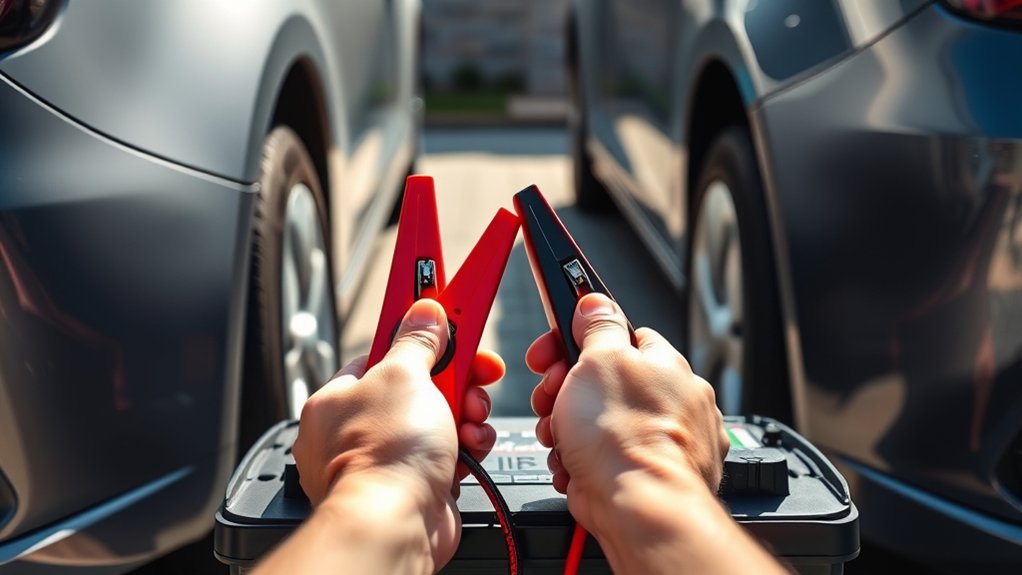
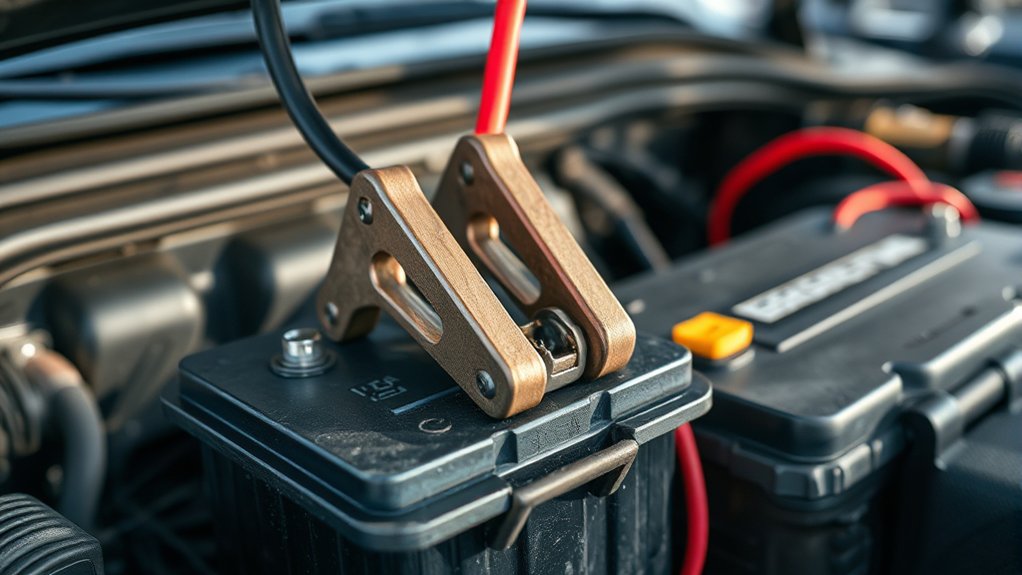
One effective way to jump-start your car battery without a charger is by using jumper cables and a second vehicle with a charged battery. First, position the two vehicles close but not touching, ensuring both ignitions are off. Attach the red (positive) clamp to the dead battery’s positive terminal, then connect the other red clamp to the live battery’s positive terminal.
Next, secure the black (negative) clamp to the live battery’s negative terminal. For safety considerations, connect the remaining black clamp to an unpainted metal surface on the dead vehicle, away from the battery, to prevent sparks. Once connections are secure, start the donor vehicle and let it run for several minutes.
Attempt to start the dead vehicle. Follow jump starting basics carefully to avoid electrical damage or injury.
How to Charge Your Car Battery Using Household Items
Wondering how to charge your car battery without specialized equipment? You can use household improvisation by creating a simple charging setup. First, gather a 12-volt DC power source, such as several AA batteries connected in series to match the car battery’s voltage.
Use insulated wires with alligator clips to connect the positive terminal of your makeshift battery pack to the car battery’s positive terminal, and the negative to negative. Maintain safe handling by wearing gloves and ensuring no metal contacts create a short circuit.
Monitor the battery voltage with a multimeter, charging in short intervals to prevent overheating. This method provides a slow, controlled charge but requires caution. Improper connections or overcharging can damage your battery or cause hazards.
How to Charge Your Car Battery With Another Vehicle
How exactly do you charge your car battery using another vehicle? First, position both vehicles close but not touching, ensuring both ignitions are off. Connect the positive terminal of your dead battery to the positive terminal of the donor battery using jumper cables or a jumper cables alternative like heavy-duty alligator clips.
Then, attach the negative terminal of the donor battery to an unpainted metal surface on your car’s engine block to minimize sparks. Start the working vehicle and let it run for about 10-15 minutes. This charge timing allows your battery to accumulate sufficient power.
Keep safety considerations paramount: wear gloves, avoid touching terminals simultaneously, and never lean over the battery. If jumper cables aren’t available, consider portable power sources designed for jump-starting as a safer, efficient alternative.
Battery Maintenance Tips Without a Charger
After charging your battery using another vehicle, maintaining it properly without a charger can extend its lifespan and reliability. First, inspect the battery terminals regularly for corrosion; clean them with a baking soda solution and a wire brush to ensure optimal conductivity.
Next, check the electrolyte levels if you have a non-sealed battery, topping off with distilled water as necessary to prevent damage. Avoid leaving your vehicle unused for extended periods, as discharge can reduce battery lifespan.
Implement charging safety by disconnecting the battery cables when performing maintenance and working in a well-ventilated area to prevent gas buildup. Lastly, periodically start and run your engine for at least 15 minutes to allow the alternator to recharge the battery naturally, preserving its charge and maximizing battery lifespan without a dedicated charger.
What to Do When DIY Charging Fails
What steps should you take if your attempts to charge the car battery yourself don’t work? First, recognize common diy charging pitfalls such as poor cable connections, insufficient power sources, or a severely damaged battery.
When troubleshooting failures, methodically verify each component involved in the charging process. If DIY efforts fail, follow these steps:
- Double-check all cable connections for corrosion or looseness.
- Test the battery voltage with a multimeter to assess charge level.
- Inspect the battery for physical damage or leakage.
- Consult a professional mechanic or use a proper battery charger for accurate diagnostics.
Frequently Asked Questions
How Long Does It Take to Fully Charge a Car Battery Without a Charger?
Charging a car battery without a charger typically takes several hours to days, depending on your method.
Can Extreme Weather Affect Car Battery Charging Without a Charger?
Extreme weather acts like a stubborn gatekeeper, imposing charging limitations on your battery. Cold slows chemical reactions, reducing charge acceptance, while heat accelerates self-discharge.
You’ll need to adjust your method and timing carefully to compensate.
Is It Safe to Charge a Car Battery Indoors Without a Charger?
It’s generally unsafe to charge a car battery indoors without proper ventilation due to discharging risk and potential gas buildup. You must guarantee excellent indoor ventilation to avoid hazardous fumes and minimize discharging risk during the process.
What Chemicals Are in a Car Battery That Affect Charging?
Isn’t it delightful that sulfuric acid and lead plates dominate your car battery’s chemistry overview? You’ll want to strictly follow safety protocols, as these chemicals react during charging, producing hazardous gases and risking corrosion if mishandled.
How Do I Dispose of an Old Car Battery Safely?
You should dispose of an old car battery safely by taking it to a certified recycling center or automotive store. These facilities follow precise protocols for recycling options, preventing hazardous chemical contamination and ensuring environmental compliance.
Conclusion
Charging a car battery without a charger demands precision and caution—one wrong move could feel like igniting a volcano. Always prioritize safety: connect terminals correctly, avoid sparks, and never work in wet conditions.
Using another vehicle or household items can provide a temporary boost, but don’t rely on these methods long-term. If you encounter resistance or leakage, stop immediately and seek professional help.
Proper maintenance is key to avoiding these urgent situations altogether. When you find yourself needing to charge a car battery without a charger, remember that safety and care are paramount.