How to Dispose of Oil Filter
Just like properly handling hazardous materials in a lab, disposing of an oil filter requires careful steps to prevent contamination.
Disposing of an oil filter correctly is crucial because you can’t simply toss it in the trash; the residual oil inside poses environmental risks.
To avoid fines and pollution, you need to drain it thoroughly, store it correctly, and find an approved recycling facility.
But how exactly do you prepare and transport your used oil filter to meet safety and legal standards?
Key Takeaways
- Drain residual oil from the used filter by puncturing and gravity draining for at least 12 hours before disposal.
- Store drained filters in sealed, leak-proof containers to prevent environmental contamination during transport.
- Do not throw oil filters in regular trash due to hazardous residual oil and legal restrictions.
- Dispose of filters at certified recycling centers, automotive shops, hazardous waste facilities, or manufacturer take-back programs.
- Check and follow local disposal regulations and guidelines to ensure proper, environmentally safe oil filter disposal.
Why Proper Oil Filter Disposal Matters
Proper oil filter disposal prevents environmental contamination and complies with regulatory standards. When you handle used oil filters, you must consider oil aging, as residual oil inside the filter degrades and poses environmental hazards if leaked. You should drain the filter thoroughly to minimize leftover oil before disposal.
Additionally, filter branding matters because some manufacturers design filters with recyclable materials or specific disposal instructions; always check the branding for proper handling guidelines. Improper disposal can lead to soil and water contamination due to oil seepage from the filter’s internal components.
Can You Throw Oil Filters in the Regular Trash?
Why should you avoid throwing oil filters in the regular trash? Oil filters contain residual oil, which classifies them as hazardous waste under many local regulations. Disposal myths often suggest that tossing them in the trash or using home burning is acceptable, but these practices risk environmental contamination and violate waste management laws.
You should never dispose of oil filters with regular household refuse because landfill leakage can pollute soil and groundwater. Home burning is equally hazardous, releasing toxic fumes and pollutants into the air. Instead, follow proper collection protocols by taking used filters to designated recycling centers or hazardous waste facilities.
This ensures safe handling, prevents environmental damage, and complies with regulatory standards, making proper disposal both a responsible and necessary step.
How to Drain Oil From Your Used Oil Filter Safely
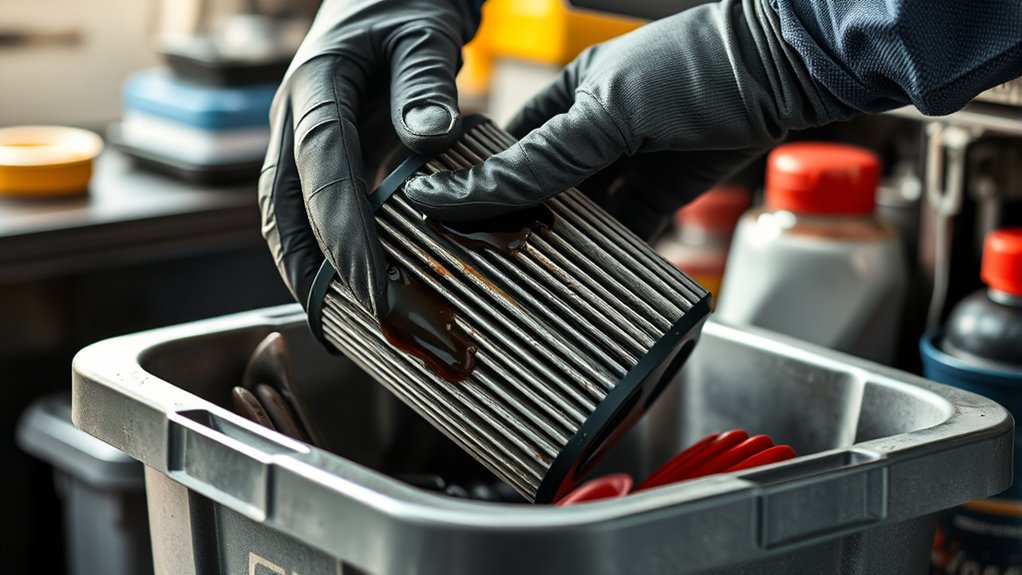
Before taking your used oil filter to a recycling center, you need to drain the residual oil to minimize environmental hazards and meet disposal requirements. Start by puncturing the filter’s dome end with a puncture tool or screwdriver to create drainage holes.
Always drain residual oil from your used filter by puncturing the dome end before recycling.
Use gravity draining techniques by placing the filter upside down over a drain pan or oil collection container. Allow it to drain for at least 12 hours to ensure maximum oil removal.
When collecting the drained oil, always use a container designed for used oil to maintain container safety and prevent leaks. Seal the container immediately after draining.
Avoid squeezing or shaking the filter, as this can cause spills. Following these draining techniques ensures safe handling and prepares the filter for proper recycling or disposal.
Where Can You Recycle Used Oil Filters?
You can recycle used oil filters at local recycling centers equipped to handle automotive waste. Many automotive service shops also accept filters for proper disposal.
Additionally, hazardous waste facilities are authorized to process oil filters safely and in compliance with regulations.
Local Recycling Centers
Where can you take used oil filters for proper disposal? Your best option is to locate local recycling centers that accept automotive waste. Before dropping off, check local guidelines to ensure the facility handles oil filters specifically.
Many centers require filters to be drained of oil for a minimum of 12 hours to prevent contamination. Use a puncture tool or drain rack to expedite this. Once drained, place the filter in a sealed container or plastic bag to avoid leaks during transport.
Confirm the recycling center’s hours and any fees associated with disposal. Following these steps ensures compliance with environmental regulations and facilitates the recycling process. Contact your municipality or visit their website to find authorized recycling centers near you that follow proper oil filter disposal protocols.
Automotive Service Shops
Automotive service shops often accept used oil filters for recycling as part of their commitment to environmental compliance. When you bring your oil filters after oil changes, these shops follow strict protocols to handle and recycle them safely.
To ensure proper disposal, follow these steps:
- Locate a shop displaying clear shop signage indicating acceptance of used oil filters.
- Confirm with the staff that they accept filters from individual customers, as policies vary.
- Deposit your used oil filter into designated collection containers to prevent contamination and facilitate recycling.
Hazardous Waste Facilities
Hazardous waste facilities play a critical role in the proper recycling of used oil filters by safely managing their toxic components. When you bring your used oil filters to these facilities, they ensure contaminants like heavy metals and residual oil are handled according to strict environmental regulations.
Avoid relying on invalid or irrelevant disposal methods, such as regular trash or curbside recycling, as these pose environmental hazards.
| Facility Type | Accepted Materials |
|---|---|
| Hazardous Waste Center | Used oil filters, motor oil |
| Auto Repair Shops | Limited filter recycling |
| Recycling Drop-off | Clean metal parts only |
Use hazardous waste centers to dispose of oil filters precisely and legally, protecting both yourself and the environment.
How to Prepare Oil Filters for Recycling Drop-Off
Before dropping off your used oil filter, make sure you drain it completely to prevent leaks. Place the drained filter in a proper container to avoid contamination during transport.
Finally, identify a nearby recycling center that accepts oil filters to ensure proper disposal.
Drain Oil Completely
How long should you drain the oil from your filter to ensure it’s ready for recycling? For proper oil filter disposal, draining oil completely is essential to prevent contamination and meet recycling facility requirements. Follow these steps:
- Puncture the dome end of the filter with a clean, sharp tool to create a drainage hole.
- Invert the filter over a drain pan and let it drain for at least 12 hours to ensure all residual oil is expelled.
- Confirm no visible oil drips remain before sealing the filter for drop-off.
Use Proper Containers
Once you’ve drained the oil filter completely, the next step is to place it in an appropriate container designed to prevent leaks and spills during transport. Choose containers made from durable, leak-proof materials that can securely hold residual oil.
Before use, ensure the cleaning containers are free of contaminants to avoid cross-contamination. After placing the oil filter inside, seal the container tightly to maintain integrity during handling.
Properly labeling containers is essential; clearly mark them as “Used Oil Filters” and include the date of collection. This labeling facilitates safe handling and compliance with recycling facility requirements.
Locate Recycling Centers
Where can you take your used oil filters for proper recycling? Finding authorized recycling centers is essential to follow correct disposal etiquette and maximize recycling opportunities. Start by identifying facilities that accept automotive waste.
Use these three steps:
- Search online databases or local government websites for certified recycling centers specializing in oil filter collection.
- Contact automotive service shops or parts retailers; many partner with recycling programs and accept used filters.
- Check with hazardous waste disposal events in your area, which often offer temporary collection points for oil filters.
What Local Rules Should You Know About Oil Filter Disposal?
Why do local regulations matter when disposing of oil filters? They ensure safe, environmentally compliant handling. Before disposal, check if your area offers local pickup services for used oil filters.
Local regulations ensure safe, eco-friendly oil filter disposal—check for local pickup services before discarding.
These programs often require you to drain the filter completely and store it in approved containers. Avoid buried disposal, as many jurisdictions prohibit it due to soil contamination risks. Some regions mandate crushing the filter to remove residual oil before recycling.
Confirm specific requirements by contacting your local waste management authority or environmental agency. Following these rules prevents fines and environmental harm. Always document your disposal process if required, and never mix oil filters with regular trash.
Adhering to your local guidelines guarantees responsible disposal aligned with regulatory standards.
Other Ways to Dispose of Oil Filters Safely
Following local disposal regulations is just one method to handle oil filters responsibly. You can explore other safe options to minimize environmental impact. Consider these eco friendly alternatives:
- Manufacturer Take Back Programs: Contact the oil filter manufacturer to see if they offer take back services. This ensures filters are processed according to industry standards.
- Specialized Recycling Facilities: Use certified recyclers equipped to drain residual oil and recover metal components safely, reducing landfill waste.
- Community Hazardous Waste Collection Events: Participate in local events designed to collect and dispose of automotive fluids and parts properly.
Tips for Reducing Oil Filter Waste
Minimize oil filter waste by selecting high-quality, reusable filters and adhering to recommended oil change intervals. When replacing filters, remove residual oil by draining thoroughly and use appropriate cleaning solvents to clean the filter housing and oil filter gaskets.
Avoid discarding oil filter gaskets unnecessarily; inspect and reuse them when intact to reduce waste. Store used filters in sealed containers to prevent leakage before proper disposal or recycling. Consider purchasing filters made with recyclable materials to facilitate eco-friendly processing.
Regularly inspect your vehicle’s oil system to prevent premature filter clogging, extending filter life. By following these procedural steps, you’ll reduce environmental impact and manage oil filter waste efficiently, ensuring compliance with local disposal regulations and promoting sustainable automotive maintenance.
Frequently Asked Questions
How Often Should I Change My Oil Filter?
You should change your oil filter every 3,000 to 7,500 miles, depending on your vehicle. Always follow oil filter recycling guidelines and disposal regulations to prevent environmental contamination and comply with local laws.
Can Oil Filters Be Reused After Cleaning?
You can’t rely on oil filter reuse after cleaning; cleaning limitations prevent full debris removal, compromising filtration. Always replace oil filters to ensure engine protection, maintain oil flow, and avoid contamination risks caused by incomplete cleaning processes.
What Are the Signs of a Faulty Oil Filter?
You’ll notice faulty filter signals like low oil pressure, engine overheating, and unusual engine noises. Warning signs also include dirty exhaust smoke and reduced engine performance.
Regularly inspect to catch these early and prevent damage.
Does the Type of Vehicle Affect Oil Filter Disposal?
Of course, every vehicle’s oil filter disposal differs because of varying vehicle regulations. You’ll need to follow specific disposal methods based on your vehicle type.
This ensures compliance and environmental safety through precise, standardized procedures.
Are There Any Environmental Benefits to Using Synthetic Oil Filters?
Yes, synthetic filters offer environmental benefits by enhancing filtration efficiency, reducing oil contamination, and extending filter life.
You’ll minimize waste generation and lower harmful emissions, making synthetic filters a more sustainable choice in vehicle maintenance.
Conclusion
Properly disposing of your oil filter prevents environmental harm and complies with regulations. For example, a local auto shop cut contamination by draining filters 12 hours before storing them in sealed containers. They then used certified recyclers to handle the waste responsibly.
You should do the same: puncture the dome end, drain completely, and transport filters in leak-proof containers. Following these steps ensures metal recycling and oil recovery.
By following proper oil filter disposal methods, you protect water sources and reduce hazardous waste effectively.