
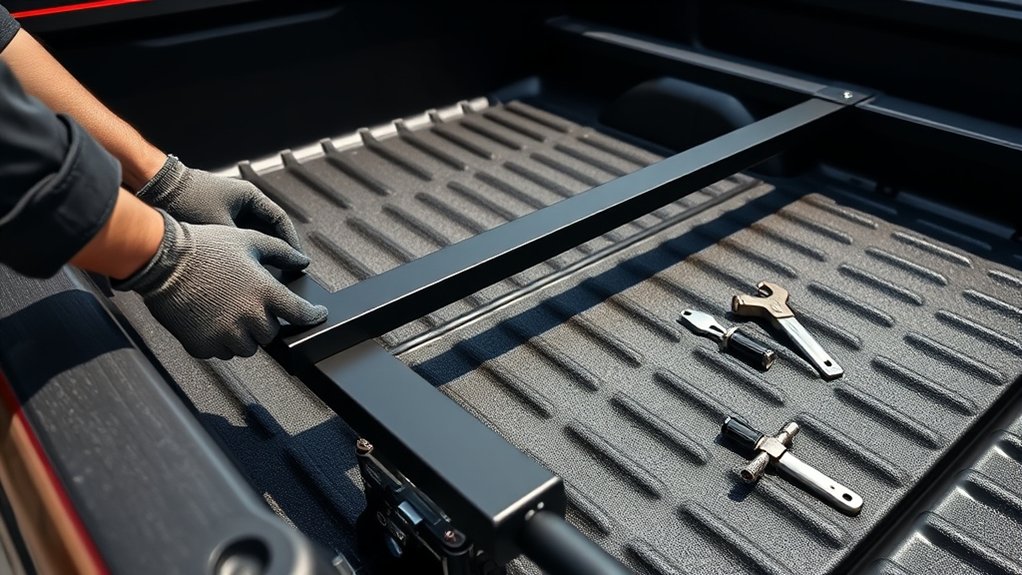
How to Install Tonneau Cover With Bed Liner
Imagine you’ve just added a spray-on bed liner to your truck and now want to install a tonneau cover with bed liner without compromising fit or protection. You’ll need to carefully check compatibility, measure precisely, and account for the liner’s thickness during installation.
Skipping these steps can lead to poor sealing or damage. Understanding the correct method to attach rails and secure the cover ensures a tight, durable fit—details that are essential before you proceed.
Key Takeaways
- Confirm tonneau cover compatibility with your specific bed liner by checking product specifications and measurements.
- Measure the truck bed with the liner installed, marking exact mounting points using a fine-tip marker for precise alignment.
- Clean and dry the bed liner thoroughly before installing rails, ensuring no debris or moisture compromises the seal.
- Attach mounting rails flush with bed edges using proper screws and torque, avoiding punctures or damage to the liner.
- After securing rails, align and snap the cover in place, checking locks and seams for a uniform, watertight seal.
How to Choose a Tonneau Cover Compatible With Bed Liners
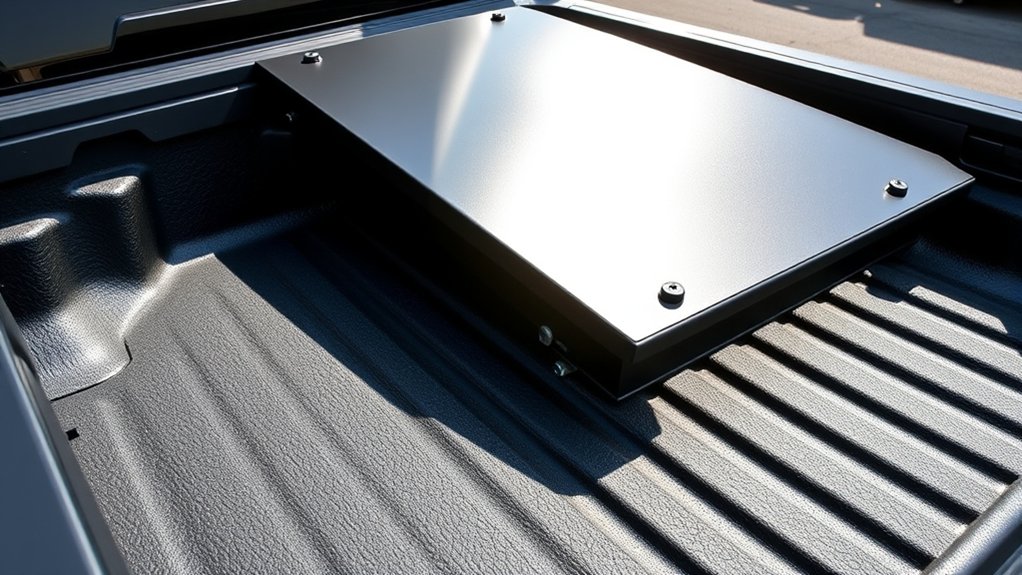
How do you guarantee your tonneau cover fits seamlessly over a bed liner? Start by choosing compatibility carefully. Not all tonneau covers are designed to accommodate bed liners, so consult product specifications to confirm suitability.
Measure your truck bed’s dimensions with the liner installed, considering thickness and edge contours. Then, narrow your options to covers explicitly listing compatibility with bed liners. Next, verify fit by comparing manufacturer measurements and installation requirements against your bed liner profile.
Look for adjustable mounting systems or flexible seals that accommodate liners without gaps or pressure points. Avoid covers requiring liner removal or modification. By methodically choosing compatibility and verifying fit, you ensure a secure, weatherproof seal that maintains both protection and aesthetics, preventing issues during installation or use.
Tools Needed for Installing a Cover Over a Bed Liner
Which tools will you need to install a tonneau cover over your bed liner efficiently? First, gather essential items: a cordless drill with appropriate bits, a torque wrench for precise fastening, and a rubber mallet to avoid damaging surfaces.
You’ll also require a tape measure to ensure proper alignment and a level to maintain even installation. Discussion idea 1 involves selecting tools that accommodate the bed liner’s texture without compromising the cover’s fit.
Use a tape measure and level for precise alignment, ensuring the bed liner’s texture doesn’t affect the cover’s fit.
Discussion idea 2 focuses on using non-invasive tools to prevent punctures or scratches during installation. Avoid power tools that may apply excessive force or create misalignment.
Having these tools ready ensures a streamlined, damage-free process, setting the stage for a secure, flush-mounted tonneau cover over your bed liner.
Preparing Your Truck Bed and Bed Liner for Installation
When should you begin preparing your truck bed and bed liner for the tonneau cover installation? Start immediately after confirming bed liner compatibility with your tonneau cover model. Clean the truck bed thoroughly to remove debris, dust, and moisture that can affect cover fitment.
Inspect the bed liner for any damage or warping that might interfere with mounting.
| Step | Action |
|---|---|
| 1. Confirm compatibility | Verify bed liner matches tonneau model |
| 2. Clean surface | Remove dirt, dust, and moisture |
| 3. Inspect bed liner | Check for damage or warping |
| 4. Dry thoroughly | Ensure bed liner surface is completely dry |
| 5. Test fit cover | Place cover to check alignment and fitment |
These steps ensure a secure, precise installation and optimal cover performance.
Measuring and Marking Mounting Points on the Bed Liner
You’ll start by using a tape measure to pinpoint exact mounting locations on the bed liner, ensuring symmetry and proper alignment. Select a fine-tip marker or pencil to make clear, precise marks without damaging the liner’s surface.
Confirm that all points line up with the tonneau cover’s hardware specifications before proceeding.
Accurate Measurement Techniques
How do you ensure your tonneau cover mounts securely on a bed liner without compromising fit or function? Measurement accuracy is critical to guarantee mount compatibility and avoid installation errors. Follow these steps methodically:
- Use a calibrated tape measure to precisely determine the distance between the bed liner edges and the intended mounting points.
- Cross-reference these measurements with the tonneau cover’s installation guide to confirm compatibility and proper alignment.
- Double-check all dimensions before marking to prevent misplacement that could affect sealing and structural integrity.
Marking Tools and Materials
Which marking tools and materials deliver the highest accuracy for mounting point layout on your bed liner? Start by using marking tape to create clear, visible guides without damaging the surface.
A stud finder helps locate structural points beneath the liner, ensuring your mounts align with solid support. Before marking, employ a sanding block to lightly scuff the tape area, enhancing adhesion and preventing slippage.
For hard-to-see spots, consider mirror placement to view angles behind the bed liner, aiding precise point identification. Use a fine-tip marker to transfer measurements onto the tape, maintaining sharp, accurate marks.
This combination of tools and materials ensures your mounting points are both exact and securely positioned, setting a reliable foundation for the tonneau cover installation.
Aligning Points on Bed Liner
Where exactly should you place the mounting points to guarantee a secure fit for your tonneau cover? Precise measurement and marking are critical to maintain alignment consistency across the bed liner. Follow these steps:
- Measure the exact manufacturer-recommended distances from the truck bed edges, ensuring symmetry on both sides.
- Mark the mounting points lightly with a fine-tip marker, double-checking measurements to avoid errors.
- Inspect the surface cure of the bed liner; ensure it’s fully hardened to prevent shifting or misalignment during installation.
Safely Attaching Mounting Rails Over Your Bed Liner
Before securing the mounting rails, make sure you clean the bed liner surface thoroughly to remove any dust, dirt, or debris that could compromise adhesion or alignment. Use a mild detergent and a soft brush, then dry completely.
Next, position the mounting rails carefully according to your alignment marks, ensuring they sit flush without gaps. When fastening, respect bed liner ethics by avoiding excessive force that could damage the liner’s protective coating.
Use the recommended screws and torque specifications to prevent stripping or cracking. Confirm that the rails run parallel to the bed edges to maintain structural integrity.
Finally, double-check that no mounting hardware punctures or compresses the liner beyond acceptable limits. This methodical approach guarantees a secure, damage-free installation of your mounting rails over the bed liner.
Securing Your Tonneau Cover and Checking the Fit
How do you guarantee your tonneau cover fits securely and functions properly after mounting the rails? Follow these steps carefully to address safety concerns and maintain aesthetic appeal:
- Align and Snap: Position the cover onto the rails, ensuring it snaps firmly into place without gaps or misalignment. This prevents movement and secures the cover.
- Lock Mechanism Check: Engage any locks or clamps and verify they hold the cover tightly. Loose locks compromise safety and detract from the cover’s sleek appearance.
- Visual and Physical Inspection: Inspect edges and seams for uniform contact with the bed liner. Confirm no lifting or uneven areas exist, preserving both function and aesthetics.
These measures ensure your tonneau cover is securely installed, eliminating safety risks while enhancing the truck’s overall look.
Adjusting and Sealing Your Tonneau Cover to Keep Water Out
Why does sealing your tonneau cover properly matter? Proper sealing prevents water intrusion, protecting your cargo and bed liner from damage. Start by inspecting all seals for gaps or misalignment.
Adjusting seals involves tightening clamps or repositioning weatherstripping to ensure a snug fit along the cover’s edges. Use a soft rubber mallet if necessary to seat seals firmly without damaging them.
Check the cover’s tension and adjust if it sags, as slack can allow water to seep in. After adjustments, test for leaks by spraying water over the cover and inspecting the bed liner area.
Address any detected water intrusion immediately by readjusting seals or replacing damaged components. This methodical approach ensures a watertight seal, extending the life of both your tonneau cover and bed liner.
Maintaining Your Tonneau Cover and Bed Liner for Longevity
You should clean your tonneau cover and bed liner regularly using appropriate, non-abrasive products to prevent buildup. Apply protective treatments to shield them from UV rays, rain, and extreme temperatures.
Additionally, inspect both components frequently for signs of wear or damage to address issues promptly.
Regular Cleaning Tips
When should you clean your tonneau cover and bed liner to guarantee maximum durability? Regular cleaning prevents buildup that can degrade materials over time. Follow these precise steps to maintain both components effectively:
- Schedule cleaning every two weeks or after heavy dirt exposure to avoid stubborn residue.
- Use a mild detergent with warm water; avoid harsh chemicals that can damage surfaces or cause two word ideas like “material fatigue.”
- Rinse thoroughly with low-pressure water to remove unrelated topics such as salt or debris without forcing contaminants into seams.
Protecting Against Weather
Maintaining regular cleaning routines lays a solid foundation for your tonneau cover and bed liner’s lifespan, but shielding them from weather elements further extends their durability. Implement weatherproofing strategies such as applying UV-resistant coatings and using waterproof sprays to prevent material degradation.
Pay close attention to UV exposure considerations. Prolonged sunlight accelerates fading and brittleness. Store your vehicle in shaded areas when possible to minimize damage.
| Weather Element | Protective Measure |
|---|---|
| Sun (UV Rays) | UV-resistant coatings |
| Rain | Waterproof sprays |
| Snow/Ice | Regular removal, avoid buildup |
Consistent application of these methods ensures your cover and liner stay intact, maintaining functionality and appearance longer.
Inspecting for Damage
How often should you inspect your tonneau cover and bed liner to catch damage early? Establish consistent inspection routines, ideally monthly, to identify wear or defects before they worsen.
Pay special attention if you use uncommon bed liner types, as they may have unique vulnerabilities.
Follow these steps during your inspection:
- Examine the tonneau cover’s seals and hinges for cracks, tears, or rust.
- Inspect the bed liner surface for abrasions, lifting, or chemical damage.
- Check attachment points and fasteners for looseness or corrosion.
Document findings and address minor issues promptly to prevent costly repairs. Regular, methodical inspections ensure both components maintain their protective qualities and extend their functional lifespan.
Frequently Asked Questions
Can a Tonneau Cover Improve My Truck’s Fuel Efficiency?
Yes, a tonneau cover can improve your truck’s fuel efficiency by reducing aerodynamic drag, but don’t fall for fuel economy myths. It mainly helps when cargo density is low, smoothing airflow over the bed for better mileage.
Will a Tonneau Cover Fit on All Truck Bed Sizes?
No, a tonneau cover won’t fit all truck bed sizes due to incompatible bed sizes and fitment variability.
You’ll need to verify your truck’s exact dimensions and choose a cover designed specifically for that size to ensure proper installation.
Are Tonneau Covers Theft-Resistant or Lockable?
You might assume all tonneau covers offer theft resistance, but lockability varies by model. During installation, ensure secure mounting to maintain this feature.
Proper installation also enhances fuel efficiency by improving aerodynamics systematically.
How Do Tonneau Covers Affect Truck Bed Cargo Capacity?
You’ll find that tonneau covers slightly reduce your truck bed capacity by limiting vertical space but improve fuel economy impact by reducing aerodynamic drag, making your overall cargo handling more efficient without substantially compromising storage volume.
Can I Install a Tonneau Cover Without Professional Help?
Certainly, you can confidently commit to a DIY installation. Weigh the pros and cons: you’ll save money and learn skills, but must meticulously measure and follow instructions to avoid damage or misalignment.
This ensures a secure, seamless setup.
Conclusion
Now that you’ve installed your tonneau cover over the bed liner with precision, you’re set to protect your cargo like a knight guarding his castle. Remember to regularly inspect seals and fasteners, clean the bed surface, and maintain a watertight fit to ensure longevity.
Staying methodical with maintenance will keep your cover secure and your liner pristine, preventing damage and water intrusion. Your truck bed is now ready for any adventure, old-school or new.
By following these steps, you ensure your tonneau cover with bed liner installation remains durable and effective for years to come.