How Long Is a Ford f150
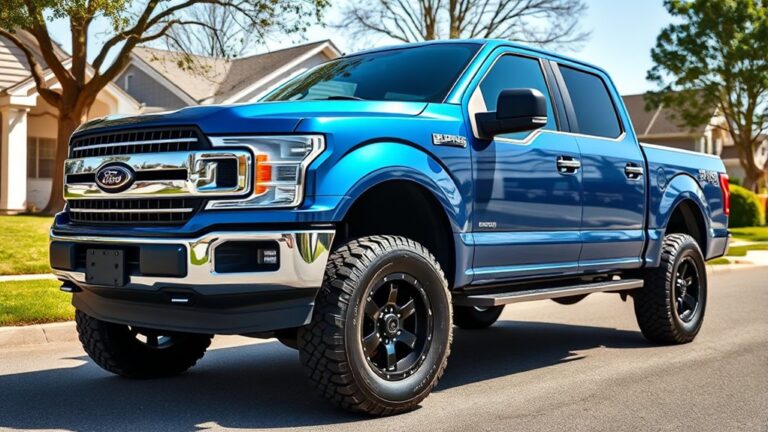
Imagine parking a Ford F-150, a vehicle that stretches nearly 21 feet—about the length of a small bus. That’s the reality with many Ford F-150 models, whose length varies considerably depending on the year, cab style, and bed size.
Knowing these dimensions is essential, especially when considering maneuverability and cargo capacity. Understanding how these factors influence overall length can help you determine which F-150 configuration suits your needs best.
Key Takeaways
- Ford F-150 lengths range from approximately 203 to 250 inches depending on model year and cab/bed configuration.
- Early 2000s F-150s are shorter, typically 203 to 231 inches long.
- Recent models (2015 onward) measure between 209 and 250 inches in length.
- Cab style and bed length directly affect overall truck length and maneuverability.
- Shorter beds (5.5 feet) improve agility and parking, while longer beds increase cargo capacity but add length.
How Long Is the Ford F-150? Lengths by Model Year
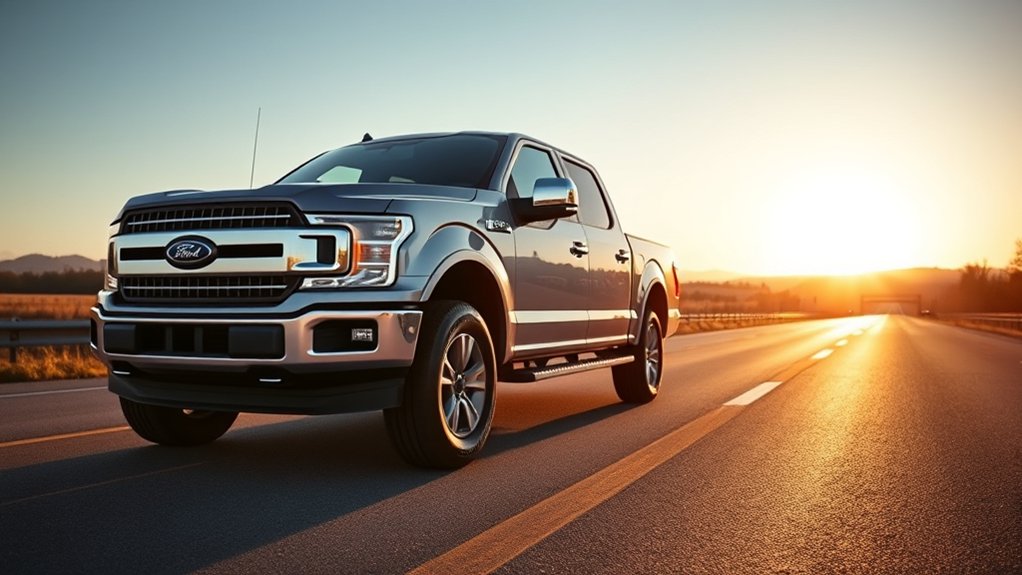
How long is the Ford F-150 across its various model years? The length of the F-150 varies depending on the model year and specific configuration.
Early 2000s models typically range from about 203 to 231 inches, reflecting different cab and bed combinations. Recent models, especially from 2015 onward, generally measure between 209 and 250 inches.
Ford F-150 lengths vary from 203 to 250 inches, depending on year and cab/bed configurations.
This dimensions comparison highlights how the truck’s length adapts to accommodate features like extended cabs and longer beds. These variations also influence fuel economy, as longer, heavier trucks often experience reduced efficiency.
Understanding these length differences is pivotal when considering maneuverability, payload capacity, and fuel consumption for your specific F-150 model year. By analyzing these technical dimensions, you can better assess how the truck fits your needs.
How to Measure Your Ford F-150 Accurately
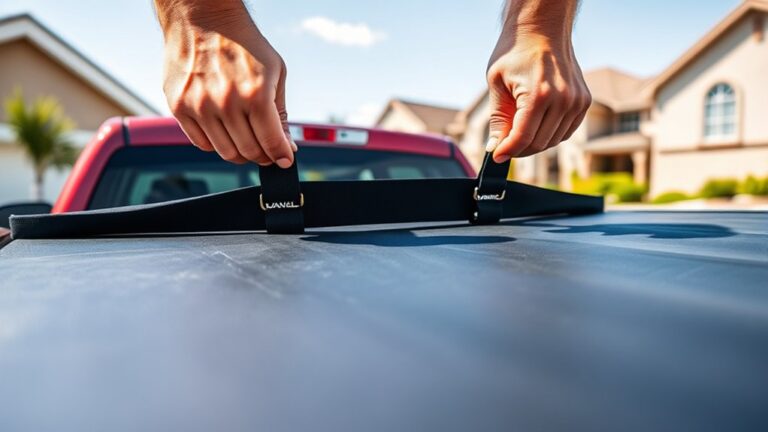
To measure your Ford F-150 accurately, you’ll need a tape measure, a level surface, and a helper for precision. Start by measuring from the front bumper to the rear, ensuring the tape stays straight and aligned with the vehicle’s centerline.
Avoid common errors like measuring on uneven ground or including accessories that extend beyond the factory body.
Required Measuring Tools
Which tools do you need to measure your Ford F-150 with precision? Ensuring measurement accuracy is crucial, especially when addressing parking challenges or fitting your truck in confined spaces. You’ll want reliable equipment to get exact dimensions.
- Measuring Tape: A sturdy, retractable tape measure at least 25 feet long allows you to capture the full length without repositioning, minimizing errors.
- Laser Distance Measurer: For enhanced precision, a laser distance device offers quick, accurate readings, reducing human error during measurement.
- Chalk or Markers: Use these to mark start and end points clearly on the ground or vehicle, ensuring consistent reference points throughout the process.
Using these tools effectively ensures your measurements are precise, helping you navigate parking challenges and maintain optimal awareness of your F-150’s size.
Step-by-Step Measurement Process
Where should you begin when measuring your Ford F-150 to ensure accuracy? Start by parking the truck on a level surface and engaging the parking brake. Use a tape measure to record the overall length from the front-most point of the bumper to the rear-most edge of the tailgate.
Measure carefully along the centerline to maintain consistency. Next, note dimensions like wheelbase and bed length for detailed length comparison with other models or trims. Document each measurement precisely.
This approach helps assess off road suitability, as length impacts maneuverability and clearance. By following this step-by-step process, you’ll obtain exact data essential for evaluating your F-150’s size relative to your needs and terrain challenges without guesswork.
Common Measurement Mistakes
Accurately measuring your Ford F-150 involves more than following steps; common mistakes can easily skew your results. To avoid inaccuracies, pay attention to these frequent pitfalls:
1. Neglecting tool calibration
Measuring devices must be calibrated regularly to ensure precision. An uncalibrated tape or laser measure can introduce errors.
2. Incorrect placement of measuring tools
Position your tape or laser at the exact vehicle endpoints, avoiding obstructions like bumpers or accessories that alter true length.
3. Measuring on uneven surfaces
Conduct measurements on flat, level ground. Slopes or uneven terrain can distort the vehicle’s perceived length.
How Ford F-150 Cab Styles Affect Truck Length
You’ll notice that the Ford F-150’s overall length varies significantly depending on the cab style you choose. Regular, SuperCab, and SuperCrew configurations each add different lengths to the truck’s chassis.
Understanding these differences is crucial for accurately assessing the vehicle’s total size and maneuverability.
Cab Style Length Differences
How do different cab styles influence the overall length of the Ford F-150? The cab style directly affects the truck’s total length by changing the cabin size and bed length options available to you. Here’s how the variations break down:
- Regular Cab: Offers the shortest overall length with a larger bed length, typically 8 feet, ideal for maximizing cargo space.
- SuperCab: Adds rear seating with smaller doors, increasing cabin length and slightly reducing bed length options to 6.5 or 8 feet.
- SuperCrew: Features full four-door access and the largest cab interior, which shortens the maximum bed length to 5.5 or 6.5 feet, increasing overall truck length.
Understanding these cab style length differences helps you choose the Ford F-150 configuration that best suits your hauling and passenger needs.
Impact On Overall Size
What effect do cab styles have on the overall size of the Ford F-150? The choice between Regular, SuperCab, and SuperCrew considerably influences truck length and interior space.
For example, the SuperCrew extends overall length by up to 20 inches compared to the Regular Cab, affecting maneuverability and parking. This size increase may slightly reduce fuel efficiency due to added weight and aerodynamic drag.
When selecting a cab style, you’re balancing space needs with performance considerations. Additionally, cab styles can impact available color options, as some trims and configurations offer exclusive palettes.
Understanding how cab style changes affect length helps you make informed decisions about handling, fuel costs, and customization. Ultimately, your cab choice shapes the practical footprint and functionality of your Ford F-150.
How Bed Length Impacts Ford F-150 Overall Size
Why does the bed length matter when considering the overall size of a Ford F-150? The bed length directly influences the truck length and overall footprint. When you choose a longer bed, the truck length increases, affecting how the vehicle fits in your garage or job site.
Conversely, a shorter bed often pairs with a short wheelbase, making the truck more compact.
Consider these points:
- A longer bed extends the truck length, impacting cargo capacity and load distribution.
- A short wheelbase combined with a shorter bed improves maneuverability but reduces cargo space.
- Bed length adjustments affect weight balance, influencing handling dynamics and ride quality.
Understanding these technical aspects helps you pick the F-150 that best suits your size and functionality needs.
How the F-150’s Size Affects Parking and Maneuverability
Navigating tight parking spots and narrow streets challenges even experienced drivers, especially with a vehicle as sizable as the Ford F-150. Its length, often exceeding 230 inches depending on the model, requires you to be precise when maneuvering in urban navigation scenarios.
You’ll need to account for a larger turning radius compared to smaller vehicles, which can complicate parallel parking and tight cornering. Practicing proper parking etiquette becomes essential; leaving adequate space between vehicles ensures you and others can enter and exit without difficulty.
Additionally, using advanced driver-assist features like rearview cameras and parking sensors can substantially improve your ability to park safely and efficiently. Understanding these technical limitations helps you adapt your driving habits, maintaining safety and convenience in congested environments.
Which Ford F-150 Length Fits You Best?
How do you determine which Ford F-150 length suits your needs best? Focus on your primary use cases and technical factors.
- Daily driving and fuel economy: If you prioritize better fuel economy and easier parking, opt for the shorter 5.5-foot bed model. It’s lighter and more agile, reducing fuel consumption.
- Workload and cargo space: Choose the 6.5-foot or 8-foot beds for maximum cargo capacity, especially if you haul bulky equipment regularly. These longer lengths may slightly reduce fuel economy but enhance utility.
- Warranty coverage and maintenance: Check if your preferred length affects warranty terms or maintenance costs, as some configurations could have different coverage specifics.
Balancing these elements ensures your F-150 length aligns with your lifestyle and technical requirements efficiently.
Frequently Asked Questions
What Is the Ford F-150’s Towing Capacity?
You’ll find the Ford F-150’s towing capacity varies up to 14,000 pounds, depending on towing constraints and payload nuances.
Always check specific model specs to ensure safe, efficient hauling within those technical limits.
How Fuel-Efficient Is the Ford F-150?
You’ll find the Ford F-150’s fuel efficiency varies, typically around 20-25 MPG highway, debunking common fuel economy myths. Despite some highway efficiency concerns, its advanced engines and aerodynamics help optimize real-world fuel consumption effectively.
What Engine Options Are Available for the Ford F-150?
Imagine picking from a painter’s palette. Ford’s F-150 offers engine options like a 3.5L EcoBoost V6, 5.0L V8, and hybrid. Engine redundancy guarantees reliability across diverse trim levels and vibrant color variants.
How Much Does a Ford F-150 Weigh?
A Ford F-150 weighs between 4,000 to 5,700 pounds, depending on the model and configuration. Avoid irrelevant topics; focus on two word discussion ideas like “payload capacity” or “curb weight” for detailed, technical clarity.
What Safety Features Come With the Ford F-150?
You’ll find advanced airbags, lane-keeping assist, and pre-collision assist, all paired with sturdy cabin materials. Even discontinued trims featured these safety staples, ensuring consistent protection, enhanced control, and driver awareness throughout Ford F-150’s evolution.
Conclusion
When choosing your Ford F-150 length, remember that “measure twice, cut once” applies beyond carpentry. Understanding how cab styles and bed lengths affect overall size ensures you pick the right fit for your needs. Longer trucks offer more cargo space but can challenge parking, while shorter models improve maneuverability.
By accurately measuring and considering your daily use, you’ll make an informed decision that balances functionality with practicality. This approach will help you select the perfect Ford F-150 length for your specific driving and hauling demands.