How to Install Tonneau Cover Clamps
When installing tonneau cover clamps, you need to guarantee a secure and even fit to protect your truck bed and cover from damage. Proper placement and tightening of the clamps are critical to prevent leaks and maintain durability.
If you overlook key steps or use the wrong tools, you risk compromising the cover’s effectiveness. Understanding the precise process will help you avoid common pitfalls and achieve a reliable installation.
Following these guidelines ensures your tonneau cover clamps provide a strong hold and long-lasting protection for your truck bed.
Key Takeaways
- Clean and inspect truck bed and cover surfaces to ensure a secure, debris-free fit before clamp installation.
- Position clamps evenly along bed rails, starting with corners, ensuring no gaps between clamp, cover, and rail.
- Use proper torque specifications to tighten clamps incrementally, avoiding overtightening or looseness.
- Test clamp security by gently pulling the cover and performing water leak tests after adjustments.
- Regularly inspect and maintain clamps for wear, corrosion, and tightness to ensure long-term durability.
Why Proper Tonneau Cover Clamp Installation Matters
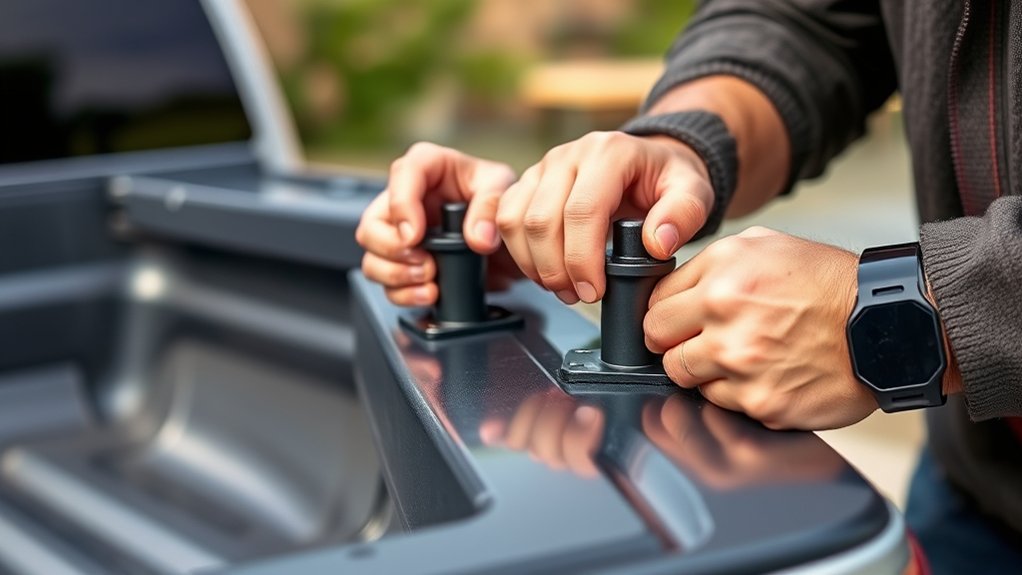
Proper installation of tonneau cover clamps ensures a secure, weather-tight fit that protects your truck bed from water, dust, and debris. When you install clamps correctly, you prevent premature wear, cover misalignment, and potential damage to both the cover and truck bed.
Avoid common installation pitfalls such as overtightening clamps, which can warp the cover, or leaving them too loose, risking cover displacement. Using accurate torque specifications and positioning clamps evenly distributes pressure, enhancing durability.
Considering these technical aspects will save you time and money. When exploring topic ideas for clamp installation, focus on precision and avoiding errors that compromise performance. By mastering proper installation techniques, you ensure your tonneau cover functions optimally, protecting your cargo under various weather conditions.
Gather Tools and Materials for Clamp Installation
Before you start, make sure you have all essential tools like screwdrivers, wrenches, and the specific clamps required for your tonneau cover. Gather the clamp materials and verify their compatibility with your truck bed.
Clear and prepare your workspace to ensure a smooth installation process.
Essential Tools Checklist
What tools do you need to install tonneau cover clamps efficiently? Start with a cordless drill equipped with the appropriate drill bits for quick, precise holes. Include a ratchet wrench with ergonomic handles to reduce hand fatigue during tightening. Tool ergonomics matter for extended work.
A tape measure ensures accurate clamp placement, while a rubber mallet helps seat clamps without damaging surfaces. Don’t forget safety glasses to protect your eyes from debris.
Quick tips: choose tools with comfortable grips and ensure your drill’s battery is fully charged to prevent interruptions. Assemble these essentials before starting to streamline your installation process and maintain precision throughout.
Having the right tools ready minimizes errors and speeds up your work, making your clamp installation smooth and efficient.
Required Clamp Materials
Which clamp materials do you need to guarantee a secure and lasting tonneau cover installation? Start with high-quality clamp materials designed for your truck model to guarantee proper fit and durability.
Typically, you’ll require sturdy metal clamps, often made from steel or aluminum, to resist corrosion and provide strong grip. Alongside clamps, gather the appropriate mounting hardware, such as bolts, nuts, washers, and screws that match the clamps’ specifications and your vehicle’s bed rails.
Using original or manufacturer-recommended mounting hardware prevents compatibility issues and guarantees optimal torque and stability. Avoid substitute materials that may weaken the installation.
Confirm all clamp materials are free from defects and compatible with your tonneau cover system. Having the correct clamp materials and mounting hardware ready streamlines installation and secures your tonneau cover firmly in place.
Preparing Your Workspace
A well-organized workspace guarantees a smooth clamp installation process for your tonneau cover. Start by clearing a flat, clean surface near your vehicle to lay out all required tools and materials.
Idea one: gather essential tools such as screwdrivers, a wrench set, and clamps specific to your tonneau cover model. Idea two: ensure you have all hardware components like screws, bolts, and rubber seals ready to avoid interruptions.
Arrange items logically to streamline access during installation. Proper lighting and ventilation will enhance precision and safety.
Double-check tool functionality before starting; malfunctioning equipment can delay the process. Preparing your workspace with these steps minimizes errors and maximizes efficiency, ensuring a secure and professional clamp installation.
Prepare Your Truck Bed and Cover for Installation
Before you begin installing the clamps, ensure your truck bed and tonneau cover are clean and free of debris. Use a soft cloth and mild cleaner to remove dust, dirt, and grease. This ensures a secure fit and prevents damage to surfaces.
Inspect the cover for any damage or wear that could affect clamp placement. Avoid two word ideas or subtopic irrelevant details here; focus strictly on preparation.
| Step | Tool Needed | Action |
|---|---|---|
| Clean Bed | Soft Cloth | Wipe down all surfaces |
| Clean Cover | Mild Cleaner | Remove grease and dust |
| Inspect Cover | Visual Check | Look for tears or deformities |
| Dry Surfaces | Dry Cloth | Ensure no moisture remains |
| Organize Clamps | None | Lay out clamps for easy access |
Position Your Clamps for the Best Fit
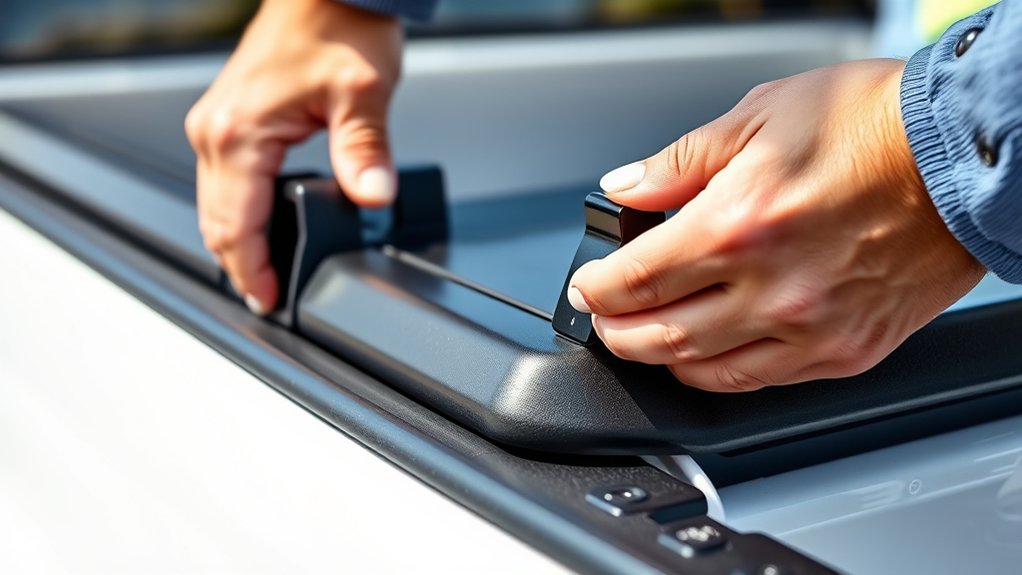
Position your clamps evenly along the truck bed rails to guarantee balanced pressure and a secure hold. Align each clamp so it grips both the cover and the rail tightly without gaps or misalignment.
This careful placement prevents movement and protects your cover from damage during use.
Clamp Placement Tips
Where should you place the clamps to guarantee a secure and even fit? Begin by positioning clamps evenly along the tonneau cover’s edges to maintain consistent tension. Focus on precise clamp alignment with the truck bed rail to prevent gaps and ensure the cover lays flat.
Place clamps near corners first, as these areas experience higher stress, then space the remaining clamps evenly between. Ensure each clamp’s non slip grip contacts the bed rail firmly to avoid movement during driving.
Avoid placing clamps too close to each other, which can cause uneven pressure and material deformation. Double-check that the clamp pads do not interfere with the cover’s sealing mechanism. Proper placement maximizes coverage, prevents damage, and maintains the cover’s functionality over time.
Ensuring Secure Fit
How tightly should you fasten the clamps to guarantee a secure fit without damaging the tonneau cover? Start by confirming clamp compatibility with your cover model to prevent material stress or failure.
Position the clamps evenly along the cover’s edge, ensuring they engage securely with the truck bed rail. Tighten each clamp incrementally, applying firm pressure but avoiding over-torquing, which can deform the cover or strip threads. Use a torque wrench if possible to maintain consistent tension.
Check that all clamps align flush and hold the cover taut without gaps. Maintaining installation safety means wearing gloves and working in a stable environment to avoid slips or damage.
Finally, inspect your work by gently pulling on the cover to confirm the clamps hold firmly without shifting.
Attach the Clamps to Your Truck Bed
When you attach the clamps to your truck bed, ensure each clamp aligns securely with the bed rails to provide a firm hold. Use proper adjustment techniques to position the clamps without damaging the rail or the clamp itself.
Check compatibility notes for your truck model to ensure the clamps fit correctly. Start by loosely placing the clamps, then tighten gradually, maintaining alignment.
Refer to the table below for torque settings and adjustment ranges:
| Clamp Model | Torque Setting (Nm) | Adjustment Range (mm) |
|---|---|---|
| TC-100 | 15 | 5-15 |
| TC-200 | 20 | 10-20 |
| TC-300 | 25 | 15-25 |
| TC-400 | 30 | 20-30 |
| TC-500 | 35 | 25-35 |
Proper attachment ensures durability and prevents slippage during use.
Test Your Tonneau Cover Clamps and Fix Common Problems
Why should you test your tonneau cover clamps immediately after installation? Performing a clip test ensures each clamp secures the cover tightly, preventing movement and potential damage.
Start by firmly pressing down on the cover near each clamp; if you notice any looseness or shifting, the clamp needs adjustment. Next, check for gaps that could cause leaks.
Use water to simulate rain and identify weak seals. If water penetrates, focus on a leak fix by tightening the clamps incrementally until the cover sits flush against the bed. Avoid overtightening, which can damage the clamp or cover.
Repeat the clip test and leak test after each adjustment to confirm proper sealing. Testing now saves you from costly repairs and maintains your tonneau cover’s durability and functionality.
Maintain and Adjust Your Clamps Over Time
Regularly checking your tonneau cover clamps after the initial installation helps maintain a secure fit and prevents wear-related issues. To maintain clamps effectively, inspect them for looseness, corrosion, or damage every few months.
Regularly inspect your tonneau cover clamps for looseness, corrosion, or damage to ensure a secure, lasting fit.
Clean the clamps and the mounting surface to remove dirt and debris that could impair grip. When you notice any looseness or shifting, adjust clamps promptly to restore proper tension.
Use a torque wrench to tighten bolts to the manufacturer’s specified values, ensuring even pressure without over-tightening. Periodic adjustment compensates for material expansion or contraction due to temperature changes.
If clamps show signs of wear or deformation, replace them immediately to avoid compromising your tonneau cover’s protection. By staying proactive, you ensure your clamps continue to secure the cover reliably over time.
Frequently Asked Questions
What Types of Tonneau Covers Work Best With Clamp Installations?
You’ll find soft roll-up and snap-fit tonneau covers work best with clamp installations. Their flexible designs match various types of clamps, simplifying installation methods and ensuring secure, adjustable fit without drilling or permanent modifications.
Can Tonneau Cover Clamps Cause Damage to My Truck Bed?
Yes, tonneau cover clamps can cause damage to bed surfaces if overtightened or improperly positioned. This may affect your truck’s appearance impact, so use protective pads and tighten clamps carefully to minimize risks and maintain aesthetics.
How Do I Choose the Right Clamps for My Tonneau Cover?
You’ll choose clamps by checking clamp sizing for your truck bed, ensuring proper bed clearance, and confirming material compatibility with your tonneau cover. Select clamps that offer tension adjustment to maintain a secure, damage-free attachment under various conditions.
Are Tonneau Cover Clamps Compatible With All Truck Models?
Only about 15% of trucks have incompatible models for tonneau cover clamps. You’ll find most clamps fit standard rails, but for incompatible models, you’ll need alternative fastening methods like bed rails or custom brackets to ensure secure installation.
Can I Install Clamps on a Tonneau Cover Without Professional Help?
Yes, you can install clamps yourself, but consider safety concerns and cost considerations. Improper installation risks damage or theft, impacting privacy concerns.
Follow precise instructions to ensure a secure, reliable fit without needing professional help.
Conclusion
Properly installing your tonneau cover clamps ensures a secure, weather-tight fit that protects your cargo and extends your cover’s lifespan. You might worry clamp installation is too complex or time-consuming, but following the right steps with the correct tools makes the process straightforward and efficient.
By positioning clamps evenly, tightening incrementally, and testing thoroughly, you’ll avoid common issues like leaks or loosening. Regular maintenance keeps your clamps functioning optimally, giving you reliable protection every time.
In conclusion, mastering how to install tonneau cover clamps correctly is key to maintaining a durable and secure cover that shields your cargo effectively.