How to Replace Tonneau Cover Straps
Replacing tonneau cover straps is like tuning the strings on a well-played instrument—precision matters. If your cover sags or shows wear, it’s time to act. You’ll need the right tools and replacement materials, along with a careful approach to removal and installation.
Getting this right ensures your cover stays secure and functional, but there are key steps you can’t afford to miss. Follow these steps carefully to maintain the integrity and appearance of your tonneau cover. Proper strap replacement extends the life of your cover and keeps your truck bed protected.
Key Takeaways
- Inspect old straps for wear signs like fraying, cracks, or loss of elasticity before removal.
- Use a flathead screwdriver and pliers to carefully unclip and remove old straps and fasteners.
- Measure original strap dimensions and select durable nylon or polyester replacement straps for outdoor use.
- Attach new straps to anchor points, ensuring flat alignment and even tension distribution without twists.
- Test strap tension under load, adjust as needed, and regularly maintain straps for longevity and secure fit.
Signs Your Tonneau Cover Straps Need Replacing
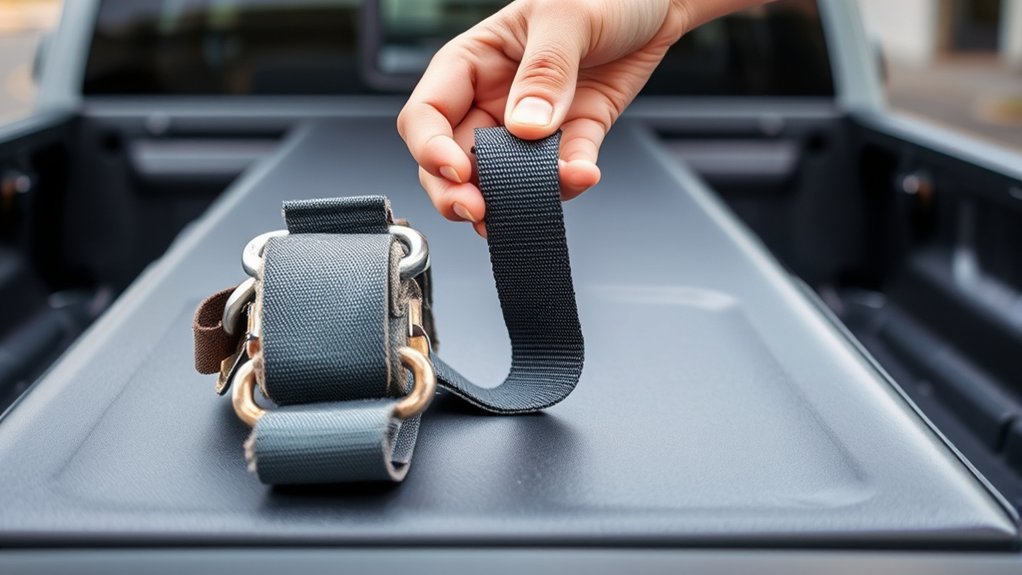
How can you tell when your tonneau cover straps need replacing? You’ll notice visible signs like fraying, cracks, or loss of elasticity, which compromise the cover’s secure fit.
Another indicator is frequent loosening during transit, reducing protection and increasing wear. Market trends show newer strap materials offer enhanced durability, but older straps often fail prematurely due to UV exposure and tension fatigue.
Knowing the pros and cons of your strap type helps you assess wear accurately. Rubber straps resist stretching but degrade in sunlight, while fabric straps resist UV but may tear.
Regularly inspect straps for these issues to maintain optimal cover performance and avoid unexpected failures. Timely replacement ensures your tonneau cover remains reliable and secure under various conditions.
Tools Needed to Replace Tonneau Cover Straps
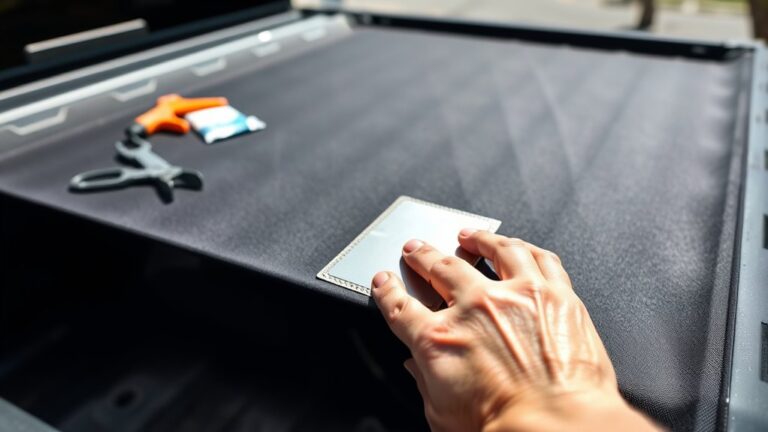
Noticing wear on your tonneau cover straps means it’s time to prepare for replacement. To swap materials efficiently, gather essential tools: a flathead screwdriver to remove fasteners, a pair of pliers for gripping clips, and a utility knife to trim excess strap length.
You’ll also need replacement straps compatible with your cover. Have a clean workspace to organize parts and prevent loss. Storage tips are crucial—keep removed hardware and old straps in labeled containers to avoid confusion during reassembly.
Additionally, gloves protect your hands during the swap. Ensure your tools are in good condition to avoid damaging your tonneau cover or truck bed. Proper preparation using these tools streamlines the replacement process and extends the life of your tonneau cover system.
Picking the Right Replacement Tonneau Cover Straps
You’ll need to choose replacement straps made from durable materials like nylon or leather to ensure longevity. Measure the length and width of your original straps to find an exact fit.
Selecting the right size and material prevents premature wear and keeps your tonneau cover secure.
Material Durability Options
Consider the environment and frequency of use when selecting replacement tonneau cover straps, as material durability directly impacts performance and longevity. You’ll want straps that have undergone rigorous durability testing and come from reliable material sourcing to ensure resistance to UV rays, moisture, and abrasion.
| Material | Durability Features |
|---|---|
| Nylon | High tensile strength, UV resistant |
| Polyester | Excellent abrasion resistance, low stretch |
| Polypropylene | Water-resistant, lightweight |
| Leather | Durable but less weather-resistant |
Choose nylon or polyester for frequent outdoor use due to superior weather resistance and durability. Polypropylene suits lighter, occasional use, while leather offers aesthetic appeal but requires more maintenance.
Prioritize materials proven through durability testing to extend strap lifespan and maintain secure tonneau cover tension.
Strap Length and Width
After selecting a durable material for your replacement tonneau cover straps, focus shifts to choosing the correct strap length and width. Accurate strap length is essential to ensure a secure fit without excess slack or tension. Measure the existing straps or the distance between attachment points to determine the ideal strap length.
For strap width, match it to the original straps or the mounting hardware to guarantee compatibility and strength. Using a strap width too narrow may compromise durability, while too wide can interfere with installation. Always verify the strap width fits your vehicle’s buckle or anchor system precisely.
Prioritize these measurements carefully to maintain the tonneau cover’s tension, protect cargo, and ensure safe, reliable operation during use.
Removing Old Tonneau Cover Straps
Start by inspecting the strap attachment points for any damage or wear. Carefully unclip the fasteners to avoid breaking them during removal.
Once unclipped, remove the old straps completely before installing the new ones.
Inspect Strap Attachment Points
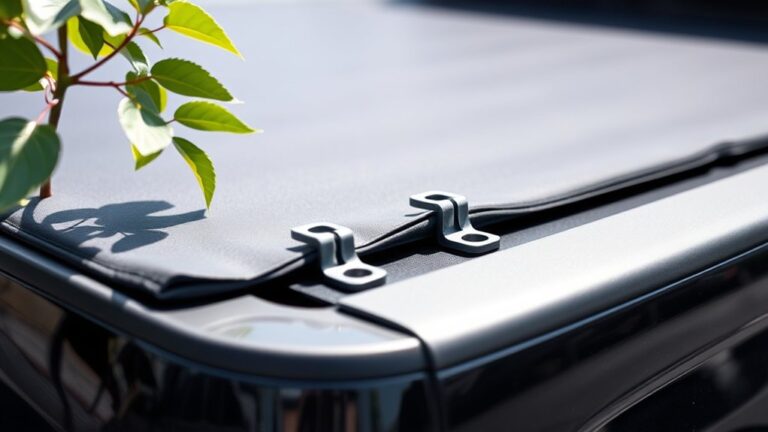
Where exactly are the straps anchored on your truck bed? Begin by closely examining the attachment points where the straps connect to the tonneau cover and truck bed. Identify the type of strap materials used, commonly nylon or leather, since their weather resistance affects durability.
Look for signs of wear such as fraying, cracking, or corrosion on metal fittings. Check the mounting brackets or loops for rust, deformation, or looseness that could compromise secure fastening.
Ensure that the attachment points remain structurally sound to maintain proper tension and cover alignment. If you spot any damage or weakening, plan to replace or reinforce these points during strap replacement.
This inspection guarantees optimal performance and longevity of your tonneau cover straps under varying weather conditions.
Unclip Fasteners Carefully
How do you safely unclip the fasteners without causing damage? Begin by locating each fastener securing the tonneau cover straps. Use your fingers or a small flat-head screwdriver to gently pry the fastener’s locking mechanism.
Apply slow, steady pressure to unclip fasteners, avoiding sudden force that could break plastic clips or distort metal parts. Maintain careful handling throughout to preserve the integrity of both the fasteners and the attachment points.
If a fastener resists, reassess its locking position before proceeding. Do not yank or twist the straps, as this risks snapping components. By unclip fasteners carefully, you ensure a smooth removal process and reduce the chance of damage, preparing the way for clean installation of new straps.
Remove Old Straps Fully
Once all fasteners have been carefully unclipped, you can fully remove the old tonneau cover straps. Start by detaching each strap from its anchor points, ensuring you don’t miss hidden clips or fasteners.
Pull the straps away smoothly to avoid damaging surrounding components. If resistance occurs, inspect closely for any remaining attachments rather than forcing removal. While doing this, avoid letting unrelated ideas or random thoughts distract you, as precision is key to a clean removal.
Keep the work area organized to prevent losing small parts. Once removed, examine the straps and mounting points for wear or damage, documenting any issues. This thorough approach ensures a proper foundation for installing new straps without complications later in the process.
Installing New Tonneau Cover Straps
Why is it essential to ensure proper alignment when installing new tonneau cover straps? Proper alignment guarantees optimal tension distribution, preventing premature wear and ensuring your cover stays secure.
Proper alignment ensures even tension, prevents wear, and keeps your tonneau cover securely in place.
Begin by selecting straps made from eco friendly materials to enhance durability and reduce environmental impact. Attach the new straps to the designated anchor points, following manufacturer specifications closely.
Use creative storage ideas, like labeling or bundling excess strap length, to keep installation neat and avoid tangling. Secure all fasteners firmly but avoid over-tightening, which can damage the cover or straps.
Double-check that straps lie flat without twists, ensuring smooth operation and longevity. By installing straps precisely, you maintain both function and aesthetics, enhancing your truck bed’s protection and appearance effectively.
Adjusting Tonneau Cover Straps for a Secure Fit
Where should you start to ensure your tonneau cover straps provide a secure fit? Begin by carefully evaluating the strap tension and buckle alignment. Proper tension prevents slack while avoiding overtightening that can damage the cover.
Next, adjust the straps with these steps: Loosen the straps slightly to relieve pressure. Align the buckles evenly to ensure they lock securely. Gradually tighten the straps, maintaining consistent tension across all points.
Check that the cover sits flat without wrinkles or gaps. Misaligned buckles can cause uneven tension, reducing effectiveness.
Testing Your Tonneau Cover Straps After Replacement
After adjusting your tonneau cover straps for a secure fit, you need to test them thoroughly to confirm their effectiveness. Begin by applying gradual force to each strap, checking for consistent tension without slipping. This testing tension ensures the straps hold firmly under load.
Next, inspect attachment points and strap material for proper strain relief, verifying that stress is evenly distributed and no excessive wear appears. Engage the cover fully, simulating driving conditions to assess dynamic tension responses and overall stability.
If you notice any looseness or strain concentration, readjust the straps or reinforce mounting points accordingly. Completing these tests guarantees your replacement straps perform reliably, maintaining cover security and preventing premature failure during use.
Troubleshooting Common Issues When Replacing Tonneau Cover Straps
- When replacing tonneau cover straps, you may encounter common issues such as improper tension, misaligned attachment points, or premature wear. Addressing these problems quickly ensures a faster installation and prevents hidden risks that could compromise your cover’s function.
- Check tension carefully; straps that are too tight or too loose can cause strain or flapping.
- Align attachment points precisely to avoid uneven stress and potential damage to mounting hardware.
- Inspect straps and hardware for signs of wear or defects before installation to prevent early failure.
Maintaining Your Tonneau Cover Straps for Longevity
Regularly inspecting and cleaning your tonneau cover straps will extend their lifespan and maintain peak performance. Begin by examining the straps for signs of wear, fraying, or corrosion.
Use a mild detergent and water to remove dirt and debris, then dry them thoroughly to prevent moisture buildup. For rust prevention, apply a light coating of a corrosion inhibitor on any metal buckles or fasteners, especially after exposure to rain or road salt.
Store your vehicle in a covered area or use a protective cover to minimize environmental damage. Incorporate these maintenance tips into your routine every few months or after harsh weather conditions.
Frequently Asked Questions
Can Tonneau Cover Straps Be Replaced Without Removing the Cover?
Yes, you can replace straps without removing the cover. When replacing straps, loosen tension carefully, avoid cover damage, and secure new straps firmly.
Installation tips include checking attachment points and ensuring proper alignment for optimal functionality.
Are All Tonneau Cover Straps Compatible With Every Truck Model?
No, not all tonneau cover straps fit every truck model. Compatibility myths persist, but you should verify strap customization options to ensure precise fit and functionality tailored to your specific truck and cover design.
How Long Do Tonneau Cover Straps Typically Last?
Like a well-worn shoelace, tonneau cover straps typically last 1–3 years depending on use and weather. Regularly check for wear, addressing straps compatibility concerns promptly to maximize longevity.
Replace straps for safety and performance when needed.
Can I Customize the Color or Style of Tonneau Cover Straps?
Yes, you can customize tonneau cover straps with various color variations and styles. Manufacturers often offer customization options, allowing you to select straps that match your vehicle’s aesthetic or personal preferences precisely and technically.
Do Tonneau Cover Straps Affect Fuel Efficiency?
Like a feather in the wind, lightweight tonneau cover straps minimize drag, so they don’t substantially affect fuel efficiency.
Conclusion
Now that you’ve replaced your tonneau cover straps with care, your truck bed is as secure as a knight’s armor. Regularly inspect and maintain your straps to avoid unexpected wear and ensure lasting performance. Remember to test tension and alignment after installation for a snug fit.
With proper upkeep, your replacement straps will serve you reliably, keeping your cargo safe mile after mile. Stay vigilant, and your cover will remain taut and dependable. Proper maintenance is key to getting the most out of your tonneau cover straps.