How to Install Tonneau Cover Rails
When you install tonneau cover rails, precision is key. Installing tonneau cover rails correctly ensures your cover fits perfectly and functions well. You’ll start by thoroughly preparing the truck bed surface, ensuring it’s clean and free of rust.
Next, accurate measurements and alignment of the rails directly impact the cover’s fit and functionality. Following a step-by-step process for mounting and securing the rails will help you avoid common mistakes and achieve a professional finish.
But before you begin, it’s important to understand the tools and techniques involved. Taking the time to prepare and follow instructions carefully will make the installation smoother and more effective.
Key Takeaways
- Thoroughly clean and prepare the truck bed surface, removing dirt, rust, and grease before installing rails.
- Measure the truck bed multiple times to ensure rails align parallel and flush with the bed’s top edge.
- Secure rails using manufacturer-recommended hardware, tightening bolts incrementally while maintaining proper alignment.
- Use a level to confirm rails are perfectly horizontal and parallel during installation to prevent leaks and noise.
- Perform final checks for immobility, proper fit, and alignment, and periodically inspect and maintain rails after installation.
What Tools You Need to Install Tonneau Cover Rails
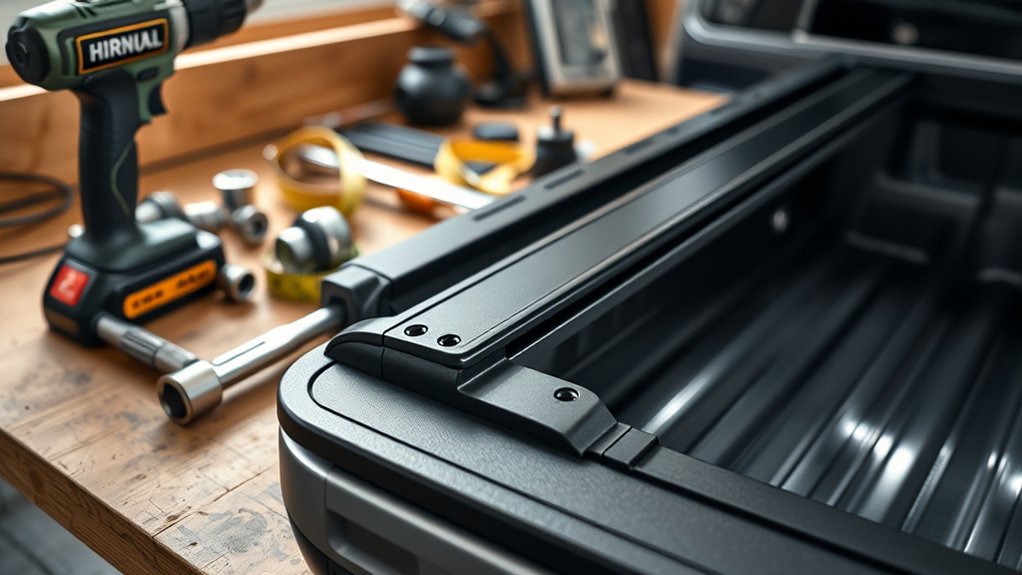
To ensure you have the right tools to install tonneau cover rails effectively, you’ll require a cordless drill with appropriate drill bits, a ratchet wrench set, and a tape measure for precise alignment. A screwdriver, preferably a Phillips head, will help secure screws tightly. Clamps are essential to hold rails in place during installation.
Avoid wasting time on unrelated topic tools or off-topic ideas that don’t contribute to the process. You might also need a rubber mallet to gently tap rails without damage and a sealant applicator to ensure waterproofing where specified.
Having a clean workspace and protective gloves will improve safety and efficiency. Stick strictly to these tools to streamline your installation and avoid unnecessary complications or delays.
How to Prepare Your Truck Bed for Installation
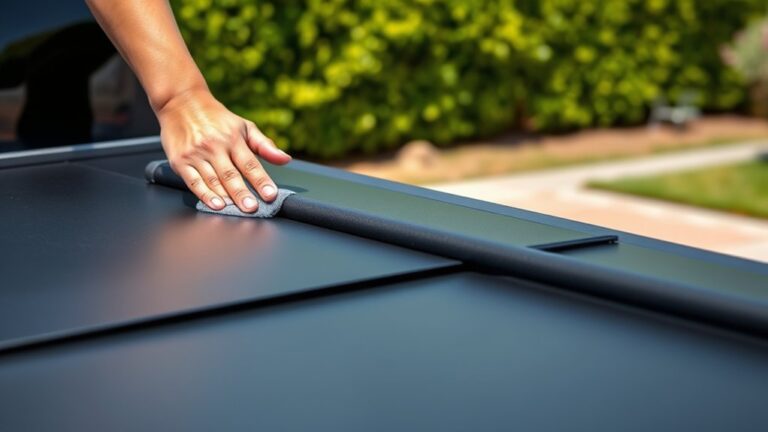
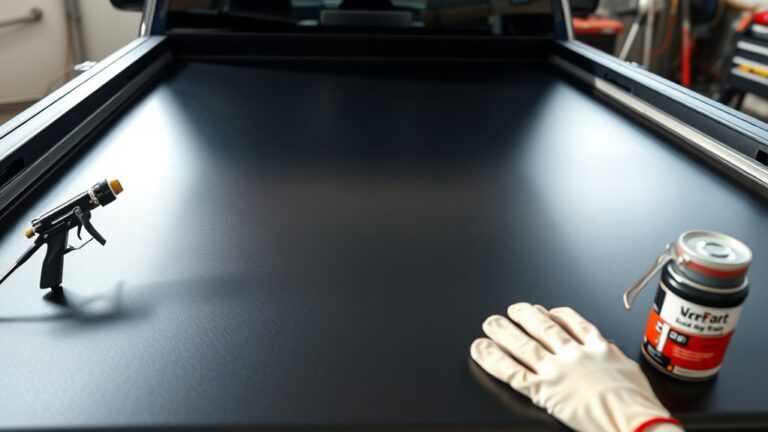
Before installing the tonneau cover rails, you’ll need to thoroughly clean and inspect your truck bed to ensure a secure fit. Start by removing any dirt, debris, or grease using a suitable cleaner and a stiff brush. Pay close attention to corners and edges where grime accumulates.
Next, inspect the metal surfaces for any surface rust. If you find rust, remove it completely with a wire brush or sandpaper to prevent premature corrosion under the rails. Make certain the bed rails are dry and free of contaminants before proceeding.
When you begin attaching the rails, use barbed screws provided or recommended by the manufacturer to guarantee strong anchoring. Proper preparation prevents installation issues and prolongs the lifespan of your tonneau cover rails.
How to Measure and Align Tonneau Cover Rails Correctly
Accurate measurement and alignment of your tonneau cover rails are essential to guarantee a snug fit and proper function. Begin by measuring the length and width of your truck bed with a steel tape measure, ensuring you record the dimensions at multiple points to account for any irregularities. Consider the effect of alternative finishes, as some coatings may slightly alter dimensions or mounting methods.
For precise alignment:
- Place rails parallel to the bed rails, maintaining consistent spacing.
- Confirm rails are flush with the bed’s top edge to avoid gaps.
- Use a level to verify rails are perfectly horizontal.
- Check manufacturer’s warranty considerations related to mounting positions before finalizing.
Following these steps ensures optimal rail placement and preserves your warranty coverage.
Attach the Tonneau Cover Rails Step-by-Step
First, make sure you align the rails precisely along the truck bed edges to ensure a proper fit. Next, secure the rails firmly using the provided clamps or bolts to prevent any movement.
Following these steps carefully will guarantee a stable and effective installation.
Align Rails Properly
How do you ensure the tonneau cover rails sit correctly on your truck bed? Proper alignment avoids gaps and prevents damage, unlike an unrelated topic or random discussion that distracts from precision. Follow these steps:
- Place each rail on the truck bed’s side, aligning with factory mounting points.
- Use a measuring tape to confirm equal distances from the tailgate to both rails.
- Check rail height to ensure they sit flush with the truck bed edge.
- Verify rails run parallel to the truck bed sides, avoiding any skewing or twisting.
Accurate alignment sets the foundation for a secure fit. Don’t rush this step. Misaligned rails lead to poor sealing and increased wear. Focus strictly on measurements and placement before moving on to securing the rails firmly.
Secure Rails Firmly
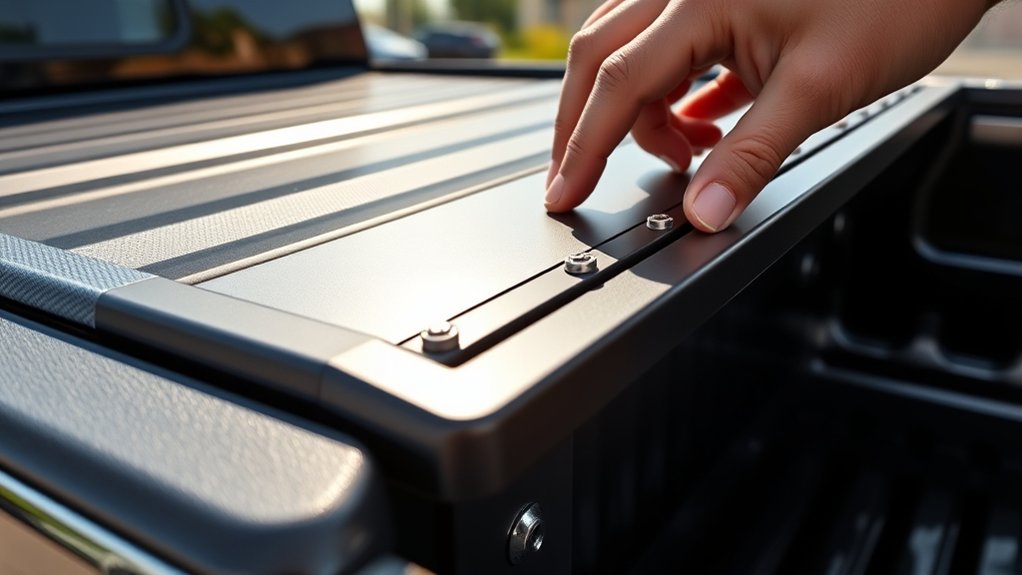
Begin securing the tonneau cover rails by firmly attaching them to the truck bed using the designated mounting hardware. Start by inserting bolts or clamps into the pre-drilled holes, ensuring each fastener aligns perfectly.
Use a torque wrench to tighten bolts to the manufacturer’s specified torque, preventing over-tightening or loosening. Avoid irrelevant chatter or off-topic speculation during this step; focus solely on the mechanical process.
Check that rails sit flush against the bed rails without gaps. After tightening, verify the rails remain immobile by applying moderate pressure. If movement occurs, recheck fastener tightness.
This precise approach guarantees the rails are securely mounted, providing a stable foundation for your tonneau cover and preventing future adjustment or damage.
Secure Tonneau Cover Rails Without Drilling
You can secure tonneau cover rails without drilling by using clamp-on rail options that grip your truck bed firmly.
Adhesive mounting techniques offer a clean, drill-free alternative with strong bonding agents. Additionally, magnetic rail solutions provide quick installation and easy removal while maintaining stability.
Clamp-On Rail Options
Why choose clamp-on rails for your tonneau cover installation? Clamp-on rails provide a secure, drill-free solution that preserves your truck bed’s integrity and simplifies future removal or adjustments.
When selecting clamp-on rails, consider the following to ensure optimal performance and compliance with warranty considerations:
- Verify compatibility with your truck model to avoid voiding the manufacturer’s warranty.
- Follow a strict maintenance schedule, tightening clamps regularly to maintain secure attachment.
- Inspect clamps and rails for wear or corrosion during routine maintenance to prevent failures.
- Use torque specifications provided by the manufacturer to prevent overtightening and damage.
Clamp-on rail options deliver reliable, damage-free installation while respecting warranty terms and easing upkeep.
Adhesive Mounting Techniques
How can you secure tonneau cover rails without drilling into your truck bed? Adhesive mounting offers a reliable, non torque bonding method that avoids damaging your vehicle.
Start by thoroughly cleaning the mounting surface to ensure maximum adhesion. Use automotive-grade adhesive tapes or epoxy designed for exterior use. Apply consistent pressure during curing to achieve a strong bond.
| Step | Consideration |
|---|---|
| Surface Prep | Clean, dry, and smooth |
| Adhesive Selection | Weather-resistant, strong |
| Application Method | Even, firm pressure |
| Curing Time | Follow manufacturer specs |
| Inspection | Check bond integrity regularly |
Magnetic Rail Solutions
Where can you find a secure, drill-free method to mount your tonneau cover rails? Magnetic rail solutions provide a reliable alternative, avoiding damage to your truck bed. These systems use powerful magnets embedded in the rails to hold the cover firmly in place.
To install magnetic rails effectively, follow these steps:
- Clean the mounting surface thoroughly to ensure maximum magnetic adhesion.
- Align the magnetic rails precisely along the bed edges, avoiding unrelated topic distractions.
- Secure the rails by pressing firmly to activate the magnets, discarding random ideas that don’t improve hold.
- Test the attachment by applying moderate force to confirm stability without drilling.
Magnetic rail solutions offer a precise, non-invasive approach, ideal for those seeking quick, damage-free tonneau cover installation.
Check and Adjust the Fit of Your Tonneau Cover Rails
When should you verify the alignment of your tonneau cover rails? You should check immediately after initial installation and periodically afterward to ensure proper fit and function. Start by inspecting the rails visually for uniform gaps and flush mounting against the truck bed.
Verify tonneau cover rail alignment right after installation and periodically to ensure proper fit and function.
Use a measuring tape or caliper to confirm measuring accuracy, ensuring both rails are parallel and aligned within manufacturer specifications. Pay attention to mounting hardware, tightening bolts incrementally to maintain alignment without compromising corrosion resistance.
If you detect misalignment, gently adjust the rails by loosening the fasteners and repositioning them before retightening. Proper fit prevents water intrusion and wind noise, while maintaining the integrity of corrosion-resistant coatings.
Final verification guarantees your tonneau cover rails provide secure and lasting performance.
Avoid These Common Installation Mistakes
Why do many tonneau cover installations fail to deliver optimal results? Often, installers focus on irrelevant topics or unrelated concepts, leading to errors that compromise fit and function. To avoid common mistakes, follow these key points precisely:
- Don’t skip measuring your truck bed; inaccurate dimensions cause poor rail alignment.
- Avoid using incompatible hardware; mismatched bolts or clamps reduce stability.
- Never ignore surface preparation; dirt or debris prevent secure rail attachment.
- Don’t force rails into place; improper positioning leads to gaps and leaks.
Tips for Installing Rails on Various Truck Models
Proper rail installation depends heavily on understanding the specific design and dimensions of your truck model. Start by reviewing the manufacturer’s specifications for rail placement and mounting points.
Before attaching rails, perform painting prep on the truck bed edges to prevent corrosion and ensure smooth adhesion. Pay close attention to tailgate alignment; misalignment can cause gaps or binding when closing the tailgate.
Use a level and measuring tape to verify that rails sit parallel and at consistent heights. Different truck models may require custom brackets or spacers, so confirm compatibility before installation.
Tighten all hardware incrementally, checking rail positioning frequently. Following these model-specific steps will optimize the fit and durability of your tonneau cover rails, ensuring secure installation tailored to your truck’s unique frame.
How to Maintain and Care for Your Tonneau Cover Rails
Maintaining your tonneau cover rails guarantees they function smoothly and last longer. Proper care prevents damage and ensures optimal performance. Follow these maintenance tips to protect your investment:
- Clean rails regularly using mild soap and water to remove dirt and debris.
- Inspect the rails for signs of rust or corrosion; address any spots immediately using rust prevention spray.
- Lubricate moving parts with a silicone-based lubricant to reduce friction and wear.
- Tighten all bolts and fasteners periodically to maintain structural integrity.
Frequently Asked Questions
Can Tonneau Cover Rails Improve My Truck’s Fuel Efficiency?
Yes, installing tonneau cover rails can improve your truck’s fuel efficiency by enhancing aerodynamics and reducing drag. They also contribute to noise reduction, minimizing wind turbulence and allowing your vehicle to operate more efficiently on the road.
Are Tonneau Cover Rails Compatible With All Tonneau Cover Types?
You won’t find universal compatibility with tonneau cover rails; different designs fit specific cover types.
You’ll face installation challenges if you mix mismatched rails and covers, so always verify compatibility before purchasing or installing.
What Materials Are Tonneau Cover Rails Typically Made From?
Metal alloys like aluminum rails often meet your strength needs, while plastic profiles offer lightweight flexibility. Composite channels combine both, giving you durable, corrosion-resistant support that fits your tonneau cover’s demands precisely and efficiently.
How Do Tonneau Cover Rails Affect My Truck’s Resale Value?
Tonneau cover rails can boost your truck’s resale value by protecting the bed from damage, reducing depreciation impact. Properly installed rails maintain structural integrity, making your vehicle more appealing to buyers, ultimately minimizing value loss over time.
Can I Install Tonneau Cover Rails Myself Without Prior Experience?
Yes, you can install tonneau cover rails yourself. Follow the step-by-step instructions carefully, use basic tools, and ensure proper alignment.
Your DIY practicality will improve with patience and precision during how to install each rail securely.
Conclusion
Now that you’ve carefully cleaned, measured, and aligned your tonneau cover rails, your truck bed is ready for a snug, secure fit. Like a skilled blacksmith forging armor, you’ve tightened hardware incrementally and checked alignment meticulously.
Remember to recheck and adjust as needed to maintain a perfect seal. With these precise steps, your rails will protect your cargo efficiently and look sharp.
Keep tools handy for future maintenance to ensure lasting performance. Following these guidelines will help you achieve the best results when installing tonneau cover rails.