How Much Does It Cost to Paint a Tonneau Cover
If you’re considering how much it costs to paint a tonneau cover, you’ll want a clear understanding of the expenses involved before you start.
Prices typically range between $150 and $400 for professional work, influenced by factors like the cover’s material, size, and the type of paint used.
Knowing these details can help you decide whether to hire a pro or tackle it yourself.
But what exactly drives these costs, and how can you optimize your budget?
Understanding these elements will ensure you make the best choice for your project.
Key Takeaways
- Professional painting of a tonneau cover typically costs between $150 and $400, including surface prep, priming, and multiple paint layers.
- Material type (vinyl, aluminum, fiberglass) and cover size significantly impact painting costs, with fiberglass covers being the most expensive.
- High-quality automotive paints and clear coats used by professionals ensure durability, UV resistance, and precise color matching with the vehicle.
- DIY painting reduces labor costs but requires investment in automotive-grade paint, primers, tools, and careful surface preparation for lasting results.
- Environmental factors like temperature, humidity, and dust influence paint adhesion and drying, affecting overall project quality and potential rework costs.
How Much Does It Cost to Paint a Tonneau Cover?
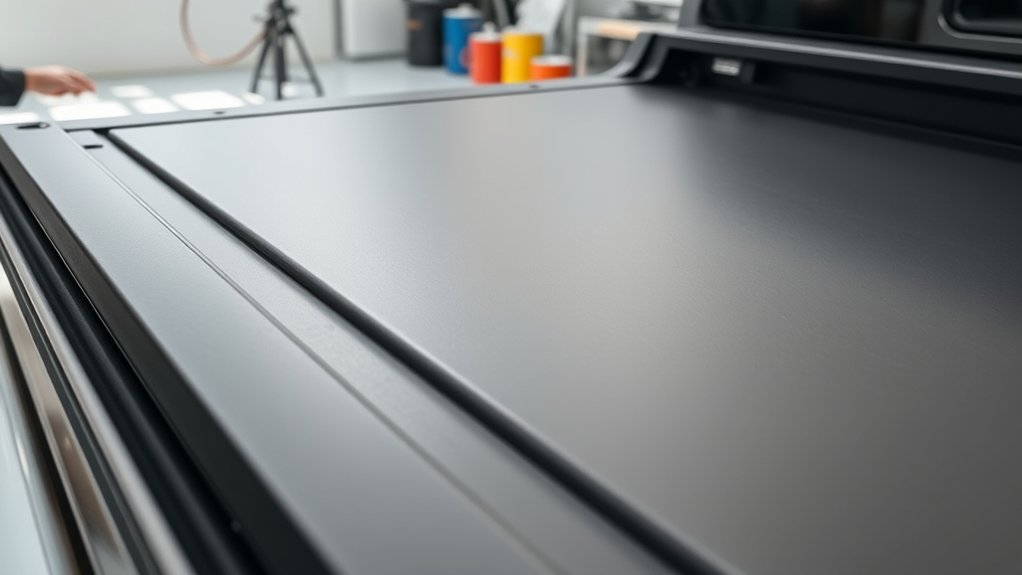
How much does it cost to paint a tonneau cover? Typically, you can expect to pay between $150 and $400, depending on specific requirements. This pricing reflects the meticulous process needed to maintain tonneau cover aesthetics, including surface preparation, priming, and applying multiple paint layers.
Staying current with paint color trends can influence your choice. Metallic finishes or matte blacks might cost more due to specialized paints. Additionally, professional painters use automotive-grade coatings to ensure durability and UV resistance, critical for preserving appearance over time.
You’ll want precision in matching your vehicle’s paint to maintain seamless integration. Understanding these factors helps you budget accurately for enhancing your tonneau cover’s look while aligning with contemporary paint color trends that complement your truck’s overall style.
Key Factors That Affect Painting Cost: Material, Size, and Paint Type
What influences the cost to paint your tonneau cover most considerably? Three primary factors determine the final price:
- Material: Different materials, such as fiberglass, aluminum, or vinyl, require specific primer considerations to ensure adhesion and durability. This affects labor and product costs.
- Size: Larger covers demand more paint and longer prep time, increasing both material usage and labor expenses.
- Paint Type: The choice of paint impacts cost significantly. High-quality automotive paints with varying gloss levels provide better protection and finish but come at a premium.
Understanding these technical details helps you anticipate costs accurately. Primer considerations are crucial for surface compatibility, while gloss levels influence both aesthetic appeal and application complexity.
Tailoring your choices to these factors ensures an optimal balance between expense and quality.
DIY Tonneau Cover Painting: Costs and Considerations
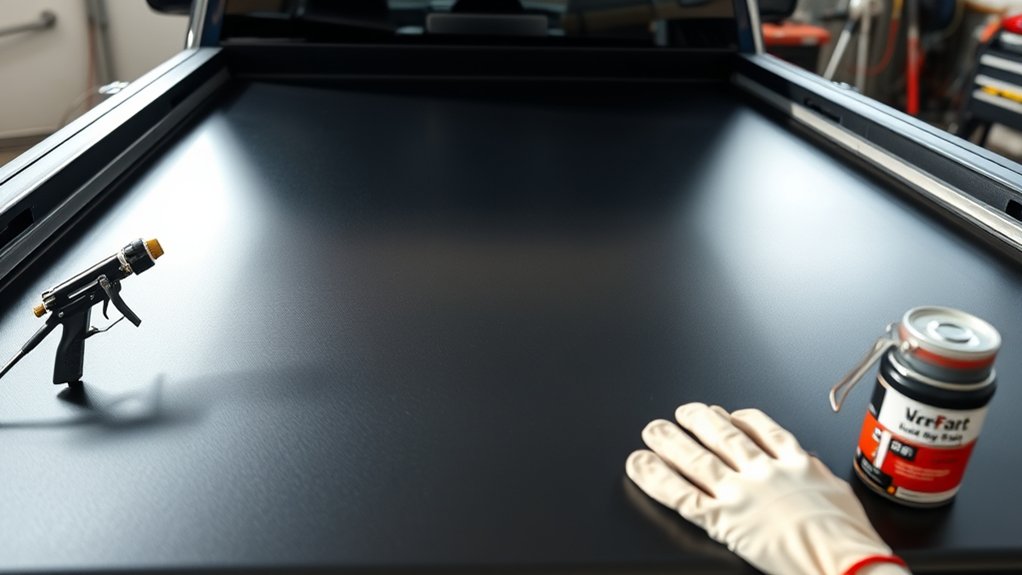
When painting your tonneau cover yourself, you’ll need to select the right paint type, typically automotive-grade or vinyl-specific, which ranges from $20 to $60 per quart. Essential tools include sandpaper, primer, spray guns or aerosol cans, and protective gear, adding another $30 to $100 depending on quality and quantity.
Carefully budgeting these materials ensures you achieve a durable, professional finish without unexpected expenses.
Paint Types and Prices
Which paint type suits your DIY tonneau cover project depends largely on durability, finish, and cost. When selecting paint, consider how it withstands weather exposure, ensuring long-lasting protection. Always wear disposable gloves during application to avoid skin contact with chemicals.
- Acrylic Enamel: Moderate cost, provides a smooth finish, but may require frequent touch-ups under harsh weather exposure.
- Polyurethane: Higher cost with superior durability and resistance to UV rays, ideal for extended outdoor use.
- Epoxy Paint: Most durable and chemical-resistant, offering excellent adhesion; pricier but minimizes repaint frequency.
Choosing the right paint balances upfront costs with maintenance needs, ensuring your tonneau cover stays protected and visually appealing.
Tools and Materials Needed
A well-prepared toolkit is essential for painting your tonneau cover efficiently and achieving a professional finish. Prioritize tools with good ergonomics to reduce fatigue and improve precision.
Accurate cost estimates help you budget effectively without sacrificing quality. You’ll need specific materials and tools to manage surface prep, painting, and finishing.
| Tool/Material | Purpose | Approximate Cost ($) |
|---|---|---|
| Sandpaper (varied grit) | Surface smoothing | 10 |
| Spray gun or paintbrush | Even paint application | 30-70 |
| Masking tape & plastic | Protect adjacent areas | 15 |
Equip yourself with these essentials to ensure high-quality results while maintaining control of your budget.
Professional Tonneau Cover Painting: Pricing and Services
How much should you expect to pay for professional tonneau cover painting? Pricing depends on specific services and your vehicle’s car aesthetics demands, but unrelated budgeting factors often confuse estimates. Professional painters charge based on preparation, paint quality, and labor intensity.
Here’s a breakdown of typical cost components:
- Surface preparation: sanding, cleaning, and priming ensure paint adhesion and durability.
- Paint application: high-grade automotive paint and multiple coats guarantee a uniform finish.
- Finishing: clear coats and polishing enhance gloss and protect against environmental damage.
Expect prices to range between $150 and $400, depending on service complexity. Choosing professional services ensures precision, color matching, and long-lasting results that maintain your truck’s visual appeal and resale value.
Price Differences by Tonneau Cover Material and Size
Why do prices vary considerably when painting tonneau covers? The key factors are material composition and size, which dictate the complexity of surface preparation and paint adhesion. Different materials require specific painting techniques, influencing pricing options and durability trends.
For example, hard fiberglass needs more prep than soft vinyl, affecting cost and longevity.
| Material | Average Size (sq ft) | Typical Price Range ($) |
|---|---|---|
| Vinyl | 20 | 150 – 250 |
| Aluminum | 25 | 200 – 350 |
| Fiberglass | 30 | 300 – 500 |
Larger covers demand more paint and labor, increasing costs proportionally. Understanding these variables helps you select the right painting service that balances budget with durability.
Money-Saving Tips for Painting Your Tonneau Cover
You can reduce costs by selecting paint types that balance quality and price, such as acrylic enamel or urethane-based options. Taking on the painting process yourself eliminates labor fees but requires proper surface preparation and controlled conditions.
Additionally, scheduling your paint job during mild weather minimizes drying time and material waste, enhancing overall efficiency.
Choosing Affordable Paint Types
Which paint types deliver the best balance between cost and durability for your tonneau cover? You’ll want to focus on options that combine affordability with long-lasting protection. Here are three choices to consider:
- Acrylic Enamel: Offers a durable finish, resists chipping, and works well with cheap primers, reducing overall costs.
- Polyurethane Paint: Known for superior durability and chemical resistance, it often uses eco friendly solvents, cutting environmental impact and cleanup expenses.
- Epoxy Paint: Provides excellent adhesion and corrosion resistance but requires precise application methods to avoid costly errors.
Selecting paints compatible with inexpensive primers and eco friendly solvents ensures lower material expenses without sacrificing quality. This approach helps maintain a cost-effective yet professional finish on your tonneau cover.
DIY Painting Advantages
Frequently, tackling the task of painting your tonneau cover yourself can considerably reduce labor costs while giving you full control over material choices and application techniques. By carefully selecting quality paint and primers, you ensure optimal adhesion and durability, avoiding costly errors typical of unrelated topic distractions.
You’ll also gain flexibility in scheduling, allowing you to paint when conditions suit best. Additionally, having spare parts on hand, like masking tape and sandpaper, prevents delays and maintains workflow efficiency.
This approach minimizes reliance on professionals, cutting expenses significantly. However, precise surface preparation and even coating application remain essential; any oversight can compromise finish quality.
Ultimately, DIY painting grants both financial savings and direct oversight, making it a technically sound choice for maintaining your tonneau cover.
Timing Your Paint Job
When is the ideal time to paint your tonneau cover to maximize cost efficiency? Timing considerations are crucial to avoid costly mistakes and ensure a smooth finish. Weather limitations significantly impact paint adhesion and drying times, so you need to plan carefully.
To optimize your paint job, consider these points:
1. Temperature Range
Paint performs best between 50°F and 85°F; avoid extreme cold or heat to prevent curing issues.
2. Humidity Levels
Aim for humidity below 60% to reduce drying time and avoid moisture-related defects like bubbling.
3. Wind and Dust
Choose calm, low-wind days to minimize dust contamination, which can cause surface imperfections and increase rework costs.
Frequently Asked Questions
How Long Does the Paint on a Tonneau Cover Typically Last?
You can expect paint durability on a tonneau cover to last around 3 to 5 years, depending on coating longevity factors like UV exposure, weather conditions, and paint type. Proper maintenance extends this lifespan considerably.
Can Painting a Tonneau Cover Affect Its Waterproofing?
Like guarding Excalibur, painting your tonneau cover can enhance painting durability and UV resistance without harming waterproofing if you use the right sealants and techniques to preserve its protective barrier against water intrusion.
What Types of Paint Finishes Are Available for Tonneau Covers?
You’ll find matte, gloss, and satin finishes compatible with your tonneau cover’s material. Spray finishes provide even coverage and better paint compatibility, while roller finishes might cause texture inconsistencies and reduced durability on flexible surfaces.
Is It Necessary to Prep the Tonneau Cover Before Painting?
Yes, you must prep the surface thoroughly to ensure optimal paint adhesion. Cleaning, sanding, and priming remove contaminants and create a rough texture, allowing the paint to bond securely.
This preparation prevents peeling or chipping over time.
Can I Change the Color of a Tonneau Cover Without Repainting?
You can’t just snap your fingers for a color change without repainting, but finish alternatives like vinyl wraps or removable skins offer precise, durable options to alter your tonneau cover’s appearance without the mess of paint.
Conclusion
Painting your tonneau cover is like fine-tuning a machine—precision matters. You’ll weigh material, size, and paint type to balance cost and quality. DIY saves labor but demands investment in proper tools and materials, while professionals ensure flawless prep and finish, especially under ideal conditions.
By understanding these factors, you can make an informed choice that protects your investment, enhances appearance, and maintains resale value without overspending. Ultimately, knowing how much it costs to paint a tonneau cover helps you plan effectively and achieve the best results for your vehicle.