What Doe the Engine Oil Filter Housing Do
You might not realize that your engine oil filter housing plays a crucial role beyond just holding the filter in place.
The engine oil filter housing ensures all the oil circulating through your engine passes through the filter media.
This helps maintain proper flow and pressure while preventing leaks and contamination.
Understanding how this component functions and what materials it’s made from can help you spot issues before they escalate.
It also helps protect your engine’s lubrication system effectively.
Key Takeaways
- The engine oil filter housing securely encloses the oil filter to ensure all oil flows through the filter media.
- It maintains a tight seal to prevent oil leaks and contamination in the engine lubrication system.
- The housing withstands engine heat and pressure fluctuations to preserve filter integrity and consistent oil flow.
- It supports proper oil pressure by holding the filter firmly in place during engine operation.
- The housing’s material and design influence filtration efficiency, engine longevity, and overall durability.
What’s the Engine Oil Filter Housing and Why Should You Care?
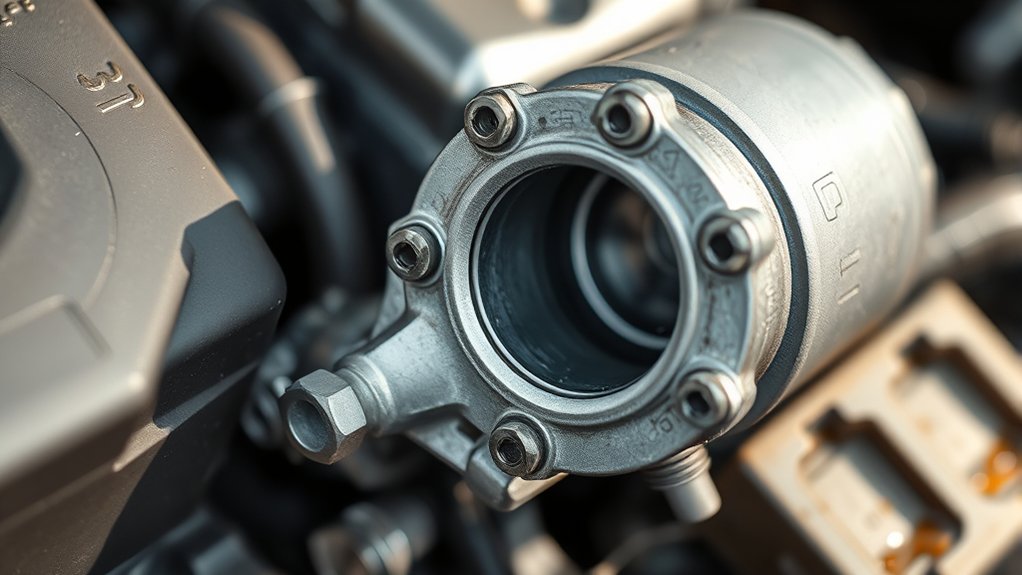
What exactly is the engine oil filter housing, and why does it matter to you? This component securely encloses the oil filter, guaranteeing oil flows efficiently through the filter media. Its design impacts filtration performance and engine longevity.
Modern housings use alternative materials like reinforced plastics or aluminum alloys, chosen to balance durability and weight reduction. The manufacturing process, often involving precision casting or injection molding, guarantees tight tolerances to prevent leaks and withstand high pressure.
Understanding this helps you appreciate how material selection and fabrication methods influence engine reliability. When you maintain or replace parts, knowing about these factors ensures you select quality components, avoiding cheaper alternatives that compromise oil filtration integrity and, ultimately, your engine’s health.
How Does the Oil Filter Housing Keep Your Engine Safe?
How exactly does the oil filter housing protect your engine from damage? It securely holds the oil filter in place, ensuring a tight seal that prevents oil leakage. By maintaining this seal, it guarantees that all circulating oil passes through the filter, removing contaminants that cause engine wear.
Without a proper housing, the filter could shift or leak, allowing unfiltered oil to circulate and accelerate engine component deterioration. Additionally, the housing directs oil flow efficiently, maintaining consistent oil pressure essential for lubrication.
It also withstands engine heat and pressure fluctuations, preserving filter integrity. In sum, the oil filter housing acts as a critical barrier against oil leakage and contamination, directly minimizing engine wear and prolonging your engine’s operational life.
How to Tell If Your Oil Filter Housing Is Damaged
You can spot damage to your oil filter housing by checking for visible cracks, leaks, or warping around the unit. Pay close attention to engine performance issues like low oil pressure, unusual noises, or overheating, which often indicate housing failure.
Identifying these signs early helps prevent severe engine damage and costly repairs.
Visible Signs Of Damage
When should you inspect your engine oil filter housing for damage? You should check it during every oil change, as this is when the housing and engine ports are most accessible.
Look for visible cracks, corrosion, or warping on the housing surface, especially near the gasket sealing area. Inspect the engine ports connected to the housing for any signs of oil leakage or buildup, which indicate compromised seals or cracks.
Also, check for stripped threads on the housing where the filter screws in, as this can cause improper sealing. Any deformation or damage can disrupt oil flow and pressure, risking engine wear.
Early detection during routine maintenance like oil changes helps you replace or repair the housing before it causes serious engine damage.
Engine Performance Symptoms
Why does your engine behave differently after an oil change? A damaged oil filter housing can disrupt oil flow, directly impacting engine efficiency. If you notice reduced power, sluggish acceleration, or fluctuating RPMs, it could signal compromised oil circulation due to cracks or leaks in the housing.
Additionally, abnormal engine noises, such as ticking or knocking, may indicate insufficient lubrication caused by oil pressure loss. Since the housing also contributes to noise reduction by maintaining proper oil filtration and pressure, any defect can increase mechanical noise.
Monitoring these performance symptoms is crucial; ignoring them might lead to accelerated engine wear or failure. To maintain optimal engine efficiency and noise reduction, inspect the oil filter housing regularly and address any irregular engine behavior promptly.
How to Check and Replace Your Oil Filter Housing
Start by thoroughly inspecting the oil filter housing for cracks, leaks, or warping using a flashlight and clean rags.
When replacement is necessary, carefully drain the engine oil, remove the housing bolts, and detach the housing without damaging surrounding components.
Follow a step-by-step guide to install the new housing, ensuring all seals and gaskets are properly seated before reassembling.
Inspecting the Oil Filter Housing
How do you determine if your oil filter housing needs inspection or replacement? Start by inspecting assemblies for any signs of oil leaks, cracks, or deformation.
Pay close attention to the housing materials. Most are aluminum or composite plastics. Check for corrosion or brittleness that compromises structural integrity.
Use a clean cloth to wipe the housing surface, revealing any fine cracks or residue buildup. Examine the sealing surfaces where the housing mates with the engine block; any damage here can cause leaks and pressure loss.
Also, verify that the bolt threads and mounting points are intact and free from stripping. If you notice persistent leaks or visible damage, it’s time to consider replacement.
Regular inspections prevent engine contamination and maintain optimal oil flow and pressure.
Step-by-Step Replacement Guide
Once you’ve identified signs of wear or damage on your oil filter housing, it’s important to proceed with a careful removal and replacement to maintain engine performance. First, drain the engine oil to prevent spills.
Next, disconnect any sensors or hoses attached to the housing. Use the appropriate wrench to unbolt the housing, taking care not to damage surrounding components.
Remove the old oil filter and clean the mounting surface thoroughly. Install a new filter, ensuring it seats correctly to preserve oil filter housing longevity.
Position the new housing, tighten bolts to manufacturer torque specifications, and reconnect sensors and hoses. Finally, refill engine oil and start the engine to check for leaks.
Proper replacement minimizes fuel economy impact and ensures efficient oil filtration.
Why the Oil Filter Housing Matters During Oil Changes
Why does the oil filter housing play a critical role during oil changes? It securely holds the oil filter, ensuring proper alignment within the lubrication system. Without a stable housing, the filter can become misaligned, compromising the filtration of contaminants from engine oil.
This directly affects the performance of vital engine components by allowing abrasive particles to circulate, accelerating wear. During oil changes, the housing provides a sealed environment to prevent oil leaks, maintaining system pressure and ensuring efficient oil flow.
Additionally, it facilitates easy removal and installation of the oil filter, minimizing the risk of damage to surrounding components. Understanding its function helps you maintain optimal engine performance and longevity by preserving the integrity of the lubrication system throughout each oil change.
What Are Oil Filter Housings Made Of?
Oil filter housings typically consist of durable metals or high-strength composites designed to withstand high temperatures and pressure fluctuations within the engine. Common engine materials for housings include aluminum alloys and reinforced polymers, chosen for their balance of strength, weight, and thermal resistance.
Aluminum is favored for its excellent heat dissipation and resistance to housing corrosion, which can compromise sealing and filtration efficiency over time. Meanwhile, advanced composites offer corrosion resistance and reduce overall engine weight but require precise manufacturing to maintain structural integrity under stress.
When selecting materials, manufacturers prioritize durability against mechanical fatigue and chemical exposure from engine oil additives. Understanding these engine materials helps you appreciate how the housing’s composition directly affects its longevity and performance in harsh operating conditions.
Simple Tips to Keep Your Oil Filter Housing Lasting Longer
Materials like aluminum alloys and reinforced polymers provide the oil filter housing with durability, but proper care is necessary to maintain its integrity over time. To ensure housing longevity, regularly inspect the housing for cracks, corrosion, or leaks, especially after engine oil changes.
Use the correct engine oil type and grade recommended by your vehicle manufacturer to prevent chemical degradation of sealing components. When replacing the oil filter, carefully tighten the housing bolts to the specified torque to avoid warping or stripping threads.
Always replace gaskets and O-rings with compatible materials to maintain a proper seal. Avoid overfilling engine oil, as excess pressure can stress the housing. Following these precise maintenance steps will maximize your oil filter housing’s service life and protect your engine’s lubrication system effectively.
Frequently Asked Questions
Can a Faulty Oil Filter Housing Cause Engine Overheating?
Yes, a faulty oil filter housing can cause engine overheating if it becomes blocked, restricting oil flow and cooling.
However, unrelated blockages elsewhere in the system are irrelevant to this specific overheating issue you’re troubleshooting.
How Does Oil Filter Housing Affect Oil Pressure?
You’ll find that 30% of engine failures link to oil pressure variations caused by compromised filter housing integrity. When the housing leaks or cracks, it disrupts oil flow, causing pressure drops that harm engine lubrication and performance.
Are There Different Oil Filter Housings for Diesel and Gasoline Engines?
Yes, you’ll find different oil filter housings for diesel and gasoline engines due to varying oil filtration needs. Choosing the correct housing is essential for effective engine maintenance and ensuring proper oil pressure and flow.
Can Aftermarket Oil Filter Housings Improve Engine Performance?
You can boost engine efficiency with aftermarket oil filter housings, like upgrading a watch’s gears for precision. However, consider compatibility, material quality, and sealing integrity to ensure performance gains without compromising engine longevity.
What Tools Are Needed to Remove an Oil Filter Housing?
You’ll need specific housing tools like a socket wrench with an oil filter housing socket, a torque wrench for proper tightening, and possibly a screwdriver.
These oil filter housing tools ensure safe, precise removal without damaging components.
Conclusion
You’ve learned how the engine oil filter housing holds, seals, and safeguards your system, securing smooth, steady oil flow. Staying sharp on signs of damage and performing prompt replacements prevents pricey problems. Remember, robust materials resist rust and wear, reinforcing reliability.
By regularly reviewing and replacing worn seals, you’ll prolong performance and protect your engine’s lubrication. Keep consistent care, and your oil filter housing will keep confidently contributing to your engine’s clean and controlled circulation. Proper maintenance of the engine oil filter housing is essential for overall engine health and efficiency.