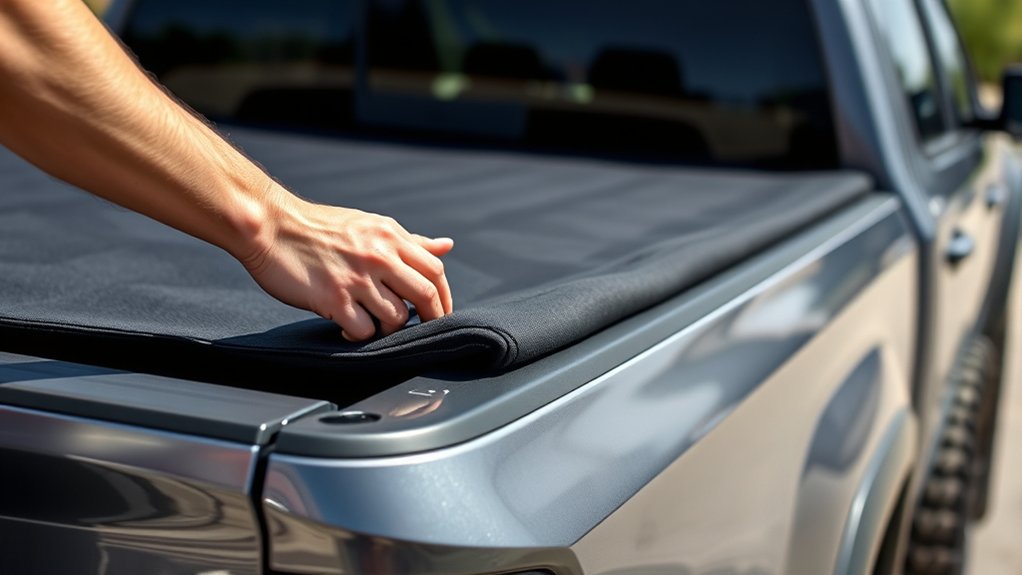
How to Tighten a Tonneau Cover
If your tonneau cover feels loose or rattles while driving, it’s time to tighten your tonneau cover to restore proper tension. Start by carefully inspecting the latches, clamps, and rails for any misalignment or wear.
Next, adjust the clamps evenly to ensure a secure fit. Proper tightening not only improves the appearance of your cover but also prevents damage and leaks.
Keep in mind that the tightening approach varies depending on your cover type. Knowing the right steps can save you time and hassle during the process.
Key Takeaways
- Inspect and identify loose areas by checking latches, frame alignment, and listening for rattling noises.
- Locate and evenly tighten clamps along side rails using appropriate tools for consistent pressure.
- For roll-up covers, loosen mounting hardware, pull cover taut, then retighten bolts from center outward.
- For folding covers, loosen clamps to adjust tension and alignment, then evenly retighten to avoid damage.
- Regularly check and replace worn seals, latches, and fasteners to maintain tight fit and prevent leaks.
Identifying a Loose Tonneau Cover
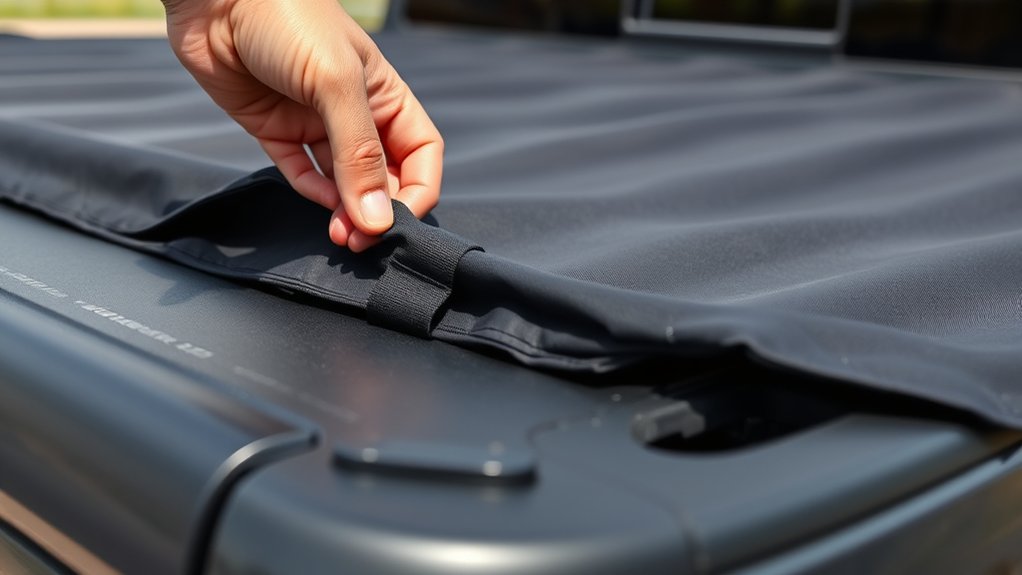
How can you tell if your tonneau cover is loose? Start by inspecting the latch; a loose latch often causes the cover to flap or shift during driving. Check if the cover feels unstable or if it moves excessively when you apply pressure.
Inspect the latch first—looseness often causes flapping or shifting when driving or pressing on the cover.
Frame warping is another key indicator. Look for any bends or distortions along the frame that prevent the cover from sitting flush. Warped frames can cause gaps, reducing the cover’s tension and security.
Listen for rattling noises, which frequently result from loose components. If the cover doesn’t maintain a tight seal or you notice uneven tension across its surface, these signs confirm looseness.
Identifying these issues early ensures you can address them promptly, maintaining the cover’s protective function and overall vehicle appearance.
Checking and Replacing Worn Tonneau Cover Parts
After identifying signs of looseness in your tonneau cover, the next step is to inspect its individual parts for wear or damage. Focus on components critical to maintaining tension and protecting your truck bed, while preserving ventilation design and paint finish.
- Seals and Gaskets: Examine for cracks or hardening that compromise airtightness and ventilation design. Replace if brittle.
- Latches and Hinges: Check for corrosion or deformation that impairs secure fastening, risking loosening and potential paint finish scratches.
- Fasteners and Straps: Inspect for fraying or rust; worn fasteners reduce tension effectiveness and can damage the paint finish beneath.
Replacing worn parts promptly prevents further cover slackness and protects your vehicle’s ventilation integrity and exterior surface.
Tools Needed to Tighten Your Tonneau Cover
What tools do you need to effectively tighten your tonneau cover? Proper tools selection is critical for a secure fit and maintaining warranty coverage.
Generally, you’ll require a ratchet wrench with the correct socket size to adjust bolts or clamps. A screwdriver, Phillips or flathead depending on your cover’s hardware, is essential for tightening screws.
Some covers may need pliers or an Allen wrench for specific fasteners. Avoid using power tools unless specified by the manufacturer, as improper torque can void your warranty.
Always consult your tonneau cover’s manual to confirm recommended tools and procedures. Using the right tools ensures you don’t damage components and keeps your cover within warranty guidelines, safeguarding your investment and ensuring a snug, durable fit.
Tightening Roll-Up Tonneau Covers
With the right tools in hand, you can focus on tightening your roll-up tonneau cover to ensure a secure, weather-resistant seal. Start by inspecting the rigid hinges and aluminum framing for any loose screws or bolts. Next, follow these steps:
- Loosen all mounting hardware slightly to allow adjustment.
- Pull the cover taut, ensuring even tension across the surface.
- Gradually retighten the hardware, starting from the center and moving outward to maintain uniform pressure.
This method prevents sagging and improves the seal against water and debris. Check the cover’s alignment with the truck bed rails, adjusting the aluminum framing if needed.
Regularly maintain the rigid hinges by lubricating them to avoid stiffness, which can affect cover tension. Proper tightening extends the lifespan of your roll-up tonneau cover and maintains optimal performance.
Tightening Folding Tonneau Covers
When tightening folding tonneau covers, you’ll want to start by loosening the clamps or fasteners securing the panels to the truck bed. This allows you to adjust the alignment and tension without damaging the cover or mounting hardware.
Use proper tightening techniques by evenly tightening each clamp in sequence, ensuring consistent pressure across all panels. Avoid over-tightening to prevent material wear, especially on vinyl or fabric surfaces, which can lead to premature cracking or fraying.
Inspect the hinges and seams for any signs of stress or damage during this process. Once adjusted, verify the cover lays flat and taut without sagging or excessive tension. Maintaining even tension extends the cover’s lifespan and preserves its protective qualities.
Adjusting Clamp-and-Rail Systems on Tonneau Covers
Start by locating the clamp adjustment points along the rails to ensure proper alignment. Tighten the clamps evenly to maintain consistent pressure across the cover.
Finally, test the tension to confirm the cover is secure and free of slack.
Locating Clamp Adjustment Points
Where exactly are the clamp adjustment points on your tonneau cover? Locating these points is critical for achieving proper clamp alignment and ensuring a tight fit. Typically, you’ll find adjustment points at these three key locations:
- Side Rails: Inspect where the clamps attach to the side rails; these usually have bolts or screws you can loosen for adjustment.
- Clamp Hinges: Check the hinges on the clamps themselves. Some models allow pivot adjustments to improve alignment.
- Rail Ends: Examine the ends of the rails near the tailgate, where some clamps have sliding or offset adjustment mechanisms.
Identifying and understanding these adjustment points lets you fine-tune clamp positioning accurately, preventing gaps and ensuring your tonneau cover stays securely tightened.
Securing Rails Evenly
How do you guarantee your tonneau cover’s rails are secured evenly for a tight, reliable fit? Start by understanding the design basics of your clamp-and-rail system. Uneven rails can cause gaps, leading to water leakage and safety concerns like cover detachment during transit.
Adjust each clamp incrementally and measure the rail alignment frequently.
| Step | Action |
|---|---|
| 1 | Loosen clamps slightly |
| 2 | Align rails parallel to truck bed |
| 3 | Tighten clamps evenly, checking tension balance |
Focus on uniform pressure across all clamps. Avoid overtightening one side, which can warp rails or compromise clamps. Maintaining this balance ensures your tonneau cover remains secure, functional, and safe under driving conditions.
Testing Tension Consistency
Why does maintaining consistent tension across your clamp-and-rail system matter? Consistent tension ensures optimal cover alignment, prevents sagging, and prolongs the tonneau cover’s lifespan. To test tension consistency, follow these steps:
- Visually inspect the cover for uniform tautness across all rails, checking for any slack or uneven spots.
- Perform manual tension testing by pressing down gently at multiple points along the cover; resistance should feel even throughout.
- Adjust clamps incrementally if you detect areas with lower tension, then recheck alignment and tension to confirm uniformity.
Regular tension testing helps identify weak points early, allowing precise adjustments that maintain a secure, streamlined fit. This process is key to preserving your tonneau cover’s protective function and appearance.
Preventing Tonneau Cover Looseness
When do you know your tonneau cover needs tightening? Pay attention to sagging or flapping during drives, which indicate looseness. To prevent this, regularly inspect and adjust tensioning mechanisms, such as straps or clamps, ensuring even pressure across the cover.
Use a torque wrench to apply consistent force without damaging the frame or paint finishes. Avoid over-tightening, which can cause premature wear or distort the cover’s shape.
Additionally, install alternative lighting near the cover to improve visibility during adjustments and inspections, especially in low-light conditions. Keep mounting points clean and free of debris to maintain secure attachment.
How Weather Affects Your Tonneau Cover’s Fit
You’ll notice your tonneau cover’s fit changes with temperature fluctuations, as materials contract in cold and expand in heat. Moisture from rain or humidity can also affect tension by causing the fabric to absorb water and loosen.
Understanding these weather impacts helps you adjust the cover for a secure fit year-round.
Temperature Impact on Material
How does temperature influence the fit of your tonneau cover? Temperature fluctuations cause the cover material to expand or contract, directly affecting its tension and fit. This impacts not only aesthetics but also functional aspects like throttle response and engine cooling, as a poorly fitted cover can alter airflow dynamics.
Consider these effects:
- Expansion in heat: The cover stretches, loosening tension and potentially exposing your truck bed.
- Contraction in cold: The material tightens, risking tears or warping as it becomes brittle.
- Repeated cycles: Continuous expansion and contraction degrade material integrity, reducing lifespan and performance.
Adjust your tonneau cover tension seasonally to maintain optimal fit, ensuring consistent engine cooling and throttle response by preserving proper airflow under varying temperatures.
Moisture Effects on Tension
Just as temperature changes influence your tonneau cover’s fit by altering material tension, moisture plays a significant role in affecting its performance. When exposed to humidity or rain, your cover’s fabric undergoes moisture expansion, causing it to stretch and loosen.
Conversely, prolonged dry conditions may lead to fabric shrinkage, tightening the material beyond its original dimensions. Both processes impact the cover’s tension, potentially compromising its seal and protection.
To maintain optimal fit, you need to regularly inspect your tonneau cover after wet weather and dry spells. Adjust tensioning mechanisms accordingly to compensate for these dimensional changes.
Understanding moisture expansion and fabric shrinkage helps you anticipate fit variations, ensuring your cover remains taut, secure, and effective regardless of weather fluctuations.
Tips for Maintaining a Tight Seal and Avoiding Leaks
Why does maintaining a tight seal on your tonneau cover matter? A tight seal ensures optimal sound insulation, prevents water intrusion, and preserves cargo integrity.
To keep your cover leak-free, follow these tips:
- Check Hitch Alignment: Misalignment can cause uneven tension, compromising the seal. Ensure the hitch and cover frame align perfectly to avoid gaps.
- Regularly Inspect Seals: Look for cracks or wear in rubber gaskets and replace them promptly to maintain watertight integrity.
- Adjust Tension Consistently: Use built-in tensioners or straps to keep the cover taut, especially after exposure to moisture which can affect material stretch.
When to Call a Pro for Tonneau Cover Repairs
When should you consider calling a professional for tonneau cover repairs? If your cover suffers from frame damage, severe fabric tears, or malfunctioning locking mechanisms, it’s time to consult a pro. These issues require specialized tools and expertise beyond routine tightening or cleaning.
Attempting repairs without proper skills might worsen the problem or void warranties. Avoid offbeat discussion or unrelated topic distractions when diagnosing damage; focus strictly on cover integrity and functionality.
If you notice persistent sagging despite adjustments, unusual noises during operation, or water pooling, a professional can accurately assess and fix underlying structural problems. In short, call a pro when repairs surpass basic maintenance, ensuring your tonneau cover remains secure, weatherproof, and durable without risking improper fixes.
Frequently Asked Questions
Can a Tonneau Cover Improve My Truck’s Fuel Efficiency?
Yes, a tonneau cover can improve your truck’s fuel efficiency by reducing drag and improving aerodynamics. By smoothing airflow over the bed, it decreases wind resistance, helping your engine use less fuel during highway driving.
Are Tonneau Covers Compatible With All Truck Bed Sizes?
You’d think tonneau covers fit every truck bed perfectly, but compatibility concerns persist. Nonetheless, universal sizing tries to bridge gaps, though you’ll often need a model tailored to your truck’s specific dimensions for an ideal fit and function.
How Do Tonneau Covers Affect Truck Bed Security?
Tonneau covers enhance your truck bed’s security by reducing security vulnerabilities and deterring theft. They also improve weather resistance, protecting cargo from rain and debris. However, choose a quality cover to maximize these benefits effectively.
What Materials Are Tonneau Covers Typically Made From?
Tonneau covers use various material types, including vinyl, aluminum, fiberglass, and canvas. Fabric options often feature marine-grade vinyl or heavy-duty polyester, providing durability, weather resistance, and flexibility tailored to your truck bed’s protection needs.
Can I Install a Tonneau Cover Myself Without Professional Help?
You can install a tonneau cover yourself. 80% of users succeed with installation basics.
Follow precise steps and maintenance tips to guarantee tightness and durability. Proper tools and patience make DIY installation both efficient and reliable.
Conclusion
Tightening your tonneau cover isn’t just about achieving a snug fit—it’s about protecting your cargo and extending the life of your cover. Like tuning a fine instrument, even adjustments create harmony between the cover and your truck. Regular checks and proper tightening help keep rattles at bay and seals secure, no matter the weather.
When in doubt, don’t hesitate to call a pro for assistance. Remember, a well-tightened tonneau cover is your truck’s silent guardian against the elements. Ensuring your tonneau cover is properly tightened will maximize its effectiveness and durability.