When Was the First Volkswagen Beetle Made
Much like the Model T symbolized a new era in American automotive history, the first Volkswagen Beetle marked a turning point in German car manufacturing. You might assume it emerged post-war, but its origins trace back to 1938 in Wolfsburg, Germany.
Designed under Ferdinand Porsche’s guidance, this vehicle was crafted to meet a government mandate for an efficient, affordable car. Yet, the story behind its creation and lasting impact is far more intricate than just a date on the calendar.
Key Takeaways
- The Volkswagen Beetle’s production officially began in 1938 in Wolfsburg, Germany.
- The car’s origin dates back to the late 1930s, designed to be affordable and practical for the masses.
- Ferdinand Porsche led the original design commissioned by the German government in the 1930s.
- The Beetle was engineered with an air-cooled, rear-engine layout emphasizing durability and simplicity.
- Initial manufacturing started in the late 1930s using standardized assembly line techniques for efficiency.
When and Where Was the First Volkswagen Beetle Made?
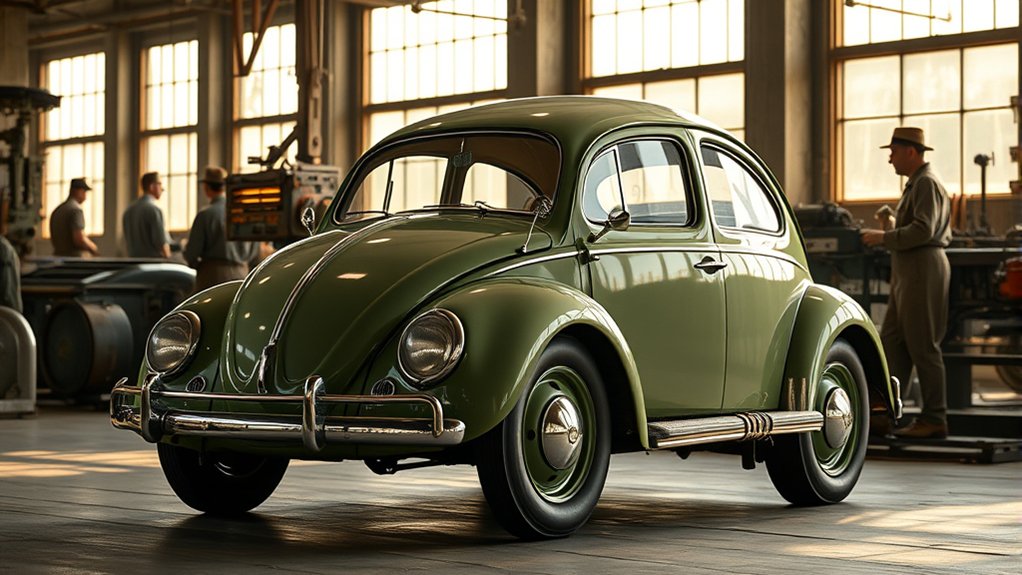
When exactly did the Volkswagen Beetle first come to life, and where did this iconic car originate? The Beetle’s origins trace back to Germany in the late 1930s, specifically 1938, when production officially began in the city of Wolfsburg.
This vehicle embodies German engineering’s focus on efficiency, durability, and affordability, designed to offer a practical car for the masses. You can see how its streamlined shape and reliable mechanics reflect purposeful design rather than mere aesthetics.
Over time, Volkswagen capitalized on marketing nostalgia, positioning the Beetle not just as a car but as a cultural icon tied to simpler times and post-war recovery. This strategic approach helped cement its legacy and broadened its appeal far beyond its original practical intent.
Who Designed the Original Volkswagen Beetle?
Who was behind the design of the Volkswagen Beetle, and what principles guided its creation? Ferdinand Porsche led the original design, commissioned in the 1930s by the German government. Porsche focused on affordability, durability, and simplicity, aiming to produce a “people’s car” accessible to the masses.
You’ll find that the Beetle’s engineering prioritized an air-cooled, rear-engine layout to reduce maintenance and improve reliability. Though designed long before electric alternatives gained attention, Porsche’s emphasis on efficiency indirectly influences modern eco-friendly discussions.
Interestingly, the Beetle’s legacy contrasts with diesel controversies that emerged later in Volkswagen’s history, highlighting evolving automotive priorities. By understanding Porsche’s foundational vision, you grasp how the Beetle set benchmarks in economy and practicality, shaping Volkswagen’s approach amid today’s shifting focus toward sustainable mobility.
What Inspired the Volkswagen Beetle’s Unique Shape and Design?
You’ll notice the Volkswagen Beetle’s shape draws heavily from the streamlined cars popular in the 1930s, emphasizing aerodynamic efficiency.
Ferdinand Porsche played a key role by designing a compact, functional vehicle that reduced air resistance and improved fuel economy. This blend of form and function set the Beetle apart from other cars of its time.
Influence of Streamlined Cars
How did the Volkswagen Beetle achieve its instantly recognizable, aerodynamic shape? Its design drew heavily from the streamlined cars popular in the 1930s, which emphasized smooth, rounded forms to reduce air resistance. This approach wasn’t just about aesthetics; it improved fuel efficiency and performance.
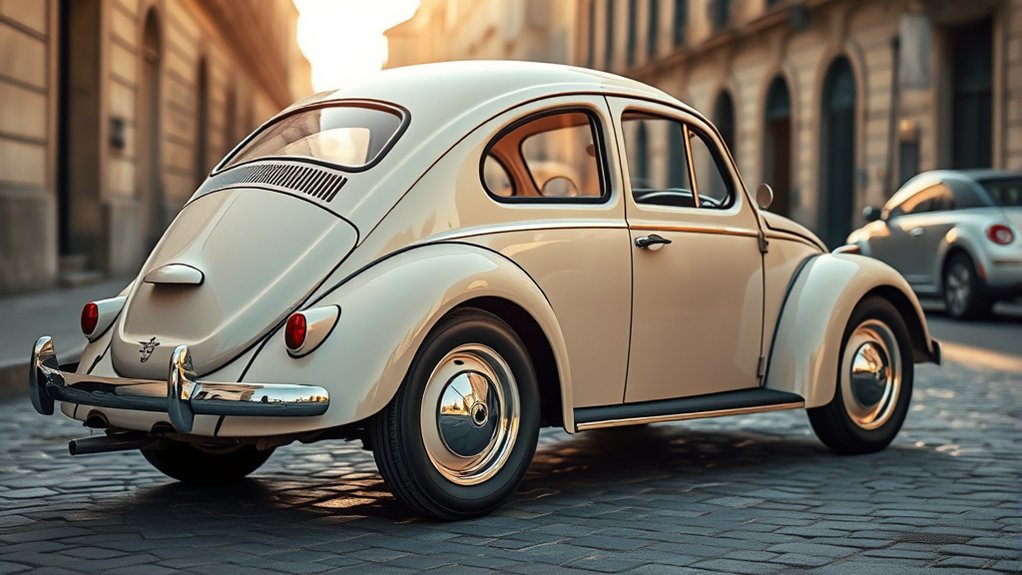
You’d notice the Beetle’s curved fenders, sloping roofline, and tapered rear closely resemble these aerodynamic principles. Unlike many contemporaries that used rare materials or offered limited color options, the Beetle prioritized affordability and simplicity, influencing its practical design choices.
Role of Ferdinand Porsche
The streamlined design principles that shaped the Volkswagen Beetle’s form were brought to life through the vision of Ferdinand Porsche. You’ll find that Porsche aimed to create a car combining affordability, efficiency, and distinctive style, responding to a growing demand for a “people’s car.”
There’s no controversy about his role as the chief designer, but debates do exist around the origins of the shape, with some attributing influences to earlier designs. Porsche’s approach wasn’t just engineering; it was a deliberate marketing strategy.
He crafted a recognizable, approachable silhouette that would appeal broadly and stand out in the market. By integrating functional needs with aesthetic innovation, Porsche ensured the Beetle’s design symbolized both modernity and accessibility, laying the foundation for its lasting legacy.
Aerodynamics and Functionality
What factors shaped the Volkswagen Beetle’s distinctive rounded silhouette? Contrary to popular belief, aerodynamic myths often exaggerate the role of streamlining in its design. While the Beetle’s shape does reduce air resistance, its form primarily serves practical functionality: maximizing interior space within compact dimensions and ensuring structural strength.
Manufacturing myths suggest the design was solely about ease of production, but in reality, the rounded body helped distribute stress evenly, enhancing durability. Ferdinand Porsche balanced these needs, blending aerodynamics with cost-effective manufacturing and functional requirements.
How the First Volkswagen Beetle Was Manufactured
Although many associate the Volkswagen Beetle with post-war success, its manufacturing process began in the 1930s under a highly organized and innovative framework. You’d find that the production emphasized efficiency, employing assembly line techniques influenced by contemporary kusabi fashion’s precision and attention to detail.
This mindset prioritized consistency and quality, much like culinary trends that balance creativity with standardized methods to ensure repeatable excellence. Each Beetle was meticulously crafted with interchangeable parts, streamlining repairs and assembly.
Factories integrated advanced metallurgy and stamping technologies to produce the car’s distinctive rounded panels with minimal waste. By focusing on modular design and scalable manufacturing, the process allowed Volkswagen to meet high demand while maintaining durability.
Understanding this manufacturing approach reveals how the Beetle became a symbol of industrial ingenuity and mass production.
What Early Volkswagen Beetle Models Looked Like
How did the earliest Volkswagen Beetle models capture attention with their design? You’ll notice their rounded, streamlined shape, which was revolutionary in the 1930s. This aerodynamic form wasn’t just about looks; it reflected the car’s efficient engineering and the influence of its racing heritage.
Those curves minimized air resistance, enhancing performance. Early Beetles featured simple, functional interiors and modest chrome accents, emphasizing utility over luxury. Color variants were limited initially, mostly in muted tones like beige, gray, and black, catering to practical tastes rather than flamboyance.
However, these restrained palettes highlighted the Beetle’s distinctive silhouette, making it instantly recognizable. When you examine these models, you see how the blend of innovative design and subtle aesthetics set the stage for the Beetle’s lasting legacy.
How the Volkswagen Beetle Became Popular After Launch
You’ll see that the Volkswagen Beetle’s rise in popularity stemmed from clever early marketing strategies that highlighted its affordability and reliability. Its distinctive shape quickly turned it into a cultural icon, appealing to a broad audience beyond just practical drivers.
Understanding these factors helps explain why the Beetle became more than just a car. It became a symbol.
Early Marketing Strategies
Why did the Volkswagen Beetle gain popularity so rapidly after its launch? You can attribute much of its success to early marketing strategies that focused on practicality, affordability, and reliability.
Volkswagen avoided going off on an unrelated topic or a random tangent, instead emphasizing the Beetle’s unique qualities directly to consumers. The company targeted middle-class buyers seeking a durable, economical car for everyday use.
Volkswagen’s ads highlighted fuel efficiency and low maintenance costs, which resonated during post-war economic recovery. Additionally, the use of straightforward, honest messaging built consumer trust, setting the Beetle apart from competitors.
These focused marketing efforts helped the Beetle break through initial skepticism, creating a solid foundation for its growing popularity without distractions or confusing messages.
Cultural Icon Status
The Volkswagen Beetle’s rise to cultural icon status wasn’t just about its engineering or affordability. It reflected a deeper connection with the social and cultural movements of its time. You’ll notice how the Beetle became a symbol of individuality during the 1960s, embraced by counterculture groups who valued its unpretentious design.
Its frequent appearances in pop culture, from movies to music, further cemented its status. The car’s compact shape and quirky look even influenced fashion trends, inspiring bold prints and accessories that echoed its playful spirit.
Why the First Volkswagen Beetle Remains Iconic to Car Enthusiasts
How does a car designed in the 1930s continue to captivate enthusiasts nearly a century later? The first Volkswagen Beetle’s lasting appeal lies in its innovative engineering and distinctive design, which set a foundation that defied rapid design evolution.
You’ll notice that its simple, reliable mechanics still resonate with collectors and restorers who appreciate craftsmanship and historical significance. Volkswagen’s early marketing strategy also played a critical role, framing the Beetle as an affordable, practical vehicle for everyday people.
This approach created a personal connection between the car and its owners, strengthening its emotional value. When you examine these factors, you see why the original Beetle remains an icon, not just as a car but as a symbol of ingenuity and cultural identity among enthusiasts worldwide.
How the Volkswagen Beetle’s Design Evolved Over Time
When did the Volkswagen Beetle start to transform from its original form, and what changes shaped its enduring legacy? You’ll find that the Beetle’s design evolution began almost immediately after its 1938 debut. Early modifications focused on improving functionality without compromising its iconic rounded silhouette.
Over the decades, Volkswagen introduced subtle aerodynamics refinement, such as smoother fenders and streamlined bumpers, enhancing fuel efficiency and stability. Inside, you’ll notice gradual upgrades in comfort and instrumentation, reflecting evolving consumer expectations.
The shift from mechanical simplicity to incorporating modern safety features marked another pivotal design phase, all while maintaining the Beetle’s distinctive charm. By analyzing these developments, you can appreciate how Volkswagen balanced innovation with tradition, ensuring the Beetle remained relevant and beloved throughout its production lifespan.
Frequently Asked Questions
What Engine Powered the First Volkswagen Beetle?
The first Volkswagen Beetle used an air-cooled, flat-four engine design, enhancing reliability and simplicity. This engine choice aligned with Volkswagen’s branding strategy, emphasizing efficiency and durability, which helped establish the car’s iconic reputation worldwide.
How Much Did the First Volkswagen Beetle Cost?
You’d find the first Volkswagen Beetle priced around 1,000 Reichsmarks, reflecting postwar recovery notes. Its craftsmanship balanced engineering milestones with design trends, contrasting later mass production and the arrival of the electric Beetle’s modern evolution.
Were There Any Safety Features in the Original Beetle?
You won’t find advanced safety features in the original Beetle; its safety feature history reflects a design philosophy focused on simplicity and durability rather than crash protection. This evolved considerably in later models to meet modern standards.
How Many Units of the First Beetle Were Produced Initially?
You’ll find that initial beetle design production involved around 1,000 units, reflecting early factory logistics challenges. This limited scale allowed Volkswagen to optimize assembly lines and refine manufacturing processes before mass-producing the iconic Beetle globally.
What Colors Were Available for the First Volkswagen Beetle?
You’ll find the first Volkswagen Beetle came in limited colors like beige and gray, reflecting its practical design. This choice highlights early production history and milestones focused on functionality over variety in colors and design.
Conclusion
You can’t overstate the impact of the first Volkswagen Beetle—it wasn’t just a car, it was a revolution on wheels. Born in 1938 in Wolfsburg under Porsche’s genius, its air-cooled, rear-engine design shattered norms and redefined affordability and efficiency.
This tiny powerhouse didn’t just transport people; it drove an entire culture forward. Understanding its origins helps you appreciate how a simple, practical idea became one of the most iconic automotive legends in history.
Knowing when the first Volkswagen Beetle was made gives you insight into how this remarkable vehicle changed the course of automotive design forever.