How Often to Change Transfer Case Fluid f150
Did you know that neglecting to change your F-150’s transfer case fluid every 30,000 to 60,000 miles can accelerate wear on critical components like seals and gears?
Changing the transfer case fluid regularly is essential for maintaining your truck’s performance and longevity.
If you rely on your F-150 for towing or off-road driving, these intervals may need to be shorter.
Harsh conditions put extra strain on the transfer case, requiring more frequent fluid changes.
Understanding how often and under what conditions to service this fluid is essential to avoid costly repairs and maintain optimal 4WD performance.
Regular maintenance ensures your transfer case operates smoothly and reliably.
Key Takeaways
- Ford recommends changing the F-150 transfer case fluid every 30,000 to 60,000 miles based on driving conditions.
- Off-road driving, towing, and stop-and-go traffic require more frequent fluid changes due to increased wear and heat.
- Regular fluid inspections help detect contamination or degradation, preventing costly transfer case damage.
- Use only manufacturer-specified Mercon V or Mercon LV fluid types to ensure proper lubrication and seal protection.
- Avoid the myth that transfer case fluid never needs changing; timely maintenance maintains drivetrain reliability and performance.
Why Transfer Case Fluid Matters for Your F-150’s 4WD
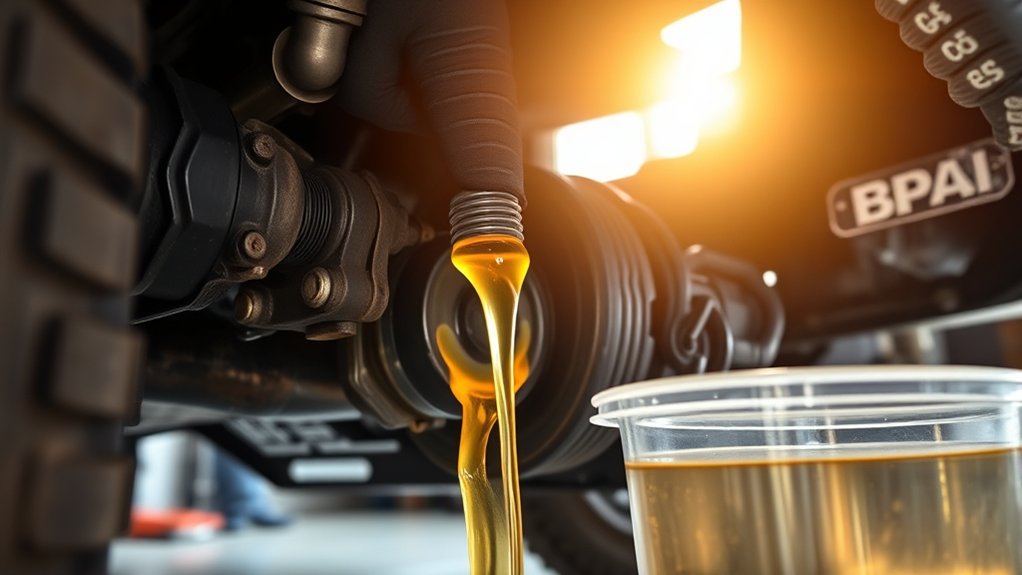
Why does transfer case fluid play a crucial role in your F-150’s 4WD system? It lubricates the transfer case’s internal components, including gears and bearings, reducing friction and preventing overheating during operation.
Transfer case fluid lubricates gears and bearings, reducing friction and preventing overheating in your F-150’s 4WD system.
Without proper fluid levels and quality, you risk accelerated wear, potential gear failure, and costly repairs. It’s essential to stay focused on this topic, avoiding any unrelated topic or stray discussion that might distract from understanding the fluid’s function.
The fluid also facilitates smooth engagement of 4WD modes, ensuring power distributes effectively between front and rear axles. Ignoring transfer case fluid health compromises drivetrain efficiency and can cause erratic shifting or noise.
Maintaining optimal fluid condition is critical for your F-150’s reliable 4WD performance and longevity.
How Often to Change Transfer Case Fluid on an F-150
Maintaining the transfer case fluid in your F-150 ensures the 4WD system operates smoothly and prevents premature component failure. Ford recommends changing the fluid every 30,000 to 60,000 miles, but many maintenance myths suggest “nope, it never needs changing.”
Ignoring this can lead to costly damage, especially if you frequently approach towing limits. Stay within recommended intervals to preserve seal integrity and gear lubrication.
| Mileage Interval | Condition |
|---|---|
| 30,000 miles | Normal driving |
| 45,000 miles | Light towing |
| 60,000 miles | Heavy towing/towing limits |
Regular fluid changes optimize transfer case performance and extend your F-150’s drivetrain life.
How Driving Conditions Affect Transfer Case Fluid Change Intervals
How do different driving conditions impact the frequency of your F-150’s transfer case fluid changes? Driving tenacity directly influences fluid degradation, affecting the interval between changes. If you consistently push your truck through demanding environments, expect accelerated fluid wear.
Consider these factors:
- Off-road usage: High torque loads and dirt exposure increase fluid contamination, requiring more frequent changes.
- Towing and hauling: Elevated mechanical stress heats the fluid, reducing its lubricating effectiveness faster.
- Stop-and-go traffic: Frequent temperature fluctuations cause thermal breakdown, shortening fluid life.
- Highway cruising: Steady speeds produce minimal fluid stress, extending change intervals and optimizing fuel economy.
Adjust your maintenance schedule based on these conditions to maintain optimal transfer case performance and prevent premature component wear.
How to Check Transfer Case Fluid Levels and Condition
Understanding the impact of driving conditions on transfer case fluid life highlights the importance of regularly verifying both fluid levels and quality. Begin by locating the transfer case fill plug, usually on the case’s side.
Before removal, prepare checklist items: clean rag, a suitable wrench, and a flashlight. Remove the fill plug carefully; fluid should be level with the plug hole’s bottom edge. If not, add the manufacturer-recommended fluid.
Inspect fluid clarity and color. Healthy fluid appears clear with a slight amber tint. Dark, cloudy, or burnt-smelling fluid indicates contamination or degradation.
Avoid mixing unrelated topics like engine oil checks during this process. Accurate fluid level and condition checks prevent premature wear and ensure optimal transfer case performance under varying driving conditions.
How to Change Transfer Case Fluid on Your F-150
When should you change the transfer case fluid in your F-150 to maintain peak performance? Avoid unrelated topic or off topic discussions that might distract from this essential maintenance. Here’s how to do it precisely:
- Warm up the vehicle to operating temperature, then safely lift it using jack stands.
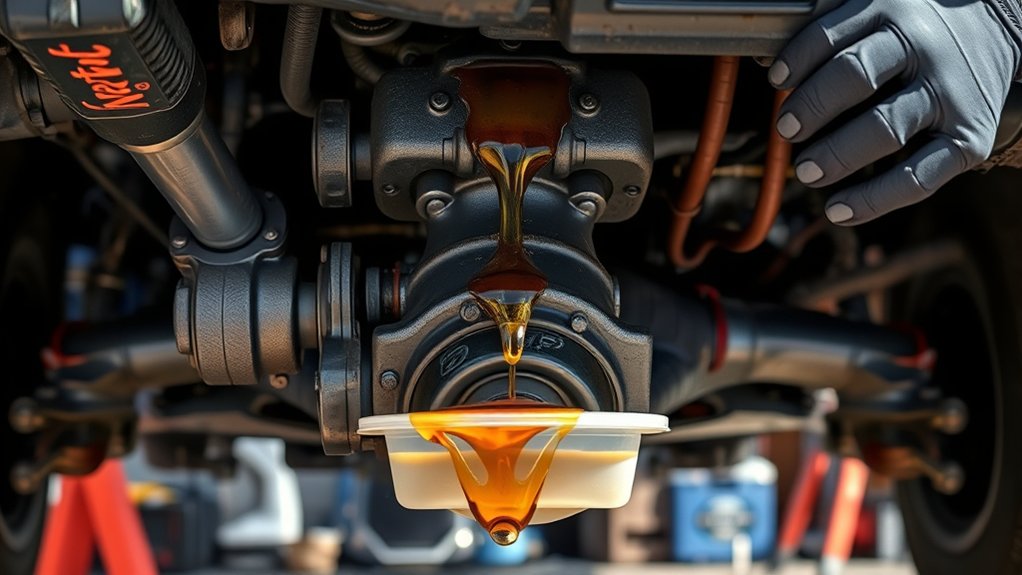
- Locate the transfer case drain plug, position a catch pan underneath, and remove the plug to drain old fluid completely.
- Replace the drain plug securely, then remove the fill plug to refill the transfer case with the correct amount of new fluid.
- Reinstall the fill plug, lower the vehicle, and check for leaks to ensure a proper seal.
Following these steps prevents contamination and wear, optimizing your F-150’s drivetrain longevity without any off topic or unrelated topic confusion.
What Type of Transfer Case Fluid Does Your F-150 Need?
Which transfer case fluid suits your F-150’s specific drivetrain requirements depends on the model year and engine configuration. Typically, Ford recommends a synthetic or conventional transfer case fluid meeting the Mercon V or Mercon LV specifications, ensuring optimal lubrication and thermal stability.
You need to consult your owner’s manual for exact fluid types, as using an unrelated topic like automatic transmission fluid can damage the transfer case seals or gears. Avoid off topic advice from generic forums, as incorrect fluids may lead to premature wear or failure.
For newer F-150s with advanced 4WD systems, specialized synthetic fluids with specific additive packages are required to maintain performance and durability. Always use fluids explicitly specified by Ford to maintain drivetrain integrity and avoid costly repairs.
Signs Your F-150 Needs a Transfer Case Fluid Change Immediately
Choosing the correct transfer case fluid for your F-150 is only part of maintaining its drivetrain health; recognizing the signs that indicate a fluid change is overdue is equally important. Ignoring these signs or discussing irrelevant topics can lead to costly damage.
- Unusual Noises: Grinding or whining sounds during 4WD engagement often signal contaminated or degraded fluid.
- Difficulty Shifting: Hesitation or resistance when switching between 2WD and 4WD indicates fluid breakdown affecting clutch packs.
- Fluid Leakage: Visible leaks around the transfer case housing require immediate fluid replacement to prevent internal damage.
- Burnt Smell or Dark Fluid: Fluid that smells burnt or appears dark and dirty shows it’s lost lubrication properties.
Avoid off topic distractions; focus on these clear signs to maintain optimal transfer case performance.
Common F-150 Transfer Case Fluid Change Mistakes
Why do so many F-150 owners make errors during transfer case fluid changes? Often, they fall victim to reliability myths, assuming the fluid is “good for life” and skipping timely replacement. This neglect can lead to debris accumulation and increased wear.
Another frequent mistake is using incorrect fluid types or mixing brands, which compromises lubrication and can cause internal damage. Additionally, improper fluid levels, either overfilling or underfilling, disrupt the transfer case’s operation.
You must also avoid rushing the process; incomplete draining leaves old contaminants behind. These errors not only degrade performance but may have warranty implications if damage results from improper maintenance.
Staying precise with fluid type, fill levels, and change intervals ensures your F-150’s transfer case remains reliable and protected under warranty.
Proven Tips to Extend Your Transfer Case Fluid’s Lifespan
You should regularly inspect your transfer case fluid for contamination and proper levels to catch issues early. Choosing high-quality, manufacturer-recommended fluid ensures optimal lubrication and heat resistance.
Additionally, maintaining steady driving habits reduces stress on the transfer case, helping the fluid last longer.
Regular Inspection Importance
Regularly inspecting your F150’s transfer case fluid is essential to maintaining peak drivetrain performance and preventing costly repairs. Don’t dismiss this as insignificant maintenance or get distracted by unrelated topics. You need to:
- Check fluid level and condition. Low or contaminated fluid impairs lubrication and cooling.
- Inspect for metal shavings or debris, signaling internal wear.
- Verify the fluid color. Dark or burnt-smelling fluid indicates oxidation and breakdown.
- Ensure the transfer case operates smoothly without unusual noises or resistance.
These precise inspections help you detect early signs of fluid degradation or mechanical issues, extending the fluid’s lifespan and safeguarding your transfer case. By integrating regular inspections into your maintenance routine, you avoid unexpected failures and costly downtime, keeping your F150’s drivetrain reliable and efficient.
Quality Fluid Selection
Selecting the right transfer case fluid directly influences the longevity and performance of your F150’s drivetrain components. Using fluid with incorrect viscosity can lead to insufficient lubrication, increasing internal wear and heat generation.
You need to choose a fluid that meets the manufacturer’s specifications, typically SAE 75W-90 or equivalent synthetic gear oil, which provides stable viscosity across temperature ranges. Avoid generic or off-spec fluids as they may not protect the transfer case’s gears and bearings effectively.
High-quality synthetic fluids also resist oxidation and thermal breakdown, extending service intervals. Always verify that the fluid contains additives designed to reduce friction and corrosion.
Proper Driving Habits
How can adjusting your driving habits considerably extend the lifespan of your F150’s transfer case fluid? Proper riding etiquette reduces unnecessary strain on the transfer case, directly impacting fluid longevity. Here are four proven tips:
- Avoid sudden shifts between 2WD and 4WD modes to prevent fluid turbulence and premature wear.
- Limit excessive idling and heavy towing, which increase fluid temperature and degrade lubrication.
- Maintain steady speeds and avoid aggressive acceleration to reduce fluid shear stress and maintain optimal fuel economy.
- Regularly engage 4WD in mild conditions to evenly distribute fluid and prevent sediment buildup.
Frequently Asked Questions
Can I Use Synthetic Transfer Case Fluid in My F-150?
Yes, you can use synthetic transfer case fluid in your F-150, but ensure synthetic compatibility and match the fluid viscosity specified by the manufacturer. This helps maintain proper lubrication, seal integrity, and optimal transfer case performance.
Does Transfer Case Fluid Affect Fuel Efficiency?
Yes, transfer case fluid quality affects lubrication quality, which impacts fuel economy and mileage. Poor lubrication increases friction, reducing efficiency.
Maintaining proper fluid levels and using recommended synthetic fluids helps optimize fuel economy by minimizing drivetrain resistance.
How Much Does a Transfer Case Fluid Change Cost?
You’ll typically pay $100 to $200 for transfer case fluid maintenance, depending on labor and fluid type.
Check your warranty coverage first, as some plans cover this maintenance cost, reducing your out-of-pocket expenses considerably.
Can Low Transfer Case Fluid Cause Drivetrain Damage?
Imagine your drivetrain as a finely tuned orchestra; low transfer case fluid disrupts harmony, causing severe damage.
Regular drivetrain inspection and fluid contamination prevention are essential to maintain smooth operation and prevent costly mechanical failures.
Is Transfer Case Fluid Change Covered Under Warranty?
Warranties typically don’t cover transfer case fluid changes since they fall under regular maintenance.
You’ll need to follow your vehicle’s fluid service policies to avoid voiding warranty protections related to drivetrain components and fluid condition.
Conclusion
Keeping your F-150’s transfer case fluid fresh is like maintaining the lifeblood of your 4WD system—it ensures smooth gear engagement and prevents costly wear. Don’t let neglect turn routine maintenance into a mechanical headache.
Change the fluid every 30,000 to 60,000 miles based on your driving conditions. Always use the specified fluid, and check levels regularly to keep everything running smoothly.
With precise care, you’ll extend your transfer case’s life and keep your truck performing at peak efficiency. For the best results, follow the recommended schedule on how often to change transfer case fluid F150.