How to Install a Tonneau Cover
You might not realize that proper bed preparation is essential for a secure tonneau cover installation. Skipping this step can lead to misalignment and water leaks. Before you mount anything, you’ll need to clean the bed thoroughly, check the rails, and have the right tools on hand.
Understanding these initial steps assures a smooth process and a weatherproof seal—details many installers overlook but are vital for lasting performance.
Key Takeaways
- Choose a tonneau cover designed for easy installation with clear instructions and minimal hardware.
- Gather all necessary tools like socket wrenches, screwdrivers, clamps, and check manufacturer requirements.
- Thoroughly clean and prepare the truck bed, removing debris and inspecting bed rails for damage.
- Align and attach side rails evenly along the bed edges, securing clamps or bolts gradually to ensure a weatherproof fit.
- Verify cover alignment and tension, tighten all fasteners securely, and perform a final check for smooth operation and seal integrity.
Choose a Tonneau Cover That’s Easy to Install
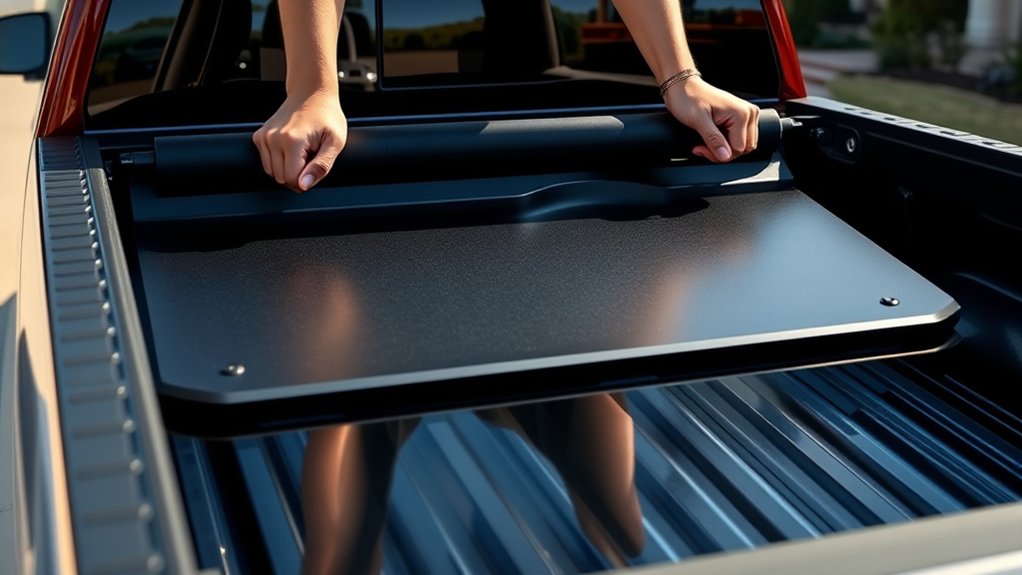
How do you guarantee your tonneau cover installation goes smoothly? Start by choosing a cover designed for straightforward installation. Focus on models with clear instructions and minimal hardware to reduce complexity.
Avoid common installation myths suggesting that more components ensure better durability; instead, rely on durability comparisons that highlight robust materials paired with simple assembly. Soft roll-up and snap-on covers typically require less time and effort compared to hard folding or retractable versions, which often demand precise alignment and specialized tools.
Selecting a cover known for ease of installation minimizes errors and potential damage during setup. By prioritizing simplicity and verified durability, you save time and ensure a secure fit without unnecessary frustration or guesswork. This approach leads to a faster, more reliable installation process.
Gather Tools and Materials
Where should you begin when preparing to install your tonneau cover? Start by gathering all necessary tools and materials to ensure an easy installation. Typically, you’ll need a socket wrench set, screwdrivers, measuring tape, clamps, and possibly a drill, depending on the cover type.
Refer to the manufacturer’s instructions to confirm specific requirements. Conduct a pricing comparison before purchasing tools you don’t already own; some kits include essential tools, which can save money. Having all materials on hand prevents interruptions during installation and helps maintain accuracy.
Organize your workspace and verify that fasteners, brackets, and seals are present. Proper preparation with the right tools streamlines the process, minimizes errors, and ensures your tonneau cover fits securely and functions optimally.
Prepare Your Truck Bed for Tonneau Cover Installation
Start by thoroughly cleaning the truck bed surface to guarantee proper adhesion and fit. Remove any existing accessories or debris that could interfere with the installation.
Finally, inspect the bed rails for damage or irregularities that might affect the tonneau cover’s alignment.
Clean Truck Bed Surface
Before installing your tonneau cover, you’ll need to thoroughly clean the truck bed surface to assure proper adhesion and fit. Effective surface preparation involves removing dirt, grease, and debris using specific cleaning techniques.
Start by sweeping out loose particles, then wash with mild detergent and water. Rinse and dry completely to prevent moisture trapping under the cover.
| Step | Description |
|---|---|
| Sweep | Remove loose dirt and debris |
| Wash | Use mild detergent and water |
| Dry | Ensure surface is completely dry |
These steps ensure the surface is clean and ready, preventing adhesion failure or fit issues. Proper cleaning techniques are critical for a secure, long-lasting tonneau cover installation.
Remove Existing Accessories
How do you guarantee a smooth installation of your tonneau cover? First, remove existing accessories from your truck bed. This includes bed liners, toolboxes, and cargo nets that could interfere with the cover’s fitment.
Use appropriate tools like socket wrenches or screwdrivers to detach bolts and screws securely. Store hardware safely for potential reuse. Check for any adhesive residues or mounting brackets that need removal to ensure a flat surface.
Skipping this step may cause improper sealing or damage during installation. Remember, this subtopic focuses solely on accessory removal; inspecting bed rails comes later.
Clearing out all obstructions creates an optimal foundation, ensuring your new tonneau cover installs flush without gaps or misalignment. Prioritize precision here to avoid complications in subsequent steps.
Inspect Bed Rails
Why is inspecting your truck’s bed rails essential before installing a tonneau cover? Proper inspection alignment ensures the cover fits securely and functions correctly. Start by thoroughly cleaning the bed rails to remove debris that could affect fitment.
Examine the rails for damage, rust, or warping that might compromise rail compatibility with your tonneau cover model. Use a level or straight edge to check alignment along the entire rail length. Misaligned or bent rails can cause installation issues and reduce the cover’s effectiveness.
Confirm that the existing rails match the specifications required by the tonneau cover manufacturer. Address any irregularities before proceeding to guarantee a smooth installation process and optimal performance of your tonneau cover.
Attach the Tonneau Cover Side Rails
Where exactly should you position the tonneau cover side rails for ideal fit? Align each rail precisely along the bed’s edge, ensuring consistent spacing from the truck’s side to maintain proper rail alignment. This prevents gaps and promotes effective seam sealing once the cover is installed.
Tighten clamps or bolts gradually, checking alignment frequently to avoid distortion.
| Step | Key Detail |
|---|---|
| Position Rails | Align parallel to bed sides |
| Check Alignment | Verify equal spacing |
| Secure Temporarily | Tighten clamps evenly |
Focus on even rail alignment and proper seam sealing to guarantee a snug, weatherproof fit. Accurate positioning now sets the foundation for a secure attachment in the next step.
Secure Your Tonneau Cover to the Rails
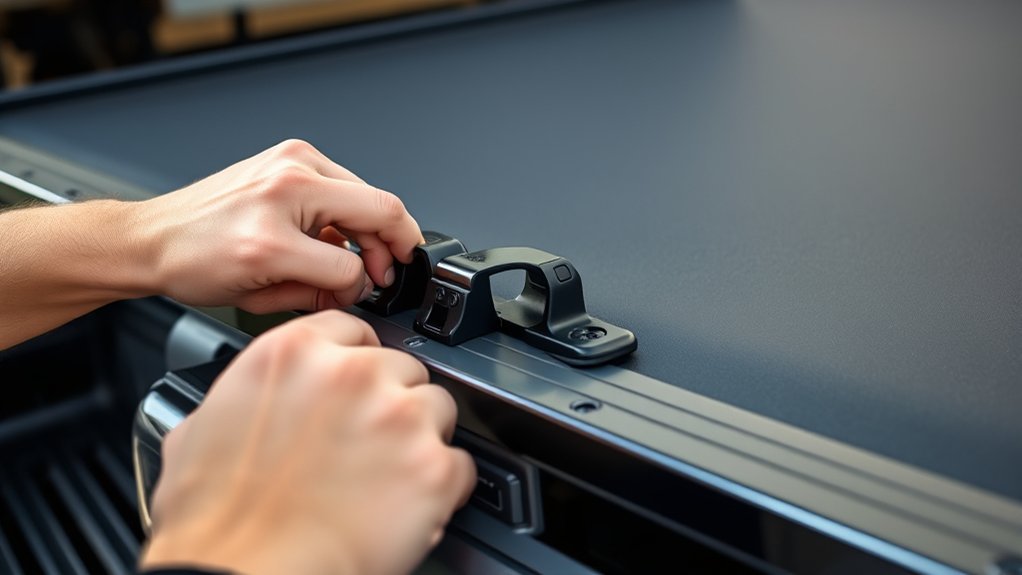
With the side rails aligned and secured evenly, you’re ready to fasten the tonneau cover itself. Begin by positioning the cover onto the secure rails, ensuring it sits flush without gaps. Attach the cover’s clamps or fasteners to the rails according to the manufacturer’s instructions, tightening them incrementally to maintain even pressure.
This method prevents misalignment and prepares the cover for a proper weatherproof fit. Focus on securing all attachment points firmly; loose clamps can compromise stability and allow water ingress. Double-check that the cover edges align consistently with the rails, reinforcing the secure rails setup you established earlier.
Once all fasteners are engaged, test the cover’s hold by applying gentle pressure to confirm it remains taut and stable before proceeding to final adjustments.
Adjust the Cover for a Weatherproof Fit
After securing the cover, you’ll need to adjust it to guarantee a weatherproof fit. Begin by checking the alignment of the cover edges along the truck bed rails. Tighten or loosen the clamps incrementally to adjust weatherproofing, ensuring the cover sits evenly without gaps.
Focus on uniform seal compression by pressing the seals firmly against the truck bed to prevent water intrusion. Avoid over-compressing seals, which can cause damage or reduce effectiveness.
Use a rubber mallet if necessary to gently tap the cover frame, enhancing seal contact. Inspect all corners and sides for consistent compression and adjust as needed.
Proper seal compression is essential for maintaining a dry bed, so take your time to achieve a snug, secure fit that blocks out moisture effectively.
Test and Finalize Your Tonneau Cover Fit
Now, check the cover alignment to ensure it sits evenly across the truck bed. Confirm that all fasteners are securely tightened to prevent shifting during use.
This final step guarantees a snug, reliable fit for your tonneau cover.
Check Cover Alignment
A properly aligned tonneau cover guarantees maximal protection and a secure fit. To ensure your cover fit is flawless, perform thorough alignment checks before finalizing installation. Start by visually inspecting the cover edges. They should sit flush with the truck bed rails without gaps.
Next, gently press down on various points to confirm uniform contact and tension. Lastly, slide the cover open and closed to verify smooth operation without catching.
- Confirm all edges align evenly along the truck bed rails.
- Check for consistent tension to avoid sagging or lifting.
- Test movement to detect any binding or resistance.
These steps ensure your tonneau cover is precisely positioned, preventing water intrusion and maintaining durability. Accurate alignment checks are essential for a professional, long-lasting installation.
Secure All Fasteners
Ensuring your tonneau cover sits perfectly aligned sets the stage for securely fastening it to your truck bed. Start by tightening all clamps or bolts incrementally, ensuring an even, snug fit. Double-check each secure fastener to prevent gaps that compromise your cover’s weatherproof fit.
Avoid overtightening, which might damage hardware or the cover material.
Use this checklist to finalize installation:
| Task | Detail |
|---|---|
| Inspect clamps | Tighten evenly |
| Check bolt torque | Follow manufacturer specs |
| Verify seal compression | Confirm uniform pressure |
| Test cover tension | Adjust for no sagging |
| Final weatherproof test | Confirm no gaps or leaks |
Clean and Care for Your Tonneau Cover
Proper maintenance considerably extends the lifespan of your tonneau cover. Following effective cleaning tips and care routines ensures optimal performance and appearance. Start by removing debris and washing the cover with mild soap and water to prevent material degradation. Avoid harsh chemicals that can damage the surface.
Proper maintenance and gentle cleaning with mild soap extend your tonneau cover’s life and keep it looking great.
Next, dry it thoroughly to prevent mold or mildew buildup. Finally, apply a UV protectant to safeguard against sun damage and cracking.
Key cleaning tips and care routines include:
- Use a soft brush or cloth for gentle cleaning
- Inspect seals and fasteners regularly for wear or damage
- Store the cover properly when not in use, avoiding prolonged exposure to extreme weather
Frequently Asked Questions
Can a Tonneau Cover Improve My Truck’s Fuel Efficiency?
Yes, a tonneau cover can improve fuel efficiency by reducing aerodynamic drag. Proper installation considerations, like ensuring a tight fit and minimal gaps, are vital to maximize this benefit.
This can enhance your truck’s overall performance.
Are Tonneau Covers Theft-Resistant or Lockable?
You’ll find many tonneau covers offer theft resistance through durable materials and secure locking mechanisms. Their lockability varies, so choose models with integrated locks or add aftermarket solutions to enhance cargo security effectively.
What Are the Benefits of Different Tonneau Cover Materials?
You know, “a stitch in time saves nine.” When you compare benefits, material durability varies: soft covers offer flexibility and easy access, while hard covers provide superior protection and longevity, ensuring your truck bed stays secure and weatherproof.
Can I Install a Tonneau Cover on a Truck With a Bed Liner?
You can install compatibility-dependent tonneau covers on trucks with bed liners, but ensure the liner doesn’t cause interference with clamps or rails.
Measure precisely and choose covers designed to accommodate bed liners for secure, proper installation.
How Do Tonneau Covers Affect Truck Bed Warranty or Insurance?
Tonneau covers usually don’t void warranty implications unless improperly installed, causing damage.
For insurance considerations, notify your insurer to update coverage, ensuring protection against theft or damage related to the cover.
Conclusion
You’ve carefully cleaned, clamped, and correctly connected your tonneau cover, creating a consistent, weatherproof wrap. With tools tightly tightened and tension tested, your truck bed is transformed, tough and tidy.
Remember to routinely review and refresh your cover’s fit, ensuring seamless security and sustained strength. This simple, systematic setup safeguards your gear while showcasing sharp style and sturdy structure.
Making maintenance manageable and maximizing your truck’s trusted protection, your tonneau cover installation ensures lasting durability and reliable performance.