How to Seal Tonneau Cover
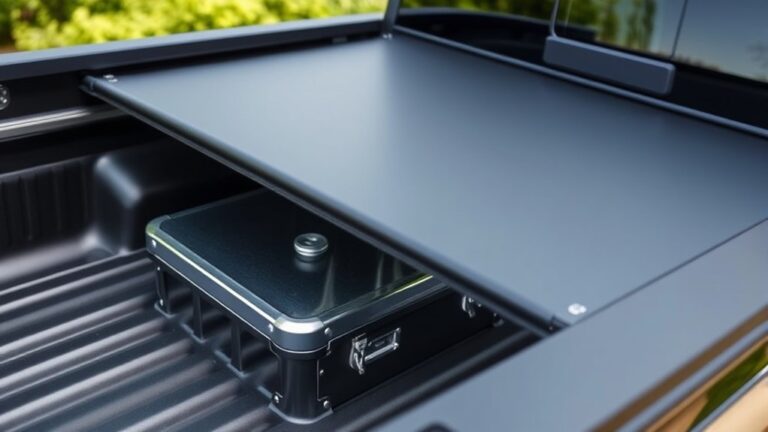
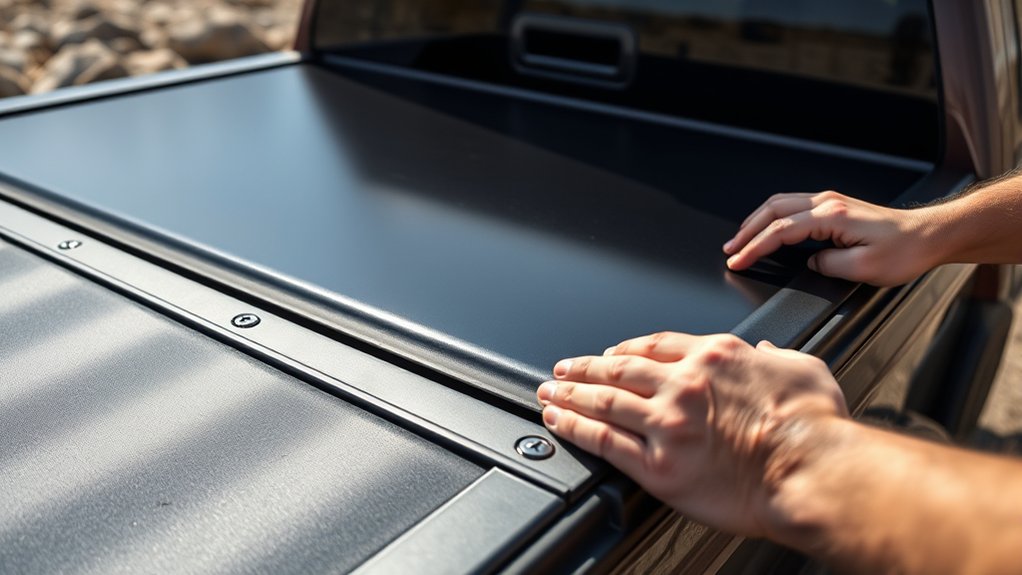
To seal your tonneau cover effectively, start by carefully inspecting all seals and edges for gaps, tears, or stiffness that could allow water in.
Sealing your tonneau cover properly begins with thorough preparation to ensure lasting protection.
You’ll need to clean and prepare the surfaces thoroughly to ensure any sealant or weatherstripping adheres properly.
Choosing the right materials and applying them precisely is essential to prevent leaks.
Before you begin, understanding where common failures occur will help you avoid costly mistakes.
Taking the time to identify potential problem areas can save you from future water damage and frustration.
Key Takeaways
- Inspect seams, edges, and attachment points for gaps, damage, or worn seals to identify potential leak sources.
- Thoroughly clean and dry all seal surfaces using suitable cleaners and isopropyl alcohol before applying any sealant or weatherstripping.
- Choose durable, flexible sealants like silicone or polyurethane and weatherstripping materials such as EPDM rubber for effective water resistance.
- Apply weatherstripping around truck bed rails, tonneau cover edges, hinges, and tailgate interfaces, pressing firmly to avoid gaps or overlaps.
- Maintain seals regularly by cleaning, inspecting for damage, lubricating with silicone spray, and storing the cover in a dry environment when not in use.
How to Check Your Tonneau Cover for Gaps and Damage
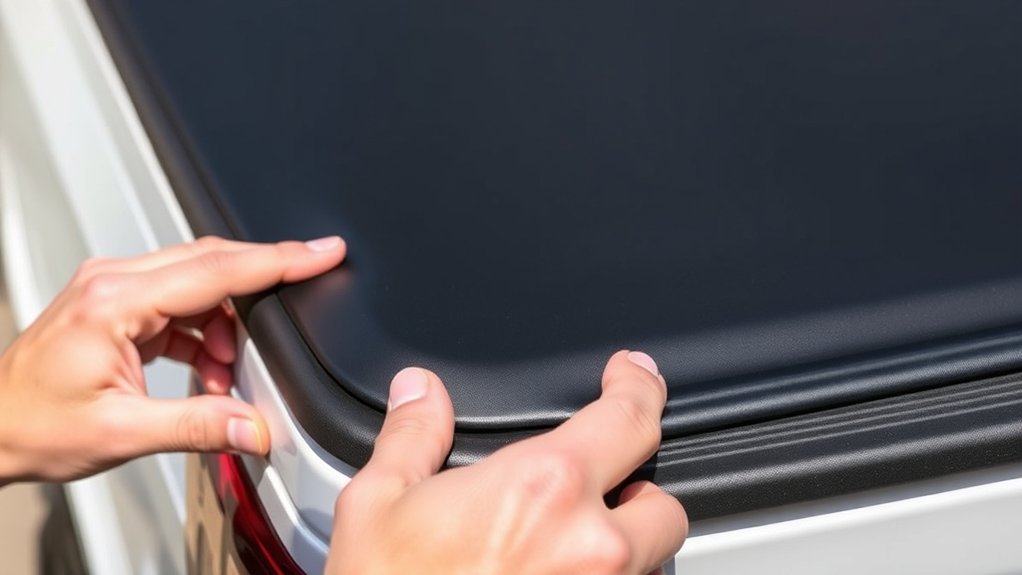
How do you identify gaps and damage on your tonneau cover effectively? Start by inspecting the cover visually under good lighting, focusing on seams and edges where gaps commonly form.
Use a spray bottle filled with water to mist along the edges and seams; if water seeps through or pools underneath, that indicates a breach. Next, run your hand gently over the cover to detect tears or abrasions.
For temporary fixes during inspection, apply small pieces of duct tape over identified gaps to prevent further water intrusion. Check the cover’s attachment points and hinges for looseness or wear, as these can cause misalignment and gaps.
This methodical approach ensures you pinpoint issues before sealing, maintaining your tonneau cover’s integrity.
Clean Your Truck Bed and Seal Surfaces for Better Adhesion
A clean truck bed and properly prepared seal surfaces are essential for ensuring strong adhesion when sealing your tonneau cover. Begin surface prep by removing all dirt, grease, and debris using a suitable cleaner and a lint-free cloth. Pay special attention to corners and edges where contaminants often accumulate.
After cleaning, dry the surfaces thoroughly to prevent moisture from compromising the sealant’s bond.
Next, inspect the seal surfaces for any residues or irregularities that could hinder adhesion. Perform adhesion testing by applying a small amount of sealant in an inconspicuous area, allowing it to cure, and then checking for proper bonding.
This step helps confirm that the surface prep was effective and that the sealant will adhere securely, ensuring a watertight, durable seal on your tonneau cover.
Pick the Best Sealant or Weatherstripping
You’ll need to select a sealant that matches your truck bed material and withstands weather exposure, such as silicone or polyurethane.
For weatherstripping, focus on durable materials like EPDM rubber or foam that provide a tight, flexible seal. Choosing the right product ensures optimal protection against water and debris intrusion.
Types Of Sealants
Selecting the right sealant or weatherstripping is essential for ensuring a tight, durable seal on your tonneau cover. Proper sealing prevents insulation gaps and resists UV degradation. Here are four common types of sealants to regard:
- Silicone Sealant: Flexible, waterproof, and UV-resistant; ideal for dynamic surfaces.
- Polyurethane Sealant: Strong adhesion, excellent for metal-to-plastic joints, but less UV stable.
- Butyl Tape: Easy to apply, provides a thick barrier, great for filling irregular gaps.
- EPDM Rubber Strips: Durable weatherstripping that withstands UV exposure and temperature variations.
Choose based on your cover’s material and exposure conditions. Each type offers specific benefits in sealing insulation gaps and resisting environmental degradation, ensuring your tonneau cover stays secure and weatherproof.
Choosing Weatherstripping Materials
How do you determine the best weatherstripping material for your tonneau cover? Start by evaluating weatherstripping options based on their durability, flexibility, and resistance to environmental factors.
Materials like EPDM rubber offer excellent material longevity due to UV and ozone resistance, making them ideal for long-term sealing. Silicone weatherstripping also performs well, maintaining flexibility in extreme temperatures. Vinyl is budget-friendly but may degrade faster under harsh conditions.
Consider the seal’s compression set, the material’s ability to return to its original shape after being compressed, to ensure a tight, lasting seal. Choose a material that balances weather resistance with ease of installation.
Apply Weatherstripping to Your Tonneau Cover
Where should you place weatherstripping to guarantee a watertight seal on your tonneau cover? Focus on critical contact points, ignoring unrelated topics or irrelevant concepts that don’t affect sealing. Apply weatherstripping to these areas:
- Along the perimeter of the truck bed rails, ensuring continuous contact.
- On the underside edges of the tonneau cover where it meets the bed.
- Around any hinges or fold points to prevent water ingress.
- At tailgate interfaces where the cover meets the tailgate edge.
Clean surfaces thoroughly before application for optimal adhesion. Press firmly to secure the weatherstripping without gaps or overlaps. Avoid placing strips on unrelated or irrelevant sections that won’t improve the seal. Proper placement ensures maximum water resistance and prolongs your cover’s lifespan.
Fill Small Leaks With Silicone or Rubber Sealant
After applying weatherstripping to key contact points, inspect your tonneau cover for any small gaps or leaks that might still allow water inside. To fix leaks effectively, use a high-quality silicone sealant or rubber sealant designed for automotive applications.
Clean the area thoroughly with isopropyl alcohol to remove dirt and oils, ensuring proper adhesion. Apply the sealant evenly along the seams or cracks, pressing it into the gaps with a caulking tool or your finger.
Allow the sealant to cure fully according to the manufacturer’s instructions, usually 24 hours, to create a flexible, waterproof barrier. Silicone sealant remains durable under temperature fluctuations and prevents water infiltration without compromising the cover’s flexibility.
This targeted sealing step ensures minor leaks are addressed, enhancing your tonneau cover’s overall water resistance and longevity.
Adjust Tonneau Cover Clamps and Hinges for a Better Seal
Why does adjusting your tonneau cover clamps and hinges matter? Proper adjustment ensures your cover seals tightly, preventing water and debris intrusion. To optimize the seal, you need to adjust clamps and tighten hinges carefully.
- Locate all clamps securing the cover edges and loosen them slightly.
- Align the cover evenly with the truck bed, ensuring no gaps.
- Adjust clamps to apply firm, uniform pressure along the cover’s perimeter.
- Inspect hinges; tighten any loose screws or bolts to improve cover stability and prevent misalignment.
How to Test Your Cover’s Seal With Water
Once you’ve adjusted the clamps and hinges to secure a tight fit, it’s important to verify the seal’s effectiveness under real conditions. Begin by performing a spot check using a water test: slowly pour water over the tonneau cover edges and observe any seepage or leaks underneath.
Focus on areas around clamps and hinges where gaps can form. If water penetrates, identify the exact points of failure. Repeat the test in sections to ensure comprehensive coverage.
This method simulates rain exposure and confirms the seal’s integrity. Address any detected leaks by readjusting or replacing seals as necessary. Conducting this water test regularly helps guarantee that your tonneau cover remains watertight, protecting your truck bed from moisture damage efficiently.
Maintain Your Seal With Regular Cleaning and Inspection
Although a proper seal guarantees protection, maintaining it requires regular cleaning and inspection. Establish a cleaning schedule and inspection routine to ensure your tonneau cover’s seal remains effective. Follow these steps:
- Clean the seal with mild soap and water to remove dirt and debris that can compromise adhesion.
- Inspect the seal for cracks, tears, or deformation that may allow water ingress.
- Lubricate the seal with a silicone-based spray to maintain flexibility and prevent drying.
- Verify the seal’s alignment and re-seat if necessary to maintain consistent contact with the truck bed.
Know When to Replace Worn Seals and Weatherstripping
How do you determine when your tonneau cover’s seals and weatherstripping need replacement? Inspect for cracks, brittleness, or deformation that indicate weatherstripping failure. If you notice water intrusion or persistent leaks despite cleaning, the seals likely no longer provide an effective barrier.
Pay special attention to areas where sealant compatibility issues may arise; incompatible sealants can degrade rubber components, accelerating wear. Test the flexibility of the seals. Stiff or crumbling weatherstripping signals imminent failure.
Replace worn seals promptly to maintain optimal protection. When selecting replacements, verify sealant compatibility to avoid chemical reactions that reduce seal lifespan. Regular, precise inspection helps you identify deterioration early, ensuring your tonneau cover remains securely sealed without compromising performance.
Prevent Future Leaks and Damage
To prevent future leaks and damage, you need to maintain a consistent inspection and cleaning routine for your tonneau cover and its seals. Addressing potential issues early helps avoid costly repairs. Follow these steps:
- Inspect seals monthly for cracks or wear, focusing on areas affected by humidity effects.
- Clean seals with mild soap and water, removing debris that could compromise the seal integrity.
- Apply sealant alternatives like silicone-based products if the original sealant shows signs of deterioration.
- Store the tonneau cover in a dry environment when not in use to minimize humidity effects that accelerate material breakdown.
Frequently Asked Questions
What Tools Do I Need to Remove My Tonneau Cover?
You’ll need basic removal tools like a screwdriver, socket wrench, and pliers. Follow removal steps carefully: loosen clamps, unfasten bolts, and detach latches to safely remove your tonneau cover without damage or misalignment.
Can I Install a Tonneau Cover Myself or Hire a Professional?
You can take the bull by the horns with DIY installation if you’re handy and have basic tools. Otherwise, professional installation ensures precision and saves time, avoiding costly mistakes and guaranteeing a perfect fit.
How Do I Choose Between Soft and Hard Tonneau Covers?
You’ll weigh soft vs hard consideration by balancing durability vs cost. Soft covers are affordable, flexible, but less durable. Hard covers offer superior protection and longevity but cost more.
Choose based on your budget and usage needs.
Are Tonneau Covers Compatible With Bed Liners?
When it rains, it pours, but yes, tonneau covers are compatible with bed liners. You’ll enjoy sealing benefits and noise reduction, as the liner protects the bed while the cover seals tightly, minimizing water and sound intrusion.
Will Sealing My Tonneau Cover Affect Fuel Efficiency?
Sealing impact on fuel economy is minimal but positive. By reducing air drag and preventing debris entry, sealing your tonneau cover can slightly improve fuel efficiency.
You won’t notice drastic changes, but sealing helps optimize aerodynamics effectively.
Conclusion
By sealing your tonneau cover thoroughly, you not only protect your cargo but also extend your cover’s lifespan—coincidentally saving you time and money on repairs. Inspect, clean, and apply the right weatherstripping or sealant with care.
Remember, a well-maintained seal prevents leaks and damage before they start. So, don’t wait for water to reveal hidden gaps; act now to keep your truck bed dry and secure.
Ensuring your investment stays protected season after season is essential. Properly sealing your tonneau cover is the key to achieving this protection and maintaining its durability over time.