Can You Use a Tonneau Cover With a Toolbox
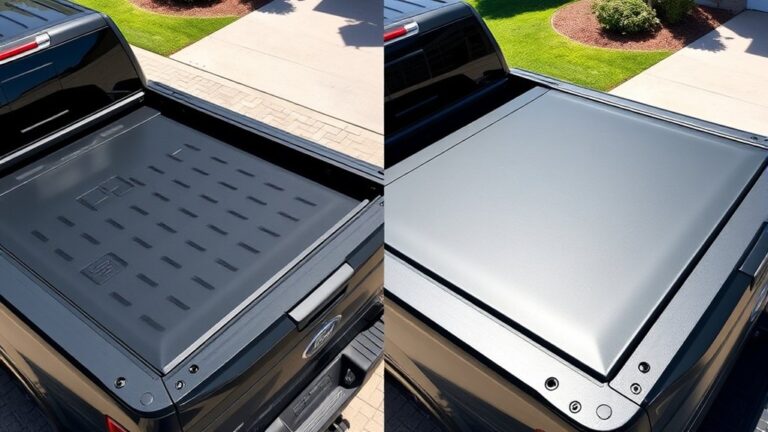
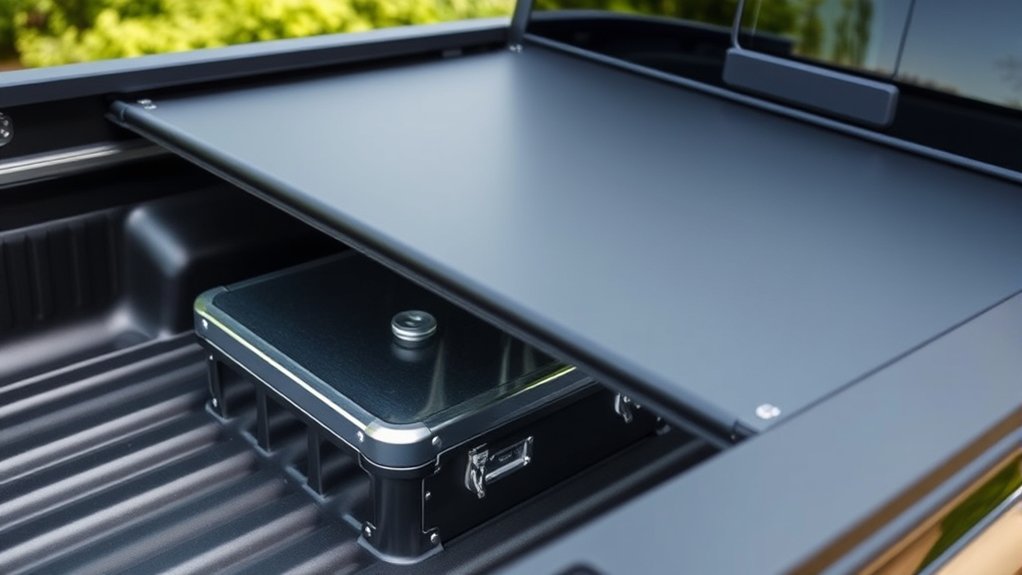
It’s a coincidence that many truck owners wonder if a tonneau cover can fit over their toolbox, since both serve essential but different purposes. You might assume they’re incompatible, but with the right measurements and setup, you can actually use a tonneau cover with a toolbox.
The key lies in understanding your toolbox’s height, placement, and how your chosen cover mounts and folds. Before you decide, consider these technical factors carefully to avoid potential issues. Taking accurate measurements is crucial to ensure a proper fit.
Additionally, some tonneau covers are designed to accommodate toolboxes, while others may require modifications. Knowing your options can help you make the best choice for your truck’s configuration and your storage needs.
Key Takeaways
- A tonneau cover can be used with a toolbox if the toolbox is low-profile and does not interfere with the cover’s closing and locking.
- Proper measurement of toolbox height, position, and bed length is essential to ensure clearance and avoid obstructing the tonneau cover’s operation.
- Crossbed and undercover toolboxes may be compatible if they provide enough space between the cab and cover mounting points.
- Toolbox placement should avoid blocking cover rails or folding areas to maintain full cover motion and a weather-tight seal.
- Selecting toolboxes with smooth contours, ventilation, and secure locking enhances compatibility and prevents damage or security risks under the cover.
Can a Tonneau Cover Fit Over a Toolbox?
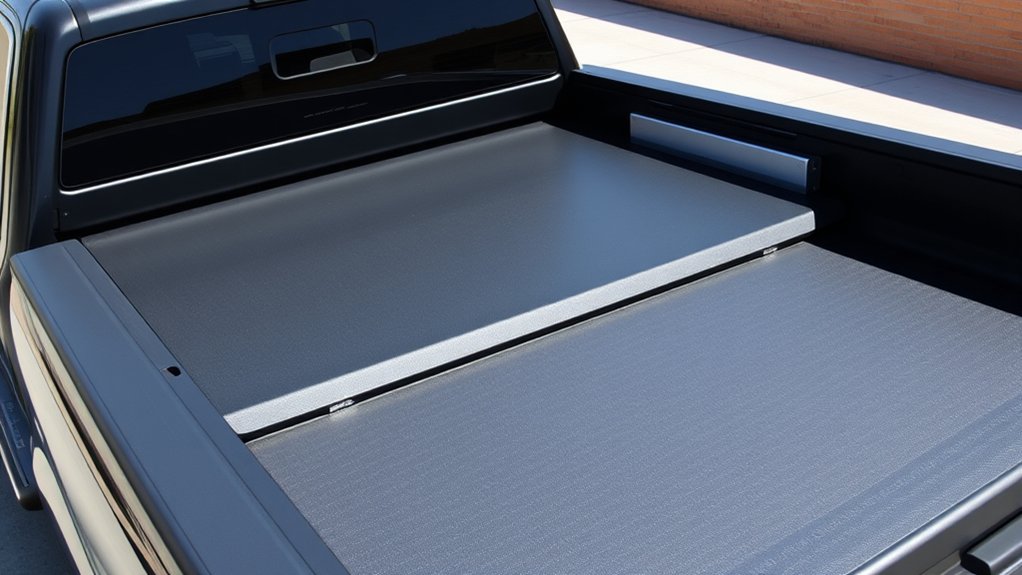
How well a tonneau cover fits over a toolbox depends primarily on the type and size of both the cover and the toolbox. You need to carefully assess the toolbox placement within the truck bed, as it directly affects the cover’s ability to close securely.
If the toolbox is positioned too close to the cab or too high, it may reduce the internal clearance required for the tonneau cover to lay flat and lock properly. Measuring the toolbox’s height and width relative to the cover’s specifications is essential.
Ensuring adequate internal clearance prevents interference during operation and maintains a weather-tight seal. By accounting for these factors, you can determine if your chosen tonneau cover will fit over your toolbox without compromising functionality or protection.
Toolbox Types Compatible With Tonneau Covers
You’ll find that low profile toolboxes work best with most tonneau covers due to their minimal height. Crossbed toolboxes can fit under certain covers, but you’ll need to verify clearance and mounting compatibility.
Additionally, Undercover toolboxes are specifically designed to integrate seamlessly with tonneau covers, offering a secure and streamlined solution.
Low Profile Toolboxes
Several low profile toolboxes have been engineered specifically to fit beneath tonneau covers without compromising their functionality. When considering toolbox compatibility, low profile models offer a sleek design that maintains your truck bed’s aerodynamics and security.
Here’s what you need to know:
- Height Considerations: Low profile toolboxes typically measure under 12 inches in height, ensuring they don’t interfere with the tonneau cover’s closing mechanism.
- Mounting Options: These toolboxes often feature flush or recessed mounting brackets, allowing seamless integration without lifting the cover.
- Material and Durability: Constructed from aluminum or steel, they provide robust storage while maintaining a slim profile to avoid damage to the tonneau cover.
Choosing a low profile toolbox optimizes toolbox compatibility, preserving the cover’s seal and weather resistance.
Crossbed Toolboxes Fit
While low profile toolboxes excel at fitting beneath tonneau covers without disrupting functionality, crossbed toolboxes require a different approach due to their larger size and placement. Unlike low profile options, crossbed toolboxes mount directly behind the truck cab, extending across the bed’s width.
Ensuring a proper crossbed fit is critical; you must verify the available space between the cab and the tonneau cover’s mounting point. Toolbox clearance is a key factor. Insufficient clearance can prevent the tonneau cover from lying flat or operating smoothly.
Before installation, measure the height and width of your crossbed toolbox relative to your tonneau cover’s design specifications. Selecting a compatible crossbed toolbox ensures you maintain both secure storage and full tonneau cover functionality without interference.
Undercover Toolbox Compatibility
How do undercover toolboxes interact with tonneau covers? You’ll find that certain toolbox types work seamlessly with tonneau covers without causing clearance or sealing issues. Here’s what to consider:
- Low-profile toolboxes: These sit below or flush with the truck bed rails, allowing your tonneau cover to close without obstruction. They’re the most compatible choice.
- Crossbed toolboxes: While they span the bed’s width, some models are designed with clearance for soft or hard tonneau covers, but verify exact dimensions.
- High-mounted toolboxes: These typically interfere with tonneau covers and often require removal or special customization.
Avoid unrelated topic or tangent discussion that doesn’t address these compatibility aspects. Focusing on these toolbox types ensures you maintain weatherproof sealing and secure fitment with your tonneau cover.
Best Tonneau Covers for Trucks With Toolboxes
When choosing the best tonneau cover for your truck with a toolbox, you’ll need one that fits your toolbox design precisely to ensure proper sealing. Look for covers that offer high durability and weather resistance to protect your tools and cargo under various conditions.
Additionally, prioritize models that are straightforward to install and operate, so you can access your toolbox without hassle.
Compatibility With Toolbox Designs
Which tonneau covers work best with different toolbox designs? Understanding compatibility is essential to avoid an irrelevant pairing or unrelated topic that wastes time and money. You need to take into account these factors:
- Low-profile toolboxes: Soft roll-up or tri-fold covers fit well, as they rest above the toolbox without interfering with lid operation.
- High-profile or crossover toolboxes: Hard folding or retractable covers work better, providing clearance while securing the bed.
- Toolboxes mounted behind the cab: Snap-on or hinged covers designed for full bed length prevent gaps and guarantee a tight seal.
You should always measure toolbox height and position before selecting a tonneau cover to guarantee seamless integration. Overlooking these specifics leads to poor fitment, making the pairing irrelevant or unrelated to your truck’s setup.
Durability And Weather Resistance
Selecting the right tonneau cover for your toolbox setup must also consider durability and weather resistance to protect both your tools and truck bed effectively. Durability concerns primarily stem from exposure to UV rays, impacts, and harsh weather conditions, so you need a cover made from robust materials such as aluminum, heavy-duty vinyl, or reinforced fiberglass.
These materials withstand daily wear and tear without compromising structural integrity. Weather sealing plays a critical role by preventing water, dust, and debris from infiltrating the bed or toolbox. Look for covers with high-quality rubber gaskets or seals that maintain a tight closure against moisture ingress.
Prioritizing these features ensures your investment withstands environmental stress, preserving tool functionality and preventing rust or damage over time.
Ease Of Installation And Use
How easily you can install and operate a tonneau cover considerably impacts its practicality, especially when paired with a toolbox. You want a system that accommodates your toolbox placement without compromising weather resistance or daily usability.
Consider these factors for ease of installation and use:
- Compatibility with Toolbox Placement: Choose covers designed to fit over or behind your toolbox, minimizing interference and ensuring a secure fit.
- Installation Mechanism: Look for covers with clamp-on or bolt-down systems that don’t require drilling, simplifying mounting and removal.
- Operational Access: Opt for covers that offer quick-release latches or fold-back designs, allowing you to access your toolbox and cargo easily while maintaining weather resistance.
Measuring Your Truck Bed for a Toolbox and Tonneau Cover
Where do you begin when measuring your truck bed to accommodate both a toolbox and a tonneau cover? Start by noting the total length and width of your truck bed’s interior using accurate measurement techniques, such as a steel tape measure for consistency.
Next, measure the height and depth of your desired toolbox, ensuring it fits without interfering with tonneau cover operation. Consider two word discussion ideas like “clearance space” and “fitment compatibility” to guide your assessment.
Measure from the tailgate forward to determine the toolbox’s optimal placement, leaving enough room for the tonneau cover to close securely. Record all dimensions precisely, including any wheel well intrusions, to prevent installation issues.
Accurate measurements ensure you select a toolbox and tonneau cover that function effectively together.
Do Toolboxes Damage Tonneau Covers?
After measuring your truck bed and ensuring the toolbox fits without obstructing the tonneau cover’s operation, you must consider whether the toolbox could cause damage. Toolboxes can impact your tonneau cover in several ways:
- Abrasion Risk: If the toolbox’s edges aren’t smooth or if it shifts during driving, it can rub against the cover, compromising the material and affecting cover aesthetics.
- Ventilation Issues: Poor toolbox ventilation may trap moisture under the cover, promoting mildew or corrosion, which deteriorates both the cover and the toolbox.
- Weight Pressure: Excessive weight from the toolbox can strain the cover’s frame or latches, leading to deformation or mechanical failure over time.
You’ll want to select a toolbox designed with proper ventilation, smooth contours, and lightweight construction to maintain your tonneau cover’s integrity.
How to Install a Toolbox Without Blocking Your Cover
You’ll need to carefully choose your toolbox placement to avoid interfering with your tonneau cover’s operation. Secure the toolbox firmly under or near the cover’s rails to prevent movement without obstructing the cover’s path.
This ensures you maintain easy access to both the toolbox and the cover without compromising functionality.
Toolbox Placement Options
How can you install a toolbox in your truck bed without interfering with the operation of a tonneau cover? Proper toolbox placement is key to maintaining both toolbox compatibility and tonneau cover functionality. Consider these three placement options:
- Bulkhead Mounting: Position the toolbox directly behind the cab, flush against the bulkhead. This keeps it out of the tonneau cover’s folding path, preserving cover movement and security.
- Side Rail Placement: Install the toolbox along one side rail of the truck bed. This avoids blocking the cover’s rails and provides easy access without compromising cover operation.
- Under-Rail Positioning: Mount the toolbox beneath the bed rails, ensuring it sits low enough not to obstruct the cover. This option requires precise measurements to maintain clearance.
These two word discussion ideas, “placement options,” are essential to achieving toolbox compatibility without hindering your tonneau cover.
Securing Toolbox Under Cover
Although installing a toolbox under a tonneau cover requires careful planning, securing it without obstructing cover operation is achievable with the right approach. Start by assessing toolbox placement to ensure it sits low enough in the bed, avoiding interference with the cover’s folding or rolling mechanism.
Select a toolbox designed with cover compatibility in mind, such as low-profile or slim models. Use mounting brackets that securely fasten the toolbox to the truck bed, preventing movement without raising its height.
Measure clearance between the toolbox lid and the tonneau cover’s underside to maintain smooth operation. Finally, test the cover’s full range of motion after installation, confirming the toolbox doesn’t block opening or closing. This precise alignment optimizes toolbox placement and preserves cover functionality.
Maintaining Cover Accessibility
Where should you position your toolbox to maintain full access to your tonneau cover? Proper placement hinges on understanding your toolbox dimensions and the cover material’s flexibility. Follow these steps to ensure easy access:
- Measure Toolbox Dimensions: Accurately measure length, width, and height. Position the toolbox toward the cab end or side, avoiding the primary fold or roll-up area of the cover.
- Assess Cover Material: Determine if your tonneau cover is soft or hard. Soft covers allow slight overlap, while hard covers require clear clearance for smooth operation.
- Install with Clearance: Leave sufficient space between the toolbox and cover components to prevent interference when opening or closing the cover.
Security Tips for Tonneau Covers and Toolboxes
Why should you prioritize security when using tonneau covers with toolboxes? Because combining these two can present unique security risks, including increased vulnerability to tool theft if not properly secured.
To mitigate this, ensure your tonneau cover has a robust locking mechanism compatible with the toolbox locks. Use high-quality locks rated for cut resistance to deter opportunistic thieves.
Ensure your tonneau cover and toolbox locks are robust and cut-resistant to effectively deter theft.
Regularly inspect latches and hinges for signs of tampering or wear. Additionally, position your toolbox to minimize gaps where tools could be accessed or pried open.
Avoid leaving tools visible under the cover, as this can attract thieves. Finally, consider installing an alarm system or GPS tracker for added security.
How Tonneau Covers Protect Toolboxes and Gear
How exactly do tonneau covers enhance the protection of your toolboxes and gear? They create a secure, weather-resistant environment that preserves the integrity of your toolbox materials and contents. Here’s how:
- Weatherproof Seals: Tonneau covers feature tight seals that prevent water, dust, and debris from entering, protecting sensitive toolbox materials like metal or plastic from corrosion and damage.
- UV Protection: The cover shields your gear from harmful UV rays, reducing material degradation and preserving tool functionality over time.
- Impact Resistance: Many tonneau covers absorb minor impacts, safeguarding your toolbox from scratches and dents during transport.
Troubleshooting Tonneau Cover and Toolbox Issues
While tonneau covers provide excellent protection for your toolbox and gear, certain compatibility and installation issues can arise that affect their performance. First, verify your toolbox compatibility by measuring its height and width to ensure the tonneau cover fits without obstruction.
Misalignment during installation can cause gaps or pressure points, so follow installation tips carefully, such as securing clamps evenly and checking latch alignment. If you notice water pooling or difficulty closing the cover, reassess the toolbox’s position and adjust mounting brackets as needed.
For folding or retractable covers, confirm the toolbox doesn’t impede movement to prevent damage. Regularly inspect seals and fasteners, addressing any wear promptly to maintain a tight, weatherproof fit. Proper troubleshooting ensures both your toolbox and tonneau cover function optimally together.
Alternatives to Tonneau Covers for Large Toolboxes
What options do you have if a tonneau cover won’t accommodate your large toolbox? Exploring alternatives ensures you address the topic relevance without settling for an unrelated comparison like using a standard bed liner. Consider these three practical solutions:
- Truck Bed Caps: These hard-shell covers provide full enclosure, offering superior security and weather protection for oversized toolboxes.
- Custom-Fitted Toolboxes: Installing a toolbox designed to fit within your bed dimensions eliminates compatibility issues with tonneau covers.
- Roll-Up or Folding Covers with Cutouts: Some models can be customized with cutouts or raised rails to fit over large toolboxes, balancing coverage and accessibility.
Each alternative offers distinct advantages, letting you maintain functionality without compromising toolbox size or protection.
Frequently Asked Questions
How Do Tonneau Covers Affect Fuel Efficiency?
You’ll improve fuel efficiency by reducing aerodynamic drag with a tonneau cover.
It also enhances weather durability by protecting your truck bed from rain, snow, and debris, maintaining cargo condition and reducing wear over time.
Can Tonneau Covers Be Used in All Weather Conditions?
Yes, tonneau covers can be used in all weather conditions. Studies show they improve fuel efficiency by up to 10%. Their waterproof materials protect cargo while enhancing aerodynamics, ensuring durability and performance regardless of rain, snow, or sun exposure.
Are Tonneau Covers Easy to Clean and Maintain?
You’ll find tonneau covers easy to clean and maintain by using materials like vinyl or aluminum, which resist dirt. Employ gentle cleaning methods such as mild soap and water, avoiding harsh chemicals to preserve durability and appearance.
Do Tonneau Covers Impact Truck Bed Warranty?
Tonneau covers typically don’t impact your truck bed warranty if you ensure tonneau compatibility and proper toolbox mounting.
Always check manufacturer guidelines to avoid voiding warranty due to improper installation or damage linked to accessories.
Can Tonneau Covers Be Customized With Logos or Designs?
Yes, you can customize tonneau covers with logo customization and design patterns. Advanced printing and embroidery techniques allow precise integration of your branding or artwork, ensuring durability and a professional, personalized appearance on your truck bed cover.
Conclusion
You can confidently combine a tonneau cover with a toolbox by carefully considering clearance, compatibility, and careful calibration. Choosing a compact, correctly positioned toolbox ensures seamless sealing and smooth operation. Secure your setup to safeguard against shifting and abrasion, sustaining strength and security.
Stay sharp with systematic measurements and smart selections, so your cover and toolbox work wonderfully without wear or weather woes. With thoughtful tactics, you’ll treasure total truck bed protection and practical performance.
In conclusion, using a tonneau cover with a toolbox is entirely possible when you prioritize fit and function, ensuring both elements provide maximum utility and protection.