How Does a Battery Charger Work
You might not realize that a battery charger doesn’t just supply power—it carefully converts and controls electrical energy to match your battery’s chemistry.
A battery charger starts by transforming AC from your outlet into regulated DC, then adjusts voltage and current through multiple stages.
This process optimizes charging while preventing damage to the battery.
Understanding how a battery charger works reveals why not all chargers are created equal.
It also explains why certain safety features are vital for reliable operation.
Knowing these details can help you choose the right charger and extend your battery’s lifespan.
Key Takeaways
- A battery charger converts AC power into controlled DC voltage and current to safely replenish battery energy.
- Charging involves stages like bulk, absorption, and float to match the battery’s state of charge.
- Chargers regulate voltage and current dynamically to prevent overcharging, overheating, and battery damage.
- Different charger types (trickle, fast, pulse) use specific current patterns tailored to battery needs and lifespan.
- Modern chargers often include smart sensing to identify battery chemistry and adjust charging algorithms accordingly.
What Are the Main Types of Battery Chargers?
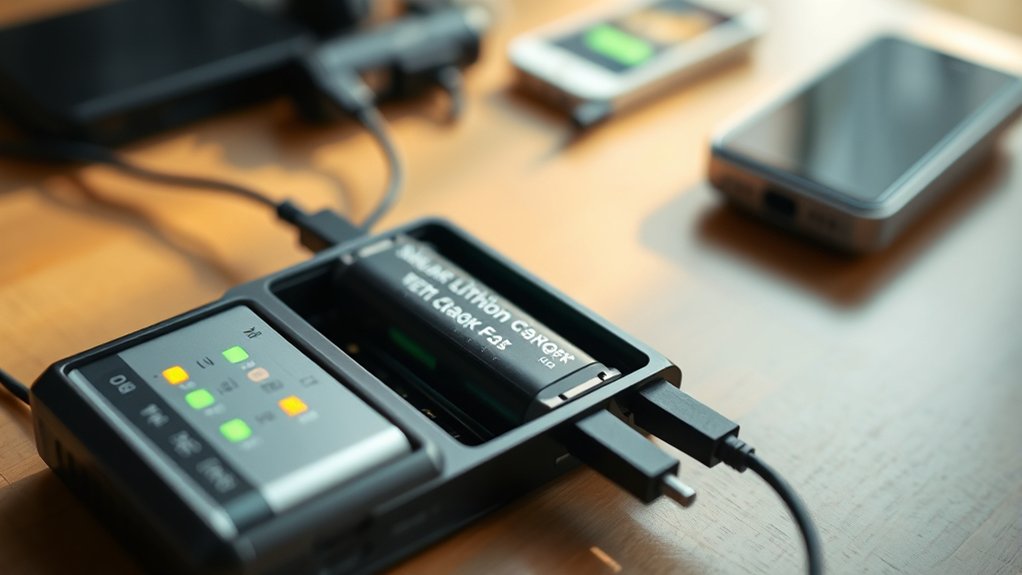
How do different battery chargers meet various charging needs? You’ll find chargers primarily divided into trickle, fast, and pulse types, each tailored to specific energy storage concepts and charging basics.
Trickle chargers supply a low, steady current to maintain full charge without overcharging, ideal for long-term maintenance. Fast chargers deliver a higher current, rapidly replenishing energy but require precise control mechanisms to prevent battery damage.
Trickle chargers maintain charge gently, while fast chargers quickly replenish energy with careful control to protect batteries.
Pulse chargers use intermittent bursts of current, improving charging efficiency and battery lifespan by reducing heat buildup and sulfation. Understanding these categories helps you select a charger that aligns with your battery’s energy storage characteristics and your operational demands.
Each type addresses unique charging scenarios, balancing speed, efficiency, and battery health within established energy storage frameworks.
How Do Battery Chargers Work With Different Battery Types?
Selecting the right charger type depends heavily on the battery chemistry and design you’re working with. Different chemistries, such as lithium-ion, nickel-metal hydride, and lead-acid, require chargers that optimize charging efficiency by matching voltage and current profiles precisely.
Chargers with chemistry compatibility ensure safe and effective energy transfer, preventing damage and capacity loss. Many modern chargers incorporate universal adapters to support various battery formats, but they rely on smart sensing technology to identify the battery type and adjust parameters accordingly.
Rapid charging is feasible only when the charger’s algorithm aligns with the battery’s tolerance to high current. For maintenance, chargers designed for float maintenance are essential, especially with lead-acid batteries, to sustain charge without overcharging.
Understanding these nuances helps you choose chargers that maximize battery life and performance.
What Battery Charger Safety Features Should You Know?
Why is understanding battery charger safety features essential for your device’s longevity and your personal safety? Knowing these features helps prevent overcharging, overheating, and potential battery damage. Look for chargers with built-in overcurrent and temperature protection circuits to avoid these risks.
Safety certifications and labels, such as UL, CE, or FCC, ensure the charger meets rigorous electrical and fire safety standards, so always verify these before use. Additionally, follow precautions for charging outdoors. Avoid exposure to moisture and extreme temperatures to prevent electrical shorts or reduced charger efficiency.
How to Choose the Right Battery Charger for Your Needs
Understanding the safety features of a battery charger lays the groundwork for making an informed choice tailored to your specific requirements. When selecting a charger, focus on key choosing criteria to ensure compatibility and efficiency.
Avoid falling for common charging myths, such as “faster is always better” or “any charger fits all batteries,” which can mislead your decision.
Consider these essential factors:
- Battery type compatibility (Li-ion, NiMH, lead-acid)
- Charging current and voltage ratings aligned with your battery specifications
- Built-in safety mechanisms like overcharge and short-circuit protection
- Portability and power source options (AC, DC, solar)
- User interface clarity and diagnostic features for monitoring charge status
How Does a Battery Charger Convert and Regulate Power?
How exactly does a battery charger convert and regulate power to safely restore your battery’s charge? The process begins with power conversion, where the charger transforms AC input from the mains into a controlled DC output suitable for the battery. This involves rectification and voltage regulation stages within the charging circuitry to ensure stable, precise current delivery.
The charging circuitry continuously monitors voltage and current levels, adjusting parameters dynamically to prevent overcharging or overheating. By modulating the output, it maintains optimal charging phases: bulk, absorption, and float, matching the battery’s state of charge.
This precise control safeguards battery health and maximizes efficiency. Thus, the charger’s power conversion and regulation mechanisms work in tandem to deliver consistent, safe energy tailored to your battery’s specific requirements.
Frequently Asked Questions
How Long Does It Take to Fully Charge a Battery?
You’ll fully charge a battery in 1 to 12 hours, depending on the charge rate and battery capacity.
Monitor charging indicators closely to guarantee optimal performance and avoid overcharging or undercharging during the process.
Can a Battery Charger Damage a Battery if Left Connected Too Long?
Leaving a charger connected too long is like overwatering a plant. It risks harming your battery.
For charge safety, avoid prolonged charging to preserve battery longevity impact, as excess current or heat can degrade cells and reduce lifespan.
Are There Portable Battery Chargers for Travel Use?
Yes, you’ll find portable charging devices designed specifically for travel. Just ensure they comply with airline regulations regarding battery capacity and type, so your device passes security checks and functions efficiently during your trip.
How Do Temperature Changes Affect Battery Charging Efficiency?
Imagine your battery as a delicate engine; when temperature stability drops, charging efficiency plummets. You’ll risk thermal runaway, causing overheating and damage.
Maintaining steady temperatures ensures optimal charging performance and prolongs battery lifespan.
What Maintenance Is Required for a Battery Charger?
You should follow maintenance reminders by regularly inspecting cables and connectors for wear, cleaning contacts, and ensuring proper ventilation.
Adhering to charging etiquette, like avoiding overcharging, prolongs charger lifespan and maintains optimal performance.
Conclusion
Now that you understand how a battery charger converts and regulates power with precision, you can choose the right one confidently. Chargers work tirelessly, balancing voltage and current through stages to keep batteries healthy and efficient.
With safety features guarding against overcharge and overheating, these devices are nothing short of lifesavers for your batteries. Mastering their operation ensures you never have to worry about power loss or damage again. Understanding how a battery charger works is key to maintaining your batteries’ longevity and performance.