What Oil Filter Does the Briggs and Stratton cv40 Take
Choosing the right oil filter for your Briggs and Stratton CV40 is like selecting the correct key for a complex lock—it guarantees smooth operation and protects crucial engine components.
The oil filter for the Briggs and Stratton CV40 plays a vital role in maintaining engine health by trapping dirt and debris.
Using anything less than the genuine OEM filter risks improper fit, filtration inefficiency, and potential engine damage.
Understanding which specific filter matches your CV40’s design and performance requirements is essential before proceeding with maintenance.
Let’s explore how to identify that precise filter and why it matters.
Proper filtration ensures your engine runs efficiently and lasts longer, making the right choice critical to your mower’s performance.
Key Takeaways
- The Briggs and Stratton CV40 requires oil filters specifically designed or listed for the CV40 model or meeting OEM standards.
- Compatible filters must match the CV40’s thread size, diameter, micron rating, and gasket specifications for secure fit and proper filtration.
- Genuine Briggs and Stratton oil filters or trusted aftermarket brands approved for the CV40 ensure optimal oil flow and engine protection.
- Official Briggs and Stratton parts catalogs or service manuals provide the correct part numbers for CV40 oil filters.
- Purchase filters from authorized dealers or the official Briggs and Stratton website to guarantee authenticity and proper fitment.
What Oil Filter Fits the Briggs and Stratton CV40 Engine
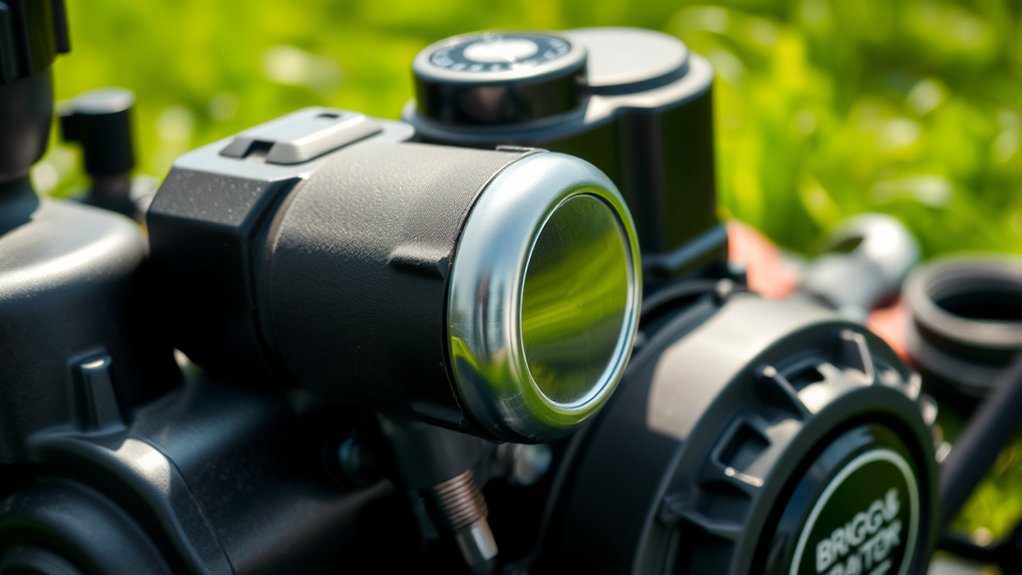
Which oil filter fits the Briggs and Stratton CV40 engine is a critical question for maintaining peak performance. When selecting your oil filter, avoid irrelevant comparison with filters designed for different engine models or unrelated sizing specifications.
The CV40 requires a specific oil filter that matches its threading, diameter, and filtration capacity, ensuring proper oil flow and contaminant removal. Using filters based on unrelated sizing or compatibility charts can lead to improper fit, oil leaks, or reduced filtration efficiency.
You should focus on filters explicitly listed for the CV40 or those meeting Briggs and Stratton’s OEM standards. This approach prevents maintenance errors caused by incompatible filters, ensuring your engine receives the correct filtration for peak operation and longevity.
Why the Right Oil Filter Matters for Your CV40
You need the right oil filter to ensure your CV40 engine runs smoothly and lasts longer. A quality filter traps harmful contaminants that cause wear and reduce efficiency.
Using the correct filter maintains optimal performance and protects your engine’s internal components.
Engine Longevity Benefits
How does choosing the correct oil filter impact your Briggs and Stratton CV40’s engine lifespan? Selecting the proper filter ensures optimal oil flow and pressure, directly affecting engine durability.
The right filter minimizes wear by effectively managing oil viscosity and maintaining lubrication integrity under varying operating conditions. Ignoring this can lead to premature engine degradation, reducing performance and increasing maintenance costs.
Avoid two word ideas that distract from core maintenance principles or introduce irrelevant topics like fuel types or spark plugs here. Focusing solely on the filter’s compatibility and filtration efficiency, you preserve critical engine components like bearings and pistons.
Contaminant Filtration Importance
Beyond supporting engine lifespan, the oil filter’s primary role lies in capturing contaminants that circulate within the oil system. For your Briggs and Stratton CV40, selecting the correct oil filter isn’t an irrelevant topic or off topic idea—it’s crucial.
Contaminants such as metal particles, dirt, and combustion by-products can cause abrasive wear, reducing engine efficiency and causing premature failure. The right filter provides precise micron-level filtration, trapping harmful debris while maintaining optimal oil flow.
Using an incompatible or substandard filter compromises contaminant removal, leading to increased engine stress and reduced reliability. Therefore, understanding and choosing the appropriate oil filter ensures your CV40 operates cleanly and efficiently, directly impacting its durability and performance. Don’t overlook this technical detail as an irrelevant or off topic idea.
Optimal Performance Maintenance
Why does selecting the correct oil filter matter for your Briggs and Stratton CV40’s performance? Using the right filter ensures efficient removal of contaminants, preserving engine integrity and preventing premature wear.
An incorrect filter can compromise oil flow and filtration efficiency, leading to engine strain and reduced longevity. When maintaining your CV40, avoid stray discussion about irrelevant topics like generic filters or unverified brands, which can mislead your maintenance strategy.
Focus strictly on filters designed to meet the CV40’s specifications, including proper micron rating and material compatibility. This precision in filter choice directly impacts oil viscosity stability and engine temperature regulation, optimizing performance.
Signs Your Briggs and Stratton CV40 Oil Filter Needs Replacing
When should you replace the oil filter on your Briggs and Stratton CV40? You need to recognize specific signs indicating filtration degradation. First, if you notice reduced engine performance or irregular idling, it signals that the oil filter may be clogged, restricting oil flow.
Additionally, unusual engine noises can result from insufficient lubrication caused by a failing filter. Dark, contaminated oil upon inspection is another clear indicator.
Avoid confusing this with irrelevant topic discussions like unrelated theme issues such as fuel type or spark plug conditions. These do not directly affect the oil filter’s function. Staying alert to these technical symptoms helps prevent engine damage.
Timely replacement ensures your CV40 maintains optimal lubrication and performance, safeguarding engine longevity and efficiency.
How Often to Change the Briggs and Stratton CV40 Oil Filter
How frequently should you change the oil filter on your Briggs and Stratton CV40 to maintain peak engine performance? The recommended interval is every 100 hours of operation or at least once per season, whichever comes first.
Regular oil filter changes ensure contaminants don’t accumulate, preserving lubrication efficiency and preventing engine wear. Ignoring this maintenance can lead to clogged filters and reduced oil flow, impairing engine function.
While you might be tempted to explore an unrelated topic or random subject during routine checks, stay focused on the oil filter schedule. Consistent replacement aligns with manufacturer guidelines and maximizes engine lifespan.
Finding the Correct Oil Filter Part Number
Where can you find the exact oil filter part number for your Briggs and Stratton CV40? The most reliable source is the engine’s service manual or the official Briggs and Stratton parts catalog, both of which provide precise specifications.
Avoid relying on forums or generic websites, as these often lead to irrelevant topic digressions or off topic discussions that confuse rather than clarify. Cross-referencing the engine model number with authorized parts databases ensures you identify the correct filter without error.
Using the correct part number is critical for maintaining optimal engine performance and preventing compatibility issues. Stay focused on verified technical documentation to bypass misleading information and streamline your search for the appropriate oil filter part number tailored to the CV40 engine.
Where to Buy Genuine Briggs and Stratton Oil Filters
Why settle for anything less than genuine Briggs and Stratton oil filters when maintaining your CV40 engine? Authentic filters ensure optimal filtration efficiency, protecting your engine from contaminants that can cause wear or failure.
Choose genuine Briggs and Stratton oil filters to safeguard your CV40 engine from harmful contaminants.
You can buy genuine filters directly from Briggs and Stratton’s official website or authorized dealers, guaranteeing product authenticity and proper fit. Avoid third-party sellers that might offer counterfeit or substandard products; purchasing from them is an irrelevant topic when considering engine reliability.
Large online marketplaces may carry unrelated concepts in their product listings, so it’s crucial to verify seller credentials. Additionally, local small engine repair shops often stock genuine parts and provide expert advice.
Prioritize official and authorized sources to maintain your CV40’s performance and longevity without risking damage from inferior filters.
CV40 Oil Filter Replacement Guide
To maintain optimal engine performance, you need to select the correct oil filter specifically designed for the Briggs and Stratton CV40. Follow a systematic replacement process to ensure proper installation and avoid leaks or damage.
This guide will walk you through each critical step for a reliable oil filter change.
Choosing The Right Filter
How do you guarantee optimal performance and longevity for your Briggs and Stratton CV40 engine? Selecting the correct oil filter is crucial. Avoid any irrelevant topic or stray discussion that could confuse your choice.
Focus strictly on filters designed to meet the CV40’s specifications, such as compatible micron ratings and pressure tolerances. The right filter traps contaminants effectively without restricting oil flow, preventing engine wear.
OEM filters or trusted aftermarket brands that meet or exceed Briggs and Stratton standards are recommended. Also, confirm the filter’s thread size and gasket compatibility to ensure a secure fit.
Step-By-Step Replacement Process
When should you replace the oil filter on your Briggs and Stratton CV40 to ensure peak engine performance? Ideally, replace it every 100 hours or annually.
First, warm up the engine briefly, then securely place a drain pan beneath the oil drain plug. Remove the plug and drain the oil completely to avoid contamination.
Next, unscrew the old oil filter using an appropriate wrench, taking care not to introduce irrelevant chatter or off topic tangents into the procedure.
Lubricate the new filter’s gasket with fresh oil, then install it by hand until snug, plus a quarter turn. Reinstall the drain plug, tighten to specification, and refill with the recommended oil type and quantity.
Finally, run the engine briefly and check for leaks, ensuring the process is precise and efficient.
Maintaining Your CV40 Oil Filter for Longer Life
Why does maintaining your Briggs and Stratton CV40 oil filter matter? Proper maintenance ensures optimal engine performance by preventing contaminants from circulating and causing wear. Neglecting the filter’s condition leads to inefficient filtration and potential engine damage.
You should routinely inspect the filter for clogs, tears, or deformities, as these defects reduce oil flow and compromise lubrication. Avoid treating maintenance as an unrelated concept separate from your engine’s health; they’re intrinsically connected.
Use manufacturer-recommended oil and maintain correct oil levels to minimize particulate buildup. Regularly cleaning or replacing the filter according to service intervals extends its lifespan and protects your engine.
Common Mistakes When Changing the CV40 Oil Filter
What common errors do technicians often make during a Briggs and Stratton CV40 oil filter change? One frequent mistake is failing to properly clean the mounting surface before installing the new filter, which can cause improper sealing and leaks. Another is overtightening the filter, leading to damage of the gasket or housing.
Additionally, some technicians experience topic drift by addressing unrelated concerns such as oil type rather than focusing strictly on filter replacement procedures, which compromises efficiency. Neglecting to prime the new filter with oil before installation is also common, reducing initial lubrication.
Avoid these pitfalls by following precise steps: clean surfaces thoroughly, hand-tighten the filter according to specifications, and concentrate solely on the filter change without veering into unrelated concerns or unnecessary tasks. This ensures optimal engine protection and filter performance.
Frequently Asked Questions
Can I Use a Universal Oil Filter on the Briggs and Stratton CV40?
You can use a universal oil filter if it matches the Briggs and Stratton CV40’s filter sizing and threading. Ensure universal compatibility by verifying dimensions and sealing specifications to maintain proper engine protection and performance.
What Type of Oil Is Best for the CV40 Engine?
Think of your CV40 engine as a finely tuned orchestra; using SAE 30 oil ensures optimal engine lubrication and oil filter compatibility. This two-word harmony keeps parts moving smoothly, preventing wear and maximizing performance under typical conditions.
How Do I Dispose of Used Oil Filters Safely?
You should drain oil filters thoroughly before disposing oil filters at authorized recycling centers. Recycling oil filters prevents environmental contamination and recovers valuable metals.
Follow local regulations to ensure proper handling and avoid illegal dumping or landfill disposal.
Does the CV40 Require a Pre-Oiled Oil Filter?
You don’t need pre-oiled filters for the CV40 since low oil filters designed for this engine come dry. Applying oil beforehand isn’t necessary and can cause inaccurate pressure readings or filter clogging during operation.
Can an Oil Filter Affect Engine Performance on the CV40?
Yes, oil filter compatibility directly influences engine performance impact on your CV40. Using an incompatible filter can restrict oil flow, reduce lubrication efficiency, and increase wear.
These issues ultimately impair engine reliability and operational efficiency.
Conclusion
Now that you know the exact oil filter your Briggs and Stratton CV40 needs, don’t underestimate its importance. Using the wrong filter might seem harmless, but it can silently compromise your engine’s performance and longevity.
The next time you replace your filter, pause—are you sure it’s the genuine part, installed correctly? One small oversight here could lead to costly damage.
Precision matters; your engine’s health depends on it. Always choose the correct oil filter for the Briggs and Stratton CV40 to ensure optimal performance and durability.