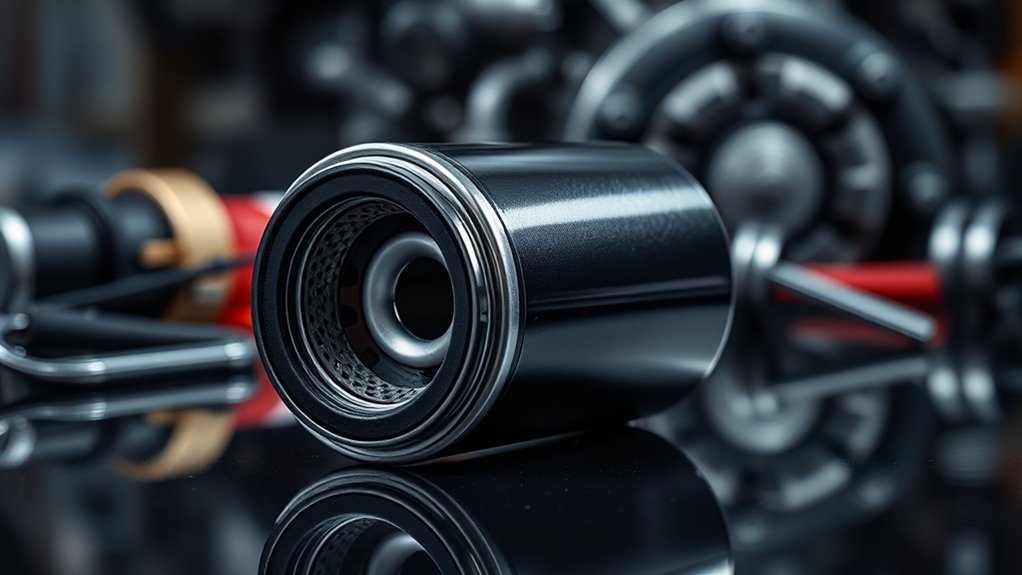
What Is the Best Oil Filter
You might think the best oil filter is simply the one with the highest filtration rating, but that’s only part of the equation. The ideal oil filter must balance efficiency, durability, and compatibility with your engine’s specifications without restricting oil flow.
Understanding how synthetic media, sealing materials, and industry standards impact performance is crucial before making a choice. Let’s examine what truly separates a top-tier oil filter from the rest.
Key Takeaways
- The best oil filter uses synthetic media for superior particle retention and longer service intervals.
- Filters meeting ISO 4548-12 or SAE J1858 standards ensure high filtration efficiency and reliable engine protection.
- Choose filters compatible with your engine’s specifications, including correct thread size and gasket type.
- High-quality filters feature reinforced housing, corrosion-resistant end caps, and heat-resistant gaskets for durability.
- For high-performance engines, select filters designed for elevated pressures, synthetic oils, and aggressive driving conditions.
How Oil Filters Protect Your Engine
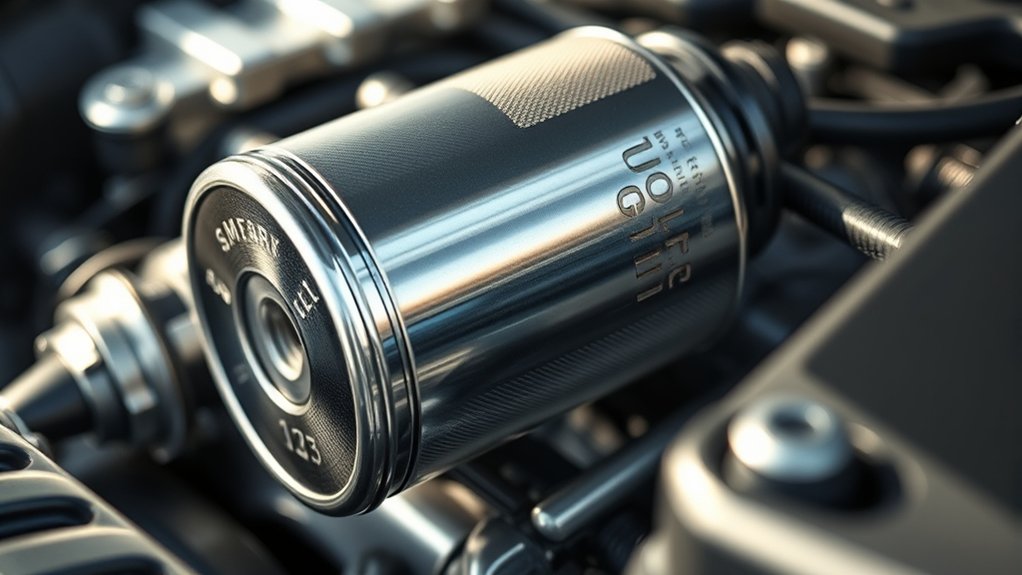
Oil filters act as critical barriers that trap contaminants and debris from circulating engine oil, ensuring that only clean oil reaches essential engine components. When you rely on an oil filter, it prevents abrasive particles from causing wear and tear inside the engine.
However, you should avoid excessive filtration, which can restrict oil flow and reduce lubrication efficiency, potentially leading to engine damage. Additionally, fuel dilution, where unburned fuel contaminates the oil, can degrade filtration performance and accelerate filter clogging.
Key Features That Define High-Quality Oil Filters
You’ll want to focus on filtration efficiency standards to guarantee the filter captures the smallest contaminants without restricting oil flow.
Pay attention to durability and material quality, as these factors determine the filter’s resistance to pressure and longevity under operating conditions.
Understanding these key features helps you select an oil filter that reliably protects your engine.
Filtration Efficiency Standards
How can you determine whether a filter effectively protects your engine? The key lies in filtration efficiency standards, which quantify a filter’s ability to remove contaminants from oil.
Filtration efficiency is typically measured by the percentage of particles of specific micron sizes a filter can capture. Higher efficiency directly translates to better engine protection, as fewer abrasive particles circulate and cause wear.
Standards like ISO 4548-12 and SAE J1858 provide objective benchmarks, ensuring filters meet minimum contaminant retention levels. When selecting an oil filter, focus on those tested against recognized standards with documented filtration efficiency ratings.
This guarantees your engine receives optimal protection by minimizing particle-induced damage, extending engine life, and maintaining performance. Prioritizing filtration efficiency ensures you choose a filter that genuinely safeguards your engine.
Durability And Material Quality
Beyond filtration efficiency, the durability and material quality of a filter considerably influence its performance and longevity. You need to assess durability metrics such as tensile strength, corrosion resistance, and burst pressure to gauge material integrity.
High-quality filters employ robust metal end caps, synthetic fiber media, and reinforced housing to withstand harsh engine conditions. Poor material choices lead to premature failure or leakage.
| Component | Material Quality Indicator |
|---|---|
| Filter Media | Synthetic fiber density |
| End Caps | Corrosion-resistant metal |
| Housing | Reinforced steel/aluminum |
| Gaskets | Heat-resistant rubber |
| Adhesives | High-bond strength |
Evaluating these durability metrics ensures you select an oil filter that maintains structural integrity under pressure and temperature extremes.
Why Oil Filter Filtration Efficiency Matters
You need an oil filter that efficiently removes microscopic particles to prevent abrasive wear inside your engine. High filtration efficiency directly reduces contamination, which extends engine life and maintains optimal performance.
Understanding this connection helps you choose filters that protect your investment over time.
Particle Removal Importance
Why does filtration efficiency matter when choosing an oil filter? Because it directly affects particle removal, which is critical for maintaining oil purity. Efficient filters trap contaminants like metal shavings and soot, preventing them from circulating and causing wear.
This precision improves cost efficiency by reducing the frequency of oil changes and minimizing engine repairs. Furthermore, effective particle removal lowers the environmental impact by decreasing waste oil generation and extending oil life.
When you select a filter with high filtration efficiency, you ensure that your engine runs cleaner and more reliably. This balance of performance and sustainability makes filtration efficiency a key factor not just for immediate engine protection, but also for long-term maintenance economics and environmental responsibility.
Engine Longevity Impact
Filtration efficiency not only maintains oil purity but also directly influences engine lifespan. When you select an oil filter that meets or exceeds rigorous filtration standards, you reduce abrasive particle presence, which otherwise accelerates wear on critical engine components.
High-efficiency filters trap contaminants down to sub-micron levels, preserving oil integrity and ensuring consistent lubrication. This directly contributes to engine longevity by minimizing metal-to-metal contact and preventing premature degradation.
Ignoring filtration standards risks circulating harmful debris, leading to increased friction, overheating, and eventual engine failure. By prioritizing oil filters engineered for superior filtration efficiency, you actively extend your engine’s operational life, optimize performance, and reduce costly maintenance.
Ultimately, understanding the filtration efficiency’s impact empowers you to make informed choices that safeguard your engine’s durability over time.
Comparing Spin-On vs. Cartridge Oil Filters
How do spin-on and cartridge oil filters differ in design and function? Spin-on filters integrate the filter media, housing, and sealing gasket into a single replaceable unit. Cartridge filters separate the media from the housing, which remains fixed on the engine.
In terms of spin on vs. cartridge, the key distinction lies in installation vs. replacement: spin-on filters require you to remove and discard the entire unit, while cartridge filters only need the internal element swapped out. This difference influences maintenance complexity and waste generation.
Spin-on filters offer quick, straightforward installation but generate more discarded parts. Cartridge filters demand more careful handling during replacement but reduce environmental impact by reusing the housing.
Understanding these contrasts helps you evaluate which filter type aligns best with your preferred maintenance approach and technical requirements.
How to Choose the Right Oil Filter for Your Vehicle
You need to understand the different filter types, such as spin-on and cartridge, to match your vehicle’s requirements. Pay close attention to your engine’s specifications to ensure compatibility with the oil filter’s design and materials.
Choosing the right filter improves filtration efficiency and maintains optimal engine performance.
Filter Types Explained
When selecting an oil filter, what factors should you prioritize to ensure optimum engine protection? Understanding filter types hinges on analyzing filter materials and their filtration efficiency. Conventional filters typically use cellulose fibers, offering basic particle trapping but lower durability.
Synthetic media filters utilize advanced materials, providing finer filtration and longer service life. High-performance filters often combine synthetic and cellulose fibers to balance cost and efficiency. Beyond performance, consider the environmental impact: synthetic filters may last longer, reducing waste, but their production can be resource-intensive.
Conversely, biodegradable filter materials and recyclable components minimize ecological footprint. By weighing filter materials against both filtration needs and environmental consequences, you can make an informed choice that safeguards your engine while aligning with sustainability goals.
Compatibility With Engines
Why does engine compatibility matter so much in selecting an oil filter? Ensuring compatibility addresses critical concerns like seal integrity, flow rate, and pressure tolerance.
Your engine’s design dictates specific requirements for filter material and construction to maintain optimal performance. Using a filter with incompatible filter material can hinder contaminant trapping or cause premature clogging, risking engine wear.
Additionally, compatibility concerns extend to the filter’s thread size and gasket type, which must match your engine’s specifications to prevent leaks.
When choosing, consult your vehicle’s manual and cross-reference OEM recommendations. This analytical approach guarantees the filter supports your engine’s lubrication system effectively, prolonging engine life and maintaining efficiency.
Prioritize filters engineered for your engine’s unique demands rather than generic options.
Best Oil Filters for Everyday Drivers
How do everyday drivers select an oil filter that balances performance, reliability, and cost? You want a filter that efficiently captures contaminants without restricting oil flow, ensuring engine longevity and consistent fuel economy.
Look for filters with synthetic media, as they offer superior particle retention and longer service intervals. Also, consider brands that emphasize sustainable recycling practices, minimizing environmental impact from used filters.
Choose filters with synthetic media for better filtration and support brands committed to sustainable recycling practices.
Pay attention to the filter’s micron rating; a finer rating improves protection but can reduce flow if too restrictive. Ultimately, you need a filter compatible with your engine’s specifications that maintains optimal oil pressure and filtration efficiency.
Choosing wisely ensures your vehicle runs smoothly, saves on fuel, and aligns with eco-friendly disposal standards, making it ideal for daily driving demands.
Top Oil Filters for High-Performance Cars
What distinguishes an oil filter suited for high-performance cars from standard options? Precision filtration and flow rate optimization are essential. High-performance engines generate greater heat and higher oil pressures, demanding filters that maintain consistent flow without sacrificing contaminant removal.
You’ll want filters engineered with synthetic media, which excel in trapping microscopic particles while accommodating synthetic oils’ unique viscosity. Such filters support efficient lubrication, vital in extreme conditions to prevent engine wear.
In terms of car care, selecting top oil filters designed specifically for high-performance vehicles ensures compatibility with the elevated demands of synthetic oils and aggressive driving. Brands offering reinforced construction and anti-drainback valves mitigate oil starvation during rapid acceleration or cornering, protecting your engine’s integrity.
Choosing these specialized filters elevates your maintenance routine, sustaining peak engine performance.
Why Durability Matters in Oil Filters
While high-performance oil filters focus on precision filtration and flow management to meet demanding engine conditions, durability plays an equally essential role in ensuring long-term reliability. You need an oil filter that withstands thermal cycling, pressure fluctuations, and mechanical stress without compromising performance.
Durability testing simulates these real-world conditions to evaluate the filter’s resistance to fatigue and deformation. Material quality directly impacts this resilience; robust filter media, corrosion-resistant end caps, and reinforced sealing components prevent premature failure.
If the filter’s structural integrity falters, contaminants can bypass the media, risking engine damage. By prioritizing durability, you ensure consistent filtration efficiency and prolonged service intervals, protecting your engine over time. Choosing an oil filter validated through rigorous durability testing and superior material quality is crucial for dependable operation in demanding environments.
How Often Should You Replace Your Oil Filter?
When should you replace your oil filter to maintain peak engine performance? Generally, manufacturers recommend changing your oil filter every 3,000 to 7,500 miles, depending on your vehicle and oil type. Ignoring this can cause topic drift, leading you to replace the oil or filter at irrelevant pairing intervals that reduce efficiency.
| Vehicle Type | Recommended Interval (miles) | Notes |
|---|---|---|
| Passenger Cars | 3,000 – 7,500 | Depends on oil and usage |
| Trucks/SUVs | 5,000 – 7,500 | Heavier loads require more care |
| High-Performance | 3,000 – 5,000 | Frequent changes improve flow |
Replacing your oil filter at the correct interval ensures optimal filtration and engine longevity without unnecessary replacements.
Where to Buy Genuine Oil Filters Safely
Where can you confidently purchase genuine oil filters without risking counterfeit products or subpar quality? Start with authorized dealerships or certified automotive retailers, as they source filters directly from manufacturers, ensuring authenticity.
Purchase genuine oil filters confidently from authorized dealerships or certified retailers sourcing directly from manufacturers.
Online platforms like manufacturer websites or reputable e-commerce sites with verified sellers also provide secure options. Avoid ambiguous third-party marketplaces lacking transparency, as counterfeit filters compromise filtration efficiency, negatively impacting oil changes and fuel economy.
Additionally, inspect packaging for manufacturer seals and part numbers to verify genuineness. Using genuine filters maintains optimal engine performance, extends oil life, and supports consistent fuel economy.
Prioritize safety by selecting vendors with clear return policies and customer feedback. This methodical approach guarantees you receive reliable oil filters critical for your vehicle’s maintenance schedule and overall efficiency.
Frequently Asked Questions
Can Using a Wrong Oil Filter Damage My Engine?
Yes, using the wrong filter can cause engine damage by restricting oil flow or failing to trap contaminants. You’ll risk reduced lubrication, increased wear, and potential engine failure if the filter doesn’t meet your engine’s specifications.
Do Oil Filters Affect Oil Change Intervals?
Yes, oil filter compatibility directly affects oil change intervals since incompatible filters can clog faster. This impacts fuel economy by increasing engine strain, so choosing the right filter ensures optimal filtration and efficient oil lifespan.
Are Reusable Oil Filters Worth It?
Reusable oil filters are worth it if you value recyclable filtration and extended filter longevity. They reduce waste and costs over time, but require proper cleaning and maintenance to maintain optimal engine protection and performance.
How Does Oil Filter Size Impact Engine Performance?
You might not realize that a 10% smaller oil filter size can increase flow restrictions by up to 15%, which directly impacts engine performance by reducing lubrication efficiency and increasing wear. Choosing the right size is vital.
Can Oil Filters Improve Fuel Efficiency?
Yes, oil filters can improve fuel efficiency by optimizing oil filtration research outcomes, reducing engine wear.
However, you must balance maintenance tradeoffs like filter replacement intervals to maintain consistent fuel economy gains over time.
Conclusion
Choosing the best oil filter is like selecting the right shield for your engine’s heart—precise, reliable, and enduring. You want a filter that balances advanced synthetic media with robust construction, ensuring peak filtration and flow.
By matching OEM specs and favoring trusted brands tested to rigorous standards, you’ll protect your engine from wear and contaminants. Replace filters timely, and you’ll keep your engine running like a finely tuned machine.
In conclusion, investing in the best oil filter is essential for safeguarding your engine’s performance and longevity.