
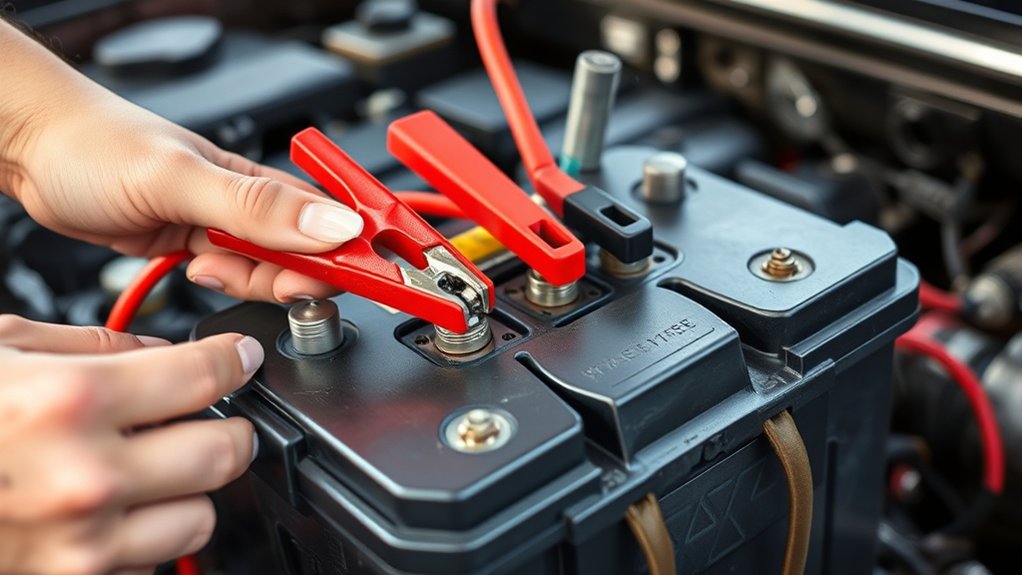
How to Connect Car Battery Charger
When you need to connect a car battery charger, following the correct procedure is essential for safety and effectiveness. Start by ensuring the car is off and parked in a well-ventilated area. This helps prevent any buildup of harmful gases during charging.
Next, identify the positive and negative terminals accurately. Attach the clamps in the proper order—usually positive first, then negative—to avoid sparks or damage. Understanding each step clearly will help you charge your battery without risking injury or equipment failure.
But there’s more to think about before and after making these connections. Proper preparation and post-charging checks are important to maintain battery health and ensure safe operation.
Key Takeaways
- Park your car in a well-ventilated area with the engine off before starting the connection process.
- Identify and clean the positive (+) and negative (–) battery terminals to ensure secure connections.
- Attach the red clamp firmly to the positive (+) terminal of the battery.
- Connect the black clamp to a clean, unpainted metal surface on the car frame away from the battery.
- Ensure all clamps are secure before plugging in the charger, and follow safety protocols during charging.
Prepare Your Car Battery Before Charging
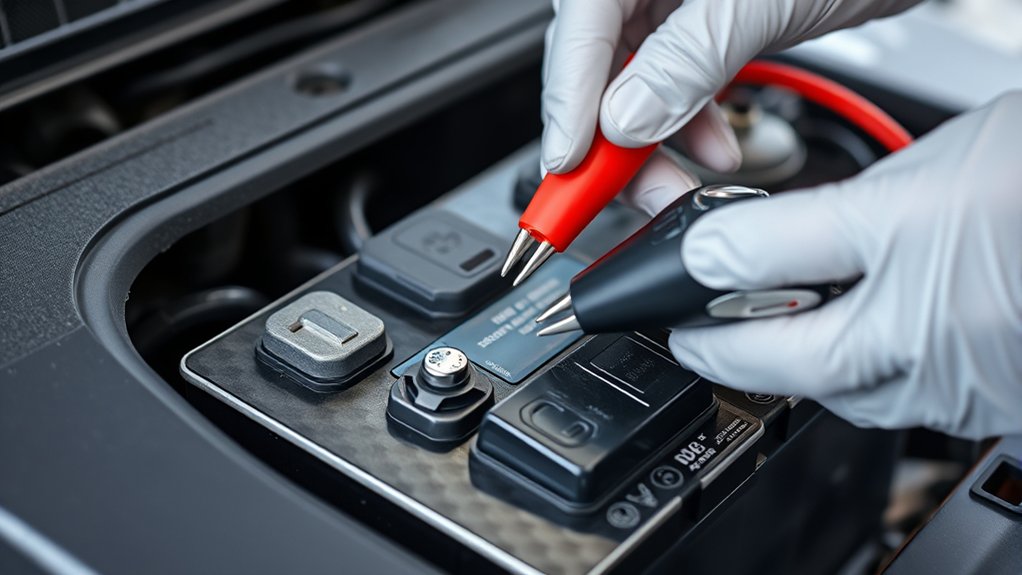
Before you connect the charger, guarantee your car battery is in a safe and accessible condition. Begin by inspecting the battery terminals for corrosion or damage, as these impede effective charging. Use a wire brush or battery terminal cleaner to remove any buildup.
Verify the battery’s voltage with a multimeter to assess its current state; this informs your recovery strategies, ensuring you don’t rely on ineffective or harmful methods. Avoid common charging myths, such as overcharging to “boost” capacity, which can damage your battery.
Disconnect any electronic devices drawing power to prevent interference during charging. Ensure the area is well-ventilated to dissipate potentially hazardous gases emitted during charging. Taking these preparatory steps ensures safe, efficient charging and extends your battery’s lifespan.
Choose the Right Tools and Charger Types
Once your battery is clean and its condition verified, selecting the appropriate charger and tools becomes the next step. Using the wrong tools can damage your battery or charger, so choose carefully. Ensure your charger matches your battery’s voltage and type (lead-acid, AGM, or gel). For safety and efficiency, use insulated gloves and eye protection.
Consider these essentials:
- Battery charger type: Smart chargers prevent overcharging, while manual chargers require monitoring.
- Proper connectors: Use clamps designed for automotive batteries to avoid poor contact or sparking.
- Disposal tools: Have a battery disposal plan if your battery is damaged or at end-of-life to comply with regulations.
Avoid shortcuts; proper tool selection guarantees safety and preserves battery life during charging.
Connect a Car Battery Charger Step-by-Step
How do you properly connect a car battery charger to ensure safety and effectiveness? First, park your vehicle in a well-ventilated area and turn off the engine. Avoid irrelevant topic distractions like off topic discussion about battery brands.
Locate the battery terminals: positive (+) and negative (–). Attach the red clamp to the positive terminal firmly. Next, connect the black clamp to a clean, unpainted metal surface on the car’s frame, away from the battery, to prevent sparks.
Confirm all connections are secure before plugging in the charger. Set the charger to the correct voltage and amperage according to your battery’s specifications. Never connect clamps in reverse order or directly across terminals to avoid damage.
Following this step-by-step procedure ensures a safe, effective battery charge without risking hazards or off topic distractions.
Disconnect the Charger Safely After Use
When should you disconnect the charger to guarantee safety and protect your battery? Always wait until the charger indicates a full charge or the recommended charging time elapses. Follow proper disconnection etiquette to prevent sparks or damage.
Before disconnecting, perform these safety checks:
- Ensure the charger is turned off or unplugged from the power source.
- Remove the negative (black) clamp first to minimize short-circuit risk.
- Then, remove the positive (red) clamp carefully, avoiding contact with metal surfaces.
Charge Different Car Battery Types Correctly
You need to adjust your charging method based on the battery type to ensure safety and efficiency. Lead-acid batteries require a slower charge rate, while AGM batteries demand a controlled voltage to prevent damage.
For lithium-ion batteries, use a charger specifically designed to manage their unique charging profile and avoid overheating.
Lead-Acid Battery Charging
A lead-acid battery requires specific charging procedures to maintain its performance and longevity. When you charge it, ensure you follow rare gas charging principles to prevent gas buildup that can damage the battery. Always prioritize electrolyte safety by avoiding spills and wearing protective gear.
Here’s how to charge your lead-acid battery correctly:
Connect the charger’s positive clamp to the battery’s positive terminal first, then the negative clamp to a grounded metal surface, not directly to the battery’s negative terminal.
Use a charger with an automatic shutoff to prevent overcharging, which can degrade the battery.
Monitor the charging voltage, keeping it between 13.8 and 14.4 volts for a 12-volt battery to maintain electrolyte balance and extend battery life.
Following these steps ensures safe, efficient lead-acid battery charging.
AGM Battery Charging Tips
How should you approach charging an AGM battery to guarantee top performance and lifespan? First, use a charger designed for AGM technology, as these batteries require a lower voltage and controlled current. Avoid overcharging by selecting a charger with an automatic shut-off feature.
Address common AGM myths, such as the belief that standard chargers suffice or that AGM batteries need no maintenance. These are inaccurate and can reduce battery life. When connecting, observe polarity carefully and ensure firm connections.
Maintain proper temperature during charging; excessive heat can damage the battery. For two word discussion ideas, focus on “charging voltage” and “battery maintenance.” Following these precise steps helps you safely charge AGM batteries, ensuring reliable performance and extending their usable life without risking damage or capacity loss.
Lithium-Ion Battery Care
When charging lithium-ion car batteries, why is it crucial to use chargers specifically designed for their unique chemistry? Using the wrong charger can compromise lithium ion safety and reduce charging efficiency, potentially damaging the battery or causing hazardous conditions. You must select chargers with precise voltage and current controls tailored for lithium-ion cells.
To maintain optimal lithium-ion battery care, follow these guidelines:
- Use a charger with built-in temperature monitoring to prevent overheating.
- Ensure the charger supports the battery’s specific voltage and capacity ratings.
- Avoid overcharging by using chargers with automatic cut-off or trickle charge functions.
Avoid Common Battery Charger Mistakes
Why do so many people struggle with connecting a car battery charger correctly? Most often, it’s due to common mistakes that compromise both safety and effectiveness.
To avoid mistakes, always ensure the charger is off before attaching clamps. Connect the positive clamp to the battery’s positive terminal first, then the negative clamp to a grounded, unpainted metal surface away from the battery. This reduces the risk of sparks and acid exposure.
Follow all safety reminders: wear protective gloves and eyewear, and work in a well-ventilated area. Never touch clamps together when the charger is powered, and double-check connections before turning the charger on.
These precise steps help you avoid damage to the battery and prevent injuries, ensuring a safe and successful charging process.
What to Do If Your Battery Won’t Charge?
If your battery won’t charge despite following proper connection steps, you need to systematically diagnose the issue. Start by inspecting the charger and battery terminals for corrosion or loose connections. Next, verify the charger’s output voltage with a multimeter to ensure it’s functioning correctly.
If the battery remains unresponsive, consider its age and condition; it may be defective or beyond recovery.
Check your battery’s warranty to see if a replacement is covered.
Consult disposal guidelines for safe and environmentally responsible battery disposal.
Avoid repeatedly attempting to charge a faulty battery to prevent damage or hazards.
Maintain Your Battery’s Health With Regular Charging
Addressing charging issues promptly helps prevent battery failure, but maintaining your battery’s health requires consistent care through regular charging. To ensure optimal battery maintenance, charge your car battery every few weeks, especially if the vehicle remains unused for extended periods.
Use a charger compatible with your battery type and adhere strictly to charging safety protocols. Disconnect the charger once the battery reaches full capacity to avoid overcharging. Always inspect terminals for corrosion and clean them before connecting the charger.
Maintain proper ventilation during charging to prevent gas buildup. Regular charging prevents sulfation, prolonging battery life and performance. By integrating these steps into your routine, you’ll enhance reliability and avoid unexpected battery failures, ensuring your car starts smoothly every time.
Frequently Asked Questions
Can I Use a Solar Charger for My Car Battery?
Yes, you can use solar charging for your car battery, but ensure the charger matches your battery’s voltage. Proper solar charging helps maintain battery longevity by preventing overcharging and deep discharge, preserving its overall performance and lifespan.
How Long Does It Take to Fully Charge a Car Battery?
Charging your battery is like filling a reservoir: how long depends on the charging rate. Typically, it takes 4-24 hours.
Ensure safe storage and regulatory compliance by using a charger with proper settings and monitoring throughout.
Are Trickle Chargers Safe to Leave Connected Overnight?
Yes, trickle charger safety allows you to leave it connected overnight. These chargers provide a low, steady current, preventing overcharging and battery damage.
This makes overnight charging implications minimal when used as instructed with compatible batteries.
Can Charging a Battery Indoors Be Hazardous?
Charging a battery indoors can be safe yet risky; you must guarantee proper ventilation requirements to avoid indoor hazards like explosive gas buildup. Always monitor the area closely, maintaining airflow to prevent dangerous fume accumulation during charging.
How Do Extreme Temperatures Affect Battery Charging Efficiency?
Extreme temperatures reduce charging efficiency by slowing chemical reactions inside the battery. You’ll notice slower charging in cold weather and potential overcharging or damage in excessive heat.
Always charge within the manufacturer’s recommended temperature range.
Conclusion
Now that you know how to connect a car battery charger safely and correctly, you’re all set to keep your battery healthy and ready.
It’s no coincidence that following these precise steps guarantees both your safety and your battery’s longevity. Just remember: secure connections, proper clamp order, and a well-ventilated area make all the difference.
Stick to these instructions, and your car will start smoothly every time you need it. Properly connecting your car battery charger is key to maintaining reliable vehicle performance.