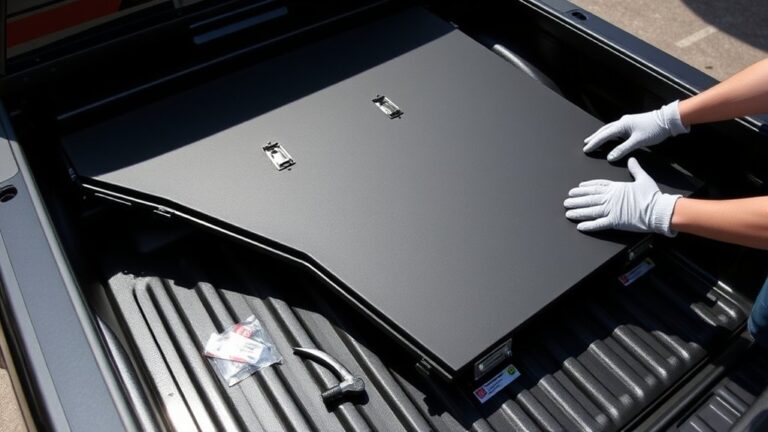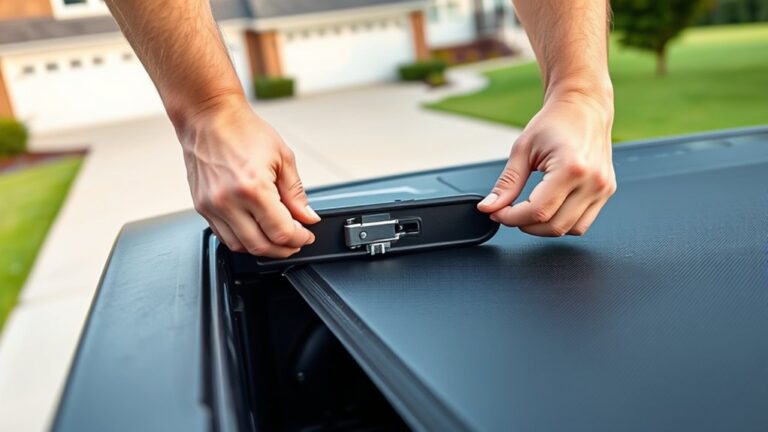
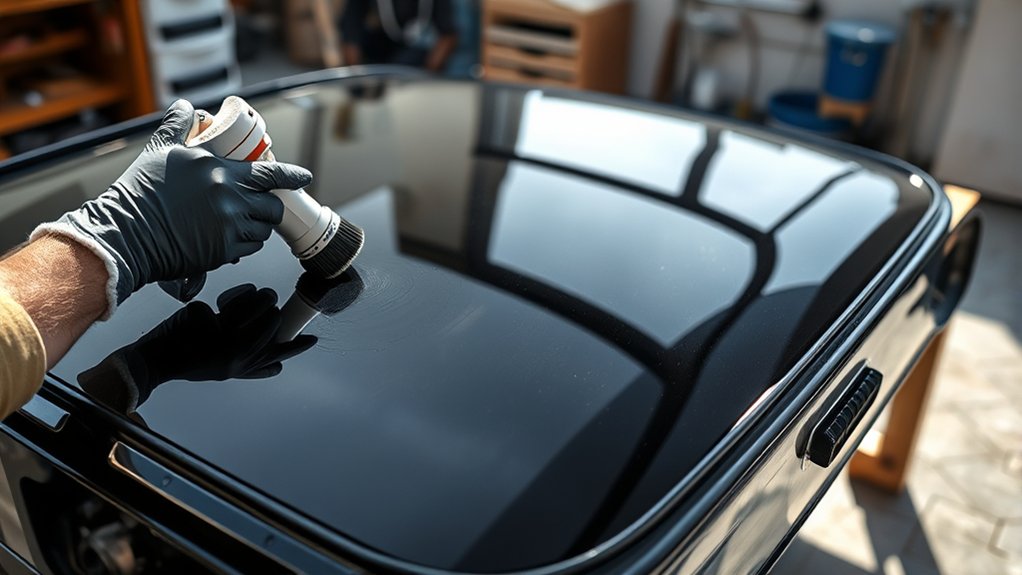
How to Paint a Fiberglass Tonneau Cover
You might think painting a fiberglass tonneau cover is too complex or messy, but with the right preparation and materials, you can achieve a smooth, durable finish.
Painting a fiberglass tonneau cover requires precise cleaning, sanding, and selecting primers and paints designed specifically for fiberglass surfaces.
Mastering these steps ensures your cover not only looks professional but also withstands weather and wear.
Understanding the correct application techniques is essential before you begin.
Key Takeaways
- Thoroughly clean and sand the fiberglass tonneau cover with 320-400 grit sandpaper to ensure proper paint adhesion.
- Apply a fiberglass-specific epoxy or urethane primer in thin, even coats, allowing adequate drying time between layers.
- Use automotive-grade polyurethane paint, applying multiple thin coats with consistent 8–12 inch spray distance for durability and UV resistance.
- Finish with 2-3 thin layers of high-quality clear coat to seal and protect against moisture, UV damage, and abrasion.
- Maintain proper ventilation, wear protective gear, and ensure a dust-free workspace for a professional, long-lasting finish.
Gather Tools and Materials for Painting Fiberglass Covers
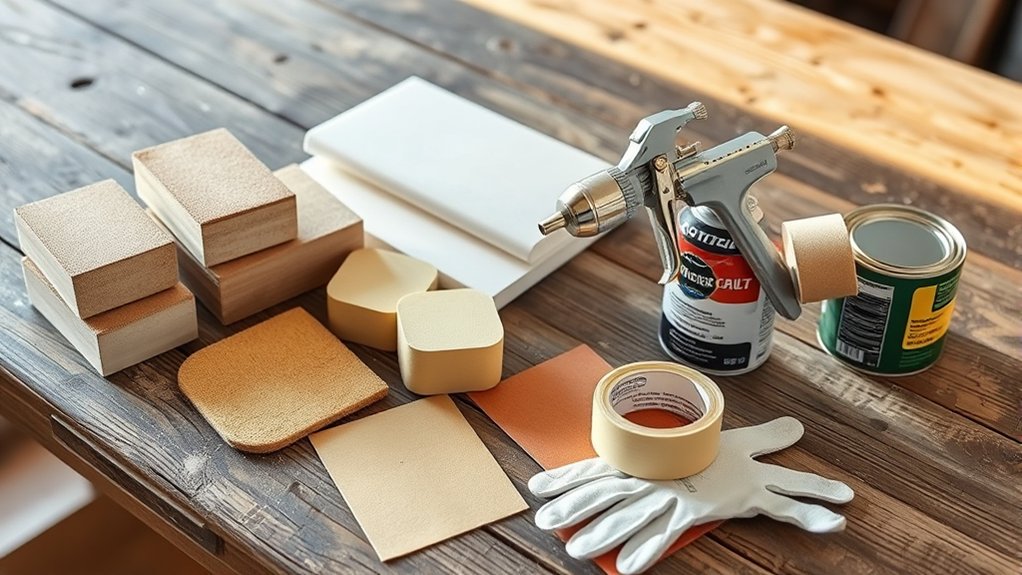
Where do you begin when preparing to paint a fiberglass tonneau cover? Start by gathering all necessary tools and materials, ensuring each item’s compatibility with fiberglass surfaces.
Use a high-quality automotive-grade primer, paint designed for plastic or fiberglass, and a clear coat for durability. Select sanding blocks or sandpaper with grits suited to fiberglass. Confirm tool compatibility, especially with spray guns or brushes, to avoid damaging the cover or compromising the finish.
Equip yourself with personal protective equipment, including respirators, gloves, and goggles, to adhere to safety protocols. Ensure your workspace is well-ventilated and free of dust.
Having all compatible tools and materials organized before you start minimizes errors and maximizes efficiency, setting the foundation for a professional-quality paint job.
Clean and Sand Your Fiberglass Tonneau Cover
A thorough cleaning and sanding process is essential before applying any primer or paint to your fiberglass tonneau cover. Start by washing the surface with a mild detergent and water, using cleaning tricks like a soft-bristle brush to remove dirt trapped in crevices. Rinse thoroughly and let it dry completely.
Next, inspect the cover for scratches or imperfections. Use fine-grit sandpaper (320-400 grit) to sand the entire surface evenly, focusing on rough areas to promote adhesion.
Carefully inspect and sand the cover with fine-grit sandpaper to enhance paint adhesion and smooth imperfections.
For scratch repair, sand the damaged spots gently until smooth, then clean the dust away with a tack cloth. Avoid aggressive sanding that can damage the fiberglass.
Proper cleaning and sanding ensure the paint adheres uniformly, preventing future peeling or cracking and providing a professional finish.
Choose the Best Paint and Primer for Fiberglass Covers
You’ll want to select a primer specifically formulated for fiberglass to ensure strong adhesion and a smooth base. Choose paint with high durability and weather resistance, such as automotive-grade urethane or epoxy coatings.
Prioritize UV and moisture protection to maintain your cover’s finish over time.
Types of Suitable Primers
Selecting the right primer is essential for ensuring proper adhesion and durability when painting a fiberglass tonneau cover. Among primer types, epoxy primers stand out for their superior adhesion promoters and corrosion resistance, forming a robust base layer.
Alternatively, urethane primers offer excellent flexibility and sandability, making them suitable for surfaces requiring smooth finishes. You should avoid primers lacking adhesion promoters, as they can compromise paint longevity.
Self-etching primers can also be effective, but only if the fiberglass surface is properly prepared since they contain acidic compounds that promote bonding. Always verify compatibility between the primer and the topcoat paint to prevent delamination.
Best Paint Formulations
After preparing the fiberglass surface with the right primer, choosing the best paint formulation ensures maximum adhesion, durability, and aesthetic appeal. You want a paint that bonds chemically and resists cracking or peeling.
Idea one is to select a two-part epoxy paint, known for its robust adhesion and chemical resistance. Idea two involves polyurethane paints, which offer excellent flexibility and UV stability.
Consider these factors when choosing:
- Compatibility with fiberglass and primer
- Chemical resistance for longevity
- Flexibility to prevent cracking under stress
- UV resistance to maintain color integrity
- Ease of application and drying time
Using these criteria, you’ll ensure the paint system forms a durable, seamless finish that withstands regular wear on your tonneau cover.
Weather Resistance Considerations
Although paint formulation plays a crucial role, ensuring weather resistance requires choosing primers and paints specifically engineered to withstand moisture, temperature fluctuations, and UV exposure. You should select a high-quality epoxy or urethane primer designed for fiberglass, as these provide excellent adhesion and enhance weather sealing.
For the topcoat, opt for automotive-grade polyurethane paint that offers superior UV durability and resists cracking or fading. These coatings form a resilient barrier against water ingress and thermal expansion stresses. Applying multiple thin coats improves coverage and strengthens protection.
Avoid generic paints lacking weatherproof additives, since they compromise long-term performance. By prioritizing primers and paints with proven weather sealing and UV durability, you ensure your fiberglass tonneau cover maintains its finish and structural integrity under harsh environmental conditions.
Apply Primer to Your Tonneau Cover
A well-applied primer is essential for ensuring proper adhesion and durability of the paint on your fiberglass tonneau cover. To maximize primer compatibility and surface adhesion, select a primer specifically formulated for fiberglass surfaces.
Proper primer application is key for paint adhesion and durability on fiberglass tonneau covers.
Before application, ensure the cover is clean, dry, and lightly sanded to promote mechanical bonding. Apply the primer evenly in thin coats, allowing adequate drying time between layers to prevent runs and uneven textures.
Key steps include:
- Choose a high-quality, fiberglass-compatible primer
- Clean and sand the surface thoroughly
- Apply primer in multiple thin, even coats
- Allow full drying time between coats
- Inspect for uniform coverage and smoothness
Following these steps will create a strong base, improving paint longevity and resistance to environmental stressors.
Spray or Brush Paint on Fiberglass Tonneau Covers
You’ll need to choose between spray and brush painting based on the finish you want and the equipment available. Spray painting offers a smooth, even coat but requires proper technique to avoid runs or overspray.
If you opt for brush painting, use high-quality brushes and apply thin, consistent layers to prevent visible strokes and ensure durability.
Spray Painting Techniques
How should you approach spray painting a fiberglass tonneau cover to achieve a smooth, durable finish? Start with thorough surface preparation. Clean, sand, and prime the cover to guarantee paint adhesion. Spray painting requires steady, overlapping passes to avoid runs and uneven coverage.
Here are essential discussion ideas for technique:
- Maintain a consistent distance (8-12 inches) between spray nozzle and surface
- Use thin, even coats rather than heavy layers
- Keep the spray gun perpendicular to the surface
- Allow adequate drying time between coats to prevent drips
- Work in a dust-free, well-ventilated environment
Following these steps ensures uniform coverage and peak durability, maximizing the paint’s bond to the fiberglass. Proper surface preparation and meticulous spray technique are vital for professional results without brush marks or imperfections.
Brush Painting Tips
When applying brush paint to a fiberglass tonneau cover, selecting the right type of brush and paint is essential to achieve a smooth, even finish without visible strokes or bubbles. Use a high-quality synthetic bristle brush, which holds paint consistently and minimizes brush marks.
Ensure pigment compatibility by choosing paint specifically formulated for fiberglass surfaces; mismatched pigments can cause adhesion failure or uneven coloration. Apply thin, even coats, maintaining a wet edge to prevent lap marks.
After each session, follow proper brush care by thoroughly cleaning the brush with the recommended solvent to preserve bristle integrity and avoid contamination. Store brushes flat or hanging to maintain shape.
Proper technique and maintenance ensure a durable, professional finish on your fiberglass tonneau cover.
Apply a Clear Coat for Durable, Weather-Resistant Finish
Although the base coat provides color and some protection, applying a clear coat is essential to achieve a durable, weather-resistant finish on your fiberglass tonneau cover. The clear coat seals the paint, preventing UV damage, moisture infiltration, and abrasion.
Use a fine spray or brush technique, ensuring even, thin layers. Allow ample drying time between coats for optimal adhesion.
Key points to consider:
- Use a high-quality, automotive-grade clear coat for superior durability.
- Apply 2-3 thin coats rather than one thick coat to avoid runs.
- Follow manufacturer instructions for drying times and recoat windows.
- Learn ways to remove clearcoat safely for touch-ups or errors.
- Properly clean and store brushes using recommended solvents to maintain their condition.
This approach guarantees a professional, long-lasting finish.
Avoid Common Fiberglass Painting Mistakes
Applying a clear coat correctly sets the foundation for a durable finish, but overlooking common painting errors can still compromise your fiberglass tonneau cover’s appearance and longevity. Avoid an irrelevant topic like neglecting surface preparation. Improper sanding or cleaning causes paint adhesion failure.
Don’t let misshapen discusses about paint thickness confuse you; applying too thick a coat leads to runs and uneven curing. Steer clear of unrelated focus on color theory during this stage. Your priority is a smooth, uniform base, not aesthetic preferences that don’t affect durability.
Use proper technique: maintain consistent spray distance, apply multiple thin coats, and allow sufficient drying time between layers. These precise steps prevent common issues like bubbling, cracking, or premature peeling, ensuring your painted cover withstands environmental stress and maintains a professional finish.
Maintain Your Painted Fiberglass Tonneau Cover
Regular maintenance preserves the integrity and appearance of your painted fiberglass tonneau cover over time. To meet your durability goals, follow these maintenance tips to prevent premature wear and damage. Routine care ensures the paint adheres firmly and resists environmental stressors.
Consistent upkeep protects your painted fiberglass tonneau cover, ensuring lasting durability and resistance to environmental damage.
Clean with a mild, pH-neutral detergent to avoid degrading the paint layer.
Inspect the surface monthly for chips, cracks, or fading; repair promptly.
Avoid abrasive tools or harsh chemicals that compromise the paint finish.
Apply a UV-protective wax quarterly to shield against sun damage.
Store the cover in a shaded, dry area when not in use to minimize exposure.
Frequently Asked Questions
How Long Does the Paint Take to Fully Cure on a Fiberglass Cover?
You’ll find the paint’s drying time typically spans 24 to 48 hours, but full cure depends on ideal cure conditions like temperature and humidity. It often requires up to 7 days to achieve maximum hardness and durability.
Can I Paint a Fiberglass Tonneau Cover Without Removing It From the Truck?
Yes, you can paint it without removal, but expect longer drying times due to limited airflow. Wear safety gear to protect from fumes and overspray, and ensure you mask surrounding areas for a clean, precise finish.
What Safety Precautions Should I Take When Painting Fiberglass?
You should wear safety gear like gloves, goggles, and a respirator. Follow prep steps by sanding the surface and working in a well-ventilated area to avoid fumes. These precautions ensure safe, effective fiberglass painting.
How Do Temperature and Humidity Affect Fiberglass Paint Drying?
Oh, sure. Humidity loves to slow your paint’s drying dance, while temperature effects either speed it up or stall it entirely.
You’ll want to control both precisely; too cold or too moist, and your finish suffers irreparably.
Is It Possible to Change the Cover’s Color Multiple Times?
Yes, you can change the cover’s color multiple times, but repeated painting affects color durability. Each layer requires proper surface prep to ensure adhesion, or paint may peel, compromising the finish and longevity of your chosen colors.
Conclusion
By carefully cleaning, sanding, and selecting superior supplies, you set the stage for a smooth, sturdy, and stunning finish on your fiberglass tonneau cover. Applying primer, paint, and clear coat with consistent care creates a cohesive coating that’s crafted to combat corrosion and weather wear.
Stay sharp, steer clear of sloppy slips, and sustain your surface with smart maintenance. This systematic strategy ensures your cover’s color and coverage remain crisp and capable for countless cruises.
Following these steps will help you achieve a professional-looking result and extend the life of your fiberglass tonneau cover. Proper preparation and application are key to a durable and attractive paint job on your fiberglass tonneau cover.