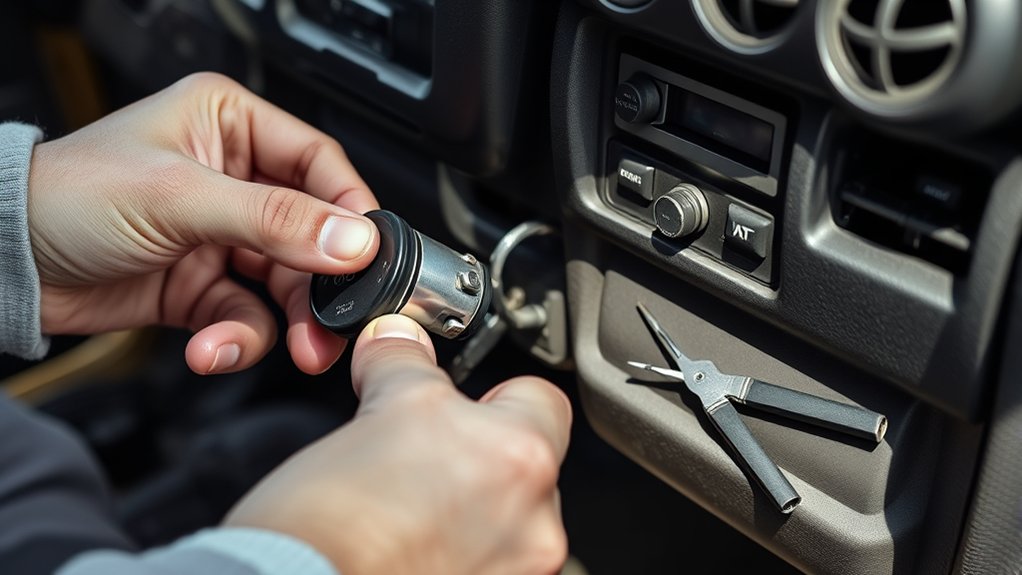
How to Replace 2000 Jeep Wrangler Ignition Lock Cylinder
Just like a key that won’t turn can bring your Jeep Wrangler to a halt, a faulty ignition lock cylinder can disrupt your entire starting system.
Knowing how to replace the 2000 Jeep Wrangler ignition lock cylinder is essential to get your vehicle running smoothly again.
You’ll need the right tools and a clear process to avoid unnecessary damage.
Understanding how to properly remove and install the cylinder will save time and frustration.
Before you proceed, make sure you recognize the signs that point to a failing ignition lock cylinder—this step is essential.
Key Takeaways
- Insert the key and turn it to the “ON” position before locating the ignition lock cylinder retaining pin.
- Press the retaining pin while gently pulling the ignition lock cylinder outward to remove it.
- Disconnect the electrical connectors from the ignition switch housing after removing the cylinder.
- Align the new ignition lock cylinder with the housing, key in the “ON” position, and insert it without forcing.
- Secure the cylinder with retaining clips or screws and test the key operation through all positions.
Gather Tools for Replacing the Ignition Lock Cylinder
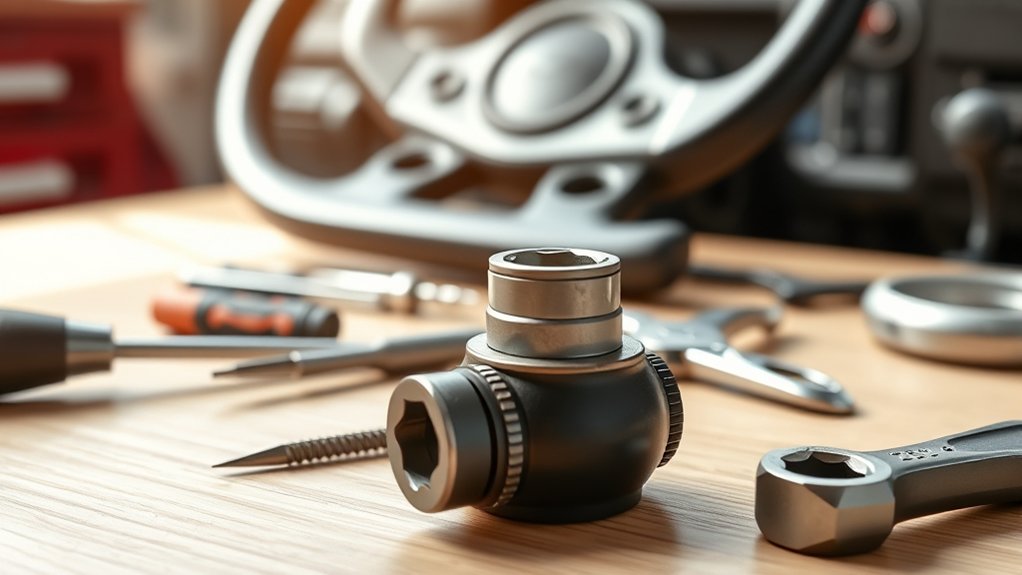
Before you begin replacing the ignition lock cylinder, what tools will you need? Start with a basic socket set, including a 10mm socket, to remove the steering column covers.
Begin with a basic socket set, including a 10mm socket, to remove the steering column covers.
You’ll also need a flathead screwdriver and a small pick tool to release retaining clips. A Torx driver set is essential for handling screws securing the ignition assembly.
Since the replacement ignition switch interfaces with the interior wiring, have a multimeter ready to test connections if necessary. Needle-nose pliers will help manipulate wiring harnesses carefully without damage.
Additionally, keep electrical tape on hand to insulate any exposed wires during reassembly. Gathering these tools ensures efficient removal and installation of the ignition lock cylinder without risking harm to the interior wiring or the replacement ignition switch itself.
Diagnose a Faulty Ignition Lock Cylinder
How can you tell if your 2000 Jeep Wrangler’s ignition lock cylinder is failing? First, check if the key won’t turn smoothly or if it gets stuck. A faulty cylinder often causes intermittent starting issues or failure to engage the electrical system.
Avoid pursuing idea one, such as battery or starter problems, as they represent an irrelevant topic here. Focus strictly on symptoms linked directly to the ignition lock cylinder. Do not engage in unrelated discussion about the vehicle’s security system or wiring, which can mislead the diagnosis.
Use a precise approach: insert the key and observe resistance, listen for unusual clicks, and test if the cylinder returns to the “on” position properly. Confirm these signs before proceeding to the next step.
Remove the Ignition Lock Cylinder
Where do you start when removing the ignition lock cylinder from your 2000 Jeep Wrangler? First, ensure the key is inserted and turned to the “ON” position to allow proper alignment for removal.
Next, locate the retaining pin on the ignition switch housing. Press this pin while gently pulling the ignition lock cylinder out. Be careful not to force it to avoid damage.
Visualize the process:
- Insert key and perform key rotation to “ON”
- Press retaining pin beneath ignition switch housing
- Gently pull ignition lock cylinder outward
- Disconnect any attached electrical connectors
This method ensures the ignition lock cylinder disengages safely, allowing you to proceed with replacement without harming the ignition switch assembly or surrounding components.
Install the New Ignition Lock Cylinder
Align the new ignition lock cylinder with the housing, ensuring the key is in the “ON” position to facilitate proper engagement. Gently insert the cylinder into the steering column, applying even pressure until it clicks securely into place. Avoid forcing the cylinder, as this may damage internal components or the housing.
Note that installation procedures may vary for an unrelated topic or a different vehicle, so confirm compatibility before proceeding. Once seated, reattach any retaining clips or screws removed earlier to lock the cylinder firmly.
Double-check the alignment and ensure the key turns smoothly through all positions without binding. Proper installation is critical to avoid electrical or mechanical failures, so don’t skip these precise steps when replacing your 2000 Jeep Wrangler’s ignition lock cylinder.
Test and Troubleshoot After Replacement
Once the new ignition lock cylinder is installed, you’ll need to thoroughly test its operation to ensure proper functionality. Start by turning the key through all positions: off, accessory, on, and start. Check for smooth movement and correct engagement.
If the engine doesn’t crank or electrical components fail, consider troubleshooting common issues such as poor electrical connections or misaligned components.
To avoid confusion with unrelated topics, focus on these discussion ideas during testing:
- Verify key rotation is smooth without sticking or resistance
- Confirm dashboard lights activate appropriately in each key position
- Ensure the engine starts reliably without delay or interruption
- Check that the steering wheel locks and unlocks correctly with the key
Address any irregularities immediately to prevent future ignition failures.
Frequently Asked Questions
Can a Faulty Ignition Lock Cylinder Cause the Jeep Not to Start?
Yes, a faulty ignition cylinder can prevent your Jeep from starting. If the cylinder is damaged or worn, it may not engage properly.
Key programming issues can also disrupt the ignition system’s ability to recognize your key.
How Much Does It Typically Cost to Replace the Ignition Lock Cylinder?
You’ll only need a small fortune, typically $150 to $400, to restore your ignition security and vehicle access.
But hey, who doesn’t love paying a premium to keep their Jeep from playing hard to get?
Is It Necessary to Reprogram the Key After Replacement?
You don’t need to reprogram ignition keys after replacing the ignition lock cylinder, but you should replace door tumblers simultaneously for consistent key operation.
This guarantees all locks work smoothly without requiring electronic reprogramming.
Can I Use a Locksmith Instead of Doing It Myself?
You can absolutely hand the reins to a locksmith, sparing you the DIY ignition cylinder hassle. They guarantee lock cylinder compatibility, maintain ignition warranty, and provide precise service, keeping your Wrangler’s ignition system running smoothly and reliably.
What Are the Signs of a Failing Ignition Lock Cylinder?
You’ll notice ignition misalignment causing difficulty turning the key, inconsistent start attempts, or your spare key’s compatibility failing. These signs indicate the ignition lock cylinder’s wear, requiring timely inspection or replacement to avoid further damage.
Conclusion
Congratulations, you’ve just replaced the ignition lock cylinder on your 2000 Jeep Wrangler—because who doesn’t love wrestling with tiny retaining pins and mysterious wiring?
Now, instead of praying your key turns, you’ve got mechanical certainty. Remember, if your Jeep still gives you attitude, maybe it’s not the cylinder—it’s your taste in vehicles.
But seriously, follow the steps precisely, test thoroughly, and enjoy starting your Wrangler without a wrestling match every morning. Technical precision beats automotive drama when you replace the ignition lock cylinder on your 2000 Jeep Wrangler.