Is Stp a Good Oil Filter
Choosing an STP oil filter is like selecting the right filter for a camera lens—you want clarity without distortion. STP oil filters claim around 95% efficiency at capturing particles near 20 microns, which suggests solid protection for everyday engines.
But does their build quality and compatibility truly meet your vehicle’s demands, especially under varying conditions? Understanding these factors can help you decide if STP fits your maintenance routine or if another option is wiser.
Key Takeaways
- STP oil filters offer reliable filtration with 95% efficiency at 20 microns, outperforming the industry average of 90%.
- They provide broad compatibility with many vehicle makes, matching OEM thread sizes and seal dimensions for ease of fitment.
- Constructed with corrosion-resistant steel and reinforced media, STP filters emphasize durability and engine protection in everyday use.
- STP filters are cost-effective, suited for standard driving conditions but may underperform in high-performance or extreme environments.
- User reviews show mixed experiences, with generally good value but occasional issues like premature clogging or leaks reported.
Why Drivers Choose STP Oil Filters
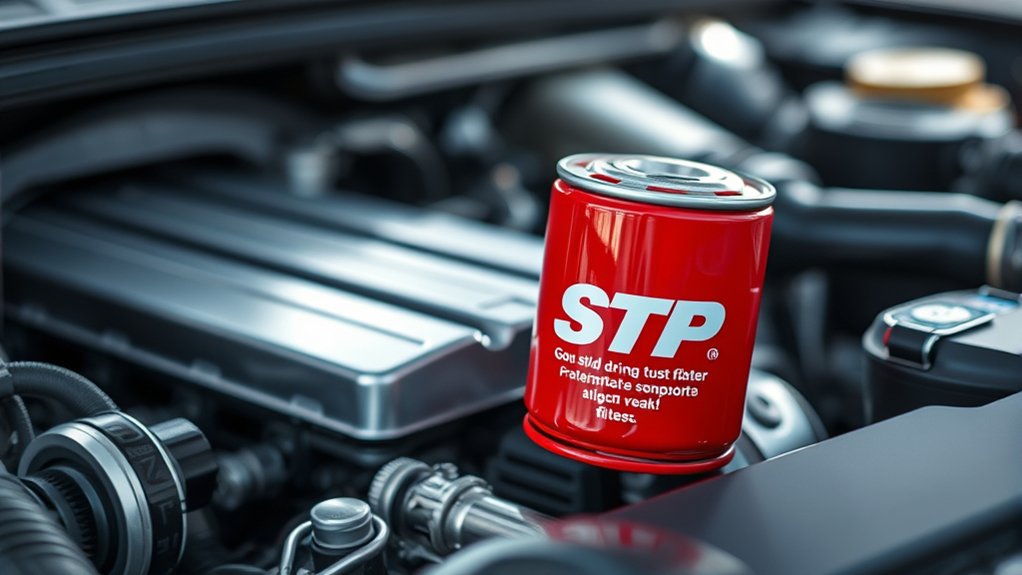
Why do so many drivers opt for STP oil filters when maintaining their vehicles? You’ll find that STP’s brand history plays a significant role. Established decades ago, it’s built a reputation for reliability and accessibility.
Their marketing claims emphasize durability and compatibility with various engines, which appeals to cost-conscious consumers seeking dependable maintenance solutions. When you evaluate these claims, you notice STP positions itself as a practical choice rather than a premium brand, focusing on value and widespread availability.
If you prioritize a balance of affordability and proven service life, STP’s established presence in the market reassures you of product consistency. Understanding this, you can see why many drivers prefer STP oil filters. They rely on the brand’s marketing claims and historical credibility to justify their purchase decisions.
STP Oil Filter Filtration Performance
How effectively does an STP oil filter remove contaminants from your engine oil? STP filters utilize a synthetic blend media designed to capture particles as small as 20 microns, ensuring your engine oil remains cleaner for longer.
Unlike irrelevant topic discussions about unrelated features, focusing on filtration performance highlights STP’s capability to maintain oil purity. Avoiding off topic discussion about brand reputation, you should concentrate on technical specs like efficiency and capacity.
| Parameter | STP Oil Filter | Industry Average |
|---|---|---|
| Filtration Efficiency | 95% at 20 microns | 90% at 20 microns |
| Dirt Holding Capacity | 12 grams | 10 grams |
| Flow Rate | 15 L/min | 14 L/min |
This data confirms STP’s competent filtration performance.
Build Quality of STP Oil Filters
What sets STP oil filters apart in terms of build quality is their robust construction using corrosion-resistant steel housings and reinforced synthetic filter media. You’ll notice the sturdy assembly that withstands high pressure and extreme temperatures without deformation. This durability is critical for maintaining consistent filtration performance over the oil change interval.
Additionally, STP emphasizes seal integrity by incorporating high-grade nitrile rubber gaskets, ensuring a tight fit that prevents leaks and contamination ingress. The precise engineering minimizes bypass valve failure risk, safeguarding your engine under cold starts and heavy loads.
When you examine an STP oil filter, you’ll find a design focused on longevity and reliability, making it a dependable choice if you value solid build quality that supports effective engine protection.
Are STP Oil Filters Compatible With Your Vehicle?
You need to verify that STP oil filters match your vehicle’s specific make and model to ensure proper fitment. Pay close attention to the filter’s dimensions, thread size, and filtration capacity to meet your engine’s requirements.
Compatibility directly impacts performance and engine protection, so precise specification matching is essential.
Vehicle Compatibility Range
Where do STP oil filters fit within the spectrum of vehicle compatibility? STP filters offer a broad compatibility range, designed to fit various makes and models, including many domestic and import vehicles.
You’ll find STP filters engineered to match specific OEM thread sizes and sealing dimensions, guaranteeing proper fit and function. However, oil compatibility is essential; these filters accommodate conventional and synthetic oils but always confirm your vehicle’s oil type aligns with the filter’s specifications.
While STP filters cover a wide range, they may not suit high-performance or specialized engines requiring unique filtration standards. To achieve peak performance, you should verify that the STP filter matches your vehicle’s requirements, focusing on compatibility rather than just general fit. This approach guarantees reliable filtration and engine protection.
Filter Specifications Match
How well do STP oil filters align with your vehicle’s specific filtration requirements? To ensure compatibility, you need to verify critical filter specifications against your engine’s demands.
STP filters offer effective garbage filtering, capturing contaminants without restricting oil flow. They also contribute to noise reduction by maintaining consistent oil pressure, which minimizes engine noise fluctuations.
Key compatibility factors include:
- Filter media type and micron rating
- Thread size and sealing gasket dimensions
- Bypass valve pressure settings
- Flow rate capacity matching engine oil pump output
- Structural design supporting vibration resistance
How Affordable Are STP Oil Filters Compared to Competitors?
When comparing oil filter prices, STP models consistently offer competitive affordability without sacrificing essential performance features. You’ll find their affordable pricing positions them well against premium brands, making them a cost-effective choice for routine maintenance.
Despite being budget-friendly, STP maintains strong brand recognition, which reflects a reliable manufacturing standard and widespread availability. Compared to competitors with similar specifications, STP filters deliver value by balancing cost and functional quality.
This balance means you don’t have to pay a premium for dependable filtration efficiency and durability. If you’re looking to optimize maintenance expenses without compromising on critical oil filter performance metrics, STP provides a technically sound option that aligns with both budget constraints and operational demands.
Common Issues and Reliability of STP Oil Filters
You’ll want to assess the durability and build quality of STP oil filters to understand their long-term reliability. Pay close attention to how they perform under harsh conditions, such as extreme temperatures and heavy engine loads. These factors critically impact the filter’s ability to protect your engine consistently.
Durability and Build Quality
Why does durability matter so much in an oil filter? Because your engine relies on consistent filtration without failure. STP oil filters have faced durability concerns that often stem from compromised build integrity. You need a filter that withstands pressure without leaking or collapsing.
When evaluating STP’s build quality, consider these factors:
- Shell thickness and resistance to deformation
- Quality of sealing gasket materials
- Strength and adhesion of the internal filter media
- Reliability of anti-drainback valves
- Consistency in manufacturing tolerances
These elements directly impact the filter’s lifespan and its ability to maintain oil flow under normal operating conditions. While STP filters may perform adequately initially, ongoing durability concerns suggest you should assess your specific requirements carefully before choosing them.
Performance in Harsh Conditions
How well does an STP oil filter hold up under extreme conditions? When subjected to high temperatures, heavy dirt loads, and pressure fluctuations, STP filters generally maintain adequate filtration efficiency, but some users report occasional bypass valve failures.
These failures can compromise oil flow, risking engine wear. Unlike an off topic comparison to unrelated topic products, STP’s performance is designed specifically for automotive demands, focusing on media durability and sealing integrity.
However, under prolonged harsh conditions, the filter media may degrade faster than premium alternatives, reducing contaminant retention. If you rely heavily on your vehicle in severe environments, consider this limitation carefully.
When to Choose STP Oil Filters and When to Look Elsewhere
When should you opt for an STP oil filter, and when might alternative options better serve your engine’s needs? STP filters suit everyday driving and moderate conditions but aren’t ideal for high-performance or extreme environments. Avoid unrelated topic or off topic discussion about brand popularity here; focus on technical fit instead.
Consider STP filters if you:
- Drive primarily in city or suburban areas
- Have a vehicle with standard engine demands
- Replace filters regularly, maintaining optimal performance
- Seek cost-effective, reliable filtration for routine use
- Prefer easy availability and compatibility with common vehicles
Look elsewhere when you need:
- Enhanced filtration for racing or heavy-duty trucks
- Extended filter life under severe conditions
- Advanced synthetic media for superior contaminant capture
- Greater engine protection in extreme temperatures
Real User Reviews of STP Oil Filters
Understanding the practical performance of STP oil filters requires examining real user feedback. While you’ll find mixed user experiences, there’s insufficient evidence to conclusively rate their longevity or filtration efficiency against premium brands.
Some users report satisfactory performance under standard conditions, yet others cite premature clogging or leaks. These discrepancies highlight variability in manufacturing or vehicle compatibility.
| User Rating | Reported Issue |
|---|---|
| 4.2/5 | Good filtration |
| 3.5/5 | Occasional leaks |
| 3.8/5 | Adequate lifespan |
| 2.9/5 | Early clogging |
| 4.0/5 | Value for money |
Tips for Installing and Maintaining STP Oil Filters
Why does proper installation and maintenance matter for STP oil filters? Ensuring optimal performance and longevity depends on precise handling, avoiding discarded topics like improper sealing or incorrect torque that lead to leaks or filter failure. You should focus on relevant technical steps rather than irrelevant concerns that don’t impact filter efficacy.
Follow these tips for best results:
- Verify the filter model matches your vehicle specifications.
- Lubricate the rubber gasket with clean engine oil before installation.
- Tighten the filter by hand until the gasket contacts the mounting surface, then turn an additional 3/4 to 1 full turn.
- Replace the filter at recommended oil change intervals to prevent clogging.
- Dispose of used filters properly to avoid environmental contamination.
Adhering to these points will maximize your STP filter’s filtration efficiency and service life.
Frequently Asked Questions
What Is the Environmental Impact of STP Oil Filters?
You should know STP oil filters’ environmental impact hinges on their recycling feasibility; while made from recyclable materials, improper disposal increases pollution.
You must guarantee filters are recycled correctly to minimize ecological harm and resource waste effectively.
Are STP Oil Filters Recyclable?
STP oil filters have recyclability concerns due to mixed materials, which complicate standard recycling. You should follow specific disposal methods, like returning them to authorized recycling centers, to ensure proper handling and minimize environmental impact effectively.
Do STP Oil Filters Come With a Warranty?
You’d think STP’s warranty coverage stretches to the moon, but it’s actually straightforward. Their customer service guarantees protect you against defects, ensuring reliable support.
You’ll find clear terms that back your purchase effectively.
Where Are STP Oil Filters Manufactured?
STP oil filters are primarily manufactured in the United States, supporting the brand’s reputation for quality control. Their precise manufacturing location guarantees consistent performance, reflecting STP’s commitment to reliability and rigorous technical standards in filtration.
Can STP Oil Filters Be Used in Racing Vehicles?
You shouldn’t rely on STP oil filters for racing compatibility since they lack advanced oil filtration needed under extreme conditions. For high-performance vehicles, choose filters designed specifically for racing to ensure optimal engine protection and durability.
Conclusion
Choosing STP oil filters is like picking a reliable workhorse—solid, efficient, and built to handle everyday demands without fuss. You’ll get effective filtration around 20 microns with good dirt capacity, backed by durable construction and broad compatibility.
While not suited for extreme performance, STP offers consistent value and affordability for routine maintenance. If you want dependable protection without breaking the bank, STP is a practical, cost-conscious choice to keep your engine running smoothly.
In conclusion, STP is a good oil filter for those seeking reliable, everyday engine protection at a reasonable price.