
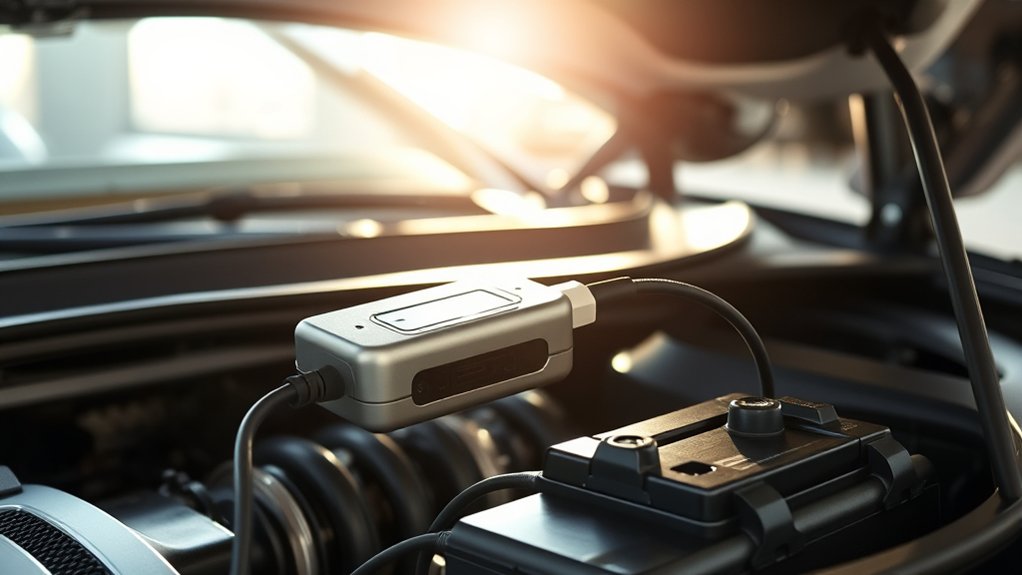
Can You Start a Car With a Battery Charger Connected
Starting a car with a battery charger connected might seem straightforward, but it involves more technical considerations than you’d expect. Not every charger is built to handle the surge required for engine ignition, and using the wrong type can damage your battery or electrical system. Before you turn the key, it’s crucial to understand which chargers support this function and the proper steps to follow to avoid costly mistakes.
Many standard battery chargers are designed only for slow charging and cannot provide the high current needed to start a car. Using these chargers while attempting to start the engine can lead to charger failure or even battery damage.
If you plan to start your car with a battery charger connected, make sure the charger is specifically designed for jump-starting or has a “start” mode. Always follow the manufacturer’s instructions carefully to ensure safety and prevent harm to your vehicle’s electrical components.
Key Takeaways
- Starting a car with a charger connected is possible only if the charger is designed with a start or engine start feature.
- Use chargers with proper voltage, current settings, and built-in protections to prevent electrical damage during engine starting.
- Ensure secure, correct polarity connections and follow manual instructions to avoid voltage spikes and hardware disruption.
- Avoid using simple trickle chargers without a start function, as they cannot safely support engine cranking current.
- Always verify charger compatibility and battery health before starting, and monitor for any electrical or mechanical issues post-start.
Can You Start a Car While a Battery Charger Is Connected?
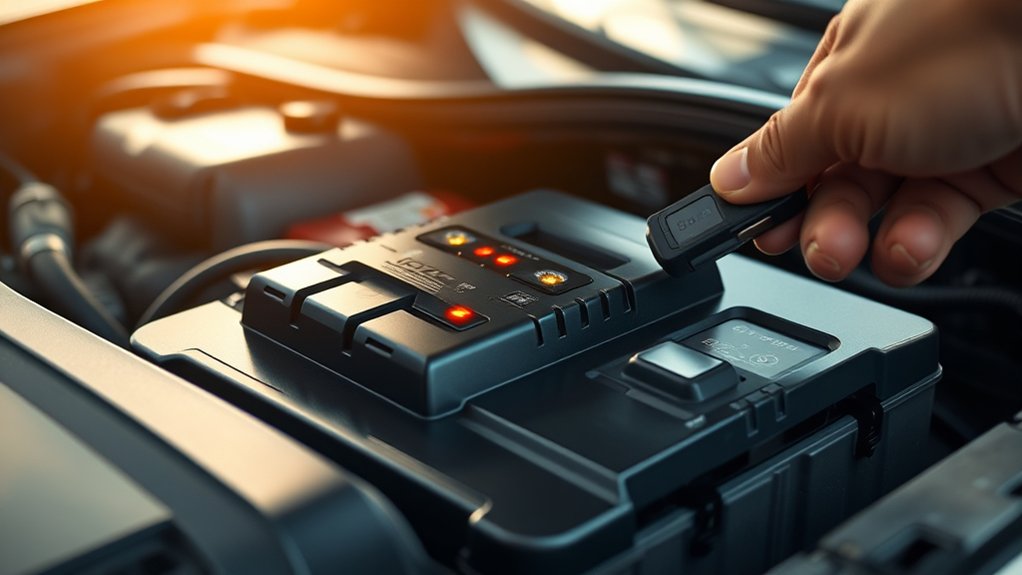
Can you start a car while a battery charger is connected? Technically, yes, but doing so introduces unnecessary risks that can lead to irreversible outcomes.
When the charger remains attached, the electrical system faces conflicting currents from both the charger and the car’s alternator. This can cause voltage spikes, damaging sensitive electronics like the ECU or onboard sensors.
Additionally, the sudden load changes might disrupt the charger’s operation, potentially leading to overheating or electrical shorts. You should avoid starting the engine with the charger connected unless the device explicitly supports this function.
Prioritizing safety and preventing damage means disconnecting the charger before ignition, minimizing the risk of costly repairs or permanent battery damage. Always follow manufacturer guidelines to maintain your vehicle’s electrical health.
How Car Battery Chargers Help Restart Your Car
How exactly do car battery chargers assist in restarting your vehicle? When your car’s battery lacks sufficient charge, the charger supplies a controlled electrical current that replenishes the battery’s energy. This process restores the battery’s voltage level, enabling it to deliver the necessary power to start the engine.
It’s important to understand that the charger’s function and the act of starting the car involve two word ideas that are related yet distinct: charging and ignition. These are not unrelated functions but work in tandem to get your vehicle running.
Additionally, maintaining proper battery health through a charger prevents deep discharge, which can damage battery cells. By using a charger correctly, you ensure your battery regains adequate charge, allowing the starter motor to operate effectively.
What Could Go Wrong When Starting With a Charger?
While car battery chargers play a crucial role in restoring battery power, attempting to start your vehicle with a charger connected can introduce complications. Improper charger placement may cause electrical shorts or damage sensitive vehicle electronics due to voltage spikes.
Additionally, starting the engine while the charger is active risks overloading the battery, potentially leading to overheating or even battery failure. You must prioritize battery safety by ensuring all connections are secure and the charger is designed to handle simultaneous charging and cranking.
Failure to do so can result in sparks, acid leaks, or permanent damage to both the battery and the vehicle’s electrical system. Always be cautious about how and where you position the charger to avoid these hazards during startup attempts.
When Is It Safe to Start Your Car With a Battery Charger?
Under what conditions can you safely start your car with a battery charger connected? You should only do so when the charger is specifically designed to support engine starting, as indicated in its manual.
Key safety considerations include verifying that the charger supplies the correct voltage and current to avoid electrical surges. Ensure all connections are secure and polarity is correct before starting.
Avoid using chargers without built-in protections such as overcurrent or short-circuit prevention. Two word discussion ideas like “charger compatibility” and “battery condition” matter; the battery must be in good health and capable of holding a charge.
Additionally, never start the engine if the charger lacks explicit instructions for this use, as improper use can damage electrical components or cause injury. Always prioritize manufacturer guidelines for safe operation.
Which Battery Chargers Let You Start Your Car?
Which battery chargers allow you to start your car safely? Chargers designed with a “start mode” or “engine start” feature are explicitly built for this purpose. These chargers deliver a high current pulse to the battery, compensating for voltage drop during engine cranking without damaging the battery or electrical system.
When selecting a charger, ensure it’s compatible with your battery chemistry, whether lead-acid, AGM, or lithium-ion, as different chemistries require specific charging profiles to maintain battery health. Using an inappropriate charger risks overcharging or undercharging, which compromises car maintenance efforts.
Avoid simple trickle chargers or those lacking a start function, as they typically don’t supply sufficient current for starting. Opt for intelligent, multi-stage chargers with clear specifications to safely start your car while preserving battery longevity.
How to Safely Start Your Car With a Battery Charger
How do you start your car safely using a battery charger? First, ensure the charger specs match your battery’s voltage and amperage requirements to maintain battery safety. Follow these steps:
Confirm the charger is off before connecting to avoid sparks or shorts. Attach the positive cable to the battery’s positive terminal, then the negative cable to the negative terminal or chassis ground.
Set the charger to the appropriate mode (usually “start” or “boost”) designed for engine cranking. Turn on the charger, allowing it to deliver a quick power boost; then attempt to start the car promptly.
Avoid prolonged cranking to prevent damage. Always monitor connections and charger status to maintain battery safety throughout the process.
Protecting Your Battery and Car While Charging
To protect your battery and car while charging, you need to prevent electrical damage by using the correct charger settings and connections. Make sure the charging area is well-ventilated to avoid the buildup of hazardous gases.
Taking these precautions ensures safe and efficient battery charging.
Preventing Electrical Damage
Why should you take precautions when charging your car battery? Preventing electrical damage is essential to maintain startup safety and minimize electrical wear on your vehicle’s systems. Improper handling can cause voltage spikes, short circuits, or overcharging, which harm the battery and sensitive electronics.
To protect your battery and car, follow these guidelines:
- Always disconnect the charger before attempting to start the engine
- Use a charger with built-in voltage regulation and automatic shutoff
- Avoid connecting or disconnecting cables while the charger is powered on
- Inspect cables and terminals for corrosion or damage before charging
Ensuring Proper Ventilation
Alongside preventing electrical damage, you need to guarantee proper ventilation when charging your car battery. Ventilation safety is crucial because charging releases hydrogen gas, which can accumulate and create an explosive environment.
Always charge your battery in a well-ventilated area or outdoors to reduce this risk. Following proper charging etiquette means keeping the charger away from enclosed spaces and ensuring the battery terminals aren’t obstructed.
| Ventilation Safety Tips | Reason | Best Practice |
|---|---|---|
| Charge in open areas | Prevent hydrogen buildup | Use garages with open doors |
| Avoid sparks | Hydrogen is flammable | No smoking or flames nearby |
| Monitor battery temp | Prevent overheating | Use charger with temp sensor |
Troubleshooting If Your Car Won’t Start With a Charger
How do you proceed when your car refuses to start even with a battery charger connected? First, verify that the charger is functioning and properly connected to ensure optimal engine optimization. Next, inspect the battery terminals for corrosion or loose connections that might disrupt current flow.
Don’t overlook the possibility of a faulty starter motor or ignition system, which can prevent engine engagement despite a charged battery. Finally, check the charger’s settings; an incorrect mode may not deliver adequate power for starting.
- Confirm charger is on and cables are secure
- Clean and tighten battery terminals
- Test starter motor and ignition switch functionality
- Adjust charger settings for appropriate power output
Following these steps maintains audience engagement by addressing common technical issues precisely and efficiently.
Battery Care Tips After Charging and Starting
After charging and starting your car, carefully inspect the battery terminals for corrosion or damage. Store your charging equipment in a dry, temperature-controlled environment to maintain its functionality.
Regularly monitor your battery’s performance to catch any early signs of failure and ensure reliable operation.
Post-Charge Battery Inspection
Why is post-charge battery inspection essential once you’ve started your car? It ensures your battery operates safely and efficiently after charging, preventing damage and promoting battery safety.
First, verify the charger placement is correct and that cables haven’t loosened during startup. Then, check for any signs of corrosion or leakage around the terminals.
Also, measure the battery voltage with a multimeter to confirm it’s within the optimal range (12.6 to 12.8 volts when fully charged). Lastly, inspect the battery casing for cracks or swelling that indicate internal damage.
- Confirm charger placement and secure cable connections
- Examine terminals for corrosion or electrolyte leaks
- Measure voltage to assess charge status accurately
- Inspect battery casing for physical defects
Performing these steps preserves battery integrity and ensures reliable vehicle operation.
Proper Charging Equipment Storage
Where should you store your battery charger and cables once you’ve finished charging and starting your vehicle? Following proper storage guidelines is essential for charging safety and equipment longevity.
First, disconnect the charger from the power source and vehicle, then carefully coil the cables to prevent kinks or damage. Store the charger and cables in a dry, cool location away from direct sunlight and moisture to avoid corrosion or electrical faults.
Ensure the storage area is well-ventilated and free from flammable materials to minimize fire risk. Avoid placing heavy objects on the charger or cables, which can cause internal damage.
Adhering to these charging safety storage guidelines preserves your equipment’s functionality and ensures it’s ready for safe, reliable use the next time you need it.
Monitoring Battery Performance
Monitoring your battery’s performance after charging and starting your vehicle is essential to guarantee its reliability and longevity. You need to dispel common battery myths to ensure proper care and maintain car safety.
Keep a close eye on your battery’s state of charge and voltage levels, as these indicate health and performance. Regularly inspect terminals for corrosion, which can cause poor connections and starting issues.
Also, monitor the battery’s temperature; excessive heat can reduce lifespan. Finally, verify that your vehicle’s charging system functions correctly to prevent undercharging or overcharging.
- Check voltage with a multimeter post-charge
- Clean terminals to avoid corrosion buildup
- Monitor battery temperature during operation
- Test charging system output periodically
Staying vigilant ensures your battery performs safely and reliably.
Frequently Asked Questions
How Long Does It Take to Fully Charge a Car Battery?
It typically takes 4 to 24 hours to fully charge a car battery, depending on the charger’s amperage.
You should start and stop charging carefully to guarantee safety and efficiency, preventing overcharging or damage.
Can a Battery Charger Damage Other Car Electronics?
Yes, a battery charger can damage other car electronics if it delivers incorrect voltage or current. You should always use a charger compatible with your car’s system and follow manufacturer guidelines to avoid electrical harm.
What Types of Batteries Are Compatible With Standard Chargers?
You’ll find battery compatibility mainly includes lead-acid types like flooded, AGM, and gel batteries. For charging safety, always verify your charger supports the battery chemistry to prevent damage or hazards during the charging process.
How Often Should I Replace My Car Battery?
You might think your battery lasts forever, but you should replace it every 3-5 years to ensure charging safety and optimal performance.
Proper recycling impacts the environment positively, so dispose of old batteries responsibly.
Are Portable Jump Starters Better Than Battery Chargers?
You’ll find portable jump starters better for quick, reliable starts, while battery chargers suit extended charging. For two-word discussion ideas, compare endurance capabilities. Avoid unrelated topics like tire pressure; focus strictly on power delivery efficiency.
Conclusion
Starting your car with a battery charger connected is like walking a tightrope—it requires precision and the right equipment. Only chargers designed for engine starts should be used, ensuring correct voltage, polarity, and secure connections.
Always follow the manual’s steps, monitor your battery’s condition, and disconnect promptly after ignition. By doing so, you protect both your battery and vehicle, avoiding potential damage.
Ensuring you can start your car with a battery charger connected safely is key to a reliable and safe start every time.