What Does S U L Mean on a Battery Charger
When you see the S U L mark on a battery charger, it means the device has undergone rigorous testing by Underwriters Laboratories to meet specific electrical safety standards. This certification isn’t just a label—it confirms the charger’s design, materials, and manufacturing quality have been independently verified.
Understanding what this mark entails can help you evaluate the safety and reliability of your charger. However, there’s more to consider beyond just the symbol itself.
Key Takeaways
- S U L on a battery charger indicates compliance with rigorous electrical safety and quality standards after thorough testing.
- It certifies the charger has been evaluated by an accredited organization for safety and performance.
- The label signifies reduced risks of electrical shock, fire hazards, and component failure during use.
- S U L certification ensures the charger meets recognized industry benchmarks and reliable operation standards.
- Presence of the S U L mark helps consumers identify genuine, tested, and safe chargers.
What Does the S U L Mark Mean on Battery Chargers?
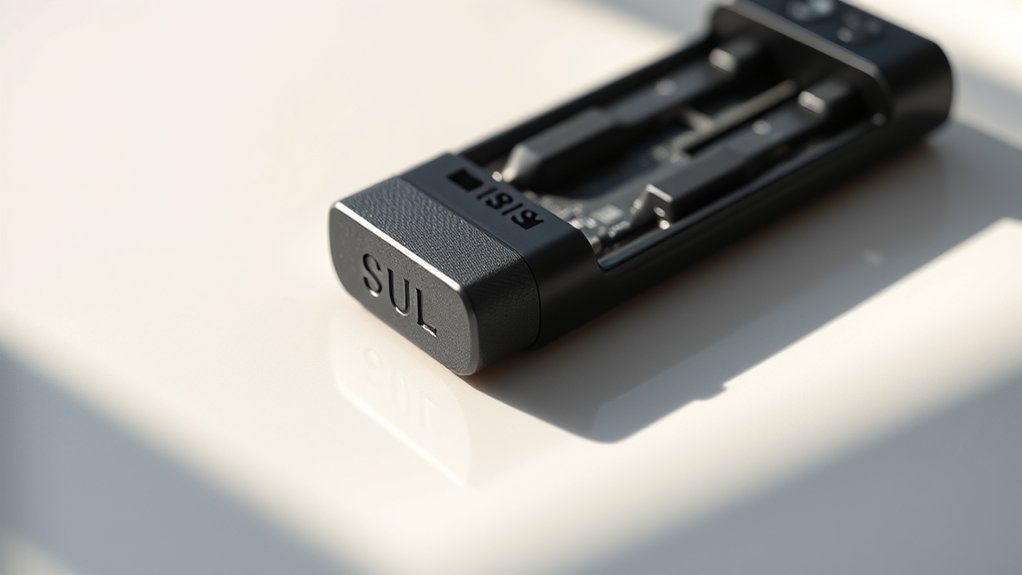
What exactly does the S U L mark on battery chargers signify? This mark indicates that the charger has undergone rigorous testing and complies with specific safety standards set by an accredited standards organization.
The SUL mark on chargers signifies compliance with strict safety standards after thorough testing by an accredited organization.
When you see the SUL certification on a charger, it means the product meets established electrical safety requirements, helping to minimize risks such as electrical shock, fire hazards, and component failure.
The SUL mark confirms that the charger’s design, materials, and manufacturing processes have been evaluated thoroughly. For you, this translates into enhanced charger safety and reliability.
It’s a clear, technical assurance that the charger adheres to recognized industry benchmarks, ensuring both performance and protection during operation under specified conditions.
Why S U L Certification Matters for Charger Safety and Compliance
Understanding the significance of the SUL mark goes beyond recognizing compliance; it directly impacts the safety and reliability of your battery charger during everyday use. The SUL certification confirms that the charger meets rigorous safety standards, reducing risks such as electrical shocks, fires, or malfunction.
When evaluating chargers, avoid unrelated topics or off-topic considerations that don’t address safety criteria. The certification ensures adherence to specific testing protocols, including insulation integrity and thermal performance, which are critical for safe operation.
Ignoring SUL certification might expose you to non-compliant products lacking proper safety validation. Therefore, prioritizing SUL-certified chargers ensures you’re using equipment vetted for regulatory compliance and operational safety, minimizing potential hazards associated with uncertified devices.
How S U L Certification Impacts Charger Reliability
How does SUL certification enhance the reliability of your battery charger? SUL certification confirms the charger meets rigorous performance and safety standards, ensuring consistent operation under specified conditions. This reduces risks of malfunction, overheating, or premature failure.
Without genuine certification, misleading labeling can disguise substandard products, potentially compromising charger reliability. Counterfeit certification further complicates trust, as such chargers may bypass essential testing protocols.
When you rely on a charger with authentic SUL certification, you benefit from verified design integrity, material quality, and manufacturing controls, which collectively improve durability and functional stability. Consequently, SUL certification acts as a critical benchmark, assuring you that the charger has undergone thorough evaluation, minimizing operational risks and enhancing long-term reliability.
How to Spot Genuine S U L Labels on Your Charger
Where can you find reliable indicators that an S U L label on your charger is authentic? Start by examining the label’s printing quality, consistency, and placement. Genuine S U L labels avoid spurious claims and irrelevant logos linked to unrelated topics.
Authentic labels also include clear certification numbers traceable via official S U L databases.
| Feature | Genuine S U L Label | Spurious Label |
|---|---|---|
| Print Quality | Sharp, clear, consistent | Blurry, inconsistent |
| Certification No. | Present and verifiable | Missing or unverifiable |
| Logo Placement | Standardized location on charger | Random or off-center |
| Claims | Specific, relevant to certification | Exaggerated, unrelated topic |
| Material | Durable, resistant to wear | Flimsy, easily damaged |
Use these criteria to determine authenticity precisely.
What to Do If Your Charger Isn’t S U L Certified
What risks do you face if your charger lacks S U L certification? Primarily, uncertified chargers may not comply with established safety standards, increasing risks of electrical faults, overheating, or fire hazards.
Uncertified chargers risk electrical faults, overheating, and fire hazards due to non-compliance with safety standards.
If your charger isn’t S U L certified, first verify its origin and specifications against recognized databases. Avoid relying on unrelated topic discussions or random chatter from unverified sources when assessing safety.
Instead, consult manufacturer documentation or professional evaluations. Consider replacing uncertified units with certified alternatives to ensure compliance and safety.
Using uncertified chargers can void warranties and compromise device integrity. In critical applications, never ignore certification status; it’s a key indicator of rigorous testing and reliability, not just a bureaucratic formality.
Prioritize certified products to mitigate risks and maintain operational safety.
Frequently Asked Questions
How Long Does the S U L Certification Process Take?
You’ll typically spend several weeks on the S U L certification process, meeting underwriter expectations through rigorous test procedures.
Timelines vary, so you should prepare detailed documentation and testing to avoid delays and ensure compliance.
Are S U L Certified Chargers More Expensive?
You’ll find S U L certified chargers slightly more expensive because they meet strict sustainability standards and ensure superior energy efficiency. This reduces long-term costs and environmental impact, which justifies the higher initial investment.
Can S U L Certification Be Transferred Between Products?
Like trying to pass a torch in a relay, SUL certification can’t transfer between products. You’ll face strict transferability limits, and unrelated topics or irrelevant certification processes won’t help you bypass this technical boundary.
Which Countries Recognize S U L Certification?
You’ll find S U L certification recognized mainly in the US and Canada, aligning with sustainability standards. When comparing costs, consider these regions’ strict regulations, which impact product acceptance and overall compliance expenses.
Does S U L Certification Cover Wireless Chargers?
Wonder if S U L covers wireless chargers? S U L stands for Standards Underwriters Laboratories, focusing on safety.
It differs by specifically certifying electrical products, including wireless chargers, ensuring compliance with stringent safety and performance standards.
Conclusion
Now that you know the significance of the S U L mark, stay savvy and select safely certified chargers. Spotting the seal signals stringent standards, shielding you from shocks, short circuits, and subpar setups. Skipping uncertified substitutes safeguards your system and sustains device durability.
So, scrutinize, select, and secure your power sources with S U L certification. This ensures superior safety, steadfast reliability, and solid standards in every charging session. Always choose chargers with the S U L mark for reliable and safe battery charging.