What Type of Oil Does a Volkswagen Jetta Take
When it comes to the type of oil a Volkswagen Jetta takes, choosing the right one is essential for maintaining engine health and performance. You’ll need to use synthetic oil that meets specific VW standards like VW 502 00 or VW 504 00, depending on your engine type.
The recommended viscosity typically falls between 5W-30 and 5W-40, but exact specifications vary. Understanding these requirements helps guarantee top-notch protection and efficiency.
Yet, there’s more to contemplate before making your final choice.
Key Takeaways
- Volkswagen Jetta requires synthetic oil meeting VW 502 00 or VW 504 00 standards, depending on the engine model.
- Common viscosity grades for Jetta are 5W-30 or 5W-40, chosen based on climate and operating temperature.
- Synthetic oils provide superior engine protection, thermal stability, and can extend oil change intervals up to 10,000 miles.
- Conventional oils offer basic lubrication but are not recommended due to lower oxidation resistance and warranty risks.
- Always consult the Jetta owner’s manual to confirm exact oil specifications and recommended change intervals.
What Type of Oil Does a Volkswagen Jetta Need?
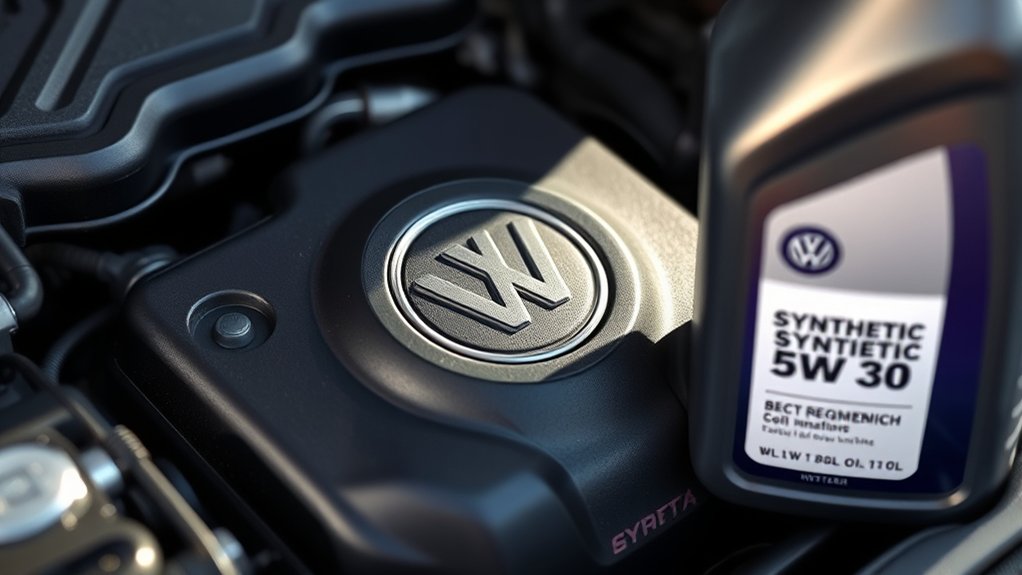
What type of oil does a Volkswagen Jetta need to guarantee optimal engine performance? You should use synthetic oil that meets Volkswagen’s specific standards, typically VW 502 00 or VW 504 00, depending on your engine model. These oils provide superior lubrication, reduce engine wear, and improve fuel efficiency.
It’s crucial to avoid irrelevant topic or off topic discussion such as general oil types or unrelated car models, which won’t help you maintain your Jetta properly. Stick strictly to oils approved by Volkswagen to guarantee compatibility with your engine’s design and emissions system.
Using unapproved or conventional oils risks engine damage and voids warranties. Always consult your owner’s manual for the exact oil specification, ensuring you provide the precise protection your Jetta requires.
Finding the Right Oil Grade for Your Volkswagen Jetta
To keep your Volkswagen Jetta running smoothly, you need to use the recommended oil viscosity specified in the owner’s manual. Choosing between synthetic and conventional oil affects performance and protection, so consider your driving conditions.
Also, follow the proper oil change intervals to maintain engine health and efficiency.
Recommended Oil Viscosity
How do you determine the correct oil viscosity for your Volkswagen Jetta? Focus on the manufacturer’s specifications rather than unrelated topic or idle chatter about oil types.
The viscosity grade affects engine performance and protection, especially under varying temperatures. For Jettas, common grades are 5W-30 or 5W-40, balancing cold starts and operating heat.
Here’s a quick reference for oil viscosity based on temperature ranges:
| Viscosity Grade | Low Temperature (°F) | High Temperature (°F) |
|---|---|---|
| 0W-20 | -40 to 32 | Up to 68 |
| 5W-30 | -30 to 32 | Up to 86 |
| 5W-40 | -30 to 32 | Up to 104 |
| 10W-30 | -20 to 32 | Up to 86 |
| 15W-40 | -10 to 32 | Up to 104 |
Always adhere to your owner’s manual for best results.
Synthetic Vs. Conventional
When selecting oil for your Volkswagen Jetta, you’ll need to weigh the benefits of synthetic versus conventional oils carefully. Synthetic oils undergo rigorous oil testing to ensure superior stability and resistance to thermal breakdown, which helps reduce engine wear compared to conventional oils.
Their uniform molecular structure provides consistent lubrication, maintaining optimum viscosity under extreme temperatures and stress. Conventional oils, derived from crude oil, are more susceptible to oxidation and sludge formation, potentially increasing engine wear over time.
While conventional oils may be cost-effective initially, synthetics deliver enhanced protection and longer-lasting performance, especially for Jettas with turbocharged engines. By choosing synthetic oil, you help safeguard your engine’s components, improving efficiency and longevity.
Always consult your owner’s manual to confirm which oil type aligns best with your Jetta’s specific requirements.
Oil Change Intervals
Why does choosing the right oil grade matter for your Volkswagen Jetta’s oil change intervals? Selecting the proper oil grade directly influences how often you need to perform oil changes. Using the manufacturer-recommended synthetic oil can extend the interval between changes, often up to 10,000 miles, compared to conventional oils that typically require changes every 5,000 miles.
This impacts your car maintenance schedule and ensures optimal engine protection. Proper oil viscosity reduces engine wear and maintains fuel efficiency by minimizing friction. Neglecting the correct oil grade may shorten oil life, degrade engine components, and increase fuel consumption.
Always consult your Jetta’s owner manual to align oil grade choice with specified oil change intervals, preserving engine performance and maximizing overall efficiency.
Why You Should Use Manufacturer-Approved Oil
What guarantees best performance and longevity for your Volkswagen Jetta’s engine? Using manufacturer-approved oil is essential. This oil meets specific viscosity and additive standards tailored to your engine’s design, ensuring optimal lubrication under various operating conditions.
If you use non-approved oil, you risk improper film strength, which can cause engine misfire due to inconsistent combustion and increased deposit formation. Manufacturer-approved oils also help maintain fuel economy by reducing internal friction and wear.
They prevent sludge buildup and corrosion, preserving component integrity and sensor accuracy. By sticking to the recommended oil, you ensure your engine runs smoothly, efficiently, and reliably.
Ignoring these specifications can void warranties and accelerate engine wear, ultimately leading to costly repairs and reduced vehicle lifespan.
How Oil Viscosity Affects Volkswagen Jetta Performance
How exactly does oil viscosity influence your Volkswagen Jetta’s engine performance? Viscosity, the oil’s resistance to flow, directly impacts lubrication efficiency. If the oil is too thick, it strains the engine at startup, reducing fuel efficiency and increasing wear.
Oil viscosity affects lubrication; too thick strains the engine, lowering fuel efficiency and increasing wear at startup.
Conversely, oil that’s too thin fails to maintain an adequate protective film, risking metal-to-metal contact. An interesting fact is that modern engines like your Jetta’s require multi-grade oils, which adapt viscosity to temperature changes, optimizing performance.
Many oil myths suggest thicker oil always protects better, but improper viscosity can hinder engine function. By choosing the correct viscosity recommended by Volkswagen, you ensure proper lubrication, smooth operation, and longevity.
Understanding viscosity’s role helps you avoid common mistakes and maintain your Jetta’s engine health effectively.
Synthetic vs. Conventional Oil for Your Volkswagen Jetta
You’ll find that synthetic oil offers superior engine protection, better temperature stability, and longer intervals between oil changes for your Volkswagen Jetta.
However, conventional oil can be a cost-effective option if you drive less frequently or under mild conditions. Understanding these differences helps you choose the oil that best matches your driving habits and engine needs.
Benefits of Synthetic Oil
Why choose synthetic oil over conventional oil for your Volkswagen Jetta? Synthetic oil offers superior thermal stability and enhanced lubrication, which reduces engine wear and improves performance.
Unlike conventional oil, synthetic oil maintains viscosity under extreme temperatures, preventing breakdown and sludge formation. This advantage isn’t just an irrelevant topic or random discussion; it directly impacts your engine’s longevity and efficiency.
Synthetic oil also contains fewer impurities, ensuring cleaner engine operation and extending oil change intervals. For your Volkswagen Jetta, which demands precise engine care, synthetic oil optimizes fuel economy and reduces emissions, aligning with manufacturer specifications.
Conventional Oil Considerations
While synthetic oil offers advanced protection and performance benefits for your Volkswagen Jetta, conventional oil remains a viable option under certain conditions. If your driving habits involve low mileage, gentle city driving, and regular oil changes, conventional oil can adequately protect your engine without unnecessary expense.
However, avoid engaging in irrelevant discussion comparing synthetic and conventional oils beyond these practical parameters, as such topic mismatch can confuse rather than clarify. Conventional oil provides basic lubrication and protection but lacks the enhanced thermal stability and oxidation resistance of synthetic formulations.
For optimal engine longevity, always follow Volkswagen’s specific oil grade recommendations and maintenance intervals. Choosing conventional oil should be a deliberate decision based on your vehicle’s needs, driving style, and climate, rather than outdated or off-topic debates.
Recommended Oil Change Intervals for Volkswagen Jetta
How often should you change the oil in your Volkswagen Jetta to maintain peak engine performance? Volkswagen generally recommends an oil change every 10,000 miles or 12 months, whichever comes first, for most Jetta models using synthetic oil.
This interval optimizes friction reduction within the engine, preventing wear and maintaining smooth operation. Sticking to this schedule helps preserve fuel economy by ensuring the engine runs efficiently without unnecessary drag from degraded oil.
However, if you frequently drive in severe conditions, like stop-and-go traffic, extreme temperatures, or dusty environments, you should consider shortening the interval to every 5,000 to 7,500 miles. Always consult your owner’s manual for model-specific guidance, as proper oil change intervals are critical to protecting internal components and sustaining the Jetta’s overall performance and longevity.
How to Check and Top Up Oil in Your Volkswagen Jetta
Maintaining the recommended oil change intervals is only part of keeping your Volkswagen Jetta’s engine in prime condition; regularly checking and topping up the oil ensures proper lubrication between changes. To avoid irrelevant topic or off topic discussion, focus strictly on the following technical steps:
Park your Jetta on level ground and let the engine cool for accurate measurement. Locate and remove the dipstick, wipe it clean, reinsert fully, then remove again to check the oil level.
Park on level ground, cool engine, then clean and check oil dipstick for accurate level measurement.
If the oil is below the minimum mark, carefully add the specified oil type through the oil filler cap in small increments, rechecking the level to avoid overfilling.
Following these precise steps helps prevent engine wear and maintains performance without veering into irrelevant topic areas.
Signs Your Volkswagen Jetta Needs an Oil Change or Update
When should you consider changing or updating the oil in your Volkswagen Jetta? Key indicators include a drop in engine performance, unusual engine noises, or a dashboard oil warning light. Dark, gritty oil on the dipstick signals contamination and reduced lubrication efficiency.
Additionally, if the oil level frequently drops, it may indicate leaks or consumption requiring attention. Ignoring these signs and discussing irrelevant topics like unrelated car maintenance or off topic ideas can delay necessary oil changes, risking engine damage.
Regular oil analysis and adhering to manufacturer intervals ensure optimal engine function and longevity. Monitoring these signs helps you avoid costly repairs and maintain your Jetta’s performance without veering into irrelevant topic discussions or off topic ideas that distract from essential maintenance tasks.
How to Choose the Best Oil Brand for Your Volkswagen Jetta
Why does selecting the right oil brand matter for your Volkswagen Jetta’s engine health? Choosing a reputable oil brand ensures optimal lubrication, minimizes engine wear, and maintains fuel economy. Not all oil brands meet Volkswagen’s stringent specifications, so picking the correct one is crucial.
Selecting the right oil brand is vital for optimal lubrication, reduced engine wear, and maintaining fuel efficiency in your Volkswagen Jetta.
When selecting the best oil brand, consider these factors:
- Certification and specifications: Ensure the oil meets VW 502 00 or VW 504 00 standards for your Jetta’s model year.
- Synthetic vs. conventional: Synthetic oil brands typically provide better engine protection and improve fuel economy under various driving conditions.
- Additive packages: High-quality additives reduce sludge buildup and enhance thermal stability, protecting your engine over time.
Frequently Asked Questions
Can I Use Diesel Engine Oil in My Volkswagen Jetta?
You shouldn’t use diesel engine oil in your Volkswagen Jetta because diesel compatibility differs from gasoline engines. Using improper oil can harm engine performance and longevity.
Always follow manufacturer specifications for optimal two word discussion ideas like “engine protection.”
Does the Oil Type Differ for Turbocharged Jetta Engines?
Think of your turbocharged Jetta as a high-performance athlete needing specialized fuel. Yes, turbocharged differences require oils with enhanced synthetic compatibility to handle increased heat and pressure. This ensures optimal engine protection and longevity under demanding conditions.
How Does Extreme Weather Affect Oil Choice for My Jetta?
Extreme weather affects your Jetta’s oil viscosity choice by requiring oils that maintain proper flow at temperature extremes. You’ll want lower viscosity in cold climates for easier starts and higher viscosity in heat to protect engine wear.
Can I Switch Oil Brands Without an Oil Change?
Imagine driving your Jetta after topping off with a different oil brand without an oil change. You can switch brands if you ensure brand compatibility, but mixing oils may affect performance or engine protection.
Is Oil Additive Use Recommended for Volkswagen Jettas?
You shouldn’t use oil additives in your Volkswagen Jetta unless specified. They can interfere with oil change intervals and may negatively affect fuel economy.
Always follow manufacturer guidelines for optimal engine performance and longevity.
Conclusion
You want your Volkswagen Jetta’s engine to hum smoothly like a well-tuned instrument. Using the correct synthetic oil—meeting VW 502 00 or 504 00 standards with the right viscosity—ensures optimal protection and performance. Skipping this precision risks wear and reduced efficiency.
Regularly checking and topping up oil keeps your engine’s heart beating strong. Stick to manufacturer-approved oils and intervals to drive confidently, knowing your Jetta runs with peak reliability and longevity.
For the best results, always use the type of oil a Volkswagen Jetta takes, as specified by the manufacturer.