
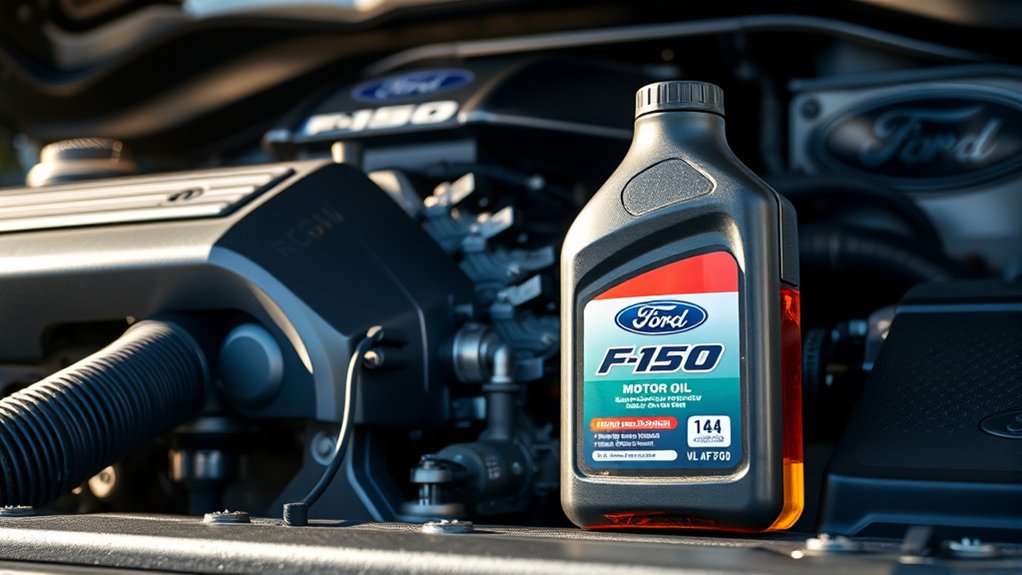
What Type of Oil Does a Ford f150 Take
If you drive a 2018 Ford F-150, knowing what type of oil your truck takes is essential for maintaining its performance. For the 3.5L EcoBoost engine, you’ll need to use SAE 5W-30 full synthetic oil that meets Ford’s WSS-M2C946-A specification.
Choosing the right oil viscosity and type isn’t just about meeting requirements—it directly affects engine performance and longevity. Understanding how oil grades vary by model year and engine type can help you avoid costly mistakes.
Keeping your truck running smoothly depends on using the correct oil. Always refer to your owner’s manual for the most accurate and up-to-date recommendations.
Key Takeaways
- Ford F-150 engines require synthetic blend or full synthetic oils meeting Ford standards WSS-M2C946-A or WSS-M2C930-A.
- Pre-2011 models use SAE 5W-20 conventional or synthetic oil; newer models typically require SAE 5W-30 or 0W-20 full synthetic.
- Oil viscosity and formulation depend on engine type, including V6, V8, or turbocharged configurations.
- Avoid generic or conventional oils lacking additives designed for F-150’s thermal stability and wear protection needs.
- Always consult the owner’s manual for exact oil grade and specifications by model year and engine variant.
Ford F-150 Oil Types Explained
When choosing oil for your Ford F-150, which type you select directly impacts engine performance and longevity. You need to focus on oils specifically formulated for the F-150’s engine requirements, such as synthetic blends or full synthetic oils meeting Ford’s WSS-M2C946-A or WSS-M2C930-A standards.
Ignoring these specifications and considering an irrelevant topic like generic oils or those designed for completely unrelated engines can harm your truck. Conventional oils lack the advanced additives and thermal stability required for the F-150’s high-performance engine.
Synthetic oils provide superior wear protection, oxidation resistance, and maintain viscosity under varying temperatures, ensuring optimal lubrication. Always check your owner’s manual to choose oils compatible with your engine model and driving conditions to prevent premature wear and maintain efficiency.
Why Viscosity Matters for Your Ford F-150 Engine
Why does viscosity play such a critical role in your Ford F-150’s engine performance? Viscosity measures oil’s resistance to flow, directly affecting lubrication efficiency. If the oil is too thick, it won’t circulate properly, increasing friction and wear.
Conversely, oil that’s too thin won’t maintain an adequate protective film, risking metal-to-metal contact. Using the correct viscosity ensures ideal temperature regulation and minimizes engine stress.
It’s important to avoid confusing viscosity with an irrelevant topic like oil brand or unrelated concept such as fuel type. These factors don’t substitute for proper viscosity selection.
Synthetic vs. Conventional Oil: Which Is Best for Your F-150?
You’ll want to weigh the benefits of synthetic oil, such as improved temperature stability and longer engine protection, against the lower upfront cost and adequate performance of conventional oil.
Synthetic oils offer superior resistance to breakdown, while conventional options can still meet basic lubrication needs. Understanding these cost and performance differences helps you choose the best oil for your F-150’s specific demands.
Synthetic Oil Benefits
How does synthetic oil compare to conventional oil for your Ford F-150? Synthetic oil offers enhanced performance by reducing engine friction, which improves gas mileage and results in a smoother, quieter engine sound. Its molecular consistency withstands extreme temperatures better, protecting critical engine components under heavy loads and harsh conditions.
Key benefits include:
- Superior thermal stability minimizes oil breakdown at high temperatures.
- Enhanced lubrication reduces engine wear, extending engine life.
- Improved cold-start performance ensures quicker oil flow.
- Better resistance to sludge and deposits keeps the engine cleaner.
Using synthetic oil optimizes your F-150’s efficiency and longevity, especially if you drive in demanding conditions or want to maintain peak engine performance over time.
Conventional Oil Advantages
While synthetic oil offers advanced protection and performance benefits for your Ford F-150, conventional oil remains a viable option for many drivers. Conventional oil provides adequate lubrication under normal driving conditions and is compatible with a wide range of engine designs.
It effectively reduces engine friction, which can help maintain consistent gas mileage. Additionally, using conventional oil can contribute to predictable tire wear patterns by ensuring smooth engine operation, preventing erratic power delivery that might otherwise impact traction.
If your driving habits involve primarily short trips or low-intensity use, conventional oil meets the basic requirements for engine protection and efficiency. However, it’s important to follow the manufacturer’s recommended oil change intervals to maintain optimal engine health and consistent performance over time.
Cost and Performance Differences
What factors should you consider when choosing between synthetic and conventional oil for your Ford F-150? Cost and performance are key. Synthetic oil generally costs more upfront but offers superior engine protection, longer intervals between changes, and better performance under extreme temperatures.
Conventional oil is cheaper but requires more frequent changes and may not protect as well under heavy loads or temperature extremes.
Consider these points:
- Synthetic oil resists breakdown, reducing engine wear.
- Conventional oil is ideal for basic driving and budget-conscious owners.
- Synthetic extends oil change intervals, saving time and labor.
- Conventional oil’s lower cost might lead to higher long-term expenses.
Avoid getting distracted by irrelevant topic details. Follow oil change hints specific to your F-150 to optimize engine longevity and performance.
How Your F-150’s Engine Type Changes Oil Needs
Why does your F-150’s engine type dictate the oil it requires? Different engines generate varying heat levels and mechanical stresses, influencing oil viscosity and additive needs.
For example, a V6 engine designed for enhanced off-road capability demands oil that maintains stability under frequent temperature fluctuations and heavy load. Conversely, a V8 engine built for towing payload requires oil with superior shear resistance to protect against the intense torque and sustained high RPMs.
Additionally, turbocharged engines produce higher combustion pressures, necessitating oils with advanced detergents to prevent deposit buildup. By matching oil specifications to your engine type, you ensure optimal lubrication, reduce wear, and maintain performance under the specific operational demands your F-150 faces, whether tackling rugged terrain or hauling heavy loads.
Oil Grades for Your F-150 by Model Year
You’ll need to match your F-150’s model year with the precise oil grade Ford recommends to guarantee optimal engine performance.
Oil specifications have evolved over the years, reflecting changes in engine design and emission standards. Understanding these yearly updates helps you select the correct oil viscosity and formulation for your truck.
Recommended Oil Types
How do you determine the right oil grade for your Ford F-150 based on its model year? Avoid confusing unrelated topics or irrelevant subjects that don’t apply to your engine’s specifications. Instead, focus on the manufacturer’s recommendations tailored to your truck’s production year.
Typically, Ford specifies particular oil viscosities and types to optimize performance and engine health.
Here are the recommended oil types for various model years:
- Pre-2011 Models: SAE 5W-20 conventional or synthetic oil
- 2011–2014 Models: SAE 5W-20 synthetic blend or full synthetic
- 2015–2020 Models: SAE 5W-30 full synthetic, meeting Ford WSS-M2C946-A spec
- 2021 and newer: SAE 5W-30 or 0W-20 full synthetic, depending on engine variant
Always consult your owner’s manual for precise specifications.
Yearly Oil Specification Changes
When selecting oil for your Ford F-150, understanding yearly specification changes is essential to maintaining engine efficiency and longevity. Ford updates oil grade recommendations periodically to address evolving engine designs and emission standards.
For example, models before 2011 typically use 5W-20 or 5W-30 conventional or synthetic oils. From 2011 onward, Ford often recommends synthetic blends with improved viscosity and additives to optimize performance during engine cold starts.
Newer models, especially after 2015, require oils meeting stricter specifications like Ford WSS-M2C946-A to enhance wear protection and fuel economy. Performing timely oil changes with the correct grade ensures your engine’s optimal function, reduces wear from cold starts, and complies with warranty requirements.
Always consult your owner’s manual for year-specific oil grades tailored to your F-150.
When and How to Change Your Ford F-150’s Oil
Why is timely oil change essential for your Ford F-150’s performance and longevity? Regular oil changes prevent engine wear, maintain optimal lubrication, and avoid sludge buildup. Ignoring this crucial maintenance step can lead to performance issues, unlike irrelevant topic or unrelated discussion found elsewhere.
To change your Ford F-150’s oil correctly:
- Warm up the engine for better oil drainage.
- Use the manufacturer-recommended oil type and quantity.
- Replace the oil filter to ensure contaminants are removed.
- Properly dispose of old oil following environmental regulations.
Stick to the interval suggested in your owner’s manual, typically every 7,500 miles or 6 months, to preserve engine efficiency and avoid costly repairs. Performing these steps precisely safeguards your truck’s reliability and extends its service life.
Signs Your F-150 Needs an Oil Change or Different Oil
What indicators should you watch for to know when your Ford F-150 requires an oil change or a different type of oil? Pay attention to engine noise, oil color, and the oil pressure warning light. If the engine sounds louder or rougher than usual, it may signal degraded oil.
Dark, gritty oil on the dipstick indicates contamination and breakdown, requiring immediate replacement. Low oil pressure warnings suggest inadequate lubrication, possibly from oil viscosity issues. Avoid getting distracted by irrelevant topics or random discussion about unrelated vehicle parts; focus strictly on oil-specific signs.
Additionally, if your driving conditions change, like frequent towing or extreme temperatures, you might need a different oil grade. Monitoring these precise indicators ensures your F-150’s engine remains protected and operates efficiently.
How Using the Right Oil Boosts Your F-150’s Performance
Using the correct oil grade enhances your F-150’s engine efficiency by reducing friction and optimizing combustion. It also extends oil longevity, meaning the lubricant maintains its protective properties longer under varying temperatures.
Choosing the right oil helps maintain peak performance and protects your engine over time.
Engine Efficiency Improvement
How does the right engine oil enhance your Ford F-150’s efficiency? Using the correct oil optimizes lubrication, reducing friction and wear within the engine components. This precise lubrication supports superior oil filtration, keeping contaminants at bay and maintaining clean engine internals.
Improved engine cleanliness directly translates to better combustion and enhanced fuel economy. Additionally, the right oil maintains viscosity under varying temperatures, ensuring consistent performance.
Key benefits include:
- Enhanced oil filtration prevents abrasive particles from damaging engine parts.
- Reduced internal friction promotes smoother operation and less energy loss.
- Improved fuel economy lowers overall operating costs.
- Stable viscosity supports engine performance across temperature extremes.
Choosing the recommended oil grade is essential for maximizing your F-150’s engine efficiency and longevity.
Oil Longevity Benefits
Why does the right engine oil extend your Ford F-150’s performance life? Selecting oil with the correct viscosity ensures optimal lubrication under varying temperatures, reducing internal friction and wear. This precise match minimizes engine stress, directly influencing the longevity of engine components.
Using oil with improper viscosity can increase engine strain, accelerating degradation and negatively affecting mileage impact. High-quality oils maintain their protective properties longer, allowing you to extend oil change intervals without compromising engine health.
Consequently, this reduces overall maintenance costs while preserving peak engine efficiency. By consistently using the recommended oil viscosity grade, you maintain stable oil pressure and effective thermal regulation. This approach safeguards your F-150’s engine, maximizing its operational lifespan and sustaining performance over extended mileage.
Where to Buy Quality Ford F-150 Oil
Where can you find high-quality oil that meets your Ford F-150’s specifications? Choosing the right source guarantees your oil change maintains engine performance and yields peak fuel economy. Use only oils that comply with Ford’s standards for viscosity and certification.
Consider these options for purchasing quality oil:
Authorized Ford dealerships: Guaranteed genuine products tailored for your F-150.
Reputable automotive retailers: Provide a wide range of OEM and synthetic oils.
Certified online suppliers: Convenient with verified product authenticity.
Specialty auto parts stores: Expert staff can guide you to the correct oil type.
Selecting oil from trusted vendors helps maintain your engine’s longevity and efficiency, ensuring each oil change supports peak fuel economy.
Tips to Maintain Your F-150’s Engine With Proper Oil Use
When should you change the oil in your Ford F-150 to ensure optimal engine performance? Follow the manufacturer’s recommended oil change scheduling, typically every 7,500 miles or as specified in your owner’s manual. Regular oil changes prevent sludge buildup and maintain proper lubrication.
Use the correct oil type and viscosity to avoid premature engine wear. Monitor engine noise diagnostics; unusual sounds can indicate oil degradation or insufficient lubrication. If you notice knocking or ticking noises, inspect oil levels immediately and change the oil if needed.
Additionally, always replace the oil filter during oil changes to maintain clean oil flow. Proper oil use and timely maintenance extend engine life, improve fuel efficiency, and prevent costly repairs. Stay proactive with oil care to keep your F-150 running reliably.
Frequently Asked Questions
Can I Use Diesel Engine Oil in My Ford F-150?
You shouldn’t use diesel engine oil in your Ford F-150, as it can cause improper lubrication and damage. Diesel oils have different additives and viscosity, making them incorrect oil for gasoline engines like yours.
How Does Extreme Weather Affect My Ford F-150’s Oil Choice?
Extreme weather affects your Ford F-150’s oil choice by requiring different oil viscosity. In cold weather, thinner oil flows better; in heat, thicker oil protects engine parts.
Always follow manufacturer viscosity recommendations for optimal performance.
Does Oil Type Affect My Ford F-150’s Fuel Efficiency?
Yes, oil type affects your Ford F-150’s fuel economy. Using the right oil viscosity and a synthetic blend reduces engine friction, improving efficiency.
Choosing the correct oil optimizes performance and helps maintain consistent fuel economy.
What Oil Additives Are Safe for My Ford F-150?
You can safely use additives designed for your oil viscosity and synthetic blends, especially those improving cold weather use and fuel economy. Guarantee diesel compatibility if applicable, and avoid frequent brand switching to maintain engine performance in your Ford F-150.
Can I Switch Oil Brands Without Flushing My Ford F-150 Engine?
Yes, you can switch oil brands without flushing your Ford F-150 engine, as long as the oil viscosity matches and the new brand meets Ford’s specifications for brand compatibility. This ensures optimal engine protection and performance.
Conclusion
Choosing the right oil for your Ford F-150 isn’t just maintenance—it’s precision engineering meeting everyday reliability. Just as your truck’s powertrain demands specific viscosities and synthetic blends, using the correct oil ensures optimal performance and longevity.
Coincidentally, following your exact model’s oil specs aligns perfectly with Ford’s standards, preventing costly damage. So, trust the recommended oil type—it’s not only smart, it’s essential for keeping your F-150 running at peak efficiency.
When in doubt, always refer to the owner’s manual to confirm the best oil choice for your specific Ford F-150 model. Using the right type of oil for a Ford F-150 is key to maintaining its power and durability over time.