How Hard Is It to Install a Tonneau Cover
When you decide to install a tonneau cover on your pickup, the difficulty can vary depending on the type you choose. Installing a soft roll-up tonneau cover is often a quick, straightforward process—usually taking around 30 minutes.
However, once you move to hard folding or retractable models, the task becomes more involved. These require precise alignment and careful handling of multiple components.
Understanding the tools, preparation, and potential challenges will help you determine if this is a DIY job or one better left to professionals.
Key Takeaways
- Installation difficulty varies by cover type, ranging from 30 minutes for soft covers to 2 hours for hard or retractable models.
- Proper tool preparation and workspace cleanliness are essential to ensure smooth installation and prevent damage.
- Precise alignment of rails and mounting points is critical to avoid misfits and ensure secure fastening.
- Torque specifications must be followed carefully to prevent over-tightening and maintain structural integrity.
- Troubleshooting common issues like rail misalignment or loose clamps is straightforward but may require patience.
Gather Tools and Materials for Tonneau Cover Installation
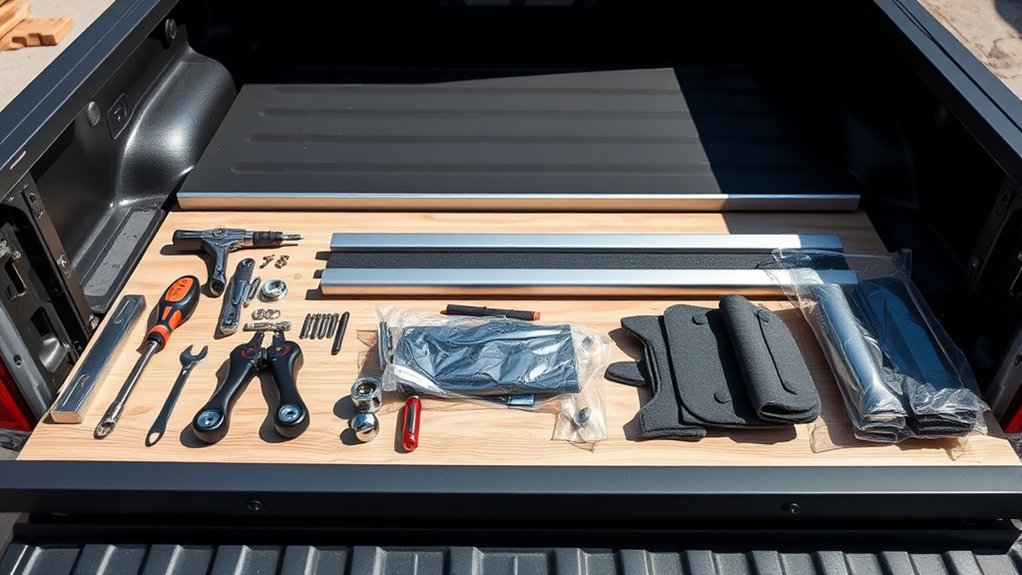
Before you begin installing your tonneau cover, you need to gather all the necessary tools and materials to ensure a smooth process. Essential items include a torque wrench, screwdrivers, and the specific bolts provided with your cover kit.
Pay close attention to bolt torque specifications to avoid over-tightening, which can cause damage or improper sealing. Inspect the gasket for any signs of gasket wear; a compromised gasket will reduce weatherproofing and may require replacement before installation.
Having a clean workspace and protective gloves is also advisable to handle components safely. By assembling these tools and checking key parts beforehand, you’ll streamline the installation, prevent errors, and maintain the integrity of your tonneau cover’s seal and mounting.
Prepare Your Truck Bed Before Installing a Tonneau Cover
Before installing your tonneau cover, you need to clean the truck bed thoroughly to remove dirt and debris. Make sure to remove any existing accessories that could interfere with the installation.
Finally, inspect the bed for damage to ensure a secure and proper fit.
Clean Truck Bed Thoroughly
How thoroughly have you cleaned your truck bed? Effective cleaning routines are essential before installing a tonneau cover to ensure proper fit and adhesion. Start by removing loose debris using a broom or vacuum for dust management.
Next, wash the bed with a mild detergent and water, using a brush to scrub corners and seams where dirt accumulates. Rinse thoroughly and allow the surface to dry completely to prevent moisture trapping under the cover.
Inspect for stubborn grime or grease spots, and treat them with a degreaser if needed. Thorough cleaning prevents dirt buildup that can interfere with clamps or seals and helps maintain the cover’s lifespan.
A clean, dry bed is crucial for a seamless tonneau cover installation and long-term performance.
Remove Existing Accessories
Once your truck bed is clean and dry, the next step involves removing any existing accessories that might obstruct the installation of your tonneau cover. Carefully assess your truck bed for any aftermarket tweaks such as bed liners, tie-down anchors, or toolboxes that may interfere with the cover’s mounting hardware.
Use appropriate tools to remove accessories without damaging mounting points or the bed surface. Detach bolts, screws, or clips securing these items, and store them safely if you plan to reinstall later.
Removing accessories ensures a flat, unobstructed surface, which is critical for proper alignment and secure attachment of the tonneau cover. Skipping this step can lead to improper fitment, water leaks, or damage.
Taking time to remove accessories thoroughly guarantees a smooth installation process and optimal performance of your new cover.
Inspect For Damage
Why is inspecting your truck bed for damage essential before installing a tonneau cover? Conducting a thorough inquiry scope helps identify risk factors that could compromise the cover’s fit and durability.
Before installation, carefully assess the truck bed for:
- Scratches, dents, or rust spots that may affect mounting points
- Loose or missing bolts and fasteners from previous accessories
- Warped or bent bed rails that could misalign the cover
- Accumulated debris or dirt that may interfere with seals
- Structural weaknesses or corrosion that reduce support integrity
Addressing these issues ensures a secure installation and prevents premature wear. By systematically evaluating your truck bed’s condition, you minimize installation complications and extend the lifespan of your tonneau cover.
Installing Different Types of Tonneau Covers: Step-by-Step
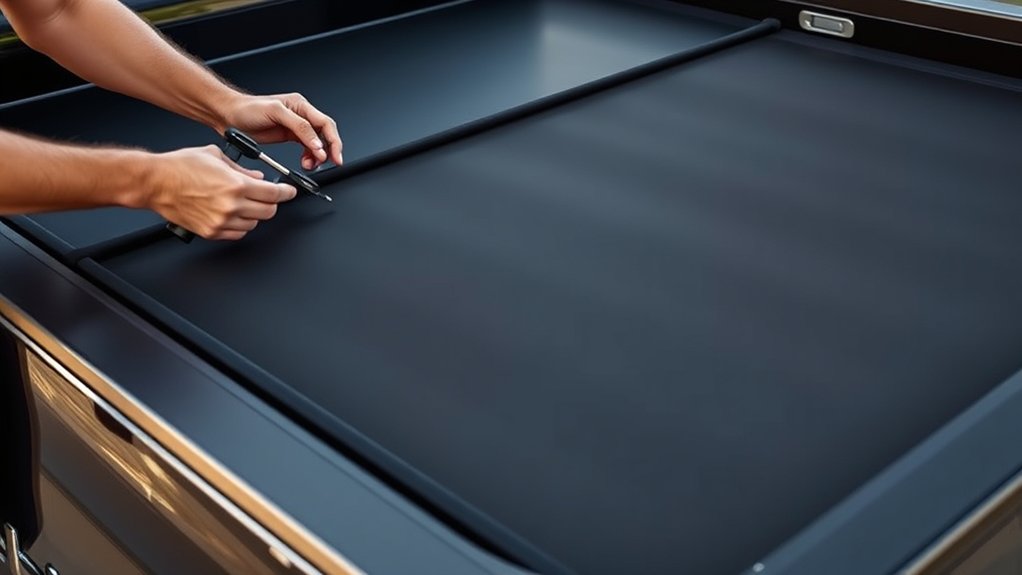
Where should you begin when installing a tonneau cover? Start by selecting the type that fits your truck and needs, balancing budget considerations with aesthetic options. For soft roll-up covers, align the rails with the bed edges, then secure them using clamps.
Lay the cover flat and fasten the snaps or Velcro beneath the rails. Hard folding covers require you to mount side rails first, ensuring they’re parallel and tightened. Position the panels sequentially, locking each into place.
Retractable covers need precise rail installation and a secure latch system to ensure smooth operation. Throughout, use a measuring tape and level to maintain alignment. Follow manufacturer instructions closely to avoid damaging your truck bed or cover.
This methodical approach streamlines installation and maximizes durability.
Tonneau Cover Installation Time: What to Expect
You can expect the average installation of a tonneau cover to take between 30 minutes and an hour, depending on the type. You’ll need basic tools like a wrench, screwdriver, and possibly clamps.
Following the step-by-step process carefully guarantees a secure and efficient fit every time.
Average Installation Duration
How long does it typically take to install a tonneau cover? On average, you can expect the process to take between 30 minutes and 2 hours, depending on several factors. Unlike an irrelevant topic or random discussion, installation time is a focused technical matter.
Key considerations include:
- Type of tonneau cover (soft or hard)
- Your familiarity with the product and instructions
- Vehicle model and bed size
- Quality and fit of included hardware
- Availability of clear, step-by-step guidance
Soft covers with clamp systems usually install faster, while hard covers with hinges require more precise alignment. Preparing your workspace and thoroughly reading instructions helps avoid delays.
Tools Needed Overview
To understand the time needed for installing a tonneau cover naturally leads to considering the tools that make the process smoother and more accurate. You’ll need a basic toolkit including a ratchet set, screwdrivers, and a tape measure.
Specialized tools like torque wrenches ensure bolts meet manufacturer specifications, essential for maintaining gasket compatibility and preventing leaks. A rubber mallet can help seat seals without damage, supporting effective seal maintenance.
Additionally, clamps may be necessary to hold components during alignment. Having lubricant or sealant recommended by the manufacturer aids in preserving gasket integrity over time.
Preparing these tools beforehand minimizes installation errors and helps you avoid time-consuming adjustments. Proper tool use directly impacts fit, function, and the longevity of your tonneau cover’s sealing system.
Step-by-Step Process
When does the actual installation process begin, and what steps should you follow to guarantee efficiency? Start by carefully unpacking your tonneau cover and verifying all components. Follow these steps precisely to avoid issues like disappearing bolts or warranty voids:
- Align the mounting rails with the truck bed, ensuring a flush fit.
- Secure rails using the provided hardware; tighten bolts incrementally to prevent stripping.
- Attach the cover hinges or clamps, checking for smooth operation.
- Adjust tension or latches according to the manufacturer’s guidelines for proper sealing.
- Perform a final inspection to confirm all bolts are tightened and no parts are missing.
Troubleshooting Common Installation Problems
Why do some tonneau covers resist proper installation? Common installation challenges often stem from misaligned clamps, uneven bed rails, or incorrect measurement. You’ll want to double-check the fit against your truck’s specifications before securing the cover.
If the clamps don’t tighten properly, inspect them for damage or debris that might hinder locking. Discussion ideas to resolve these issues include verifying rail alignment with a straight edge and ensuring the cover’s frame sits flush without gaps.
Additionally, tension adjustment problems can cause sagging or gaps, so make sure the cover fabric is taut but not overstretched. Addressing these troubleshooting points prevents damage and improves durability, ensuring your tonneau cover installs smoothly and functions as intended.
Tips for a Secure and Weatherproof Tonneau Cover Fit
How can you guarantee your tonneau cover stays secure and weatherproof under varying conditions? Focus on precise installation techniques and appropriate tools to ensure optimal storm resistance. Use tool ergonomics to reduce fatigue and improve accuracy during fitting. Follow these tips:
- Verify all mounting points align perfectly with the cover’s frame.
- Use a torque wrench with ergonomic handles to apply consistent pressure on fasteners.
- Seal edges with high-quality weather stripping to prevent water ingress.
- Regularly check clamps and latches for tightness, especially after storms.
- Adjust tension evenly across the cover to avoid gaps and wind lift.
When to Hire a Pro for Your Tonneau Cover Installation
Wondering if you should handle your tonneau cover installation yourself or call in a professional? If you encounter complex mounting systems, require precise alignment beyond basic tools, or lack experience with automotive hardware, hiring a pro is wise.
Professionals avoid funny misfires like improper latch tension or frame misalignment, which can compromise security and weatherproofing. Additionally, if your truck’s bed involves integrated sensors or electronic locks, don’t confuse these with unrelated tech; improper handling can void warranties or cause malfunctions.
A pro ensures compatibility and flawless operation, saving time and frustration. If you’re unsure about torque specifications or sealing techniques, a certified installer offers the expertise to guarantee a secure, durable fit without risking damage or costly errors.
How to Maintain Your Tonneau Cover for Longevity
Ensuring your tonneau cover remains functional and secure over time requires regular maintenance tailored to its materials and mechanisms. To optimize longevity while respecting budget constraints and aesthetic considerations, focus on these key practices:
Clean the cover with mild soap and water, avoiding harsh chemicals that degrade materials. Inspect seals and latches monthly for wear or misalignment, adjusting as needed to maintain a tight fit.
Regularly clean with mild soap and water, and inspect seals and latches monthly for a secure fit.
Lubricate moving parts like hinges and locks with silicone spray to prevent corrosion and stiffness. Store the cover properly during extreme weather or prolonged off-use periods, protecting it from UV damage and moisture.
Check for tears or punctures in soft covers and repair promptly to prevent worsening damage.
Frequently Asked Questions
Will a Tonneau Cover Improve My Truck’s Fuel Efficiency?
Yes, installing a tonneau cover can improve your truck’s fuel efficiency by exploring aerodynamics. It reduces drag, which you’ll notice when evaluating fuel savings, especially at highway speeds, making your driving more economical and efficient.
Are Tonneau Covers Compatible With All Truck Bed Sizes?
Tonneau covers aren’t universally compatible; incompatible sizing often causes installation difficulty. You’ll need to verify your truck bed’s exact dimensions and select a cover designed specifically for your model to assure a proper fit and smooth installation process.
Can I Lock My Tonneau Cover for Added Security?
Just like a knight securing his treasure chest, you can lock your tonneau cover using a built-in lock mechanism. These security features prevent unauthorized access, ensuring your cargo stays safe and protected at all times.
Do Tonneau Covers Affect My Truck’s Resale Value?
You’ll find tonneau covers can boost your truck’s resale value by improving cargo protection and slightly enhancing throttle efficiency through reduced drag. Properly maintained covers signal care, appealing to buyers seeking both practicality and performance.
Are There Any Warranty Concerns With Tonneau Covers?
Don’t put all your eggs in one basket; warranty limitations often exclude damage from improper installation or modifications. You’ll need to carefully review manufacturer exclusions to ensure your tonneau cover stays protected under warranty terms.
Conclusion
Installing a tonneau cover is like fitting a tailored suit to your truck bed—precision and patience assure a seamless fit. With the right tools and clear steps, you’ll secure protection that hugs your cargo tightly, keeping weather and debris at bay.
While soft covers roll on swiftly, complex hard or retractable models demand more finesse. Don’t hesitate to call a pro if the fit feels like a puzzle.
Your effort pays off in durability and peace of mind, making the installation of a tonneau cover well worth the time and care.