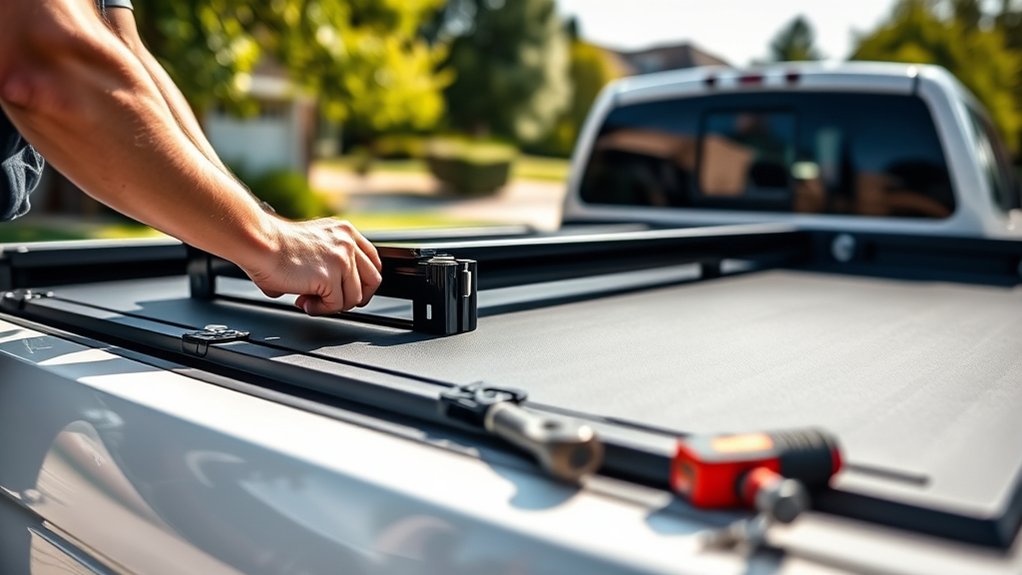
How Long Does It Take to Install a Tonneau Cover
When you install a tonneau cover, the time it takes varies based on the cover type, your truck’s size, and your experience. Soft roll-up covers usually go on faster, while hard folding models need more careful hinge alignment and sealing.
Proper preparation and the right tools are key to avoiding mistakes. Understanding these factors can help you plan your installation efficiently—but what specific steps will make the process smoother?
Key Takeaways
- Most tonneau cover installations take between 15 to 60 minutes, depending on cover type and installer experience.
- Soft roll-up covers typically require 20 to 40 minutes using basic hand tools like screwdrivers and adjustable wrenches.
- Hard folding covers usually take 30 to 60 minutes and involve precise alignment of side rails and folding panels.
- Preparation, including cleaning the truck bed and inspecting mounting rails, helps minimize installation time and errors.
- Quick-release mechanisms and snap fasteners can significantly reduce setup time by simplifying attachment and removal.
Typical Installation Times for Tonneau Covers
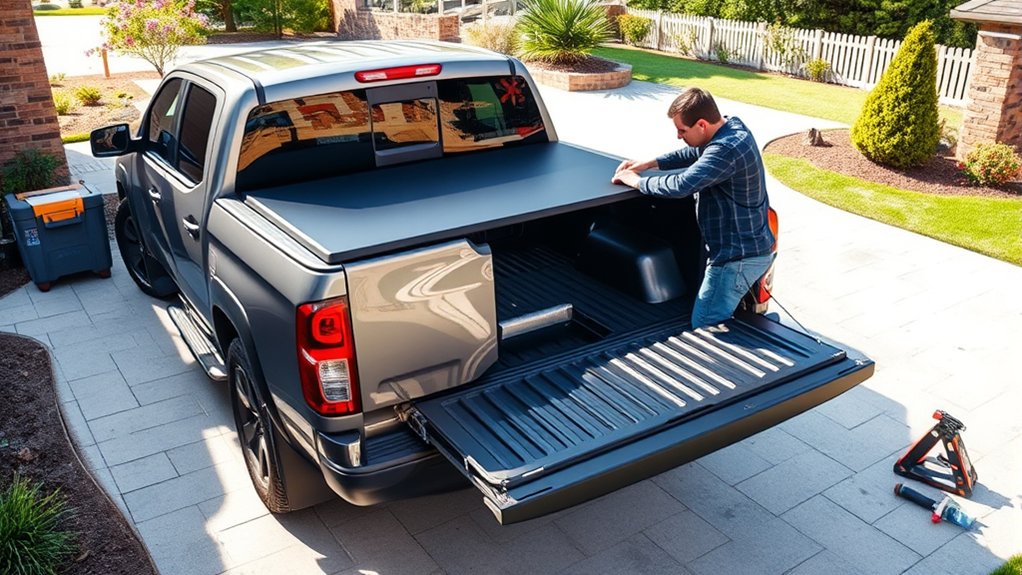
How long does it typically take to install a tonneau cover? Most installations range from 15 to 45 minutes, depending on the cover type and your experience level.
Installing a tonneau cover typically takes between 15 and 45 minutes, depending on the type and your experience.
Quick fit models streamline the process, featuring pre-attached clamps or snaps that significantly reduce setup time. You’ll want to prepare your truck bed by cleaning and inspecting it for any damage beforehand.
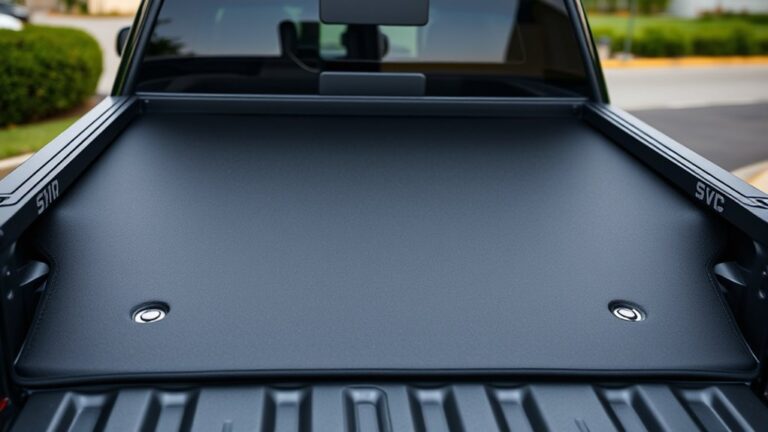
Notice the color contrast between the tonneau cover and your truck bed; this can sometimes indicate varying material thickness or design complexity, which might slightly affect installation time.
Soft covers generally install faster due to fewer components, while hard covers may require additional alignment and fastening steps. By understanding these variables, you can better estimate how long your specific tonneau cover installation will take.
Step-by-Step Guide to Installing Your Tonneau Cover Quickly
When should you begin preparing your truck bed for tonneau cover installation? Start immediately by clearing debris and ensuring a clean, dry surface. Follow these steps for a swift, secure fit:
- Inspect mounting rails for damage or dirt
- Align the cover properly with the tailgate
- Use recommended tools to avoid stripping fasteners
- Secure clamps firmly but avoid overtightening
- Test opening and closing mechanisms for smooth operation
Avoid uninstallation pitfalls by not forcing components; improper removal can void warranty implications. Confirm all parts fit snugly without gaps to maintain protection and integrity.
Taking these precise actions helps you install your tonneau cover efficiently, minimizing time while preserving your warranty and ensuring durable performance.
Installing Soft Roll-Up Tonneau Covers
To install a soft roll-up tonneau cover, you’ll need basic tools like a screwdriver and clamps. Follow a step-by-step process that includes aligning the frame, securing the rails, and attaching the cover.
On average, this installation takes about 30 to 45 minutes when done correctly.
Tools Needed
Which tools will you need to install a soft roll-up tonneau cover efficiently? Having the right tools ensures a smooth installation process, reflecting the soft skills and customer service mindset you bring to the task. Precision and care are essential, so prepare the following:
- Phillips screwdriver
- Adjustable wrench
- Tape measure
- Rubber mallet
- Clamps or vice grips
These tools allow you to align the cover accurately, secure clamps firmly, and avoid damage during installation. Using a tape measure guarantees proper fit, while a rubber mallet helps seat components without scratching. Mastering tool use mirrors the soft skills required for excellent customer service: attention to detail and patience.
Equipped with these, you’re set to install the cover quickly and correctly, setting the stage for the next step.
Step-by-Step Process
Having gathered the necessary tools, you can begin installing the soft roll-up tonneau cover by preparing the truck bed. Clean the bed rails thoroughly to ensure proper adhesion and fit.
Position the side rails along the bed edges and secure them using the provided clamps, verifying alignment before fully tightening. Attach the cover’s front rail to the bulkhead, ensuring a snug fit without gaps. Roll the cover backward to confirm smooth operation.
When selecting installation techniques, consider the debate between clamp-on versus bolt-on methods; clamp-on preserves factory finishes and often maintains warranty considerations better. Finally, check all fasteners and seals for tightness, ensuring the cover is secure and weatherproof.
Following these precise steps minimizes potential warranty issues and guarantees optimal functionality.
Average Installation Time
How long does it typically take to install a soft roll-up tonneau cover? On average, you’ll spend about 20 to 40 minutes completing the installation. This timeframe depends on your familiarity with the process and the specific vehicle model.
Unlike an unrelated subject, such as engine repair, installing this cover is straightforward and requires minimal tools.
Picture yourself:
- Aligning the cover’s rails with your truck bed
- Securing clamps evenly along the side rails
- Stretching the cover taut over the bed
- Fastening the tailgate seal correctly
- Testing the roll-up function for smooth operation
This focused task avoids complications often found in unrelated topics, letting you finish efficiently without needing professional help or special equipment.
Installing Hard Folding Tonneau Covers
You’ll need specific tools like a torque wrench and clamps to prepare for installing a hard folding tonneau cover. Follow a step-by-step process that includes aligning the rails, securing clamps, and testing the folds.
Be ready to address common challenges such as misalignment and tight fit adjustments to ensure a proper installation.
Preparation and Tools Needed
Where do you begin when preparing to install a hard folding tonneau cover? First, clear your workspace, ideally in a garage or driveway, to ensure safety and efficiency. Since you might use your truck for urban commuting or even creative gardening tools transport, precise installation is crucial to protect your cargo and maintain aerodynamics.
Gather these essential tools and materials:
- Ratchet wrench set
- Screwdrivers (Phillips and flathead)
- Measuring tape
- Torque wrench
- Clean cloth and mild cleaner
Ensure the truck bed is clean and dry to maximize seal effectiveness. Double-check your tonneau cover’s compatibility with your truck model. Proper preparation minimizes installation time and guarantees a secure, durable fit for everyday use.
Step-by-Step Installation Process
When should you start assembling the tonneau cover components? Begin immediately after confirming all parts and tools are ready, avoiding unrelated chatter or off-topic brainstorming that wastes time.
First, position the side rails on the truck bed rails, securing them with clamps or bolts as specified. Next, attach the folding panels, aligning hinges precisely to ensure smooth operation.
Then, install the tailgate seal and any weather stripping to prevent leaks. After that, test the folding mechanism, making adjustments to tighten or loosen hinges if needed.
Finally, verify all fasteners are secure and the cover locks correctly. By following this exact sequence without distractions, you streamline the process, ensuring a professional, durable hard folding tonneau cover installation.
Common Installation Challenges
Addressing the assembly steps accurately sets a solid foundation, but you may still encounter challenges during installation. Hard folding tonneau covers demand precise alignment to guarantee proper sealing and function. Misalignment can compromise installation safety and void warranty implications.
Watch for issues like incomplete latch engagement causing cover movement, incorrect rail mounting leading to water intrusion, over-tightening fasteners risking material damage, misplaced weatherstripping reducing seal effectiveness, and difficulty in folding panels smoothly due to binding.
Address these by double-checking measurements and torque specifications. Use manufacturer tools and follow guidelines strictly to avoid warranty nullification. Prioritize installation safety by wearing protective gear and securing the cover during adjustments. Proper attention prevents costly rework and maintains the cover’s longevity.
Installation Time for Retractable Tonneau Covers
How quickly can you install a retractable tonneau cover? Typically, it takes between 30 to 60 minutes, depending on your experience and the specific model. The process involves securing the side rails, aligning the cover, and ensuring smooth operation of the retractable mechanism.
Unlike other covers, retractable models require precise adjustment to avoid binding or misalignment. While discussion ideas might tempt you to veer into unrelated topics like aesthetic preferences or brand comparisons, stay focused on installation mechanics for efficiency.
Preparation and careful adherence to instructions minimize errors and speed up the process. If you’re methodical, you can complete installation within an hour without compromising quality or function, making retractable covers a practical choice for those valuing quick, reliable setup.
Essential Tools for Faster Tonneau Cover Installation
To speed up your tonneau cover installation, you’ll need essential hand tools like screwdrivers and wrenches. Accurate measuring equipment ensures a proper fit, preventing costly adjustments.
Utilizing quick-release mechanisms can significantly reduce setup time and effort.
Required Hand Tools
Which tools will speed up your tonneau cover installation? Having the right hand tools ensures a streamlined process, much like following sunroof etiquette or scheduling tire rotation, both require precision and care. To install your cover efficiently, gather these essentials:
- Ratchet wrench with various socket sizes
- Phillips and flathead screwdrivers
- Torque wrench for accurate tightening
- Measuring tape for quick adjustments
- Rubber mallet to avoid damaging components
Each tool plays a specific role: the ratchet and torque wrench help secure bolts correctly; screwdrivers assist with clamps or brackets. Measuring tape verifies fitment without guesswork, and the mallet aids in gentle assembly. Using these hand tools minimizes errors and saves time, ensuring your tonneau cover installs smoothly and functions optimally right from the start.
Measuring Equipment Importance
While having the right hand tools speeds up installation, precise measurements guarantee your tonneau cover fits perfectly and functions as intended. Employing reliable measuring equipment enhances measuring accuracy, reducing errors that lead to misalignment or installation delays.
Tools like digital tape measures or laser distance meters provide exact dimensions quickly, improving your workflow. Accurate measurements support installation ergonomics by minimizing repetitive adjustments and awkward positioning, allowing you to work efficiently and comfortably.
Prioritize tools that deliver consistent readings and are easy to handle within the confined space of a truck bed. By integrating precise measuring devices into your setup, you streamline the installation process, prevent rework, and ensure the tonneau cover’s components align flawlessly, ultimately saving you time and enhancing overall installation quality.
Quick-Release Mechanisms
How can quick-release mechanisms accelerate your tonneau cover installation? These components streamline attachment and removal, reducing installation time considerably. Their subtopic relevance lies in simplifying the process without compromising security or fit.
By focusing on two word discussion ideas like “snap fasteners” and “lever locks,” you grasp how these mechanisms operate efficiently. Quick-release systems allow you to:
- Secure clamps with minimal tools
- Engage locking levers instantly
- Adjust tension without disassembly
- Remove cover panels swiftly
- Maintain tight seals under load
Using quick-release mechanisms optimizes your workflow, turning a potentially lengthy task into a rapid assembly. This technical advantage ensures your tonneau cover fits securely while saving valuable time during installation.
Common Installation Problems and How to Fix Them
Why do some tonneau cover installations hit snags? Often, misaligned clamps or improperly seated seals cause gaps, compromising product safety and potentially voiding warranty coverage. You should double-check clamp tightness and ensure seals sit flush against the truck bed.
Misaligned clamps and poorly seated seals create gaps that risk safety and void warranties—always double-check installation.
Another common issue is hardware mismatch, using incorrect bolts or missing washers, leading to instability. Always cross-reference parts with the instruction manual before starting.
If the cover doesn’t lay flat, inspect the frame for warping or bent components. Replacing damaged parts preserves safety and warranty validity.
Lastly, avoid overtightening clamps, which can damage mounting points and affect coverage eligibility. Addressing these problems promptly helps you maintain a secure, durable installation while complying with warranty terms, ensuring long-term protection for your tonneau cover.
How Truck Size and Model Affect Tonneau Cover Installation
Addressing installation challenges often depends on understanding your truck’s specific size and model. Truck size directly influences the tonneau cover’s fit and the installation process complexity. Larger trucks may require more time due to wider beds and additional fastening points.
Model effects also play a pivotal role; variations in bed design, rail shape, and tailgate configurations demand tailored installation techniques.
Consider these factors related to truck size and model effects:
- Bed length variations affecting cover compatibility
- Rail profile differences requiring custom clamps
- Tailgate style influencing latch mechanisms
- Bed liner presence altering mounting methods
- Rear window proximity impacting cover alignment
Preparing Your Truck for a Quick Tonneau Cover Install
Where should you start to guarantee a quick tonneau cover installation? Begin by thoroughly cleaning your truck bed and rails. Remove debris, dirt, and any previous accessory residues that could interfere with the mounting process.
Inspect the bed rails for damage or irregularities that might cause misalignment. Avoid engaging in irrelevant topics or random distractions during preparation; focus solely on the task. Gather all necessary tools and hardware beforehand to prevent interruptions.
Verify the tonneau cover’s compatibility with your truck model to ensure a smooth fit. Finally, read the installation manual carefully to familiarize yourself with specific requirements.
When to Consider Professional Tonneau Cover Installation
When should you opt for professional tonneau cover installation? If you lack mechanical experience or want to avoid misalignment issues, professionals ensure precise fitting. Complex models with integrated locks or electronic components also benefit from expert handling. Additionally, if your truck bed has modifications or damage, a pro can adjust installation accordingly. Avoid relying on nontechnical unrelated advice or catchy marketing slogans promising “easy installs” that overlook technical challenges.
Consider professional installation if you encounter:
- Unfamiliar or intricate mounting systems
- Electronic locking mechanisms
- Customized or damaged truck beds
- Time constraints requiring efficient setup
- Concerns about warranty validity or coverage
Choosing professional help guarantees accuracy, protects your investment, and prevents costly errors during your tonneau cover installation.
Frequently Asked Questions
How Do Tonneau Covers Impact Fuel Efficiency?
Tonneau covers impact fuel efficiency by reducing aerodynamic drag over the truck bed. You’ll see fuel efficiency benefits because smoother airflow decreases resistance, improving mileage, especially at highway speeds.
This makes your drive more cost-effective and eco-friendly.
Are Tonneau Covers Weatherproof?
Yes, tonneau covers are weatherproof, proven through rigorous weatherproof testing. When you compare durability, high-quality covers resist water, UV rays, and debris effectively, ensuring long-lasting protection regardless of the conditions you face.
Can Tonneau Covers Be Locked for Security?
Yes, tonneau covers often feature locking security mechanisms to enhance theft deterrence. You can lock them to secure your truck bed, preventing unauthorized access and protecting your cargo effectively from theft attempts.
Do Tonneau Covers Affect Truck Bed Warranty?
If you install a tonneau cover incompatible with your truck bed, you could void your short warranty implications. Always verify truck bed compatibility to avoid damaging seals or paint, ensuring your coverage remains intact and effective.
How Do I Clean and Maintain My Tonneau Cover?
You should follow a regular cleaning routine using mild soap and water, avoiding harsh chemicals. Establish a maintenance schedule to inspect seals, tighten fasteners, and apply UV protectant to extend your tonneau cover’s lifespan and performance.
Conclusion
Installing a tonneau cover typically takes between 15 and 60 minutes, with soft roll-up models averaging 20 to 40 minutes. Knowing this can help you plan your time effectively.
By preparing your truck properly and following instructions carefully, you’ll ensure a secure, leak-free fit.
If you’re short on time or unsure, consider professional installation to avoid common issues and guarantee optimal performance.
Understanding how long it takes to install a tonneau cover can help you decide whether to do it yourself or seek expert help for the best results.