What Happens if You Don’t Change Your Oil Filter
Imagine driving a car where the oil filter hasn’t been changed in over 15,000 miles. A dirty oil filter can cause contaminants to build up, restricting oil flow and causing pressure drops. This silently stresses engine components, reducing lubrication efficiency and increasing wear.
If you overlook this essential maintenance, the consequences extend beyond sluggish performance to potential overheating and costly damage. Understanding how a clogged oil filter disrupts your engine’s health can help you avoid these risks. Regularly changing your oil filter is crucial to keeping your engine running smoothly and efficiently.
Key Takeaways
- A clogged oil filter restricts oil flow, reducing lubrication and causing increased engine wear and overheating risks.
- Contaminants bypass a dirty filter, circulating in oil and accelerating engine component damage and sludge buildup.
- Reduced oil pressure from a neglected filter impairs cooling, leading to potential engine overheating and failure.
- Dirty filters increase engine strain, lowering performance, fuel efficiency, and causing sluggish acceleration.
- Skipping oil filter changes shortens filter lifespan and degrades oil quality, compromising long-term engine health.
What the Oil Filter Does and Why It Matters
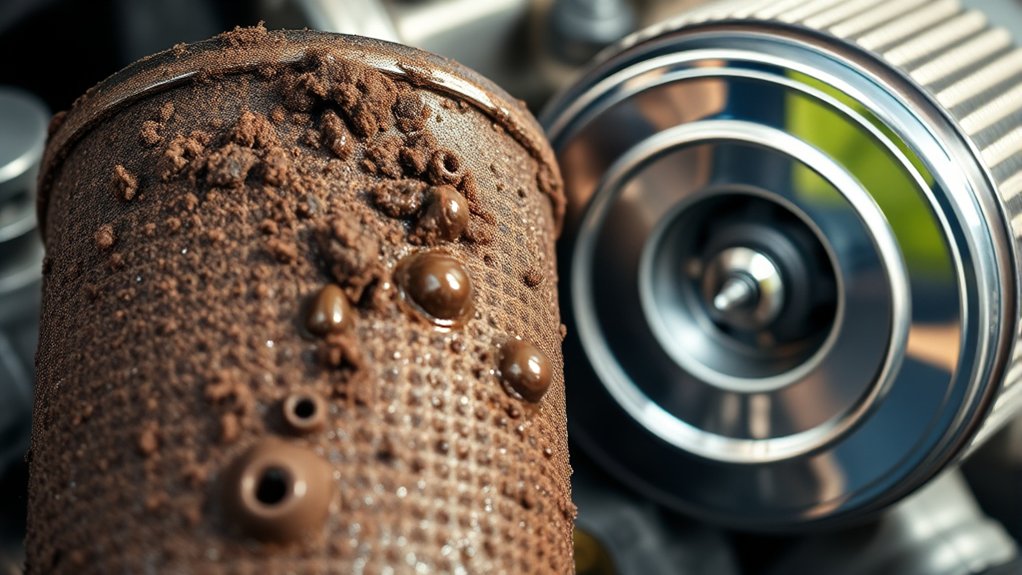
Why does the oil filter play such a critical role in your engine’s health? It continuously removes contaminants like metal particles and carbon deposits from the oil, ensuring lubrication remains efficient.
Throughout the oil filter lifecycle, its filtration efficiency gradually declines as trapped debris accumulates, restricting oil flow. This reduction impairs the filter’s ability to protect engine components from wear. You rely on the filter to maintain oil cleanliness, preventing abrasive materials from circulating and causing damage.
A well-functioning oil filter supports optimal engine performance, fuel efficiency, and longevity. Understanding the oil filter lifecycle helps you recognize when filtration efficiency drops below safe thresholds, emphasizing the necessity of timely filter replacement to uphold engine integrity and avoid costly repairs.
Signs Your Oil Filter Needs Changing Now
You’ll notice a drop in engine performance when your oil filter clogs, as it restricts oil flow and reduces lubrication efficiency.
Unusual engine noises, such as knocking or ticking, often indicate that contaminants are circulating due to a failing filter. Additionally, visible oil contamination or sludge buildup signals that it’s time to replace the oil filter immediately.
Decreased Engine Performance
Although your engine may continue running with a clogged oil filter, you’ll notice a significant drop in performance that signals immediate attention is needed. When contaminants accumulate, the filter restricts oil flow, causing inadequate lubrication.
This increased resistance forces your engine to work harder, reducing power output and fuel efficiency. Your driving habits play a crucial role. Frequent stop-and-go traffic or aggressive acceleration accelerates filter clogging.
Additionally, improper oil viscosity exacerbates the problem; oil that’s too thick struggles to pass through a dirty filter, further starving engine components of lubrication. Maintaining optimal oil viscosity and timely filter replacement ensures consistent oil pressure and flow.
Ignoring these factors leads to sluggish acceleration, rough idling, and impaired throttle response, clearly indicating your oil filter demands immediate replacement to restore engine performance.
Unusual Engine Noises
How can you tell when your oil filter is overdue for a change? One clear indicator is unusual engine noises caused by restricted oil flow. When the filter clogs, oil pressure drops, leading to insufficient lubrication and increased metal-on-metal contact.
This manifests as:
- Tapping or ticking sounds from the valve train.
- Loud knocking during acceleration.
- Whining noises near the oil pump.
- Grinding or rattling from internal components.
These sounds are precise signals that your engine isn’t getting proper oil circulation. As a random note, don’t confuse these noises with unrelated topic symptoms like exhaust issues or belt squeals; they indicate different problems.
Ignoring these noises risks severe engine damage, so replace the oil filter promptly to maintain optimal engine function and avoid costly repairs.
Oil Contamination Signs
Unusual engine noises often point to restricted oil flow, but another critical indicator lies within the condition of your engine oil itself. When your oil appears dark, gritty, or has a burnt smell, it’s a clear sign that oil filtration is compromised.
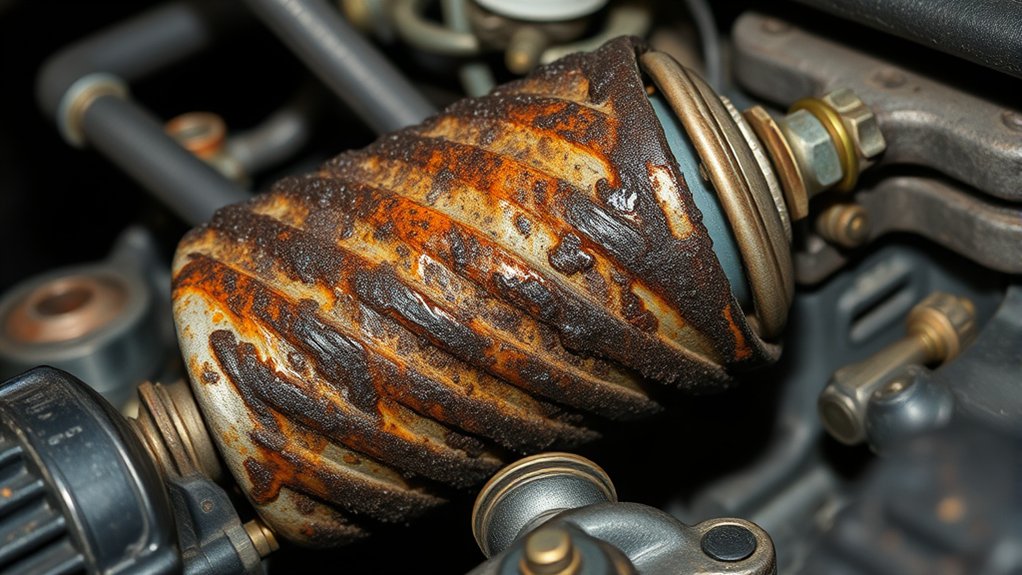
Contaminants like metal particles, dirt, and sludge accumulate when the oil filter exceeds its filter longevity, reducing its efficiency. This contamination impairs oil’s ability to lubricate, cool, and protect engine components, accelerating wear.
You’ll notice increased engine deposits and potentially diminished performance. Monitoring oil cleanliness through visual inspection or oil analysis can help you detect contamination early.
If you observe these signs, changing your oil filter promptly restores optimal filtration, maintaining proper oil flow and prolonging engine life. Don’t ignore these oil contamination signs; they’re your vehicle’s early warning system.
How a Clogged Oil Filter Blocks Oil Flow
Why does a clogged oil filter disrupt oil flow so critically? When debris accumulates, the clogged filter restricts the oil’s path, impairing circulation. This obstruction forces the oil pump to work harder, potentially causing pressure drops.
Here’s how a clogged filter blocks oil flow:
- Particulate buildup reduces filter media porosity.
- Oil passageways narrow, limiting volume throughput.
- Increased backpressure triggers bypass valve activation.
- Unfiltered oil circulates, risking engine damage.
You rely on consistent oil flow for lubrication and cooling; a clogged filter compromises this system. The reduced flow rate hinders oil delivery to essential components, raising wear and heat risks.
Recognizing how a clogged filter blocks oil flow underscores the necessity of timely oil filter replacement to maintain engine integrity.
How a Dirty Oil Filter Hurts Engine Performance and Fuel Efficiency
When a clogged oil filter restricts oil flow, your engine doesn’t just face lubrication issues. It also suffers in performance and fuel efficiency. Dirty filters increase engine strain, causing incomplete combustion and reduced power output.
This directly impacts fuel economy, forcing you to burn more fuel for the same performance. Many oil filter myths suggest you can skip regular changes, but ignoring oil change intervals only worsens engine wear and efficiency.
| Effect on Engine | Impact on Fuel Efficiency |
|---|---|
| Increased friction | Higher fuel consumption |
| Reduced oil pressure | Lower miles per gallon |
| Sluggish acceleration | Poor throttle response |
| Engine component wear | More frequent refueling |
Maintaining clean oil filters is essential to optimize both performance and fuel economy.
Why Neglecting the Oil Filter Causes Engine Overheating
How does neglecting your oil filter lead to engine overheating? Your engine design relies heavily on optimal filtration efficiency to maintain proper oil flow and temperature regulation. When the oil filter clogs, oil circulation slows, reducing heat dissipation. This directly stresses engine components, causing temperatures to rise beyond safe levels.
Here’s how it happens:
- Clogged filter restricts oil flow, lowering lubrication.
- Reduced oil flow impairs heat transfer from engine parts.
- Increased friction elevates engine temperature.
- Overheated engine risks warping and failure.
Ignoring oil filter changes compromises filtration efficiency, leading to sludge buildup and impaired oil channels. This disrupts the engine’s thermal balance, causing overheating that can damage critical components in your engine design. Regular filter maintenance is essential to prevent this chain reaction.
How Skipping Oil Filter Changes Wears Out Your Engine
When you skip changing your oil filter, contaminants accumulate and restrict oil flow, directly reducing lubrication efficiency. This compromised lubrication increases friction between engine components, accelerating wear and tear.
Over time, these factors degrade engine performance and can lead to costly mechanical failures.
Contaminant Buildup Effects
Why does skipping oil filter changes accelerate engine wear? When you neglect to replace the oil filter, contaminant buildup intensifies within the oil circulation system. This accumulation leads to several essential issues:
- Abrasive particles in the oil increase friction on engine components.
- Blocked filter elements reduce oil flow, causing localized overheating.
- Elevated temperatures contribute to engine overheating, degrading metal surfaces.
- Contaminants promote sludge formation, impairing heat dissipation.
As these factors compound, your engine endures premature wear and potential failure. The oil filter’s role is crucial in trapping harmful debris; without timely changes, contaminants circulate freely, accelerating damage.
Maintaining clean oil flow preserves component integrity and prevents the thermal stress linked to engine overheating. Skipping oil filter changes compromises this balance, directly impacting your engine’s longevity and performance.
Reduced Engine Lubrication
What happens to your engine’s lubrication if you skip changing the oil filter? Over time, the oil filter becomes clogged with contaminants, drastically restricting oil flow. This reduced flow compromises the oil’s ability to reach critical engine components, leading to insufficient lubrication.
Without proper filtration, the oil degrades faster, losing its viscosity and protective properties. It’s an irrelevant topic to assume engine lubrication remains unaffected despite a neglected filter; the reality is the opposite.
Neglecting filter replacement introduces a stray concept: that oil alone maintains engine health. In truth, the filter ensures oil purity, enabling consistent lubrication. Reduced lubrication increases friction and heat, impairing engine efficiency.
To maintain optimal lubrication and prevent premature engine damage, regularly changing the oil filter is essential, not an optional or irrelevant topic.
Increased Wear And Tear
Skipping oil filter changes accelerates engine wear by allowing abrasive particles to circulate freely within the lubrication system. Just like neglecting pet care or plant watering causes damage over time, ignoring your oil filter lets contaminants erode critical engine components.
These particles compromise the oil’s ability to protect surfaces, leading to increased friction and metal degradation. Here’s what happens inside your engine:
- Microscopic debris causes scoring on cylinder walls.
- Bearings experience accelerated wear from contaminated oil.
- Oil passages clog, restricting lubrication flow.
- Heat dissipation efficiency drops, increasing thermal stress.
Long-Term Damage From Skipping Oil Filter Changes
Although it might seem harmless at first, neglecting to change your oil filter causes contaminants to accumulate in the engine oil, reducing its ability to lubricate critical components effectively. Over time, sticky contaminants clog the filter media, drastically shortening the oil filter lifespan and allowing abrasive particles to circulate freely.
This contamination accelerates wear on engine parts like bearings, camshafts, and pistons, leading to scoring and premature failure. Additionally, sludge buildup impedes oil flow, causing localized overheating and increased friction.
The combined effect compromises engine efficiency and may result in costly repairs or total engine replacement. By skipping timely oil filter changes, you expose your engine to sustained mechanical stress, deteriorating its performance and longevity in ways that are difficult and expensive to reverse.
Easy Maintenance Tips to Keep Your Oil Filter and Engine Running Smoothly
How often you change your oil filter directly impacts your engine’s health and performance. To keep both running smoothly, you need to understand the oil filter design and the role of filter material in trapping contaminants effectively. Follow these easy maintenance tips:
Changing your oil filter regularly is key to maintaining engine health and efficient contaminant removal.
- Replace the oil filter at manufacturer-recommended intervals to prevent clogging and maintain optimal filtration efficiency.
- Choose filters with high-quality filter material that balances permeability and particle retention for superior engine protection.
- Inspect the filter housing and seals during oil changes to avoid leaks that compromise filtration.
- Use compatible oil types that complement the filter material to reduce degradation and extend filter life.
Consistent adherence to these steps ensures your engine operates at peak performance and longevity.
Frequently Asked Questions
Can Using the Wrong Oil Filter Damage My Engine?
Yes, using the wrong filter can cause oil contamination, reducing filtration efficiency. This allows debris to circulate, increasing engine wear and potential damage.
Always ensure you select the correct oil filter to maintain optimal engine performance.
How Often Should I Replace My Oil Filter With Synthetic Oil?
You should replace your oil filter every 7,500 to 10,000 miles with synthetic oil.
Considering oil filter considerations, sticking to synthetic oil intervals ensures optimal engine protection and maintains filtration efficiency throughout your vehicle’s lifespan.
Are Aftermarket Oil Filters as Effective as OEM Filters?
Aftermarket vs OEM filter effectiveness varies; you’ll find some aftermarket filters match or exceed OEM standards, but others fall short in filtration media quality and seal integrity.
Always check certifications to ensure reliable performance.
Does Oil Filter Size Vary Between Car Models?
Yes, oil filter sizing varies between car models due to differences in engine design. You must ensure compatibility standards match your vehicle’s specifications to maintain proper filtration and oil flow.
This prevents engine damage and performance issues.
Can a Damaged Oil Filter Cause Oil Leaks?
Like a cracked dam, a damaged oil filter can cause oil leaks, disrupting pressure and flow. You’ll risk engine damage as contaminants bypass filtration, leading to wear and potential failure. Regular inspection and replacement prevent costly repairs.
Conclusion
If you think skipping your oil filter change is harmless, think again. That clogged filter quietly chokes oil flow, letting sludge and debris wreak havoc inside your engine. Over time, you’ll notice overheating, reduced performance, and costly wear—problems that could’ve been avoided.
Don’t wait until damage shows; stay ahead by swapping your oil filter regularly. Your engine’s health depends on it, and ignoring this simple step might just cost you far more than you bargained for.
Remember, regularly changing your oil filter is essential to keep your engine running smoothly and prevent serious damage.