What Does Flo Mean on a Battery Charger
You might not realize that the “Flo” indicator on your battery charger represents a specific maintenance mode designed to preserve battery health rather than rapidly charging it. This mode carefully controls voltage and current to keep your battery fully charged without causing damage from overcharging or heat buildup.
Understanding how “Flo” operates can change the way you maintain your battery. Its exact role and benefits often go overlooked, but knowing about this feature can help extend your battery’s lifespan and reliability.
Key Takeaways
- Flo indicates the battery charger is in float mode, providing a maintenance charge to keep the battery healthy after full charge.
- Float mode regulates voltage and current to prevent overcharging and excessive heat during long-term battery storage.
- The Flo indicator confirms proper float operation and helps diagnose charger or battery connection issues.
- Flo mode is not a rapid charge but a low-current phase ideal for maintaining batteries in storage or infrequent use.
- Charger settings, voltage matching, and terminal condition must be verified to ensure reliable and safe float mode function.
What Does “Flo” Mean on a Battery Charger?
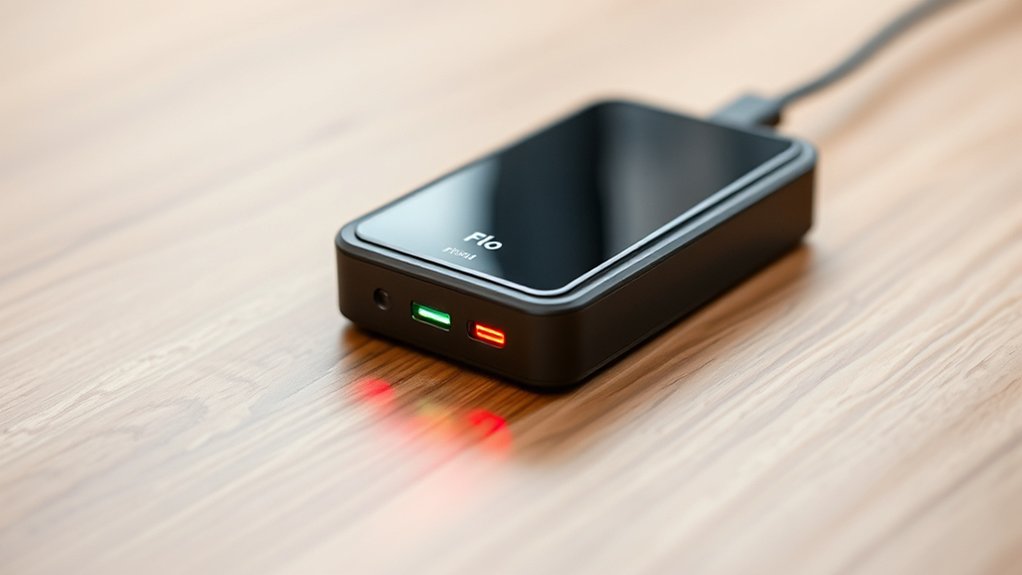
What does “Flo” indicate on your battery charger? It typically represents a specific charging mode designed to optimize battery health, but you shouldn’t assume it’s universally standardized.
Calibration myths often cloud understanding; some believe “Flo” implies a unique self-calibrating function, yet this is rarely accurate. Instead, the term can stem from branding confusion, where manufacturers assign proprietary labels without clear industry definitions.
Calibration myths persist, but “Flo” rarely means self-calibration—often it’s just a branded term without clear industry meaning.
This lack of standardization means “Flo” might vary in function across devices, potentially referring to a maintenance or trickle charge phase. When evaluating your charger, focus on technical documentation rather than the “Flo” label alone.
Doing so helps you avoid misconceptions and ensures you interpret the indicator’s role correctly within your charger’s operational context.
How Does the “Flo” Mode Affect Battery Charging?
Understanding the implications of the “Flo” mode on battery charging helps clarify its functional role beyond just a label. When you engage “Flo,” the charger shifts to a maintenance phase, regulating voltage and current to avoid overcharging. This mode ensures battery safety by preventing excessive heat and electrolyte loss.
Charging etiquette plays a role here; you don’t need to disconnect the battery immediately since “Flo” maintains optimal charge without stress. The charger balances energy input precisely, enhancing system stability while minimizing wear.
Key effects of “Flo” mode include:
- Reduced charging current to a trickle level
- Voltage stabilization at a safe threshold
- Prevention of battery overheating
- Continuous monitoring of battery condition
- Extension of safe charging intervals without damage
Why Does “Flo” Help Your Battery Last Longer
Flo mode optimizes charging by maintaining your battery at a controlled voltage, preventing overcharging and excessive heat buildup. This precise regulation reduces stress on the battery’s internal components, which slows degradation over time.
Flo Mode Benefits
How does the “Flo” mode optimize battery longevity? By intelligently adjusting the charge cycle, it prevents overcharging and minimizes stress on the battery’s internal chemistry. This mode carefully balances charge and rest periods, enhancing the battery’s lifespan through controlled energy flow rather than constant full power.
Consider these Flo mode benefits:
- Maintains optimal charge voltage to reduce wear
- Limits heat buildup during charging cycles
- Prevents sulfation by avoiding undercharging
- Extends cycle life with precise float voltage control
- Reduces capacity loss from prolonged high voltage exposure
These advantages highlight why Flo mode outperforms two-word discussion ideas like “fast charge” or “trickle charge,” which are unrelated topics when addressing battery preservation. You’ll find Flo mode crucial for maximizing your battery’s service life.
Battery Health Maintenance
The controlled charging pattern of Flo mode directly supports long-term battery health by minimizing chemical degradation and physical wear. When you use Flo, the charger adjusts current and voltage dynamically, preventing overcharging and excessive heat, two primary factors that accelerate battery aging.
This optimized charging efficiency reduces stress on the battery’s internal structure, preserving its capacity and cycle life. By maintaining a stable state of charge without fluctuating voltage spikes, Flo mode limits electrolyte breakdown and mitigates plate sulfation.
As a result, you ensure your battery retains optimal performance over extended periods. In essence, Flo mode acts as a protective mechanism, balancing charge delivery to maximize battery health, prolong service life, and maintain consistent charging efficiency, which conventional modes often fail to achieve.
When Should You Use the “Flo” Setting?
You should use the “Flo” setting when you need a controlled, low-current charge that prevents overcharging. It’s ideal for maintaining batteries in storage or during periods of infrequent use.
This mode optimizes battery health by balancing charge cycles and minimizing degradation.
Understanding Flo Mode
When should you engage the “Flo” mode on a battery charger? You use it primarily for maintaining battery health after a full charge, preventing overcharging without manual disconnection.
Addressing common Flo mode misconceptions is essential; it’s not a rapid charge but a controlled, low-current state that sustains battery capacity.
Be mindful of charger compatibility issues, as not all chargers support Flo mode, which can affect performance and safety.
Consider these two word discussion ideas to clarify its purpose:
- Battery maintenance
- Float voltage
- Overcharge prevention
- Trickle current
- Charger compatibility
Using Flo mode correctly ensures your battery remains charged ideal during inactivity, extending its lifecycle while avoiding damage linked to continuous high-voltage charging.
Ideal Charging Conditions
Maintaining battery health through Flo mode depends on recognizing the ideal conditions for its use. You should engage Flo mode primarily when the battery is fully charged but still connected to the charger for extended periods. This mode prevents overcharging by providing a low, consistent current that supports battery preservation without causing damage.
Following proper charging etiquette, avoid using Flo mode for rapid charging or when the battery is critically low, as it doesn’t supply the high current required for fast recovery. Instead, reserve Flo mode for maintaining charge levels in idle batteries, such as seasonal vehicles or equipment stored long-term.
Using Flo mode under these precise conditions ensures top-tier battery lifespan and performance, minimizing wear caused by continuous full-current charging or prolonged disconnection.
Battery Maintenance Benefits
Why choose the Flo setting for battery maintenance? It counters common battery myths by providing a controlled, low-current charge that prevents overcharging and sulfation. Using this setting follows proper charging etiquette, ensuring your battery stays healthy over long periods without damage.
You should use Flo when your battery isn’t in daily use or after a full charge to maintain optimal capacity.
Flo setting benefits include:
- Prevents battery degradation from overcharging
- Maintains electrolyte balance
- Reduces sulfation buildup on plates
- Extends overall battery lifespan
- Supports gradual, safe charge equalization
What Are Common Misconceptions About the “Flo” Indicator?
How should you interpret the “Flo” indicator on a battery charger? Many users confuse it, leading to common misconceptions. Understanding the myth vs reality helps clarify its purpose and proper usage, minimizing user misunderstandings.
| Misconception | Reality | Impact on Battery |
|---|---|---|
| “Flo” means full charge | Indicates float charging mode, not full | Overcharging risk avoided |
| “Flo” is an error signal | It’s a normal maintenance phase | Ensures battery longevity |
| Charger is faulty if “Flo” stays on | “Flo” maintains optimal voltage | Prevents battery drain |
| “Flo” mode is unnecessary | Crucial for battery health | Extends battery life |
| “Flo” drains battery | It provides a trickle charge | Keeps battery ready |
Recognize these realities to optimize your battery care effectively.
How to Troubleshoot “Flo” Mode Issues on Your Charger
Understanding the correct function of the “Flo” indicator helps you recognize when the charger operates in float mode as intended. If the “Flo” light doesn’t activate during gentle charging or long term storage, troubleshoot by examining key factors.
Recognizing the “Flo” indicator confirms proper float mode charging and guides effective troubleshooting steps.
First, confirm the charger’s voltage matches your battery specifications. Next, inspect battery terminals for corrosion or loose connections. Check the charger’s output current to ensure it’s within float mode parameters.
Verify the battery’s state of charge; an over-discharged battery may prevent float mode engagement. Finally, review the charger’s settings or software for faults or outdated firmware. Visualize these checks:
- Multimeter test on voltage output
- Clean battery terminals
- Tighten all connections
- Monitor battery charge level
- Update charger firmware
This systematic approach ensures reliable float mode operation.
Frequently Asked Questions
Can “Flo” Mode Be Used With All Battery Types?
You can’t use flo mode with all battery types because battery compatibility varies. Flo mode suits specific chemistries, like lead-acid, but may damage lithium or nickel-based batteries if used improperly.
Always check your charger’s specs.
Does “Flo” Mode Consume More Electricity Than Regular Charging?
Think of “flo” mode like a trickle faucet, using slightly more power but improving battery efficiency by maintaining ideal voltage.
It doesn’t considerably increase electricity consumption but extends charging cycles, enhancing your battery’s lifespan and performance.
Is “Flo” Mode Safe for Overnight Charging?
Yes, Flo mode supports safe charging overnight by maintaining a low, steady current that prevents overcharging. This controlled approach optimizes battery longevity, ensuring your battery remains healthy without excessive heat or wear during extended charging periods.
How Does “Flo” Mode Compare to Trickle Charging?
Flo charging maintains ideal voltage, adapting to battery compatibility more precisely than trickle charging, which delivers a constant low current.
You’ll find Flo mode better preserves battery life and efficiency across various battery types.
Can “Flo” Mode Damage Old or Weak Batteries?
Flo risks damaging old or weak batteries by maintaining continuous current, accelerating battery aging. You should monitor voltage carefully to avoid overcharging, as Flo mode’s constant charge can degrade battery health over time if not managed properly.
Conclusion
Now that you know Flo isn’t just a fancy light, you can appreciate how it’s like a watchdog for your battery’s health—constantly guarding against overcharge and decay.
Using Flo mode isn’t optional; it’s your battery’s lifeline, extending its life far beyond ordinary limits.
Ignore it, and you might as well be handing your battery over to the junkyard.
So, activate Flo and watch your battery live a long, robust life without breaking a sweat. Understanding what Flo means on a battery charger is key to keeping your battery in top shape.