What Is the Best Auto Battery Charger
Imagine you need to revive a dead battery quickly before a critical trip. Choosing the best auto battery charger isn’t just about power; it requires smart voltage detection, multi-stage charging, and compatibility with your battery type and system voltage.
You’ll want a charger that balances efficiency and safety, with clear monitoring and reliable controls. Understanding these factors is key to making an informed decision that protects your battery and vehicle.
Key Takeaways
- The best auto battery charger features smart, multi-stage charging to optimize battery health and prevent overcharging.
- Compatibility with battery types (lead-acid, AGM, gel, lithium-ion) and voltages (6V, 12V, 24V) is essential for safe charging.
- Built-in safety protections like reverse polarity, short circuit, and overcharge prevention ensure reliable and secure operation.
- A clear digital display and automatic voltage detection enhance usability and real-time monitoring during charging.
- Portability, durable design, and reputable brand reliability contribute to long-term performance and user confidence.
How Auto Battery Chargers Work
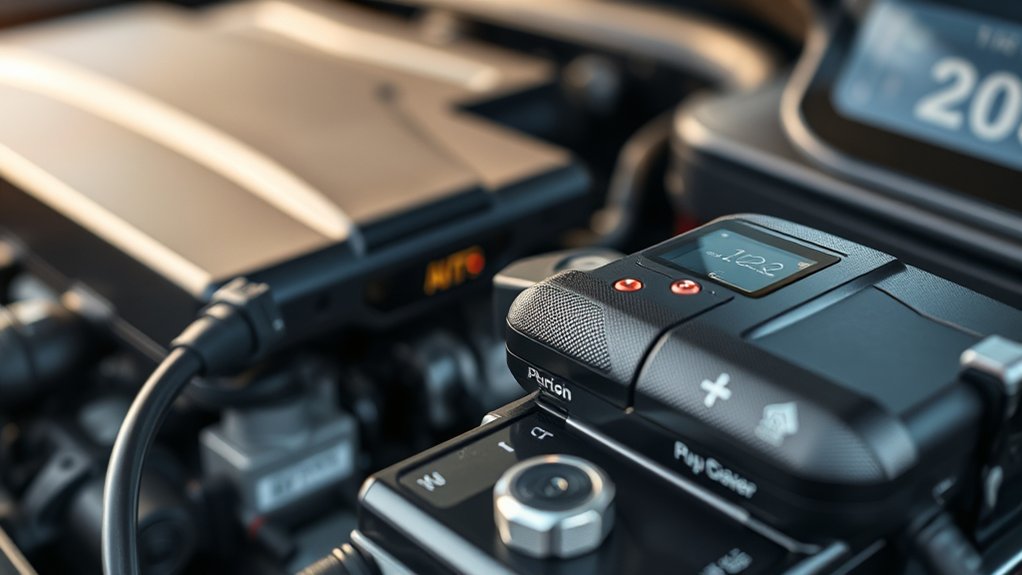
An auto battery charger restores electrical energy to a vehicle’s battery by supplying a controlled flow of current. When you connect the charger, it pushes electrons into the battery’s cells, reversing the chemical reaction that drained them.
Understanding this process helps dispel common charger misconceptions, such as the belief that faster charging always means better results. In reality, high current can damage the battery, while controlled charging extends battery life.
Charging myths also include the assumption that all batteries require identical charging methods; in truth, chargers adjust voltage and current based on battery type and condition. By grasping how chargers regulate current flow and monitor battery status, you can avoid damaging your battery and ensure efficient, safe recharging every time.
Types of Auto Battery Chargers You Should Know
Understanding how chargers regulate current and adapt to battery conditions sets the stage for recognizing the different types of auto battery chargers available. Primarily, you’ll encounter manual chargers, which require constant monitoring, and automatic chargers that adjust voltage and current based on battery status.
Chargers vary from manual models needing oversight to automatic ones that tailor charging to battery condition.
Smart chargers offer advanced microprocessor control, optimizing charge cycles and extending battery life. Maintenance chargers keep batteries at full capacity without overcharging, ideal for long-term storage.
When selecting, consider charger branding, as reputable manufacturers often ensure better reliability and safety. While battery aesthetics might seem less critical, compact, well-designed units often provide enhanced usability and heat dissipation.
Knowing these types helps you match a charger to your battery’s requirements, ensuring efficient performance without risking damage or reduced lifespan.
Essential Features of the Best Auto Battery Chargers
What features should you prioritize when choosing an auto battery charger? Focus on functionality and value rather than just charger aesthetics or retail pricing. Look for a device that combines efficiency, safety, and compatibility.
Key features include:
- Automatic voltage detection to adapt to different battery types
- Multi-stage charging for optimal battery health and longevity
- Built-in safety mechanisms like overcharge, short circuit, and reverse polarity protection
- Clear digital display for real-time status monitoring
- Portability and durable design balancing compactness without sacrificing robustness
While aesthetics and pricing matter, prioritize chargers that deliver precise control and reliable performance. This ensures you get the best return on investment and maintain your vehicle’s battery in peak condition.
How to Choose the Right Auto Battery Charger for Your Vehicle
You’ll need to guarantee the charger matches your vehicle’s battery type, whether it’s lead-acid, AGM, or lithium-ion. Pay attention to charging speed options, as slower rates can preserve battery life while faster settings provide quick power boosts. Choosing the right combination optimizes performance and protects your battery.
Battery Type Compatibility
How do you ensure your auto battery charger matches your vehicle’s battery type? Prioritize battery compatibility to maintain charger safety and optimal performance. Different batteries require specific charging protocols, so using a mismatched charger can damage both battery and vehicle.
When selecting a charger, check these key points:
- Confirm charger supports your battery chemistry (lead-acid, AGM, gel, lithium-ion)
- Verify voltage compatibility (6V, 12V, or 24V systems)
- Assess if the charger handles your battery’s amp-hour (Ah) rating
- Look for built-in safety features like overcharge protection and reverse polarity alerts
- Ensure the charger provides appropriate charging modes tailored to your battery type
Focusing on these factors guarantees efficient, safe charging aligned with your vehicle’s battery specifications.
Charging Speed Options
When selecting an auto battery charger, how quickly it can recharge your battery plays a critical role in meeting your needs. Fast charging options markedly reduce downtime, delivering higher current rates to replenish your battery swiftly. However, not all batteries tolerate rapid charging, so ensure compatibility to avoid damage.
Alternatively, solar charging offers a slower, eco-friendly method, ideal for maintaining battery levels over extended periods without grid power. Solar chargers work best in sunny environments and are suited for trickle charging rather than full recharges.
When choosing, balance your urgency for quick power restoration with the battery’s specifications and your typical usage scenarios. Prioritize chargers with adjustable settings to switch between fast charging and maintenance modes, ensuring both efficiency and battery longevity.
Top-Rated Auto Battery Chargers Compared
Battery chargers play an essential role in maintaining your vehicle’s performance and reliability by ensuring the battery stays fully charged and ready for use. When comparing top-rated auto battery chargers, you want to focus on critical features, avoiding unrelated topics or miscellaneous chatter that doesn’t impact functionality. Here’s what to consider:
- Charging modes: multi-stage and smart charging optimize battery health
- Compatibility: suitable for various battery types (lead-acid, AGM, gel)
- Safety features: overcharge protection, reverse polarity alerts
- Portability: compact, lightweight design for ease of use
- Display & controls: intuitive interface with clear status indicators
How to Use and Maintain Your Auto Battery Charger Safely
To use your auto battery charger safely, you need to handle it according to the manufacturer’s instructions and ensure proper connection to the battery terminals.
Regularly inspect and clean the battery terminals to prevent corrosion and maintain optimal charging efficiency.
Following these steps helps protect both your charger and battery from damage.
Proper Charger Handling
How should you handle your auto battery charger to ensure both safety and longevity? Proper charger handling is critical to maintain charger safety and extend its operational life. Always follow manufacturer instructions and observe safety precautions when connecting or disconnecting the charger.
Keep these key practices in mind:
- Inspect cables and connectors regularly for damage or corrosion.
- Connect the charger clamps to the correct battery terminals (positive to positive, negative to negative).
- Avoid charging in damp or poorly ventilated areas to prevent electrical hazards.
- Unplug the charger before cleaning or storing it to prevent accidental shocks.
- Dispose of old or damaged batteries according to local battery disposal regulations to avoid environmental harm.
Battery Maintenance Tips
When should you perform maintenance on your auto battery charger to ensure optimal performance and safety? Regularly inspect it every three months, especially if you practice budget shopping and select chargers without advanced diagnostics.
Check cables for corrosion, fraying, or loose connections, as these can affect charging efficiency and risk safety. Clean terminals using a baking soda solution to prevent buildup, preserving both functionality and car aesthetics.
Store the charger in a dry, cool place to avoid moisture damage. Always disconnect the charger from power before cleaning or inspecting it. Following these steps ensures your charger operates reliably, extends its lifespan, and protects your vehicle’s battery.
Proper maintenance minimizes unexpected failures, helping maintain your car’s appearance and performance while sticking to a budget-friendly approach.
How to Solve Common Auto Battery Charger Problems
Why does your auto battery charger sometimes fail to deliver the expected performance? Common issues often stem from overlooked brainstorming pitfalls and pricing considerations when selecting or using the charger. To troubleshoot effectively, consider these points:
Verify charger compatibility with your battery type to avoid improper charging cycles. Inspect cables and connectors for corrosion or damage that impede current flow.
Ensure your power source provides stable voltage; fluctuations can disrupt charging. Check if the charger’s automatic shutoff or safety features are functioning correctly.
Review user manual settings to confirm the charger is configured for your battery’s voltage and capacity.
Addressing these technical aspects helps you solve common charger problems efficiently, ensuring optimal battery charging without unnecessary guesswork or additional costs.
How to Extend Auto Battery Life Using the Right Charger
Solving common charger issues sets the foundation for maintaining your battery’s health over time. To extend your auto battery life, choose a charger with smart charging technology that automatically adjusts the current based on the battery’s state. This idea1 prevents overcharging and minimizes sulfation, a leading cause of battery degradation.
Additionally, select a charger with a float mode to maintain the battery at optimal voltage without causing damage. Regularly using the right charger ensures consistent charge cycles, which supports the battery’s chemical stability and longevity.
Another idea2 is to avoid cheap, unregulated chargers that can supply inconsistent voltage, leading to premature battery failure. By implementing these precise charging strategies, you maximize your battery’s usable lifespan and reliability under varied operating conditions.
Frequently Asked Questions
Can Auto Battery Chargers Be Used on Other Types of Batteries?
You can’t use an auto battery charger on all battery chemistries safely, as they’re designed for specific auto battery types.
Always check compatibility with the battery chemistry to avoid damage or reduced performance.
How Do Temperature Extremes Affect Charging Efficiency?
You might think temperature extremes barely matter, but they seriously impact charging efficiency. Cold slows chemical reactions, reducing efficiency, while heat accelerates wear.
Are Solar-Powered Battery Chargers Effective for Cars?
You can use solar-powered battery chargers effectively, but solar efficiency varies with sunlight. They provide moderate charge stability, debunking solar charging myths, and can support car battery longevity when combined with traditional charging methods for optimal performance.
What Safety Certifications Should a Charger Have?
Like a seatbelt for your device, your charger should have safety certifications such as UL, CE, and RoHS. These charger standards ensure reliable protection against electrical faults, overheating, and short circuits, keeping you and your battery safe.
Can a Charger Damage a Battery if Left Connected Too Long?
Yes, overcharge can damage your battery if left connected too long. Long term charging risks include overheating, reduced capacity, and shortened lifespan.
Use chargers with automatic shutoff or smart features to prevent these issues effectively.
Conclusion
You might think all auto battery chargers are basically the same, but choosing one with smart voltage detection, multi-stage charging, and tailored safety features makes a huge difference.
By picking the right charger for your battery type and vehicle system, you ensure efficient, damage-free charging every time. Don’t settle for less—invest in a reliable, microprocessor-controlled charger that offers clear monitoring and long-term battery health.
This way, you avoid costly replacements and enjoy consistent performance. When it comes to maintaining your vehicle’s power, selecting the best auto battery charger is essential for optimal results.