Can You Use a Regular Plug on f150 Lighting
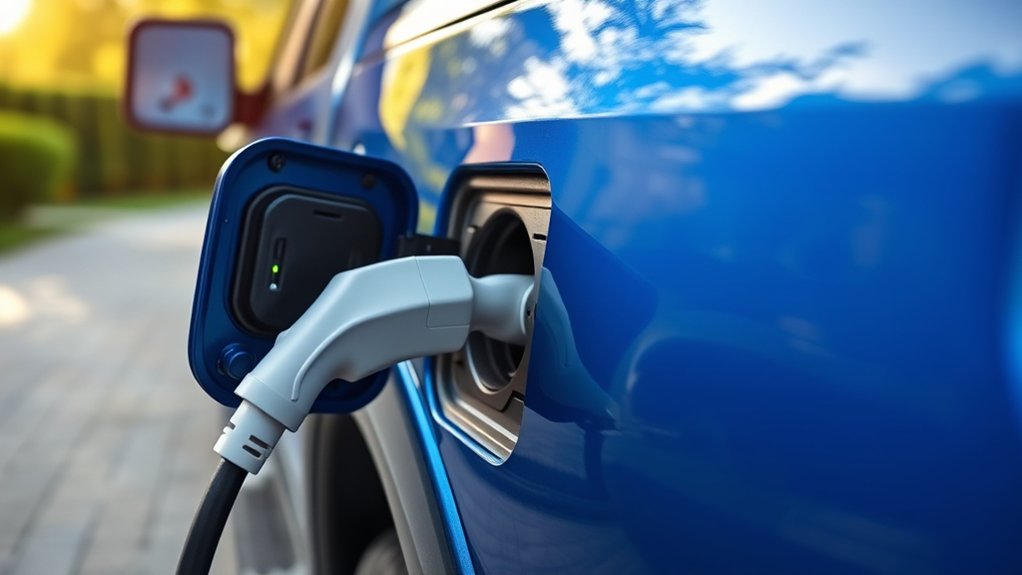
You can use a regular plug on F-150 Lightning to charge your vehicle with a standard 120-volt household outlet, but it comes with significant limitations.
The low amperage means charging will be very slow, potentially taking over a day for a full charge.
While this method might work in emergencies, relying on it daily could affect your vehicle’s battery health and overall efficiency.
Understanding these trade-offs will help you decide when and how to charge safely and effectively.
Key Takeaways
- You can use a regular household plug (120V) to charge the F-150 Lightning, but charging is very slow and can take over 24 hours.
- Regular plugs provide low amperage and are only practical for emergency or occasional use, not daily charging.
- Home wiring must be properly grounded and safe to handle continuous current to avoid risks when using regular outlets.
- For faster, safer charging, a Level 2 (240V) charger with a dedicated 40A circuit is recommended over regular plugs.
- Avoid relying on regular plugs for frequent charging, as prolonged use may strain your home electrical system and reduce battery health.
Can You Charge the F150 Lightning With a Regular Household Outlet?
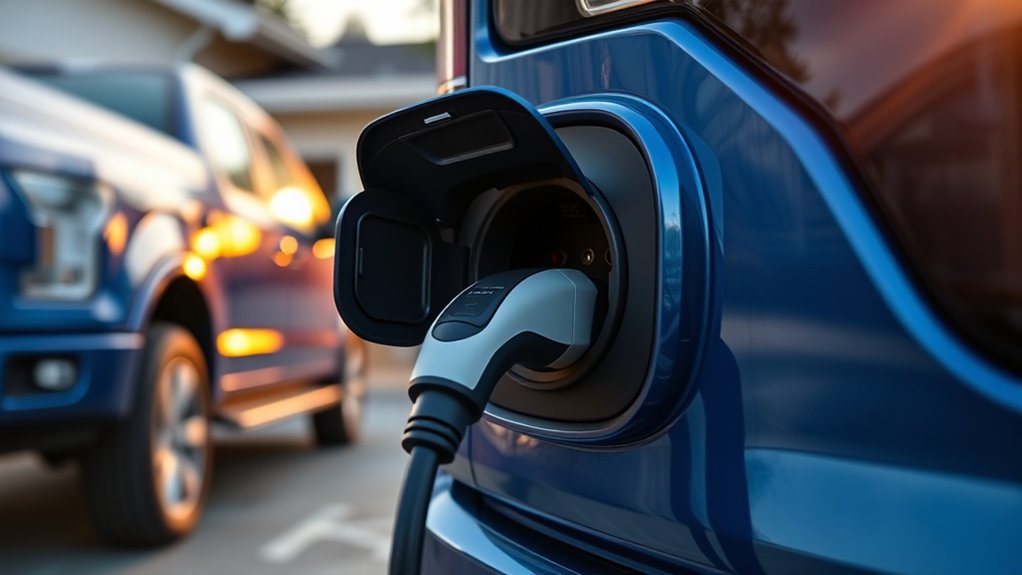
How practical is it to charge your Ford F150 Lightning using a regular household outlet? Technically, you can, but it’s not the most efficient method. A standard 120-volt outlet delivers low amperage, resulting in slow charging. It often takes over 24 hours for a full charge.
While this might seem eco friendly, it’s important to separate eco friendly myths from reality. Slow charging consumes less peak energy but prolongs energy use overall. You should also consider charging etiquette: avoid monopolizing outlets for extended periods, especially in shared or public spaces.
For optimal performance, a dedicated Level 2 charger is recommended. Using a regular household outlet is feasible in emergencies but isn’t practical for daily use or maintaining your F150 Lightning’s battery health over time.
What Type of Plug Does the F150 Lightning Use?
What kind of plug does the F150 Lightning require for charging? Ford designed the F150 Lightning to use a J1772 plug for Level 2 charging, which is the industry standard for most electric vehicles in North America. This plug compatibility ensures you can access numerous public and home charging stations without hassle.
Understanding charging etiquette, you should always verify the plug type before connecting your vehicle to avoid damaging your charger or the vehicle’s port. While the J1772 handles Level 2 charging efficiently, the F150 Lightning also supports DC fast charging via a CCS Combo 1 plug, allowing rapid charging at compatible stations.
Proper plug compatibility is essential to maintain charging efficiency and safety, so always use the recommended plugs and connectors for your F150 Lightning.
Is It Safe to Charge Your F150 Lightning With a Regular Plug?
Is it safe to charge your F150 Lightning using a regular household plug? Yes, you can, but there are important safety considerations. Regular plugs typically supply 120 volts at 15-20 amps, which is substantially lower than dedicated EV chargers.
Charging your F150 Lightning with a regular household plug is possible but requires careful attention to safety.
This means the charging process relies on standard electrical infrastructure not specifically designed for electric vehicle loads. You must ensure your home wiring is up to code and can handle continuous current without overheating.
Using a properly grounded outlet and avoiding extension cords reduces risks. While the truck’s onboard charger manages current draw safely, extended charging sessions on a regular plug may increase wear on your home’s electrical system.
These two word ideas—“electrical capacity”—are critical for safe charging. Avoid subtopic unrelated concerns like charging speed here; focus strictly on safety.
How Fast Will Charging Be Using a Standard Plug?
When you use a standard 120-volt plug to charge your F150 Lightning, the charging speed will be considerably slower compared to dedicated Level 2 chargers. Charging time depends on factors like your outlet’s amperage and the vehicle’s onboard charger capacity.
Understanding these variables helps set realistic expectations for daily charging durations.
Charging Speed Overview
How quickly your F150 Lightning charges using a standard household plug depends largely on the outlet’s amperage and voltage. Regular charging with a typical 120-volt, 15-amp outlet delivers roughly 3 to 5 miles of range per hour, which means a full charge can take over 40 hours.
This slow rate suits overnight or extended parking periods but isn’t ideal for quick turnarounds. Ensuring outlet safety is critical; older or improperly rated outlets may overheat or cause electrical faults during prolonged charging sessions.
Using a dedicated circuit designed for electric vehicle charging improves safety and reliability. While regular plugs enable convenient charging, they inherently limit speed, so understanding these constraints helps you plan your charging schedule effectively without compromising electrical system integrity.
Factors Affecting Charging
What determines the charging speed of your F150 Lightning using a standard plug? Several factors impact how fast your vehicle charges, including the outlet’s amperage, the vehicle’s onboard charger capacity, and ambient temperature.
Following proper charging etiquette, such as avoiding peak hours and unplugging promptly, ensures efficient use and battery health. Dealership tips often emphasize using dedicated circuits to prevent circuit overloads and optimizing charging schedules.
| Factor | Impact on Charging Speed | Dealership Tip |
|---|---|---|
| Outlet Amperage | Higher amps = faster charge | Use 15-20A dedicated circuits |
| Onboard Charger | Limits max charge rate | Confirm charger specs |
| Ambient Temperature | Cold slows charging | Charge in moderate temps |
| Charging Etiquette | Avoids delays, prolongs life | Unplug when full |
When Should You Avoid Charging With a Regular Plug?
Why might you want to skip charging your F150 Lightning with a regular plug? Primarily, regular household outlets provide limited amperage, leading to prolonged charging times that may not meet your needs.
Additionally, if your electrical system isn’t rated for continuous high loads, using a standard plug risks overheating and potential fire hazards. Avoid relying on non vehicle topics or unrelated charging methods that lack compatibility with your truck’s specifications, as they can cause electrical faults or damage.
Also, if you need rapid charging for urgent use, a regular plug won’t suffice. Ultimately, steer clear of regular plugs when your charging demands exceed their capacity or when your home wiring doesn’t support the load safely, ensuring efficient and secure power delivery to your F150 Lightning.
What Are Better Charging Alternatives?
Since regular household outlets often fall short in safely and efficiently charging your F150 Lightning, exploring more suitable charging solutions becomes necessary. Level 2 chargers, delivering 240 volts, reduce charging time significantly compared to standard 120-volt plugs. These two word ideas, “Level 2,” represent the most practical upgrade for home use.
Public fast chargers, like DC fast chargers, offer rapid energy transfer but may impact your battery warranty if used excessively. It’s important to understand that Ford’s battery warranty covers specific charging conditions, so consistently using recommended charging methods preserves battery health and warranty validity.
How to Set Up a Home Charging Station
Setting up a home charging station for your F150 Lightning involves careful planning to ensure safety, efficiency, and compatibility with your vehicle’s charging system. Start by selecting a dedicated 240-volt outlet with at least 40 amps capacity to support faster charging rates. This directly benefits your truck’s off-road usability and towing efficiency by minimizing downtime.
Hire a licensed electrician to install a Level 2 charger, ensuring proper wiring, grounding, and adherence to local electrical codes. Position the charger near your parking area for easy access, and use a charging unit compatible with Ford’s charging protocol to maximize performance and battery lifespan. This setup optimizes charging speed, supporting your F150 Lightning’s demanding power needs without compromising safety or functionality.
How to Get the Most From Your F150 Lightning’s Battery
Maximizing the performance and longevity of your F150 Lightning’s battery requires understanding its charging habits and energy management. Regularly using Level 2 chargers rather than a standard plug optimizes charging efficiency and reduces battery stress.
Avoid letting your battery deplete below 20% to prevent accelerated degradation. Keep temperature controls active, as extreme heat or cold negatively impact battery health.
While it might seem like an unrelated topic, managing your vehicle’s software updates ensures the battery management system runs optimally. Don’t entertain the random idea that rapid charging every time is beneficial; instead, reserve fast charging for emergencies.
Frequently Asked Questions
Can a Regular Plug Handle F150 Lightning’s Power Needs in Emergencies?
You can use a regular outlet for emergency charging your F150 Lightning, but it provides limited power and slower charging speeds.
For optimal performance, use designated high-capacity chargers designed for the vehicle’s power requirements.
Does Using a Regular Plug Affect the Battery Lifespan of the F150 Lightning?
Using a regular outlet can slightly impact your F150 Lightning’s battery lifespan due to slower charging rates and potential heat buildup. Proper charging management minimizes battery impact, so monitor charging conditions to preserve long-term battery health effectively.
Are There Any Warranty Issues When Charging With a Regular Household Outlet?
You won’t face warranty concerns charging your F150 Lightning with a regular household outlet, as Ford approves it. Just ensure charging safety by using proper equipment and following guidelines to avoid potential damage or voiding your warranty.
Can a Regular Plug Be Used for Charging Other Electric Vehicles Like the F150 Lightning?
You can technically use a regular plug for charging other EVs like the F150 Lightning, but respecting charging etiquette and outlet compatibility is vital to avoid slow charging and potential electrical strain. Always check your vehicle’s specs.
What Maintenance Is Needed for Plugs Used Regularly With the F150 Lightning?
You should regularly inspect plugs for damage, clean contacts to prevent corrosion, and ensure secure connections. Follow maintenance routines diligently, and always consider safety by avoiding moisture exposure and using certified equipment to protect your F150 Lightning’s charging system.
Conclusion
Sure, you *can* charge your F-150 Lightning with a regular household outlet—if you enjoy waiting longer than a Monday meeting for a full charge. While it’s perfectly safe in a pinch, relying on a 120-volt plug daily is like using a garden hose to fill a swimming pool: painfully slow.
For real efficiency, invest in a proper 240-volt Level 2 charger. Your battery—and your patience—will thank you. When considering how to power up your truck, remember that using a regular plug on F-150 Lightning won’t give you the fastest or most convenient charging experience.