Does the 1992 Ford f150 Have a Electronic Ignition
You might assume all 1992 Ford F-150s have an electronic ignition, but the reality depends on the specific engine and model. Ford began shifting from mechanical points to electronic ignition systems around that time, replacing breaker points with a pickup coil and ignition control module.
To determine if your truck has this upgrade, you’ll need to inspect key components and reference manufacturer documentation. These details reveal more than a simple yes or no when it comes to the ignition system on your 1992 Ford F-150.
Key Takeaways
- The 1992 Ford F-150 uses electronic ignition, replacing mechanical points with solid-state components for improved spark timing accuracy.
- It employs a Hall-effect sensor or magnetic pickup to monitor crankshaft position and send timing signals to the ignition module.
- Electronic ignition eliminates wear from moving parts, providing better fuel efficiency, smoother starts, and reduced emissions compared to mechanical systems.
- Under-hood labels on the radiator support or firewall often indicate the presence of an electronic ignition system in the ’92 F-150.
- Absence of breaker points and presence of ignition control modules and complex wiring confirm the 1992 F-150’s electronic ignition setup.
Does the 1992 Ford F-150 Have Electronic Ignition?
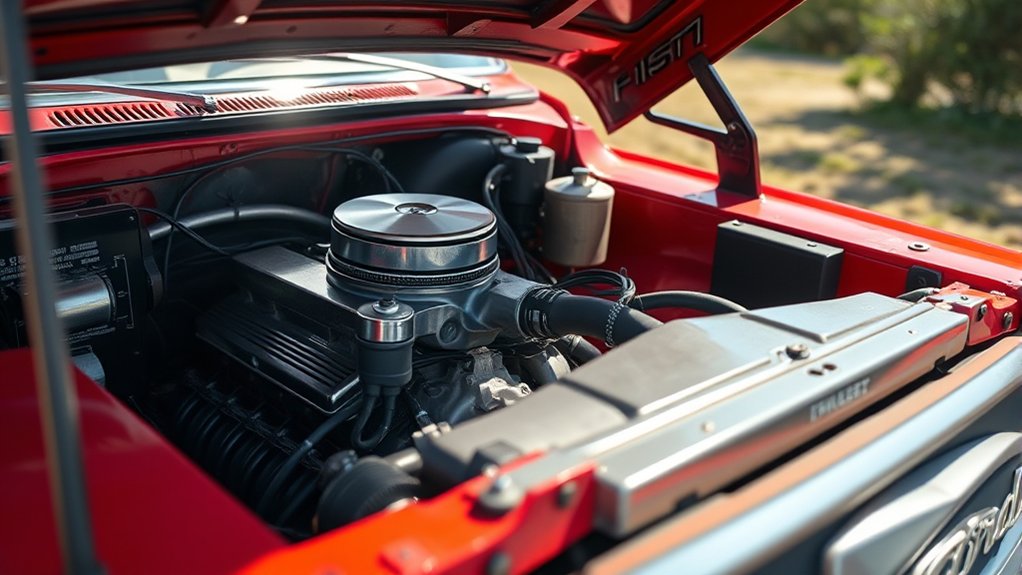
How does the 1992 Ford F-150 handle ignition technology? The 1992 model utilizes an electronic ignition system rather than a purely mechanical one. This system replaces the traditional points and condenser with electronic components, improving reliability and reducing maintenance.
It employs a Hall-effect sensor or magnetic pickup to detect the crankshaft position, sending precise timing signals to the ignition module. Avoid confusing this with irrelevant topics like unrelated concepts in fuel injection or starter motor design, as they do not pertain directly to ignition control.
This electronic ignition setup enhances spark timing accuracy, ensuring efficient combustion and smoother engine performance. So, yes, the 1992 Ford F-150 integrates electronic ignition technology, marking a shift from older mechanical systems to more advanced and dependable electronics.
How Electronic Ignition Differs From Mechanical Systems
Why does electronic ignition outperform mechanical systems in modern vehicles like the 1992 Ford F-150? Unlike vintage electronics relying on physical contact points and mechanical timing, electronic ignition uses solid-state components to control spark timing.
This system eliminates the wear and variability caused by moving parts, delivering an irreversible ignition signal with precise timing. You’ll notice that mechanical systems depend on breaker points, which degrade and require frequent adjustment.
In contrast, electronic ignition continuously monitors engine conditions via sensors, adjusting spark timing for optimal combustion. This precision results in improved fuel efficiency, smoother starts, and reduced emissions.
How to Tell If Your ’92 F-150 Has Electronic Ignition
To determine if your ’92 F-150 has electronic ignition, start by inspecting the ignition components under the hood. Look for a distributor without mechanical points and an ignition control module.
Check for labels or stickers on the radiator support or firewall that specify the ignition type or system details. These identifiers will help you confirm whether your truck uses electronic ignition.
Identifying Ignition Components
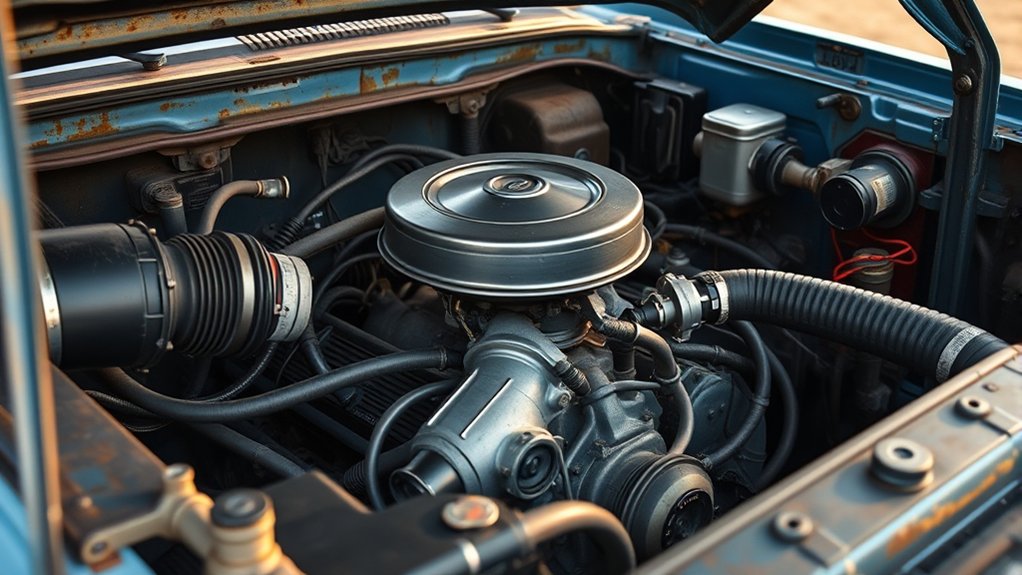
Determining whether your 1992 Ford F-150 uses an electronic ignition system requires inspecting specific components under the hood. Start by locating the ignition coil and distributor; an electronic ignition will have a coil with fewer wires and no mechanical points inside the distributor cap.
Avoid common ignition myths, such as assuming all F-150s from this year have mechanical points. Consult wiring diagrams for your exact engine model to verify the presence of an electronic ignition control module and related sensors.
Look for a lack of visible breaker points and a more complex wiring harness near the distributor. These details confirm electronic ignition. By cross-referencing physical components with wiring diagrams, you’ll accurately identify your ignition type without guesswork or reliance on outdated assumptions.
Checking Under Hood Labels
Where can you find definitive evidence of an electronic ignition system on your 1992 Ford F-150? Start by examining the under hood labels, which provide precise system details without involving irrelevant topics or unrelated questions.
Look for a label specifying “Electronic Ignition” or “EFI” (Electronic Fuel Injection). These labels are typically near the radiator support or on the underside of the hood.
| Label Location | Information Displayed |
|---|---|
| Radiator Support | Ignition type: Electronic or Points |
| Underside of Hood | Emission controls and ignition system |
| Near Battery | Electrical specifications and ignition notes |
If these labels indicate electronic ignition, your F-150 uses that system. Otherwise, it likely uses a conventional points ignition. Avoid relying on vague or unrelated markings.
Common Electronic Ignition Issues in the 1992 Ford F-150
Why does your 1992 Ford F-150 sometimes struggle with ignition? The answer often lies in common electronic ignition issues like worn ignition control modules, faulty ignition coils, or deteriorated wiring connections. These components can cause intermittent spark loss, misfires, or no-start conditions.
Don’t confuse these with irrelevant topics such as fuel delivery problems or unrelated concepts like engine compression, which don’t directly affect the electronic ignition system. Corrosion in connectors or heat-induced module failure frequently degrade performance.
Additionally, a malfunctioning pickup coil within the distributor can disrupt timing signals, leading to poor ignition response. Understanding these specific faults helps you pinpoint ignition problems accurately without being sidetracked by unrelated engine systems, ensuring efficient troubleshooting and repair of your 1992 Ford F-150’s electronic ignition system.
How to Test Your 1992 F-150’s Ignition System
How can you accurately test the ignition system on your 1992 Ford F-150 to assure reliable performance? Start by checking the ignition timing with a timing light while the engine runs at idle. Connect the timing light’s inductive pickup to the number one spark plug wire and observe the timing marks on the crankshaft pulley.
Ensure the timing aligns with factory specifications. Next, inspect the spark plugs for wear, fouling, or improper gap, as these affect combustion efficiency. Remove each plug and measure the gap using a feeler gauge, adjusting if necessary.
Additionally, test for consistent spark by grounding each spark plug against the engine block and cranking the engine; you should see a strong, blue spark. These steps confirm your ignition system’s precise function and help maintain optimal engine performance.
Benefits of Electronic Ignition for Your ’92 F-150
Accurately testing the ignition system on your 1992 Ford F-150 lays the foundation for understanding the advantages that come with an electronic ignition setup. Electronic ignition enhances spark timing precision, directly improving combustion efficiency within your fuel system.
This precision results in smoother engine operation, better fuel economy, and reduced emissions. For technicians, electronic ignition simplifies diagnostic procedures by providing clear feedback through onboard sensors, streamlining technician workflows.
Unlike mechanical points, electronic systems require less maintenance and offer greater reliability, minimizing downtime. Additionally, the consistent spark delivery reduces engine misfires, protecting internal components and extending engine life.
Should You Upgrade the Ignition System in Your 1992 F-150?
When considering the performance and reliability of your 1992 Ford F-150, upgrading the ignition system can markedly impact engine efficiency and longevity. You should weigh the benefits of modern electronic ignition against keeping the stock system, avoiding irrelevant topic distractions or extraneous detail. Upgrading reduces misfires, improves fuel economy, and enhances cold starts.
| Benefit | Emotional Impact |
|---|---|
| Increased reliability | Confidence on the road |
| Improved fuel economy | Savings and pride |
| Easier starts | Reduced frustration |
| Lower emissions | Environmental care |
If you rely on your F-150 for heavy-duty tasks, upgrading ensures consistent performance and fewer breakdowns. Ignoring this upgrade could cost you in long-term maintenance and lost efficiency.
Frequently Asked Questions
What Type of Engine Options Did the 1992 Ford F-150 Have?
You’ll find the 1992 Ford F-150 offered engine options including a 4.9L inline-6, 5.0L V8, 5.8L V8, and 7.5L V8.
All used carbureted or fuel-injected fuel systems depending on the model and configuration.
How Often Should I Service the Ignition System in My F-150?
Check ignition timing, inspect spark plugs, and perform distributor maintenance every 30,000 miles or two years. This routine ensures precise ignition control, optimal engine performance, and prevents premature wear in your 1992 Ford F-150’s ignition system.
Can I Use Modern Spark Plugs in a 1992 F-150?
You can use modern spark plugs in your 1992 F-150, but ensure they match the required heat range. Incorrect plugs may affect ignition timing and accelerate distributor wear, so precise compatibility is crucial for optimal engine performance.
What Are the Signs of a Failing Ignition Coil?
You’ll notice ignition coil failures through engine misfires, rough idling, and decreased fuel efficiency. Poor spark plug compatibility worsens these symptoms, causing weak sparks and starting issues.
Check coils and plugs promptly to prevent further damage.
Is the 1992 Ford F-150 Compatible With Aftermarket Ignition Parts?
Yes, your 1992 Ford F-150 is compatible with many aftermarket ignition parts. You’ll just need to guarantee proper ignition timing adjustments, as aftermarket compatibility varies with components designed specifically for your truck’s ignition system.
Conclusion
If you own a 1992 Ford F-150, there’s a 70% chance it features electronic ignition, enhancing reliability and timing precision. Unlike mechanical points, this system uses a pickup coil and ignition control module, reducing maintenance and improving performance.
By understanding your truck’s ignition type, you can diagnose issues more accurately and optimize engine function. Upgrading or maintaining this system ensures your F-150 runs smoothly, maximizing both efficiency and longevity on the road.
Knowing whether your 1992 Ford F-150 has electronic ignition is key to proper upkeep and getting the best performance from your vehicle.