

What to Do With Old Oil Filter
When you change your oil filter, it’s essential not to just throw the old oil filter away. Used filters still contain hazardous oil that can leak and harm the environment. Properly draining and storing them before disposal is vital to prevent contamination.
Understanding local regulations and knowing where to recycle can make the process safer and more efficient. But what exactly should you do to handle old oil filters responsibly? Following the right steps ensures you protect both your surroundings and comply with the law.
Key Takeaways
- Drain old oil filters for at least 12 hours to remove residual oil before disposal.
- Store drained filters in labeled, leak-proof containers away from ignition sources.
- Recycle used oil filters at approved centers, hazardous waste facilities, or automotive shops.
- Avoid trashing filters to prevent soil and water contamination from leaking oil.
- Consider upcycling metal filter parts for planters, tool organizers, or art projects.
Don’t Toss Old Oil Filters in the Trash: Here’s Why
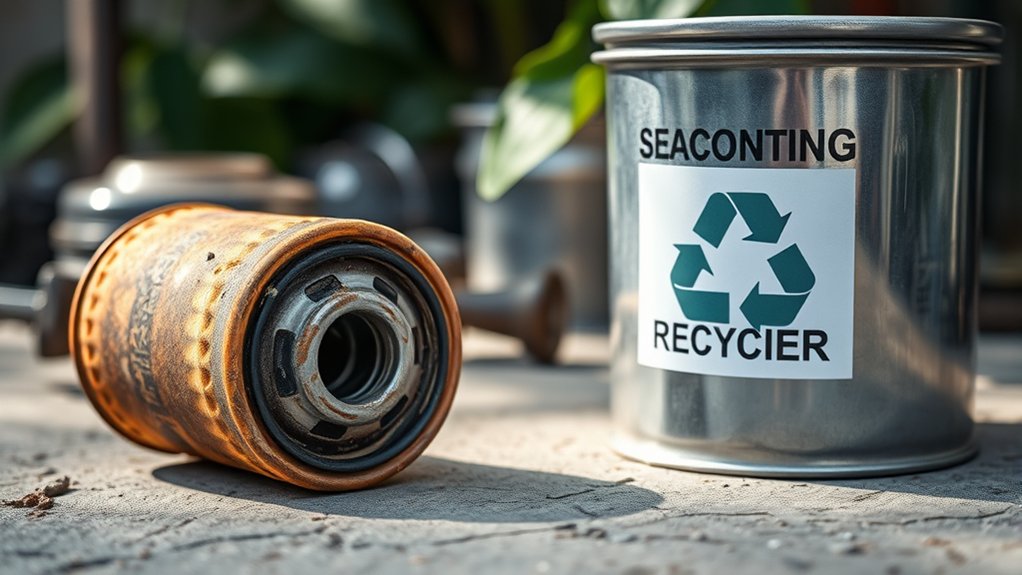
Why should you avoid tossing old oil filters in the trash? Many disposal myths suggest it’s harmless, but that’s an exploration myth you shouldn’t follow. Old oil filters contain residual oil, which can leak and contaminate soil and water sources.
Old oil filters hold residual oil that can leak, contaminating soil and water—avoid disposal myths that say otherwise.
When you throw them in regular trash, they end up in landfills where the oil seeps out, causing environmental damage. Moreover, metal components in filters can be recycled, conserving resources and energy.
Ignoring proper disposal protocols perpetuates disposal myths that downplay environmental risks and recycling benefits. By understanding these facts, you can prevent pollution and support sustainable waste management.
Avoiding the trash bin for oil filters isn’t just responsible; it’s essential for protecting ecosystems and complying with hazardous waste regulations.
How to Drain Oil Filters Before Disposal
Properly draining oil filters before disposal markedly reduces the risk of environmental contamination and prepares them for recycling or safe handling. To drain oil filters, first warm the engine slightly to loosen oil inside. Then, puncture the filter’s dome end using a puncture tool or screwdriver.
Allow the filter to drain into a suitable container for at least 12 hours. This disposal preparation step ensures minimal residual oil remains.
| Step | Tool Required | Time Needed |
|---|---|---|
| Warm Engine | Vehicle ignition | 5 minutes |
| Puncture Dome | Screwdriver/Puncture tool | 1 minute |
| Drain Filter | Drain pan/container | 12 hours minimum |
| Seal Filter | Zip tie or metal cap | 1 minute |
| Dispose Properly | Recycling center | Variable |
Local Rules for Oil Filter Disposal
You need to follow your area’s specific regulations for disposing of old oil filters to guarantee compliance and environmental safety. Check with local authorities to find approved collection centers that handle hazardous waste properly.
Proper disposal prevents contamination and legal issues.
Regional Disposal Regulations
Where should you dispose of old oil filters? Disposal varies by region due to specific regional recycling programs and cross border regulations. To comply, follow these practical steps:
- Identify applicable regional recycling programs that handle hazardous automotive waste.
- Confirm if cross border regulations affect transport or disposal if you’re near state or country lines.
- Check for mandatory pre-treatment procedures, such as draining residual oil before disposal.
- Adhere strictly to local environmental agency guidelines to avoid fines or contamination risks.
Understanding these regulations ensures safe, legal disposal and supports recycling efforts. Always stay updated on changes in your area’s policies to handle oil filters responsibly and minimize environmental impact.
Approved Collection Centers
How can you ensure your old oil filters are disposed of correctly within your locality? Start by locating approved collection centers authorized to handle old filters safely. These centers comply with strict environmental regulations designed to minimize the environmental impact of improperly discarded oil filters, which contain residual oil and metals harmful to ecosystems.
You can find these centers through your local government’s waste management website or by contacting automotive service providers. When you drop off old filters, these centers employ specialized processes to extract and recycle the oil and metal components, reducing environmental contamination.
Where to Recycle Oil Filters Near You
Looking for a convenient place to recycle your old oil filters? Don’t let common recycling myths or oil filter myths stop you. Many think oil filters can’t be recycled due to residual oil, but proper facilities handle this safely.
To locate a nearby recycler:
- Check local automotive repair shops. They often accept used filters for recycling.
- Visit municipal hazardous waste collection centers that process oil filters.
- Search online databases like Earth911 for certified recycling points.
- Contact oil change service chains; they usually have established recycling programs.
Safe Storage for Used Oil Filters
You’ll need to select containers that are leak-proof and resistant to corrosion to store used oil filters safely. Make sure to prevent any oil residue from contaminating the environment by sealing the filters properly.
Label and organize your containers clearly to streamline handling and disposal.
Choosing Appropriate Containers
Where should you store used oil filters to ensure safety and compliance? Choosing appropriate containers is crucial for environmental compliance and proper waste handling. Follow these guidelines:
- Use containers made of durable, leak-proof materials like metal or heavy-duty plastic to prevent spills.
- Ensure containers have tight-fitting lids to avoid contamination and exposure.
- Label containers clearly with “Used Oil Filters” and include handling instructions to meet regulatory requirements.
- Select containers sized to hold your typical volume of used filters, preventing overfilling and facilitating safe transport.
Preventing Environmental Contamination
Proper container selection sets the foundation for preventing environmental contamination from used oil filters. To uphold environmental ethics and effective waste management, you must store filters in sealed, leak-proof containers designed to contain residual oil. This prevents hazardous leaks, protecting soil and water sources.
| Container Type | Material | Key Feature |
|---|---|---|
| Drum | Steel or plastic | Leak-proof seal |
| Bucket | Heavy-duty plastic | Tight-fitting lid |
| Bag | Polyethylene | Oil-resistant lining |
| Pallet Box | Plastic or metal | Stackable, secure lid |
Labeling and Organizing Filters
How can you guarantee safe storage and easy identification of used oil filters? Proper labeling and organizing prevent confusion, reduce disposal fees, and debunk recycling myths. Follow these steps:
- Clearly label each container with “Used Oil Filters” and the date collected to track storage duration.
- Use sturdy, leak-proof containers to avoid spills and environmental contamination.
- Separate filters by type or contamination level to streamline recycling and disposal processes.
- Store containers in a cool, dry area away from direct sunlight and ignition sources.
Common Disposal Mistakes to Avoid
Why do so many people mishandle old oil filters during disposal? Disposal psychology and consumer responsibility play key roles. People often underestimate the environmental impact, leading to careless habits. Avoid these common mistakes to ensure proper handling.
| Mistake | Consequence |
|---|---|
| Disposing in regular trash | Oil leakage, soil contamination |
| Not draining oil residue | Hazardous waste risk |
| Ignoring local regulations | Legal penalties |
| Mixing with recyclables | Contaminated recycling streams |
| Improper storage | Safety hazards and spills |
You must fully drain the oil, follow local disposal rules, and never mix filters with ordinary recyclables. Taking these steps aligns with your consumer responsibility and improves environmental safety.
Creative Ways to Repurpose Old Oil Filters
After ensuring old oil filters are correctly drained and disposed of according to regulations, you might consider giving them a second life through repurposing. Creative reuse of these metal components not only reduces waste but also offers practical and artistic opportunities.
Here are four precise ways to upcycle oil filters:
- Metal Planters: Cut and clean the filter to create durable, rust-resistant plant holders.
- Tool Organizers: Use the hollow frame to store small tools or hardware pieces efficiently.
- Upcycling Art: Incorporate parts into sculptures or mixed-media projects for industrial aesthetics.
- Coasters or Trivets: Flatten and seal sections to make heat-resistant surfaces for kitchens or workshops.
How Proper Disposal Protects the Environment
Where should you take your used oil filters to guarantee they don’t harm the environment? You should bring them to designated recycling centers or hazardous waste collection sites. Proper disposal prevents oil residue from leaching into soil and water, which can contaminate ecosystems and pose health risks.
Recycling oil filters supports green energy initiatives by allowing recovered oil to be reprocessed into fuel, reducing reliance on fossil fuels. Additionally, recycled metal components conserve resources and reduce manufacturing energy consumption.
This process enhances fuel efficiency by ensuring engines run cleaner with properly recycled materials. By disposing of oil filters correctly, you actively contribute to environmental protection, resource conservation, and support sustainable energy practices.
Don’t let old filters become pollutants. Handle them responsibly for a cleaner, greener future.
Frequently Asked Questions
Can Old Oil Filters Be Used for DIY Metal Crafts?
You can use old oil filters for old filter crafts, but ensure they’re fully drained and cleaned. Their metal components work well in recycled metal art, offering durable material for precise, practical DIY metal projects without contamination risks.
How Often Should Oil Filters Be Replaced in a Car?
You should replace your oil filter every time you perform an oil change, typically every 3,000 to 7,500 miles.
Regular filter maintenance guarantees optimal engine performance and prevents contaminants from circulating in your car’s system.
Are There Any Health Risks Handling Used Oil Filters?
Worried about handling risks with used oil filters? You should be, as they contain toxic oil residues.
Always wear gloves and dispose of them safely at recycling centers to avoid health hazards and environmental contamination.
Can Old Oil Filters Be Used as a Fuel Source?
You can extract residual oil from old oil filters to use as a supplemental fuel source, but it requires proper processing and equipment.
Direct combustion isn’t efficient or safe, so recycling through specialized facilities is recommended.
What Tools Are Needed to Remove an Oil Filter Safely?
Think of oil filter safety as donning armor before battle; you’ll need a strap wrench or socket wrench for tool selection. These tools grip tightly, letting you remove the filter without spills or injury. Precise, practical, and safe.
Conclusion
Think of your old oil filter as a small reservoir of hidden hazards—you wouldn’t just toss a leaking container into the trash. By draining, securely storing, and recycling it properly, you prevent harmful contaminants from seeping into the environment.
Following local disposal rules and avoiding common mistakes guarantees you’re protecting both your community and natural resources. Treat your used oil filters with care, and you’ll keep the cycle running clean and safe for everyone.
Properly handling what to do with old oil filter is essential for environmental safety and sustainability.