Where Is the Volkswagen Tiguan Made
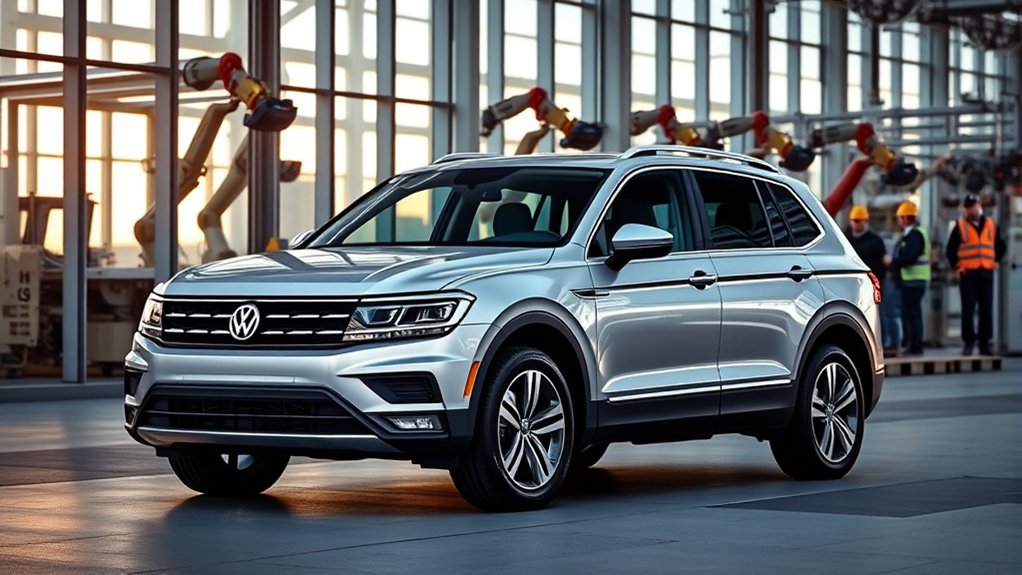
You might expect the Volkswagen Tiguan to come from a single factory, yet the Volkswagen Tiguan is actually built in multiple countries worldwide. This global production strategy balances local demand, tariffs, and logistics while aiming to keep quality consistent.
Understanding where the Tiguan is made reveals how Volkswagen adapts to different markets and maintains standards across diverse regions. The details of this manufacturing network show why location matters for both buyers and the brand.
Key Takeaways
- The Volkswagen Tiguan is produced in Germany, Mexico, China, and Slovakia to serve global markets.
- U.S. production focuses on American preferences and streamlines logistics to reduce costs and delays.
- Mexico’s plant primarily serves the Americas, while China’s factory produces extended wheelbase versions for Asian markets.
- Regional plants adapt Tiguan features and comply with local regulations to meet market-specific demands.
- Volkswagen’s global manufacturing network ensures consistent quality while optimizing delivery times and supply chain efficiency.
Where Is the Volkswagen Tiguan Built Worldwide?
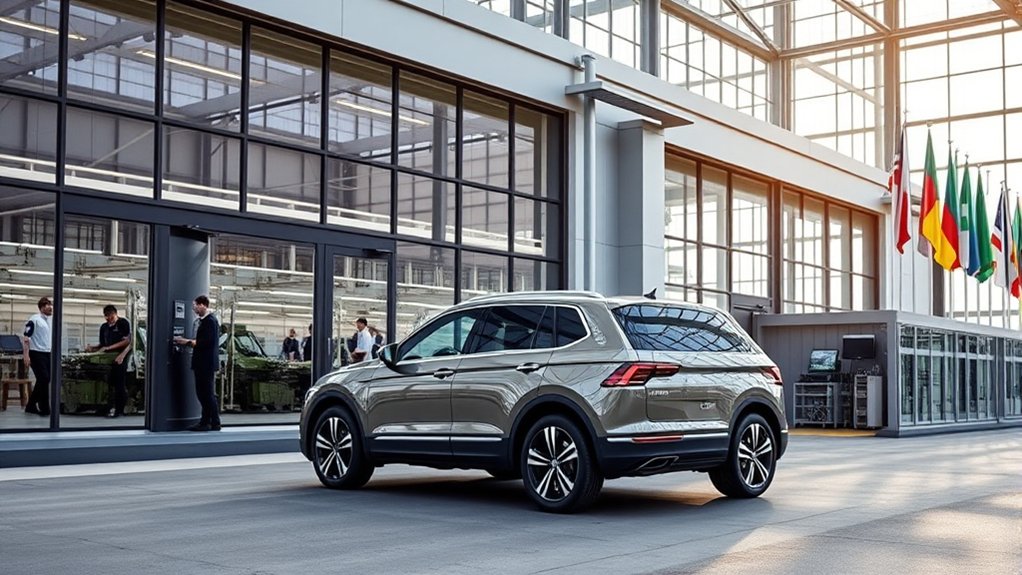
Where is the Volkswagen Tiguan built worldwide? You’ll find Tiguan production spread across multiple countries, including Germany, Mexico, China, and Slovakia. This global manufacturing network allows Volkswagen to optimize global logistics, reducing shipping costs and delivery times.
Each plant adapts to local market demands, benefiting from regional supply chains and labor markets. You’ll also notice that Volkswagen works closely with labor unions in many locations to maintain fair working conditions and address workforce concerns.
This cooperation helps ensure stable production schedules and high employee satisfaction. When you consider the Tiguan’s diverse production sites, you see how Volkswagen balances efficiency with regional strengths, using global logistics expertise and strong labor relations to maintain steady output across continents.
How Volkswagen Ensures Consistent Tiguan Quality Globally
Volkswagen employs rigorous quality control measures to ensure every Tiguan meets the same high standards, no matter where it’s built. You’ll find that standardized production protocols are implemented across all manufacturing plants, supported by frequent audits and real-time data monitoring.
Volkswagen’s commitment to supplier ethics guarantees that all parts meet strict environmental and social criteria, maintaining consistency in component quality. They also use advanced worldwide logistics systems to coordinate timely delivery and reduce variability in materials, ensuring smooth assembly processes.
How Supply Chains Impact Tiguan’s Global Assembly
Maintaining consistent Tiguan quality worldwide depends heavily on efficient supply chains that connect parts manufacturers, assembly plants, and logistics providers. When you look at Volkswagen’s global operations, you’ll see how supply chain disruptions in one region can ripple across the entire production network.
The global economy influences the availability and cost of raw materials and components, affecting assembly schedules. You’ll also find that labor unions play a critical role, especially in regions with strong union presence, by negotiating work conditions that can impact production speed and flexibility.
As a result, Volkswagen must balance supplier reliability, labor relations, and logistics complexity to keep Tiguan assembly lines running smoothly worldwide. Understanding these factors helps you appreciate the intricate coordination behind each Tiguan’s assembly.
What Sets the German Tiguan Factory Apart in Quality and Innovation?
You’ll find the German Tiguan factory stands out due to its advanced manufacturing technologies that enhance precision and efficiency. It employs strict quality control measures to guarantee every vehicle meets high standards.
These factors combine to make the factory a leader in both quality and innovation.
Advanced Manufacturing Technologies
How does the German Tiguan factory consistently deliver exceptional quality and innovation? It leverages advanced manufacturing technologies, including robotics integration and global sourcing of materials. These technologies optimize production efficiency and ensure component precision.
Here’s a quick look at key technologies used:
| Technology | Purpose | Benefit |
|---|---|---|
| Robotics Integration | Automated assembly | Faster, precise manufacturing |
| Global Sourcing | High-quality parts acquisition | Consistent material standards |
| CAD/CAM Systems | Design and manufacturing sync | Reduced errors, improved fit |
| IoT Sensors | Real-time monitoring | Predictive maintenance |
| Laser Welding | Strong, precise joins | Enhanced structural integrity |
Strict Quality Control
Why does the German Tiguan factory consistently set the standard for quality and innovation? It’s because of its strict quality control measures that ensure every vehicle meets rigorous standards.
You’ll find that each Tiguan undergoes thorough inspections, from engine maintenance checks to final assembly reviews. This factory employs advanced diagnostic tools to detect even minor issues early, reducing defects and enhancing reliability.
Unlike other plants, it integrates quality checks seamlessly into production, rather than as an afterthought. Furthermore, the factory rigorously tests aftermarket accessories to guarantee compatibility and performance, so you won’t face unexpected problems later.
When you buy a Tiguan made here, you’re assured of meticulous craftsmanship and enduring quality, reflecting the factory’s commitment to excellence and continuous innovation.
How Does U.S. Production Shape the Tiguan Experience?
What impact does U.S. production have on the Volkswagen Tiguan you drive? Building Tiguans in the U.S. streamlines offshore logistics, reducing delays and costs associated with overseas shipping. This local manufacturing helps Volkswagen respond quicker to demand changes and tariff timing, minimizing price fluctuations caused by international trade policies.
You benefit from shorter supply chains that enhance parts availability and assembly efficiency, which supports consistent quality. Additionally, U.S. production aligns Tiguan features and specifications more closely with American market preferences, ensuring the vehicle suits your driving needs and expectations.
In essence, producing the Tiguan domestically not only improves reliability and affordability but also tailors the driving experience to fit your region’s requirements more precisely, enhancing overall satisfaction.
Volkswagen Tiguan Manufacturing in Mexico and China: Key Differences
Where do the Volkswagen Tiguans made in Mexico and China differ most markedly? Primarily, the distinction lies in their production focus and market adaptation.
Mexico manufacturing centers on supplying the North and South American markets, emphasizing compliance with regional safety and emission standards. China production, in contrast, tailors the Tiguan to local preferences, often including extended wheelbase versions and features favored by Chinese consumers.
Additionally, Mexico manufacturing benefits from proximity to key suppliers and established logistics networks serving the Americas, whereas China production integrates with local supply chains optimized for Asian markets.
Both facilities maintain Volkswagen’s global quality standards, but their operational strategies reflect regional demands. Understanding these manufacturing differences helps you appreciate how the Tiguan adapts to diverse market requirements while maintaining consistent quality.
Why Regional Production Matters for Tiguan Buyers
You’ll notice that where the Tiguan is made affects how quickly you can get the vehicle and its final price. Regional production also means the car meets local regulations, which can impact features and compliance.
Understanding these factors helps you make a more informed choice when buying a Tiguan.
Impact on Vehicle Availability
How does regional production affect the availability of the Volkswagen Tiguan in your area? When the Tiguan is manufactured closer to your region, dealers typically have quicker access to various models and configurations. This means you’re more likely to find a broader range of color options and trim levels without long wait times.
Additionally, regional production can support faster delivery of replacement parts, which helps maintain your vehicle, including components related to tire wear, ensuring optimal performance and safety. On the other hand, if the Tiguan is produced far from your location, supply chain delays might limit local inventory, reducing your immediate choices.
Understanding this impact allows you to make informed decisions when shopping for a Tiguan, balancing availability with your specific preferences and needs.
Influence on Pricing Structures
Why does the location of Volkswagen Tiguan production matter for pricing? When Tiguan models are made closer to your region, production and shipping costs decrease, directly influencing the vehicle’s price.
Regional manufacturing helps Volkswagen adjust global pricing more effectively by responding to local market supply and demand. If supply meets demand efficiently, prices stay competitive.
Conversely, if Tiguan production is distant, added logistics expenses and tariffs can increase costs, which you’ll likely see reflected in the final price.
Additionally, regional production allows Volkswagen to better manage inventory levels, reducing the risk of shortages or surpluses that might disrupt pricing stability. Understanding where your Tiguan is made gives you insight into how these factors shape the price you pay.
Importance of Local Regulations
Where do local regulations come into play when it comes to the Volkswagen Tiguan? Regional regulations and local labor laws significantly impact where the Tiguan is produced. When Volkswagen manufactures the Tiguan in a specific region, it must adhere to the area’s environmental standards, safety requirements, and worker protections.
For you as a buyer, this means the vehicle complies with local quality and safety norms. Additionally, local labor laws influence production costs and timelines, which can affect pricing and availability.
Understanding that the Tiguan is made in locations aligned with these regulations helps you appreciate the balance between cost-efficiency and compliance. Ultimately, regional production ensures the Tiguan meets local expectations, providing you with a vehicle suited for your market’s specific legal and regulatory framework.
What the Future Holds for Volkswagen Tiguan Production
What changes can you expect in Volkswagen Tiguan production in the coming years? Volkswagen is focusing on adapting to evolving market demands and optimizing manufacturing processes.
Volkswagen aims to evolve Tiguan production by adapting to market needs and streamlining manufacturing.
Key factors shaping future production include:
- Enhancing regional logistics to reduce transit times and costs.
- Adjusting plant locations to mitigate tariff implications in global trade.
- Integrating electric and hybrid models to meet environmental standards.
- Increasing automation and smart manufacturing to improve efficiency.
Frequently Asked Questions
What Engines Are Available in the Volkswagen Tiguan?
You’ll find engine options like a 2.0L turbocharged four-cylinder, paired with either an eight-speed automatic or a seven-speed dual-clutch transmission. These choices balance performance and efficiency, fitting various driving preferences effectively.
How Fuel-Efficient Is the Volkswagen Tiguan?
You’ll find the Volkswagen Tiguan offers competitive fuel economy for its class, helping you save at the pump.
Plus, its reasonable maintenance costs make it an efficient choice for everyday driving without breaking your budget.
What Safety Features Does the Tiguan Include?
You’ll find advanced safety features like adaptive cruise, blind-spot monitoring, and lane assist in the Tiguan. These systems offer collision prevention and driver support, ensuring a secure drive with enhanced awareness and proactive protection throughout your journey.
How Does the Tiguan Compare to Other SUVS?
You’ll find the Tiguan competes well with other SUVs, offering strong safety and tech. Use tips for history and check sources for reliability to make an informed choice based on performance, comfort, and value.
What Are the Common Maintenance Costs for a Tiguan?
Wondering about maintenance costs? You’ll typically spend on oil changes, brake pads, and tire rotations.
Keep these ownership tips in mind to avoid surprises: regular check-ups and timely repairs will help you manage expenses effectively.
Conclusion
You might see the Volkswagen Tiguan built in Germany, the U.S., Mexico, or China—each location balancing global standards with local needs. While German factories push innovation and precision, American and Mexican plants focus on regional demand and logistics. China adapts designs specifically for its market.
This blend of uniform quality and tailored production shows how Volkswagen masterfully combines global consistency with local relevance. This approach ensures you get a Tiguan that fits both worldwide standards and your unique preferences.
Understanding where the Volkswagen Tiguan is made highlights the brand’s commitment to quality and customer satisfaction across different regions.