How to Repair Tonneau Cover
If you notice a tear near the seam of your tonneau cover, addressing it quickly can save you a costly replacement later.
Repairing a tonneau cover requires the right tools and a methodical approach to restore its integrity and weather resistance.
Understanding common damage types and how to fix them ensures your cover stays secure and functional.
Let’s explore the essential steps to get your tonneau cover back in top shape.
Key Takeaways
- Inspect the cover for tears, holes, frayed seams, and damaged fasteners before starting repairs.
- Clean and dry damaged areas thoroughly to prepare for effective patching or sealing.
- Use a vinyl patch kit and strong adhesive to repair holes and tears, pressing firmly to remove air bubbles.
- Replace broken snaps or fasteners with matching parts to ensure secure attachment and functionality.
- Regularly tighten clamps, adjust tension cables, and maintain patches to prevent sagging and prolong cover life.
Spot Common Tonneau Cover Damage
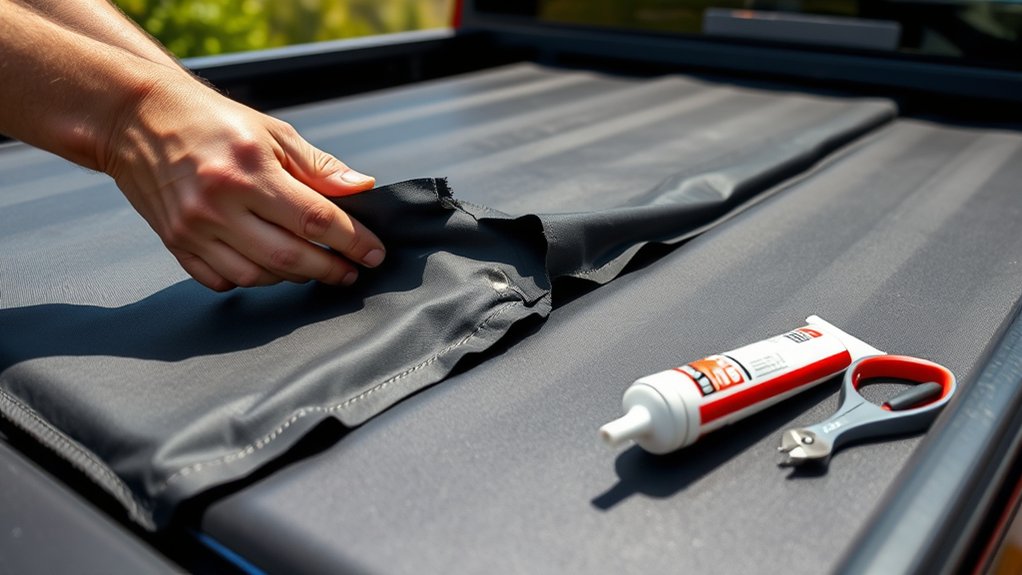
How can you quickly identify the common damages on your tonneau cover? Begin by inspecting the surface for tears, punctures, or abrasions. These are the primary issues requiring spot repair.
Check the seams and edges for fraying or separation, as compromised seams reduce cover protection. Look for fading or cracking caused by UV exposure, which weakens material integrity.
Also, examine the fastening mechanisms for wear or malfunction, since secure attachment is crucial for maintaining cover protection. Addressing these damages early prevents further deterioration and costly replacements.
Get Your Tools Ready for Repairs
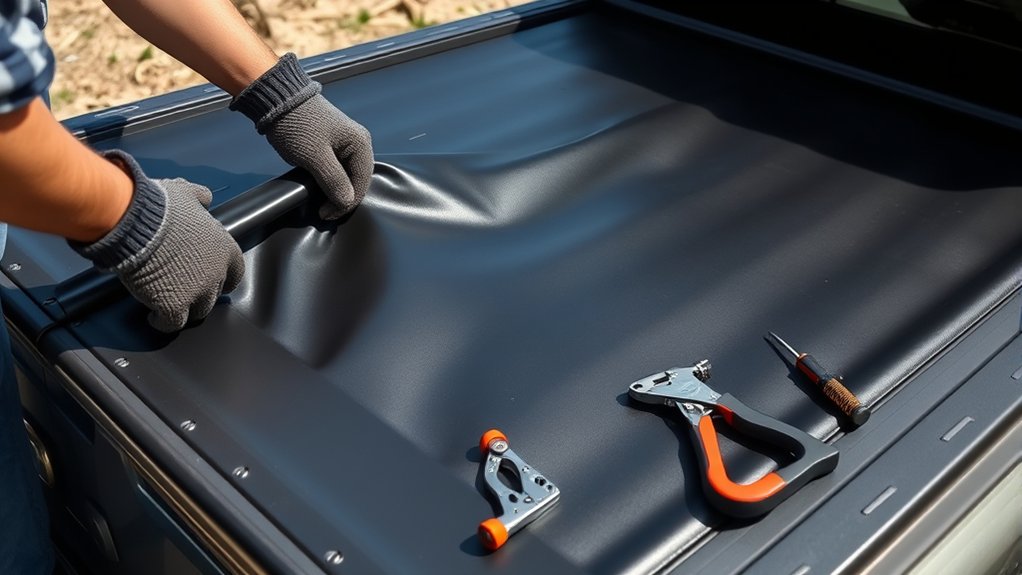
A well-prepared toolkit guarantees efficient and effective repairs on your tonneau cover. Start by getting organized: gather your toolbox essentials before you begin. Include a heavy-duty utility knife for precise cutting, a strong adhesive or vinyl patch kit for sealing, and a clean cloth for surface preparation.
Add clamps or weights to hold patches in place while drying, and a screwdriver set if your cover has detachable parts. Don’t forget a measuring tape to ensure accurate patch sizing and a marker for outlining repair areas. Keep all tools within reach to avoid interruptions.
Repair Tears and Holes in Your Cover
Before applying any patches, you’ll need to clean and dry the damaged area thoroughly to guarantee proper adhesion. Start with a detailed tears inspection to identify all affected spots.
For effective holes sealing, use a repair kit designed for your tonneau cover material. Follow these steps:
- Trim jagged edges around tears for a smooth patch surface.
- Apply adhesive evenly on both the patch and cover.
- Press the patch firmly, removing air bubbles for a secure bond.
Ensure you let the adhesive cure fully according to the manufacturer’s instructions. Proper preparation and sealing will restore your cover’s integrity and prevent water intrusion.
Regularly inspect repaired areas to catch any recurrence of damage early on.
Fix or Replace Broken Snaps and Fasteners
Once you’ve sealed tears and holes to maintain your cover’s waterproof integrity, check the snaps and fasteners that secure it. Broken or loose snaps can compromise your tonneau cover’s stability, so you need to fix snaps promptly to prevent further damage.
Inspect each fastener for cracks, corrosion, or missing parts. If a snap won’t hold or is damaged, replace fasteners with matching components to ensure a secure fit. Use the proper tools to remove old snaps without harming the cover material.
After replacing, test each snap by fastening and unfastening it multiple times to confirm reliability. Properly fixing snaps and replacing fasteners helps maintain your cover’s function and durability, complementing your efforts to repair tears and holes effectively.
Prevent Tonneau Cover Sagging and Keep It Tight
How do you prevent your tonneau cover from sagging and maintain a tight fit? To keep tight and prevent sagging, regular maintenance is key. Inspect your cover for wear and apply patches where necessary to reinforce weak spots before they worsen.
Tighten all clamps and fasteners to ensure the cover stays taut. Additionally, adjust the tension cables if your cover has them to improve fit.
Focus on these steps to effectively prevent sagging and keep your tonneau cover tight:
- Regularly check and replace worn seals or snaps
- Use appropriate patches to repair minor tears immediately
- Adjust tension cables and fasteners after cleaning or heavy use
Frequently Asked Questions
Can I Use a Tonneau Cover in Extreme Weather Conditions?
You can use a tonneau cover in extreme weather if its material durability meets harsh conditions like heavy rain, snow, or intense sun. Choose covers made from high-quality vinyl or aluminum for reliable protection and longevity.
How Do I Clean and Maintain My Tonneau Cover?
You’ll want to keep your tonneau cover looking its Sunday best by following cleaning tips like using mild soap and water. Then establish a maintenance schedule: check for tears, lubricate hinges, and tighten fasteners regularly to ensure longevity.
Are There Different Types of Tonneau Covers for Various Truck Models?
Yes, different models of tonneau covers exist, designed for specific vehicle compatibility. You’ll find soft, hard, folding, and retractable types tailored to fit various truck beds, ensuring secure installation and optimal functionality.
Can a Tonneau Cover Improve My Truck’s Fuel Efficiency?
Yes, a tonneau cover can improve your truck’s fuel efficiency by enhancing aerodynamics impact, reducing drag.
Just keep weight considerations in mind. Lighter covers optimize benefits without compromising performance or fuel savings.
What Materials Are Tonneau Covers Typically Made From?
You probably thought tonneau covers grow on leather trees, but they’re mainly made from leather alternatives like vinyl or polyester blends, chosen for fabric durability, weather resistance, and cost-effectiveness. Practicality beats luxury every time.
Conclusion
By spotting tears early and having your tools ready, you’ll keep your tonneau cover tight and secure like a shield over your truck bed. Repairing holes with precise patches and fixing fasteners ensures a snug fit that resists sagging and weather.
Picture a smooth, taut cover protecting your cargo, rain or shine—simple upkeep prevents costly damage. Stay proactive, check your clamps and patches regularly, and your cover will perform flawlessly every time.
With regular attention and care, you can extend the life of your truck bed protection and enjoy the benefits of a well-maintained tonneau cover. Proper repair and maintenance are key to keeping your tonneau cover in top condition.