How Many Miles Can a Volkswagen Last
If you own a Volkswagen with over 180,000 miles, you’ve likely noticed how consistent maintenance impacts its performance and longevity.
How many miles can a Volkswagen last? Typically, these vehicles can reach between 150,000 and 200,000 miles, provided you stay on top of service schedules and address issues promptly.
However, factors like engine condition, driving habits, and rust prevention all play essential roles. Understanding these elements can help you maximize your Volkswagen’s lifespan far beyond average expectations.
Key Takeaways
- Volkswagens can reliably last between 150,000 to 200,000 miles with proper maintenance and care.
- Lifespan depends heavily on adherence to manufacturer maintenance specifications and schedules.
- Powertrain warranties typically cover 4 years or 50,000 miles, reflecting durability confidence but not lifespan limits.
- Engine, transmission, and electrical issues are common factors that can limit a Volkswagen’s longevity.
- Regular oil changes, fluid monitoring, and smooth driving habits significantly extend Volkswagen mileage potential.
How Many Miles Can a Volkswagen Last on Average?
How long can you expect a Volkswagen to run before major repairs become necessary? On average, Volkswagens can reliably cover 150,000 to 200,000 miles when maintained within manufacturer specifications.
This lifespan benefits from the brand’s consistent focus on fuel economy through efficient engine design and advanced fuel injection systems, which reduce strain on components over time. Early models often came with limited warranty coverage, but newer Volkswagens provide comprehensive warranties, including powertrain protection that typically covers 4 years or 50,000 miles.
These warranties reflect confidence in durability but don’t guarantee longevity beyond their limits. Ultimately, your Volkswagen’s ability to reach these mileage milestones depends on adherence to operational parameters, but knowing these metrics helps you set realistic expectations for its usable life before encountering significant mechanical issues.
How Maintenance Keeps Your Volkswagen Running Longer
You’ll extend your Volkswagen’s lifespan considerably by performing regular oil changes to maintain engine lubrication and prevent wear.
Monitoring and replenishing fluids like coolant and brake fluid on schedule ensures optimal system performance and reduces the risk of component failure. These maintenance actions directly impact your vehicle’s reliability and mileage capacity.
Regular Oil Changes
Why does regular oil change play a critical role in extending your Volkswagen’s lifespan? Engine oil lubricates internal components, reducing friction and wear. Over time, oil degrades, losing its viscosity and contaminant-trapping abilities, which accelerates engine deterioration.
By adhering to scheduled oil changes, you maintain optimal lubrication, preventing premature engine damage and costly repairs. This proactive maintenance also preserves your vehicle’s fuel economy by ensuring smooth engine operation, directly impacting your overall cost of ownership.
For those considering lease pricing, maintaining regular oil changes prevents penalties related to excessive wear or engine issues at lease-end. In essence, consistent oil changes act as a safeguard, enhancing engine reliability and longevity while simultaneously optimizing performance and fuel efficiency. Key factors in maximizing how many miles your Volkswagen can last.
Timely Fluid Checks
When should you check your Volkswagen’s crucial fluids to ensure peak performance and longevity? You should inspect engine oil, coolant, brake, transmission, and power steering fluids at recommended intervals, typically every 3,000 to 5,000 miles or during scheduled maintenance.
Monitoring fluid levels and quality prevents component wear and overheating, directly supporting optimal fuel economy. Pay close attention to color options of these fluids: engine oil should be clear amber, coolant typically bright green or orange, and brake fluid pale yellow. Darkening or contamination signals degradation requiring immediate replacement.
Neglecting timely fluid checks accelerates mechanical wear, risking costly repairs and reduced lifespan. By proactively maintaining fluid integrity, you preserve system efficiency, enhance safety, and extend your Volkswagen’s mileage potential significantly.
Driving Habits That Extend Volkswagen Lifespan
How do your daily driving habits influence the longevity of your Volkswagen? Maintaining smooth acceleration and braking optimizes driving aesthetics and reduces mechanical stress. This directly enhances fuel economy and minimizes wear.
Consistent speeds and avoiding rapid changes in velocity preserve engine integrity and transmission life. Below is a comparison of driving behaviors and their impact on vehicle lifespan:
| Driving Habit | Impact on Lifespan |
|---|---|
| Smooth acceleration | Reduces engine and transmission wear |
| Steady speed | Enhances fuel economy and engine efficiency |
| Avoiding harsh braking | Preserves brake components |
| Regular idling limit | Prevents engine overheating |
| Timely gear shifts | Optimizes transmission durability |
Adopting these habits systematically extends your Volkswagen’s operational life by minimizing component fatigue.
Common Problems That Can Shorten Your Volkswagen’s Life
You’ll want to watch for engine and transmission issues, as they directly impact your Volkswagen’s operational integrity. Electrical system failures can disrupt critical functions and lead to costly repairs if not addressed promptly.
Additionally, rust and corrosion damage compromise structural components, accelerating wear and reducing overall lifespan.
Engine and Transmission Issues
Why do engine and transmission issues rank among the most critical factors limiting a Volkswagen’s longevity? These components endure significant mechanical stress, and failures here can lead to costly repairs or total engine replacement.
Poor engine cooling often accelerates wear by causing overheating, while persistent transmission noise signals internal damage or fluid degradation.
To maintain your Volkswagen’s lifespan, focus on:
- Monitoring engine cooling system integrity to prevent overheating.
- Regularly checking transmission fluid levels and quality.
- Addressing transmission noise promptly to avoid further damage.
- Scheduling timely engine and transmission diagnostics for early fault detection.
Electrical System Failures
Beyond engine and transmission reliability, the electrical system in your Volkswagen plays a significant role in overall vehicle durability. Electrical glitches, such as intermittent lighting failures or malfunctioning dashboard indicators, often signal deeper wiring or connector issues that, if left unaddressed, can escalate and cause system-wide failures.
These glitches may also drain the battery prematurely, necessitating more frequent battery replacement. Ensuring a stable electrical flow requires regular inspections of the alternator, fuses, and wiring integrity. Neglecting these components increases the risk of sudden electrical shutdowns, which can immobilize your vehicle and shorten its lifespan.
Rust and Corrosion Damage
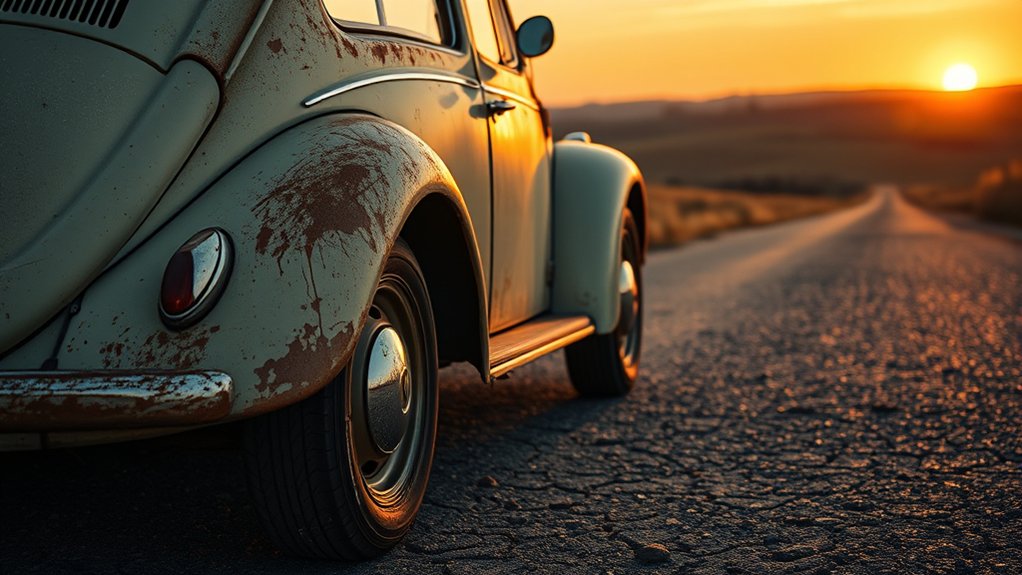
How does rust and corrosion impact the longevity of your Volkswagen? Rust problems accelerate structural degradation, compromising safety and function. Paint deterioration exposes metal surfaces, increasing vulnerability to moisture and salts.
To mitigate these effects, focus on:
- Regular inspections for early signs of rust in wheel wells and undercarriage.
- Promptly addressing paint chips and scratches to prevent corrosion initiation.
- Applying rust-proof coatings or sealants in high-risk areas.
- Ensuring thorough cleaning, especially after exposure to road salts.
Which Volkswagen Models Have the Longest Lifespan?
Which Volkswagen models stand out for their longevity? You’ll find that diesel variants, such as the Volkswagen Golf TDI and Jetta TDI, consistently achieve high mileage due to their robust engine design and fuel-efficient combustion process. These models often surpass 200,000 miles with proper maintenance.
Additionally, the Passat, especially in its diesel form, exhibits exceptional durability attributed to its reinforced drivetrain and solid build quality. Gasoline-powered models like the Tiguan and Beetle can also reach high mileage but generally fall short compared to diesel counterparts.
When assessing lifespan, focus on engine type and model-specific reliability data. Diesel variants typically provide superior longevity, making them the preferred choice if you want a Volkswagen that lasts significantly longer on the road.
Tips to Keep Your Volkswagen Running Beyond 200,000 Miles
What maintenance strategies ensure your Volkswagen exceeds 200,000 miles? You need a disciplined, technical approach to longevity, focusing on critical systems and performance optimization. Consider these steps:
- Follow a strict schedule for oil changes, filter replacements, and fluid flushes to prevent premature wear.
- Monitor engine health with diagnostic tools and calibrate aftermarket tuners carefully to avoid overstressing components.
- Evaluate the feasibility of engine swaps if your original powertrain shows signs of irreversible damage; this can extend lifespan significantly.
- Inspect and maintain suspension, brakes, and transmission regularly to ensure balanced vehicle operation and prevent cascading failures.
Frequently Asked Questions
What Is the Average Cost of Repairing a Volkswagen?
You’ll find the average repair costs for a Volkswagen typically range between $500 and $1,200 annually. While ownership reliability is decent, unexpected repairs can increase expenses, so budgeting for maintenance guarantees better long-term vehicle performance.
Are Volkswagen Parts Expensive to Replace?
Yes, Volkswagen parts can be expensive to replace due to specialized engineering and imported components. You’ll face higher maintenance costs and expensive repairs, especially for advanced systems. Budgeting carefully for upkeep is essential.
How Does Volkswagen’s Warranty Compare to Other Brands?
Like a safety net, Volkswagen warranty offers 4 years/50,000 miles, which is shorter than many competitors. When you compare brand warranties, you’ll find others often provide longer coverage, making Volkswagen’s less generous in technical terms.
Can Volkswagen Electric Models Last as Long as Gasoline Ones?
You’ll find Volkswagen EV durability matches gasoline durability closely, as battery longevity reduces concerns over engine wear. Advances in battery technology and thermal management ensure EVs maintain performance, often outlasting traditional engines under comparable conditions and maintenance schedules.
What Is the Resale Value of High-Mileage Volkswagens?
You’ll find high-mileage Volkswagens experience notable resale depreciation due to perceived durability concerns. However, models with proven high mileage durability retain value better, reflecting their mechanical reliability and maintenance history in the resale market analysis.
Conclusion
Think of your Volkswagen like a finely tuned watch—consistent maintenance is the tiny gear keeping time precise. With proper oil changes, fluid checks, and mindful driving, you can expect 150,000 to 200,000 miles, sometimes even beyond.
Neglecting these details is like letting dust clog that gear—wear accelerates, and longevity drops. By staying proactive and attentive, you ensure your Volkswagen’s engine and components stay synchronized, delivering reliable performance mile after mile.
Ultimately, how many miles can a Volkswagen last depends largely on the care it receives, making regular maintenance the key to reaching those high mileage marks.