How Long Will Alst the Volkswagen Tiguan
They say a car is only as good as the care it receives, and the lifespan of your Volkswagen Tiguan is no exception. Many owners report reaching 150,000 to 200,000 miles with their Tiguans, but the true longevity depends on more than just numbers.
Factors like regular maintenance routines, driving habits, and even the climate where you live all play essential roles. Understanding these elements can help you gauge how long your Tiguan will really last—and when it might be time to reconsider your options.
Key Takeaways
- The Volkswagen Tiguan typically lasts between 150,000 and 200,000 miles with proper maintenance.
- Regular oil changes, tire rotations, and brake inspections are essential for maximizing Tiguan’s lifespan.
- Driving habits like smooth acceleration and steady speeds significantly extend vehicle durability.
- Environmental factors such as extreme temperatures and rough terrain can accelerate wear and maintenance needs.
- Timely part replacements and adherence to Volkswagen’s service schedule optimize reliability and long-term safety.
How Long Does a Volkswagen Tiguan Typically Last?
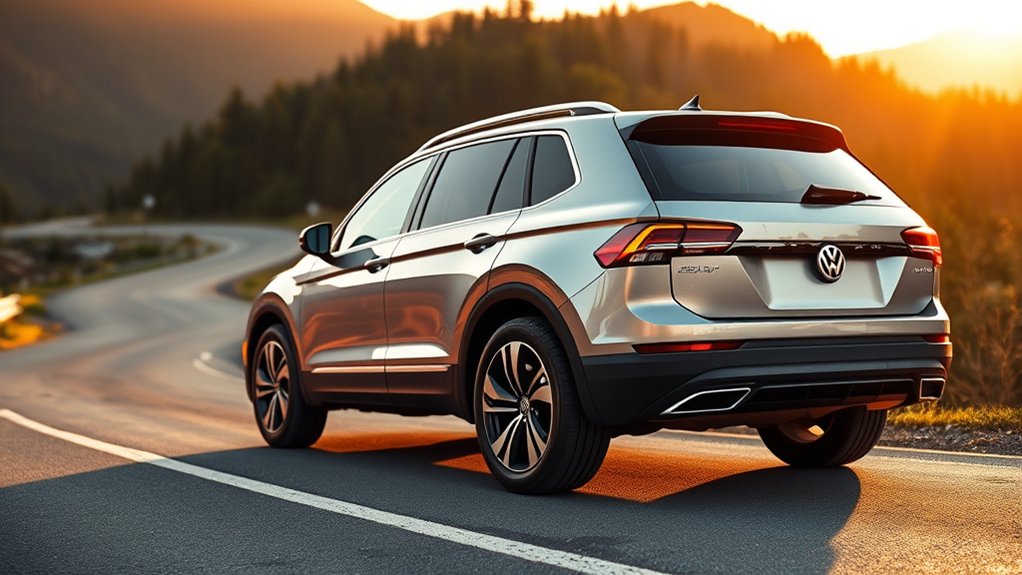
How long can you expect your Volkswagen Tiguan to last? Typically, a well-maintained Tiguan can serve you reliably for around 150,000 to 200,000 miles.
A well-maintained Volkswagen Tiguan typically lasts between 150,000 and 200,000 miles.
Focusing on this lifespan is essential rather than veering into irrelevant topics or unrelated discussions that don’t impact durability. Your driving habits, maintenance routine, and environmental conditions all play critical roles in reaching the Tiguan’s full potential.
Ignoring these factors or diverting to unrelated discussion about aesthetics or features won’t clarify how long the vehicle lasts. By concentrating on mechanical health and timely servicing, you’ll get a precise understanding of the Tiguan’s longevity.
Avoid distractions from irrelevant topics to make informed decisions about your vehicle’s expected endurance.
Comparing Volkswagen Tiguan Model Years and Reliability
You’ll notice reliability varies across Volkswagen Tiguan model years, with some experiencing fewer mechanical issues than others. Understanding common problems tied to specific years helps you anticipate maintenance needs.
Staying on top of regular upkeep directly impacts how long your Tiguan will last.
Model Year Reliability Trends
When comparing Volkswagen Tiguan model years, reliability patterns reveal notable differences that can influence your purchasing decision. Certain model year quirks, such as early-generation software bugs or transmission updates, impact overall dependability.
Additionally, diesel vs gasoline variants show distinct trends: diesel models often face emission system challenges, while gasoline engines typically exhibit fewer long-term issues.
| Model Year | Reliability Rating | Engine Type | Notable Quirk | Common Strength |
|---|---|---|---|---|
| 2010 | Moderate | Gasoline | Transmission recalibration | Solid fuel efficiency |
| 2013 | Moderate High | Diesel | Emission system concerns | Strong torque output |
| 2017 | High | Gasoline | Software update improvements | Enhanced electronics |
| 2020 | Very High | Gasoline | Minimal quirks | Advanced safety features |
| 2022 | Very High | Diesel | Improved emission controls | Refined power delivery |
Choosing the right year and engine type helps maximize reliability.
Common Mechanical Issues
Which mechanical issues tend to surface most frequently across Volkswagen Tiguan model years? Unreliable engines and faulty transmissions are the two primary concerns reported by owners.
Some earlier models, particularly those before 2015, experienced engine problems related to timing chain failures and excessive oil consumption. These unreliable engines often led to costly repairs and reduced vehicle longevity.
Additionally, faulty transmissions have been a recurring issue, especially in models equipped with dual-clutch systems, causing rough shifting and premature wear. While improvements were made in newer models, transmission faults still occasionally appear, impacting overall reliability.
Recognizing these common mechanical problems helps you anticipate potential repairs and evaluate the Tiguan’s durability more accurately when comparing different model years.
Maintenance Impact On Longevity
How considerably does maintenance affect the longevity of Volkswagen Tiguan models across different years? Regular, attentive upkeep directly extends your Tiguan’s lifespan by addressing known drivetrain quirks, such as timing chain tensioner issues common in earlier models.
Neglecting these can escalate repair costs post-warranty limits, especially since many drivetrain repairs fall outside standard coverage. Staying proactive with oil changes, fluid flushes, and timely part replacements helps you avoid premature failures.
Additionally, later model years benefit from refined engineering but still require consistent maintenance to sustain reliability. By understanding each model’s specific quirks and adhering to Volkswagen’s service schedule, you optimize your Tiguan’s durability.
In short, your maintenance decisions critically influence how long your Tiguan remains dependable and safe on the road.
Key Factors Affecting Volkswagen Tiguan Lifespan
What determines the lifespan of your Volkswagen Tiguan? Several key factors influence how long it lasts, beyond just hitting durability benchmarks or maintaining fuel economy. To maximize your Tiguan’s lifespan, consider these:
1. Driving Habits
Smooth acceleration and braking reduce wear, directly impacting engine and brake longevity.
2. Maintenance Routine
Adhering to scheduled oil changes and inspections preserves mechanical integrity.
3. Environmental Conditions
Extreme climates or salty roads can accelerate corrosion and component degradation.
4. Quality of Parts
Using OEM parts ensures compatibility and reliability, supporting the vehicle’s design lifespan.
Common Volkswagen Tiguan Problems That Shorten Longevity
Why do some Volkswagen Tiguan models experience reduced longevity despite proper care? One key reason is irreversible wear on essential components like the transmission and timing chain, which can degrade performance over time.
Additionally, Tiguan models are prone to early rust development, especially in areas where rust mitigation measures are insufficient or compromised. This corrosion can weaken structural integrity, leading to costly repairs or even safety concerns.
Electrical system glitches and turbocharger failures also commonly affect longevity, as these issues strain engine efficiency and reliability.
Understanding these common problems helps you recognize potential risks that might shorten your Tiguan’s lifespan. Addressing irreversible wear and prioritizing rust mitigation are vital steps to minimizing premature aging, though some damage may be inevitable without proactive intervention.
Essential Maintenance Tasks to Extend Your Tiguan’s Life
To keep your Volkswagen Tiguan running smoothly, you need to prioritize regular oil changes, as they prevent engine wear and maintain performance. Don’t overlook tire maintenance, since proper inflation and rotation improve safety and extend tire life.
Also, schedule timely brake inspections to ensure reliable stopping power and avoid costly repairs.
Regular Oil Changes
How often you change your Volkswagen Tiguan’s oil directly impacts its engine’s longevity and performance. Neglecting regular oil changes can lead to sludge buildup, reduced lubrication, and accelerated engine wear.
To keep your Tiguan running smoothly, follow these steps:
- Check your owner’s manual for the recommended oil change interval, typically every 7,500 to 10,000 miles.
- Use manufacturer-approved oil types to ensure optimal engine protection.
- Combine oil changes with tire rotation when possible, improving maintenance efficiency.
- Monitor oil levels monthly to catch leaks or consumption issues early.
Tire Maintenance Importance
When was the last time you checked your Volkswagen Tiguan’s tires? Tire maintenance plays a critical role in your vehicle’s overall longevity impact. Properly inflated and regularly rotated tires ensure even wear, improve fuel efficiency, and enhance safety.
Neglecting tire pressure or ignoring tread depth can lead to uneven wear patterns, increasing the risk of blowouts and reducing the lifespan of your tires. You should inspect your tires monthly, looking for signs of damage or irregular wear.
Rotating tires every 5,000 to 7,500 miles helps distribute wear evenly, preventing premature replacement. By staying proactive with tire maintenance, you not only extend your tires’ life but also protect your Tiguan’s performance and structural integrity over time.
Timely Brake Inspections
Maintaining your Volkswagen Tiguan’s tires is just one part of keeping it running smoothly, but ensuring your brakes are inspected regularly plays an equally important role in extending your vehicle’s lifespan. Neglecting brake inspections can exacerbate tire wear and compromise safety.
To keep your Tiguan in top shape, follow these key steps:
- Schedule brake inspections every 10,000 to 15,000 miles or as recommended by Volkswagen.
- Check for uneven tire wear, which often signals brake system issues.
- Listen for unusual noises or vibrations during braking, indicating potential wear or damage.
- Replace brake pads and rotors promptly to prevent further mechanical stress.
Timely brake inspections help maintain optimal performance and safety, ultimately prolonging your Tiguan’s operational life.
How Your Driving Habits Impact Tiguan Longevity
Why do your daily driving habits play a pivotal role in the lifespan of your Volkswagen Tiguan? Consistently aggressive acceleration, hard braking, and sharp cornering strain your vehicle’s components, reducing longevity.
Maintaining steady speeds enhances fuel economy and minimizes wear on wheel alignment, tires, and suspension.
Consider this table illustrating how different habits affect your Tiguan:
| Driving Habit | Impact on Fuel Economy | Impact on Vehicle Components |
|---|---|---|
| Smooth acceleration | Improves | Preserves wheel alignment |
| Hard braking | Decreases | Accelerates brake wear |
| Frequent sharp turns | Moderate | Causes uneven tire wear |
| Consistent speed | Optimizes | Extends suspension life |
How Climate and Terrain Affect Volkswagen Tiguan Wear
How do climate and terrain influence the wear and tear on your Volkswagen Tiguan? Both factors play a pivotal role in determining the extent of climate wear and terrain wear your vehicle endures. Understanding their impact helps you anticipate maintenance needs.
- Extreme temperatures cause climate wear by stressing engine components and degrading fluids faster.
- High humidity and salt exposure accelerate corrosion, particularly in coastal areas.
- Rough, uneven terrains increase terrain wear by straining suspension, tires, and undercarriage.
- Frequent off-road driving amplifies terrain wear, leading to faster degradation of protective coatings and mechanical parts.
Tips to Maximize Your Volkswagen Tiguan’s Mileage
Wondering how to get the most miles out of your Volkswagen Tiguan? Focus on two word maintenance habits and two word driving techniques. Regular oil changes, tire rotations, and brake checks keep your Tiguan running efficiently.
Pair these with smooth acceleration and steady speeds to reduce wear.
| Maintenance Habit | Driving Technique | Benefit |
|---|---|---|
| Oil Changes | Smooth Acceleration | Engine longevity |
| Tire Rotations | Steady Speeds | Even tire wear |
| Brake Checks | Avoid Idling | Fuel efficiency |
| Fluid Levels | Proper Gear Use | Transmission health |
When Should You Replace Your Volkswagen Tiguan?
Maintaining your Volkswagen Tiguan with regular care extends its lifespan, but there comes a point when replacement becomes more practical than repair. Knowing when to replace your Tiguan hinges on careful assessment of key factors:
- Follow the maintenance schedule strictly; frequent major repairs signal declining reliability.
- Monitor engine oil viscosity; consistent changes outside manufacturer recommendations indicate engine wear.
- Evaluate repair costs; if expenses approach or exceed the Tiguan’s value, replacement might be wiser.
- Consider performance and safety; persistent issues affecting drivability or safety features suggest it’s time to upgrade.
Frequently Asked Questions
What Are the Best Accessories for the Volkswagen Tiguan?
You’ll want all-weather mats, roof racks, and cargo organizers for the Volkswagen Tiguan. These two-word discussion ideas enhance functionality and style.
Though some subtopic irrelevant accessories exist, focusing on practical upgrades maximizes your driving experience efficiently.
How Does the Volkswagen Tiguan Compare to Other SUVS in Fuel Efficiency?
You know what they say, “Slow and steady wins the race.” The Tiguan offers solid driving efficiency and a competitive fuel comparison, balancing performance and economy better than many SUVs in its class, making it a smart choice.
What Are the Interior Features of the Latest Volkswagen Tiguan Model?
You’ll enjoy spacious interior dimensions offering ample legroom and cargo space. The latest Volkswagen Tiguan also features customizable ambient lighting, enhancing your driving experience with a modern, comfortable atmosphere tailored to your preferences.
Is the Volkswagen Tiguan Suitable for Off-Road Driving?
You might not know that the Tiguan’s 4MOTION system handles mild off-road conditions well, but off-road myths exaggerate its capability limits. It’s best for light trails, not rugged terrain or deep mud challenges.
What Safety Ratings Does the Volkswagen Tiguan Have?
You’ll find the Volkswagen Tiguan’s new design earns strong safety ratings, thanks to advanced features. With varied engine options, it balances performance and protection, ensuring you drive confidently with top-tier crash test results and driver assistance systems.
Conclusion
So, you want your Volkswagen Tiguan to last forever, huh? While it’s no mythical beast, with sharp maintenance and savvy driving, it’ll stick around for 150,000 to 200,000 miles—maybe more if you’re lucky. Ignore those oil changes, and it might just retire early.
Remember, treating your Tiguan right isn’t rocket science; it’s just a bit of effort. Keep it smart, and your Volkswagen Tiguan won’t ghost you anytime soon. When it comes to how long will last the Volkswagen Tiguan, proper care is the key to a long-lasting ride.