How to Remove Jeep Doors
Imagine you’re preparing to remove Jeep doors for an off-road trip and want to do it efficiently without causing damage. You’ll need the right tools, like a Torx T40 and panel clip tool, and a clear plan for detaching wiring and mirrors safely.
Knowing the correct sequence and precautions helps prevent costly mistakes. Let’s explore the essential steps and considerations to ensure a smooth, safe door removal process.
Key Takeaways
- Gather necessary tools like a T40 Torx screwdriver, panel clip remover, gloves, and a magnetic tray before starting door removal.
- Support the door securely and wear gloves and eye protection when loosening hinge bolts with the correct socket or wrench.
- Apply penetrating oil and use a wire brush on rusted hinges before loosening to prevent damage and ease bolt removal.
- Carefully disconnect wiring harnesses near the door latch and detach side mirrors using proper tools to avoid damage.
- Store removed doors upright on padded supports and ensure proper alignment and safety when reinstalling doors later.
What Tools and Gear You Need Before Removing Jeep Doors
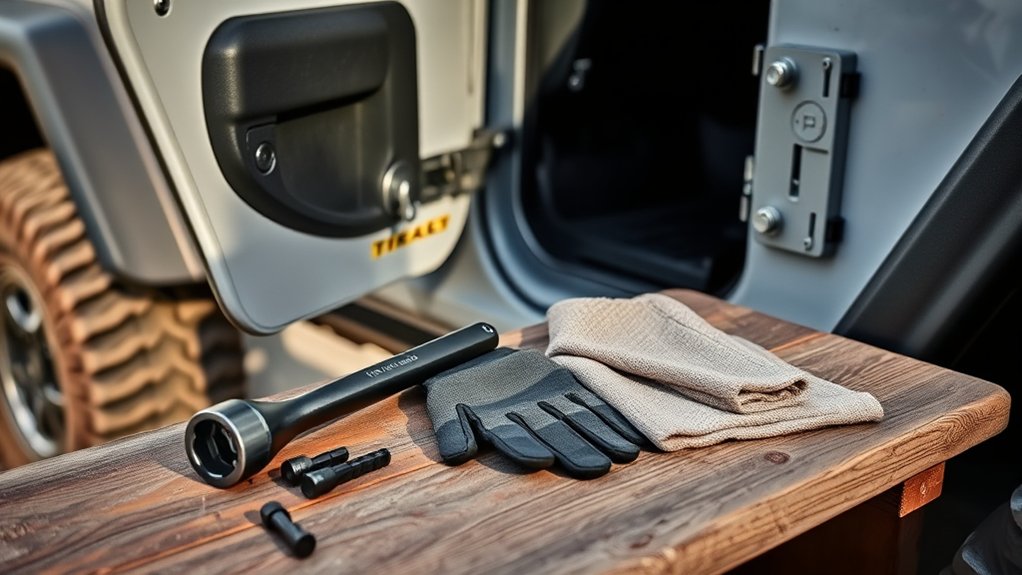
Before you begin removing your Jeep doors, gather the essential tools and gear to ensure a smooth process. You’ll need a Torx screwdriver or socket set, typically T40, to remove door hinge bolts efficiently.
Have a panel clip removal tool handy to detach wiring connectors without damage. Use gloves to protect your hands and maintain grip. A magnetic tray or small container will keep bolts and screws organized, preventing loss during door maintenance.
Additionally, carry a door storage bag or padded blanket to safely store doors once removed, avoiding scratches or dents. Proper preparation not only expedites the removal but also supports off road safety by ensuring doors reattach securely. This approach minimizes damage risks and maintains your Jeep’s structural integrity.
Differences Between Removing Soft and Hard Jeep Doors
Gathering the right tools sets the stage for removing either soft or hard Jeep doors, but the procedures differ substantially. When dealing with soft doors, you focus on releasing Velcro, zippers, and quick-release pins, which simplifies detachment but requires attention to door safety to avoid damage.
Proper tools and careful handling are key when removing soft Jeep doors to prevent damage.
Hard doors involve unbolting hinges and disconnecting wiring harnesses for power windows or locks, demanding more mechanical skill and caution.
- Soft doors detach quicker but need careful handling to maintain weather considerations, as seals are delicate.
- Hard doors require precise unfastening of bolts and connectors to ensure proper reinstallation and safety.
- Both types require securing the door post-removal to prevent damage or injury.
Understanding these distinctions ensures efficient, safe removal tailored to your Jeep’s door type.
How to Detach Jeep Side Mirrors Safely
Before removing your Jeep’s side mirrors, you’ll need to disconnect the wiring carefully to avoid damage. Use the correct tools to loosen mounting bolts while supporting the mirror securely.
Taking these steps guarantees a safe and efficient removal process.
Mirror Wiring Disconnection
How exactly do you disconnect the mirror wiring without damaging the connectors? Properly handling the wiring is essential for mirror maintenance and preserving door alignment. Follow these steps:
- Locate the Connector: Access the wiring harness behind the mirror, usually found by slightly peeling back the interior door panel.
- Depress the Release Tab: Gently press the release tab on the connector to disengage it without forcing the wires or pins.
- Pull Apart Smoothly: Separate the connectors by pulling straight apart, avoiding twisting motions that could deform pins or sockets.
Secure Mirror Removal Methods
Why should you prioritize secure removal methods when detaching Jeep side mirrors? Maintaining door safety and avoiding damage to wiring or the mirror assembly is essential.
First, wear appropriate eye protection to prevent injury from debris or accidental tool slips. Next, ensure the mirror wiring is fully disconnected to avoid electrical hazards.
Use a properly sized socket or wrench to loosen mounting bolts carefully, preventing stripping or damage. Support the mirror firmly with one hand while removing fasteners to avoid sudden drops.
Avoid forcing the mirror off; if resistance occurs, double-check for hidden clips or screws. Finally, store removed mirrors safely to prevent scratches or breakage.
How to Disconnect Jeep Door Wiring Safely
First, locate the wiring harness connecting the door to the Jeep’s body. Use the correct tools to carefully release the connectors without forcing them.
Take precautions to avoid damaging the electrical components during disconnection.
Locate Wiring Harness
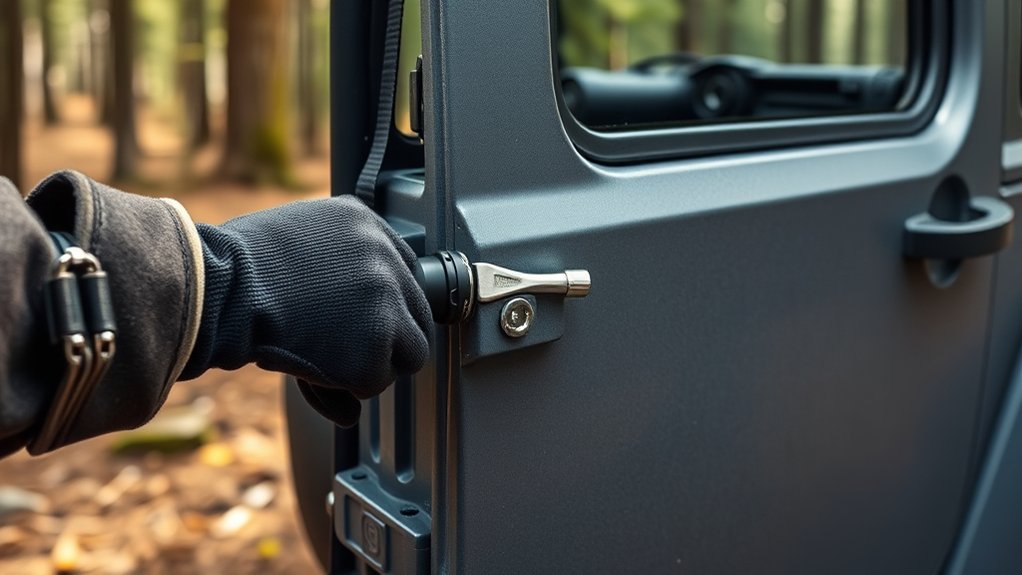
Where exactly is the wiring harness located on your Jeep door? It’s typically found near the door latch area, running through the hinge side to maintain door alignment during opening and closing. Properly locating it is crucial before disconnecting to avoid damage.
- Open the door fully and inspect the rubber boot connecting the door to the frame; the wiring harness is housed inside this protective sleeve.
- Trace the harness from the door latch mechanism, where electronic components often connect.
- Identify the connector clip within the harness; this is the point you’ll disconnect to separate the door wiring safely.
Pay close attention to the door alignment as you locate the harness to prevent stressing any wires during door removal.
Use Proper Tools
How exactly do you disconnect your Jeep door wiring without causing damage? Using the right tools ensures door durability and helps prevent wind noise caused by improper sealing after reassembly. Avoid makeshift tools that can damage connectors or wiring insulation.
Here’s a quick guide:
| Tool | Purpose | Tip |
|---|---|---|
| Plastic Pry Tool | Release clips without damage | Avoid metal tools that scratch |
| Needle Nose Pliers | Grip small connectors | Use gently to prevent pinching |
| Wire Harness Release Tool | Unlock wiring clips | Matches factory connector style |
| Electrical Tape | Secure disconnected wires | Prevents moisture entry |
| Multimeter | Verify connectivity | Check before disconnecting |
Use these tools to carefully disengage wiring harnesses, maintaining door durability and minimizing wind noise after door removal.
Prevent Electrical Damage
Why must you disconnect your Jeep door wiring carefully to prevent electrical damage? Improper handling can damage the wiring harness, door hardware, or compromise electrical shielding, leading to shorts or system failures. To disconnect safely, follow these steps:
- Power Down: Always turn off the vehicle and disconnect the battery to eliminate electrical flow and reduce shock risk.
- Locate Connectors: Identify the wiring harness connectors within the door jamb, ensuring you handle electrical shielding carefully to avoid damage.
- Disconnect Gently: Use proper tools to release connectors without pulling on wires or stressing door hardware components.
How to Unbolt and Remove Jeep Door Hinges
When you’re ready to unbolt and remove your Jeep door hinges, start by ensuring the door is supported to prevent it from falling. Use a sturdy prop or have a helper hold the door steady.
Next, locate the hinge bolts connecting the door to the frame. Using the correct socket or wrench, carefully loosen and remove these bolts. Don’t buy into door removal myths that suggest excessive force or complicated tools are necessary; straightforward unbolting is sufficient.
Take safety precautions seriously. Wear gloves and eye protection to avoid injury from falling hardware or sharp edges.
Once all hinge bolts are removed, gently separate the door from the frame. Double-check that all electrical connections are detached before completing hinge removal to prevent damage.
Handling and Storing Jeep Doors After Removal
Where should you place your Jeep doors immediately after removal to prevent damage? You’ll want a clean, flat surface with enough space to avoid scratches or dents. Proper handling and storage ensure longevity and maintain your door’s condition.
Follow these key steps:
- Use padded supports: Lay the doors on foam blocks or blankets to cushion against hard surfaces and prevent paint damage.
- Cover interiors: Protect interior components from dust and moisture with plastic covers or tarps. This aids interior protection and cleanup tips.
- Store upright: Position doors vertically to minimize stress on hinges and seals, reducing deformation risks.
Fixing Stuck or Rusted Jeep Doors Before Removal
Before removing your Jeep doors, carefully inspect all hinges and latches for rust or corrosion. Apply penetrating lubricants directly to seized areas, allowing time for them to work.
Use appropriate tools like a breaker bar or pry bar to loosen stubborn components without causing damage.
Identifying Rusted Areas
How do you pinpoint rusted spots that cause your Jeep doors to stick? Start by thoroughly inspecting the door interior and hinges where corrosion commonly forms. Rust removal begins with accurate identification of affected areas to prevent damage during door removal.
- Visual Inspection: Look for discoloration, flaky metal, or bubbled paint around the door interior and hinge points, indicating oxidation.
- Physical Test: Gently wiggle the door to detect stiffness or resistance caused by rust seizing the hinges or latch mechanisms.
- Moisture Check: Examine seams and joints for trapped moisture, a catalyst for rust formation within concealed areas.
Identifying these rusted areas precisely ensures you target the right spots for rust removal, streamlining the door removal process without causing structural damage.
Applying Lubricants Effectively
When should you apply lubricants to stuck or rusted Jeep doors for optimal results? You should apply lubricants immediately after identifying rusted or seized hinges during door maintenance. Use a penetrating oil specifically designed for corrosion prevention to loosen rust and reduce friction within hinge pins and latch mechanisms.
Apply the lubricant directly to all moving parts, ensuring thorough coverage without oversaturation. Let it penetrate for 10 to 15 minutes before attempting to move the door. Repeat the application if necessary to fully free the components.
Consistent and precise lubricant application not only facilitates easier door removal but also prolongs hinge life by preventing further corrosion and wear. Proper lubrication is essential for effective door maintenance and ensures safe, damage-free removal.
Using Proper Tools
Applying lubricants thoroughly helps loosen rusted hinges, but you’ll still need the right tools to effectively address stubborn or corroded components. To guarantee door safety and avoid damage, equip yourself with these essentials before removing stuck Jeep doors:
1. Penetrating oil and wire brush
Apply oil liberally and scrub rusted areas to prepare for loosening bolts.
2. Torque wrench or ratchet set
Use appropriate sockets to avoid stripping bolts and maintain control.
3. Rubber mallet
Gently tap hinges or pins to dislodge corrosion without deforming metal parts.
Following these off road tips minimizes risk during door removal and preserves your Jeep’s structural integrity. Using proper tools assures a safe, efficient process, even when rust complicates the task.
How to Reinstall Jeep Doors Without Damage
Where should you begin to reinstall Jeep doors without causing damage? Start by aligning the door hinges precisely with the frame mounts. Use a helper to hold the door steady, preventing stress on the hinge pins, which can lead to misalignment or damage.
Secure the hinge bolts gradually, tightening them incrementally to avoid distortion. Check door safety by ensuring the locking mechanisms engage smoothly and seals seat firmly to prevent water ingress and wind noise.
After installation, inspect the door gaps for uniformity, confirming the door closes without force. Remember, improper door installation can affect door safety and have insurance implications if the door fails during use. Always test functionality before driving to maintain vehicle integrity and compliance.
Legal Rules for Driving a Jeep Without Doors
Properly reinstalling your Jeep doors ensures safety and compliance, but you might also want to know the legal aspects of driving without them. Door safety regulations vary by state, so staying informed is essential for legal compliance.
Here are three key points to consider:
- Seatbelt Use: Most states require you to wear seatbelts when driving without doors, compensating for reduced protection.
- Mirror Requirements: You must maintain at least one functional side mirror, either on the door or the vehicle frame.
- Local Restrictions: Some jurisdictions prohibit doorless driving on highways or at night due to increased risk.
Adhering to these legal rules ensures your safety and prevents fines while enjoying your doorless Jeep experience. Always check local laws before removing doors to maintain full legal compliance and optimal door safety.
Best Accessories for Your Jeep When Driving Doorless
Why should you consider specific accessories when driving your Jeep without doors? Removing doors reduces protection and changes vehicle dynamics due to the loss of door weight, impacting stability. To compensate, install side mirrors designed for doorless use, ensuring visibility and safety.
Adding grab handles improves passenger security during off-road maneuvers. Since removing doors exposes the cabin to external noise and airflow, apply soundproofing material strategically to minimize noise intrusion and enhance comfort.
Additionally, consider installing half doors or tube doors for partial protection without restoring full door weight. Weather-resistant seat covers and storage solutions protect your interior from debris.
These accessories maintain functionality, safety, and comfort, optimizing your Jeep’s performance and your driving experience when off-road or cruising doorless.
Frequently Asked Questions
Can I Remove Jeep Doors in Cold Weather?
Yes, you can remove Jeep doors in cold weather, but expect door removal challenges like stiff hinges and brittle seals. Use cold weather tips: lubricate hinges, warm the seals briefly, and handle parts gently to avoid damage.
Will Removing Doors Affect My Jeep’s Insurance?
Insurance implications instantly influence your Jeep’s policy. You’ll want to check legal requirements carefully since removing doors might alter coverage or violate regulations.
Contact your insurer directly to confirm compliance and avoid costly complications or denied claims.
How Does Door Removal Impact Jeep Resale Value?
You’ll find door removal misconceptions often exaggerate resale value impact. Removing doors can slightly reduce appeal to traditional buyers, but Jeep enthusiasts may value versatility more, minimizing negative resale effects if doors and hardware remain intact.
Are Jeep Door Removal Methods Different for Newer Models?
Yes, newer Jeep models require precise door hinge maintenance due to updated designs. You’ll also need to address wind deflection concerns more carefully, as improved aerodynamics affect how doors detach and fit after removal.
Can I Remove Jeep Doors Without Voiding the Warranty?
You can remove Jeep doors without voiding your warranty if you follow manufacturer guidelines and prioritize door safety. Avoid warranty loopholes by using approved tools and methods.
Ensure no damage or unauthorized modifications occur during removal.
Conclusion
Removing your Jeep doors safely requires the right tools, patience, and careful steps—from disconnecting wiring to properly supporting and unbolting hinges. Have you ever wondered how much easier off-roading is without doors?
Remember, storing and reinstalling them correctly prevents damage and ensures safety. Follow the outlined procedures precisely, respect legal rules, and equip your Jeep with proper accessories for a seamless doorless experience.
With these tips, you’ll handle door removal confidently and efficiently. Mastering how to remove Jeep doors will enhance your off-road adventures while keeping your vehicle secure and well-maintained.