How to Roll up a Tonneau Cover
If you’re looking to roll up your tonneau cover correctly, you need to start by understanding the type of tonneau cover you have and preparing your truck bed properly. Skipping these steps can lead to damage or poor sealing.
Whether you have a soft, folding, or retractable tonneau cover, each requires a specific approach to avoid wear and ensure longevity. Knowing how to handle your cover safely can save you time and costly repairs down the line.
Key Takeaways
- Clear the truck bed and remove debris before rolling the tonneau cover to prevent damage and ensure smooth operation.
- Align the cover evenly, removing wrinkles and moisture, and wear gloves for hand protection during rolling.
- Roll the cover smoothly with even tension, avoiding force if resistance is encountered to prevent damage and misalignment.
- Secure the rolled cover using straps or clamps at multiple points to maintain tension and prevent movement while driving.
- Regularly inspect seals, fasteners, and the cover during transit, and perform cleaning and maintenance for longevity.
How To Identify Your Tonneau Cover Type
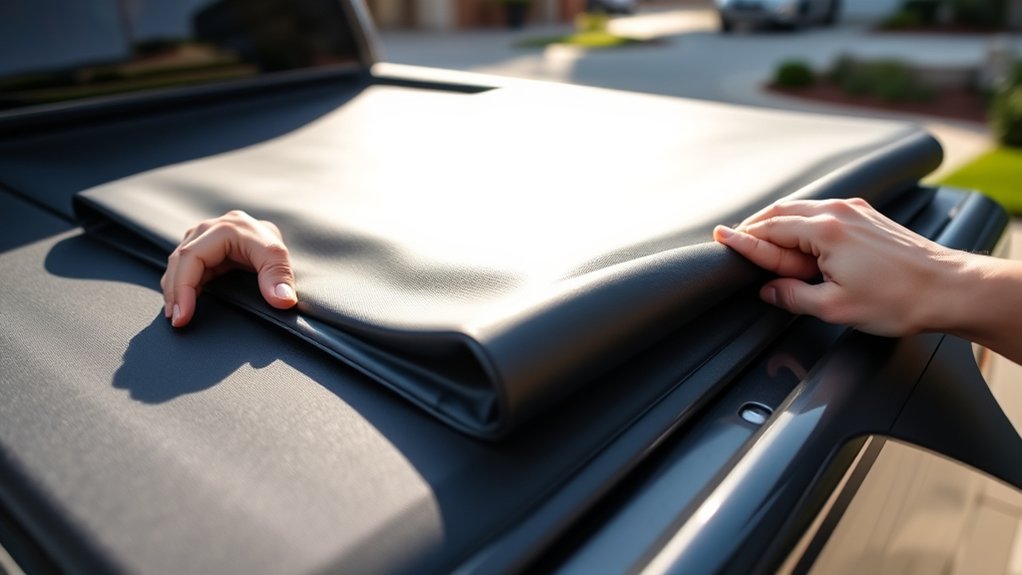
How can you quickly determine the type of tonneau cover installed on your truck? Start by identifying material; common types include vinyl, aluminum, and fiberglass. Vinyl covers often feel flexible and soft, while aluminum and fiberglass are rigid and durable.
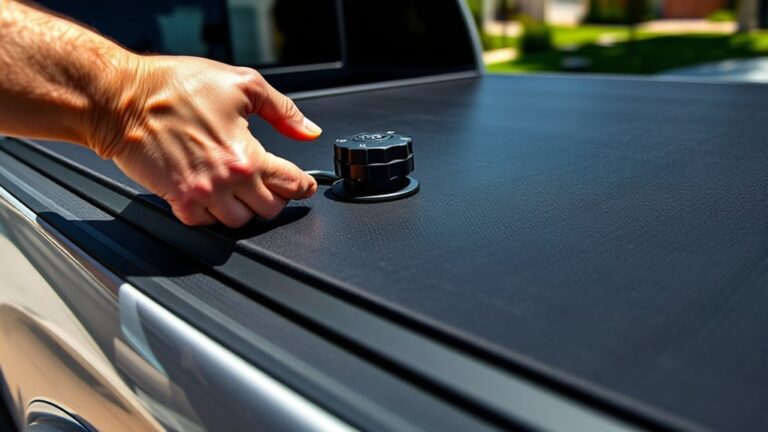
Next, focus on recognizing anchor points. Soft roll-up covers typically use snaps or Velcro along the bed rails, while hard folding or retractable covers attach to fixed rails with hinges or tracks. Some retractable models have visible locking mechanisms near the tailgate.
When Should You Roll Up Your Tonneau Cover?
You should roll up your tonneau cover when weather conditions threaten its integrity or when you need full access for loading cargo. Consider how exposure to rain, snow, or extreme sun might affect the cover material and your truck bed.
Additionally, factor in security needs. Rolling it up can leave items vulnerable, so weigh convenience against protection.
Weather Conditions Impact
When should you roll up your tonneau cover to protect it from weather damage? You should monitor local weather patterns closely. If forecasts predict heavy rain, snow, or high winds, it’s best to roll up the cover to prevent water pooling and wind damage.
During storm preparation, securing your cover reduces stress on its frame and material. Prolonged exposure to harsh conditions can weaken seals and cause premature wear.
Additionally, if temperatures drop considerably, rolling up the cover can prevent cracking or stiffness from cold exposure. Conversely, in mild, dry weather, leaving the cover down helps protect your cargo.
Always adjust based on current and upcoming weather conditions to maximize your tonneau cover’s lifespan and maintain its functionality.
Cargo Loading Needs
Why roll up your tonneau cover during cargo loading? You should do so when your truck bed requires unobstructed access to accommodate bulky or irregularly shaped items. Rolling up the cover allows you to maximize the available space and position cargo efficiently.
Additionally, it facilitates proper load securing since you can easily attach straps, tie-downs, or nets directly to the truck bed’s anchor points. If you keep the cover closed, it may interfere with securing mechanisms or limit the height of your load.
Always roll up the tonneau cover before loading heavy or oversized materials to prevent damage to the cover and ensure safe transport. This step is essential for optimizing your truck bed’s functionality during cargo handling.
Security and Protection
How does rolling up your tonneau cover impact the security and protection of your cargo? When you roll up the cover, you expose the truck bed, increasing vulnerability to theft and weather damage.
You should only roll it up when necessary, such as during large cargo loading or unloading, to minimize security risks. Consider your security budgeting, as investing in a lockable tonneau cover or additional security accessories can offset these risks.
Privacy concerns also play a role; rolling up the cover exposes your cargo to public view, which might not be acceptable depending on what you’re transporting. Always assess the trade-off between accessibility and protection, rolling up the cover only when the benefits outweigh potential security and privacy compromises.
How To Prepare Your Truck Bed Before Rolling Your Tonneau Cover
Where should you begin before rolling up your tonneau cover? Start by clearing your truck bed of all debris and items, ensuring nothing obstructs the cover’s movement or causes damage. Use a soft brush or cloth to remove dirt and dust, similar to the meticulous care you’d apply in indoor gardening to maintain a clean environment.
Next, assess the space planning within your truck bed; organize tools or cargo efficiently so they don’t shift when the cover is rolled up. Check the bed rails and seals for damage or wear, as these components ensure a snug fit and prevent leaks.
Proper preparation minimizes strain on the cover’s hinges and extends its lifespan, making your rolling process smooth and hassle-free.
How To Roll A Soft Tonneau Cover
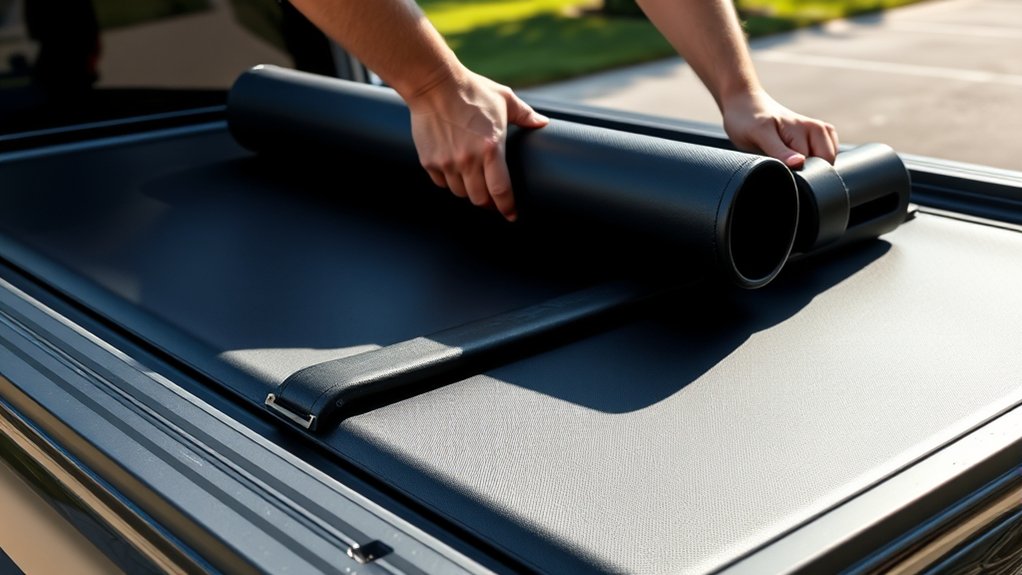
When you’re ready to roll up a soft tonneau cover, start by releasing the securing latches or clamps that hold it down. Unlike hard folding covers, soft tonneau covers rely on flexible vinyl or fabric, making rolling easier and quicker.
You’ll want to fold the cover smoothly from the tailgate toward the cab, ensuring no wrinkles or debris interfere with the retractable efficiency. Avoid forcing the cover, as that can damage the material or rails.
| Step | Action |
|---|---|
| 1. Release latches | Disengage clamps securing cover |
| 2. Begin rolling | Roll cover toward cab evenly |
| 3. Secure rolled cover | Use straps or clips to hold roll |
This approach maintains the cover’s integrity and maximizes its lifespan.
How To Roll A Hard Folding Tonneau Cover
Why choose a hard folding tonneau cover for your truck bed? Hard folding covers offer superior durability and off road suitability compared to soft covers. Their rigid panels provide enhanced protection against debris and weather, making them ideal for rugged terrains.
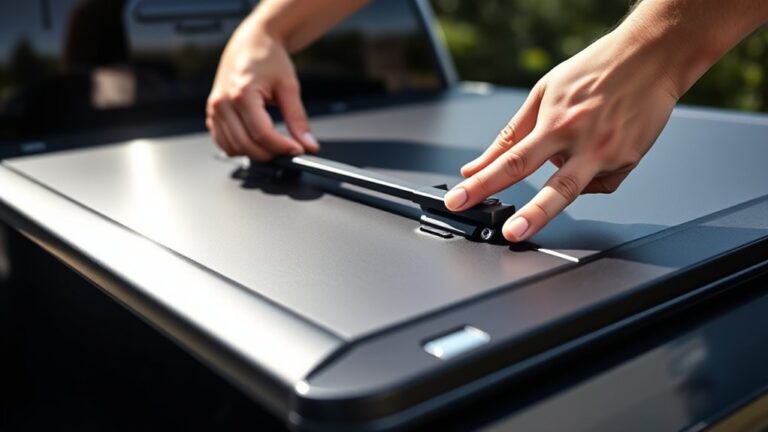
To roll a hard folding tonneau cover, start by unlatching the clamps securing it to the truck bed rails. Fold each panel sequentially towards the cab, ensuring hinges align smoothly without forcing.
Keep the cover clean and free of debris to maintain hinge function and avoid damage. These covers often use eco friendly materials, reducing environmental impact while delivering robust performance.
After folding, secure the cover with any integrated straps or locks to prevent movement during transit. This method preserves both functionality and longevity.
How To Roll A Retractable Tonneau Cover Safely
Before rolling your retractable tonneau cover, make sure it’s clean and free of debris to prevent damage. Use smooth, even motions to roll the cover back along its track without forcing it.
Once fully retracted, secure the cover properly to avoid unintentional movement while driving.
Prepare The Cover Properly
How exactly do you ensure your retractable tonneau cover rolls up safely and maintains its longevity? First, clear the truck bed of debris and wetness to prevent damage or mold growth. Inspect the cover for tears or weak spots, addressing them promptly to avoid worsening.
Next, check your tire pressure; proper inflation ensures your vehicle remains stable when you manipulate the cover. Before rolling, clean the cover using recommended recycling tips. Use eco-friendly cleaners and avoid harsh chemicals that degrade materials.
Finally, disengage any locking mechanisms carefully to prevent strain on the cover’s retracting components. Preparing your cover with these precise steps reduces wear and tear, maintaining its function and extending its lifespan efficiently.
Use Smooth Rolling Techniques
When you roll up your retractable tonneau cover, make sure to operate it with a steady, controlled motion to prevent unnecessary strain on the mechanism. Avoid sudden jerks or excessive force, which can cause misalignment or damage similar to neglecting proper tire rotation on your vehicle.
Maintaining smooth rolling ensures the cover’s tracks and rollers function optimally, reducing wear and tear over time. Use your hands to guide the cover evenly, mimicking the consistent pressure applied when activating windshield wipers.
This technique keeps the cover balanced and prevents binding. By rolling smoothly and deliberately, you prolong the system’s lifespan and maintain reliable performance. Remember, controlled motion is key to protecting both the cover’s mechanical components and the truck bed beneath it.
Secure The Cover Afterward
Once you’ve rolled the tonneau cover smoothly, securing it properly is essential to prevent damage and assure safety during transit. Always wear safety gloves to protect your hands, especially in cold weather when materials become brittle. Follow these steps:
- Align the cover evenly, ensuring no wrinkles or folds.
- Engage the locking mechanism firmly; listen for a click to confirm.
- Use straps or clamps to secure the cover at multiple points, distributing tension evenly.
- Inspect all fasteners and seals for tightness, adjusting as needed to prevent flapping or detachment.
Proper securing minimizes wear and extends cover lifespan. Regularly check the cover during long trips, particularly in cold weather, as temperature fluctuations can loosen fasteners. This method guarantees your tonneau cover stays intact and your cargo protected.
Common Mistakes When Rolling Your Tonneau Cover
Why do some tonneau covers fail to roll up smoothly? Common mistakes often cause this issue. One frequent error is not cleaning debris or moisture from the cover before rolling, which can lead to sticking or damage.
Another is uneven tension during rolling, causing wrinkles or misalignment. You might also neglect to align the cover properly with the rails, increasing wear and making rolling difficult.
Prevention strategies include inspecting and cleaning the cover before use, applying consistent, gentle pressure while rolling, and ensuring the cover stays aligned with the truck bed rails. Avoid forcing the cover if you encounter resistance; instead, check for obstructions.
How To Secure Your Rolled Tonneau Cover
How do you guarantee your rolled tonneau cover stays securely in place during transit? Start by making precise secure adjustments to the cover’s straps or clamps to prevent shifting. Next, ensure that the cover is tightly rolled without gaps that could let in moisture, addressing essential weatherproofing considerations. Follow these steps:
- Tighten all securing straps evenly to maintain consistent tension.
- Use locking mechanisms or clips designed for your tonneau model.
- Check for any loose ends that could flap or loosen while driving.
- Inspect weather seals to confirm they align correctly when rolled.
How To Maintain And Clean Your Tonneau Cover After Rolling
When should you clean and maintain your tonneau cover to ensure its longevity and performance? Ideally, you should perform maintenance and cleaning after every few uses or at least monthly if rolled frequently.
Start by unrolling the cover fully and inspecting for debris or damage. Use a soft brush or microfiber cloth to remove loose dirt. For cleaning techniques, apply a mild soap solution with water. Avoid harsh chemicals that degrade materials.
Unroll fully, inspect for debris, and gently clean with mild soap and water using a soft cloth or brush.
Rinse thoroughly and allow it to air dry completely before rolling. Regularly apply a UV protectant designed for tonneau covers to prevent fading and cracking.
Maintenance tips include lubricating hinges or locks and checking for secure fastenings. Consistent care preserves flexibility and water resistance, ensuring your cover functions optimally over time.
Frequently Asked Questions
Can I Roll up My Tonneau Cover in Cold Weather?
You can roll up your tonneau cover in cold weather, but be cautious. Cold temperatures can make materials brittle, increasing damage risk and potentially voiding your warranty.
Always check manufacturer guidelines before proceeding to avoid warranty impact.
Will Rolling My Tonneau Cover Void the Warranty?
Rolling your tonneau cover typically won’t void warranty, provided you follow manufacturer guidelines. Check warranty implications carefully and ensure material compatibility to avoid damage.
Improper handling or incompatible materials may lead to coverage denial.
How Long Does It Take to Roll up a Tonneau Cover?
Time is money, so it usually takes you about 2 to 5 minutes to roll up a tonneau cover.
Cold weather might stiffen the material, making the process slightly longer or more challenging for you.
Can I Roll up My Tonneau Cover With Cargo in the Bed?
You can roll up your tonneau cover with cargo in the bed only if it doesn’t obstruct the rolling mechanism. Regular maintenance tips include checking for debris and ensuring smooth operation to prevent damage during rolling.
Are There Any Tools Required to Roll up a Tonneau Cover?
Rolling up your tonneau cover is like folding a map, simple and straightforward. Usually, no tools are needed.
But in cold weather, a rubber mallet or lubricant can help ease stiffness and guarantee smooth operation without damage.
Conclusion
Now that you’ve mastered rolling your tonneau cover, imagine gliding your hand over its smooth, taut surface—secure, clean, and ready for the next adventure. By preparing your bed, rolling with care, and securing the cover properly, you prevent damage and moisture build-up.
This precise routine ensures your cover stays durable and functional, protecting your truck bed like a shield. Keep up this maintenance habit to enjoy years of reliable performance with your tonneau cover.