
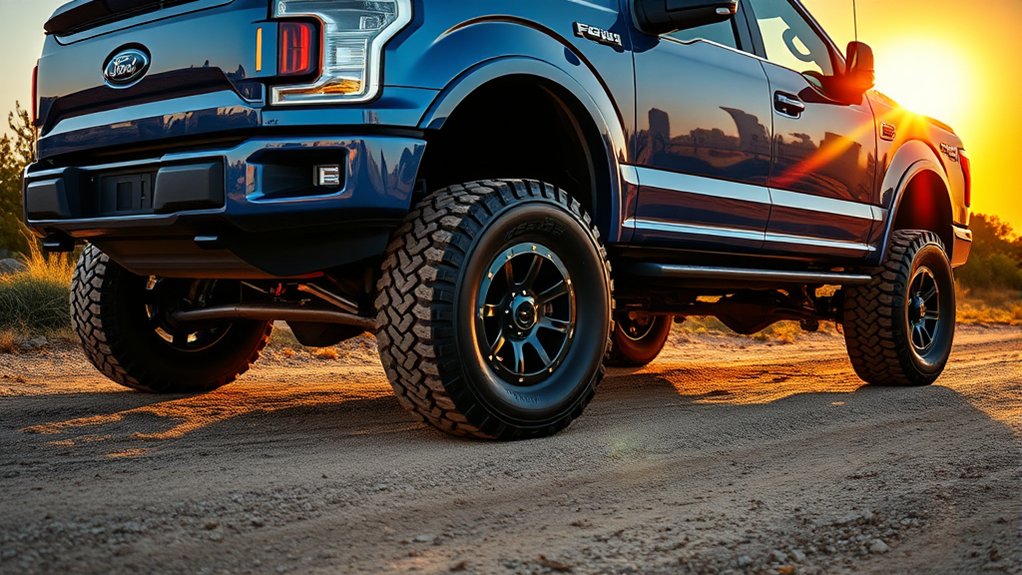
How Heavy Is a Ford f150
The Ford F-150’s weight is like the foundation of a building—silent but essential to everything above it. How heavy is a Ford F-150? You might assume it’s a fixed number, but the reality is far more complex. Depending on the trim, engine, cab, and options you choose, your truck’s mass can vary considerably, influencing how it performs and handles.
Understanding these differences is key to making informed decisions about towing capacity, fuel efficiency, and overall stability. The weight affects not just how the truck drives but also its safety and durability. Knowing what to expect helps you get the most out of your Ford F-150.
Key Takeaways
- Ford F-150 trims weigh between 4,000 and 5,500 pounds depending on engine, cab size, and equipment.
- Heavier models include luxury packages and advanced technology, while lighter ones focus on utilitarian use.
- Engine type (V6, V8, hybrid) and cab style (Regular, SuperCab, SuperCrew) significantly influence vehicle weight.
- Adding 4WD and towing packages increases the truck’s overall mass and drivetrain weight.
- Weight directly impacts towing capacity, fuel efficiency, handling, and cargo load limits.
What Is the Average Weight of a Ford F-150?
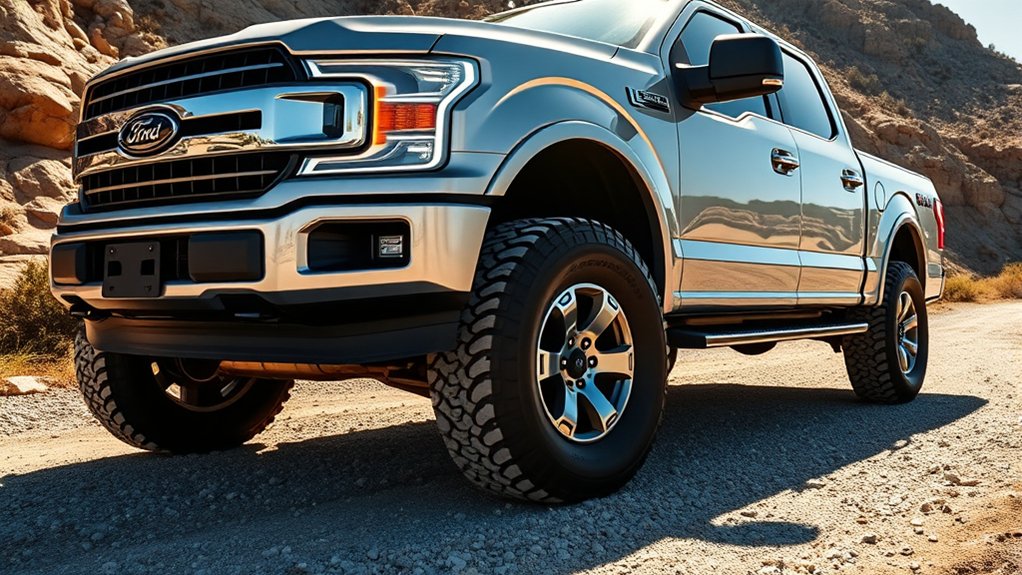
How much does a Ford F-150 actually weigh? On average, the trim weight of a Ford F-150 ranges between 4,000 and 5,500 pounds, depending on the specific configuration.
When assessing this weight, you must consider factors like engine type, cab size, and included equipment. The trim weight directly affects the cargo load capacity, which typically falls between 1,500 and 3,000 pounds.
Understanding this relationship is crucial if you plan to maximize payload without compromising safety. The F-150’s weight balance enables it to maintain stability while carrying heavy loads.
How Do Different Ford F-150 Models and Trims Compare in Weight?
Different Ford F-150 models and trims vary considerably in weight due to their distinct configurations, powertrains, and features. When you analyze the weight comparison across trims, you’ll notice how these differences impact the overall curb weight.
Ford F-150 trims differ significantly in weight due to their unique configurations and powertrain options.
For example, heavier trims often include advanced technology and luxury packages, while lighter models focus on utilitarian functionality.
Key trim differences affecting weight include:
- Engine type (V6, V8, or hybrid) significantly alters weight.
- Cab style (Regular, SuperCab, SuperCrew) adds structural mass.
- Bed length influences chassis weight.
- Inclusion of 4WD adds drivetrain components and weight.
- Added equipment like towing packages and off-road enhancements increase mass.
Understanding these variables helps you evaluate how each model balances capability and efficiency through their weight profiles.
Why Weight Matters for Towing, Fuel Efficiency, and Handling
Why does the weight of a Ford F-150 play such a critical role in towing, fuel efficiency, and handling? Because weight directly affects how the truck manages loads and responds dynamically. Proper weight distribution ensures the trailer’s force is balanced, reducing sway and improving stability during towing.
Additionally, the truck’s suspension tuning is calibrated to accommodate specific weight ranges, optimizing ride quality and control. Excess weight increases rolling resistance, which negatively impacts fuel efficiency by demanding more engine power.
Conversely, insufficient weight on the rear axle may compromise traction, limiting towing capacity. Understanding the interplay between weight, weight distribution, and suspension tuning allows you to maximize the F-150’s capability while maintaining efficiency and safety during demanding tasks.
How Weight Affects Your Ford F-150’s Performance on the Road
In what ways does the weight of your Ford F-150 influence its on-road performance? The truck’s total mass directly impacts handling dynamics, braking distances, and ride comfort. Proper weight distribution is essential to maintaining stability, especially during cornering and sudden maneuvers.
The rear suspension plays a pivotal role in managing loads, affecting traction and responsiveness.
Key effects of weight on your F-150’s road performance include:
Key effects of weight on your F-150’s road performance include steering, braking, suspension, and acceleration changes.
- Altered steering feedback due to changes in weight distribution
- Increased stopping distances as overall mass rises
- Rear suspension compression impacting traction and ride smoothness
- Potential understeer from front-heavy loading
- Variations in acceleration and fuel consumption linked to weight
Understanding these factors helps you anticipate how your truck will behave under different load conditions.
Simple Tips to Manage and Reduce Your Ford F-150’s Weight
Managing and reducing the weight of your Ford F-150 can markedly enhance its fuel efficiency, handling, and overall performance. Start by analyzing your payload optimization; only carry necessary items to avoid excess mass.
Remove non-essential accessories or aftermarket parts that add unnecessary weight. Pay close attention to weight distribution. Uneven loads can impair stability and increase wear on suspension components.
Use lightweight replacement parts where possible, such as aluminum wheels or composite bed liners, to reduce overall mass without compromising durability. Regularly inspect and adjust cargo placement to maintain balanced weight distribution between axles.
Frequently Asked Questions
What Materials Are Used to Build the Ford F-150’s Frame?
You’ll find the Ford F-150’s frame materials primarily use high-strength steel, which optimizes weight distribution and structural integrity. This choice balances durability and reduces overall weight, enhancing performance and fuel efficiency through precise engineering.
How Does the Ford F-150’s Weight Compare to Other Trucks?
You’d swear the Ford F-150 weighs a ton compared to other trucks, but its weight strikes a precise balance. In a two word discussion: “weight efficiency,” it outperforms many, unlike unrelated topics like “fuel economy.”
Does the Ford F-150’s Weight Affect Insurance Rates?
Yes, the Ford F-150’s weight can influence your insurance premiums since heavier vehicles often incur higher weight-related depreciation costs.
Insurers analyze this to assess risk, potentially raising your insurance rates accordingly.
Can Adding Aftermarket Accessories Significantly Change the Truck’s Weight?
Like adding armor to a knight, oversized tires and lifted suspension can substantially increase your truck’s weight. These aftermarket accessories alter your Ford F-150’s mass, affecting balance, fuel efficiency, and overall performance metrics precisely.
How Often Should I Check My Ford F-150’s Weight for Safety?
You should check your Ford F-150’s weight regularly, especially before heavy hauling. Avoid unrelated discussion or off-topic ideas; focusing on this critical safety measure prevents tangential thoughts that could distract from proper load management.
Conclusion
So, your Ford F-150’s weight isn’t just a number—it’s a carefully calculated balancing act between brute strength and nimble efficiency. Sure, you could try to lighten it by removing the kitchen sink, but remember: every pound affects towing, fuel, and handling.
You want a truck that hauls your gear without guzzling gas or turning every corner like a battleship. Embrace the science—your F-150’s weight is the unsung hero of its performance.
Understanding how heavy a Ford F-150 is can help you appreciate the engineering behind its capability and efficiency.