What Car Battery Charger
Choosing a car battery charger might seem straightforward, yet the technology behind these devices is quite complex. A good car battery charger not only restores power efficiently but also protects your battery from damage. Understanding how different chargers work and what features they offer can make a significant difference in performance and safety.
Before you decide, it’s important to grasp the fundamentals of how chargers interact with various battery types and conditions. This knowledge ensures you pick the right charger for your specific needs, improving battery life and reliability.
Key Takeaways
- A car battery charger replenishes a vehicle’s battery by supplying controlled electric current to restore electrical energy safely.
- It regulates voltage and current, preventing overcharging and optimizing battery capacity and longevity.
- Types include trickle, fast, smart, and solar chargers, each suited for different charging speeds and environments.
- Essential features include automatic voltage detection, multi-stage charging, safety indicators, and compatibility with various battery types.
- Safe use involves correct clamp connections, working in ventilated areas, and using built-in safety features like automatic shutoff.
What Is a Car Battery Charger and How Does It Work
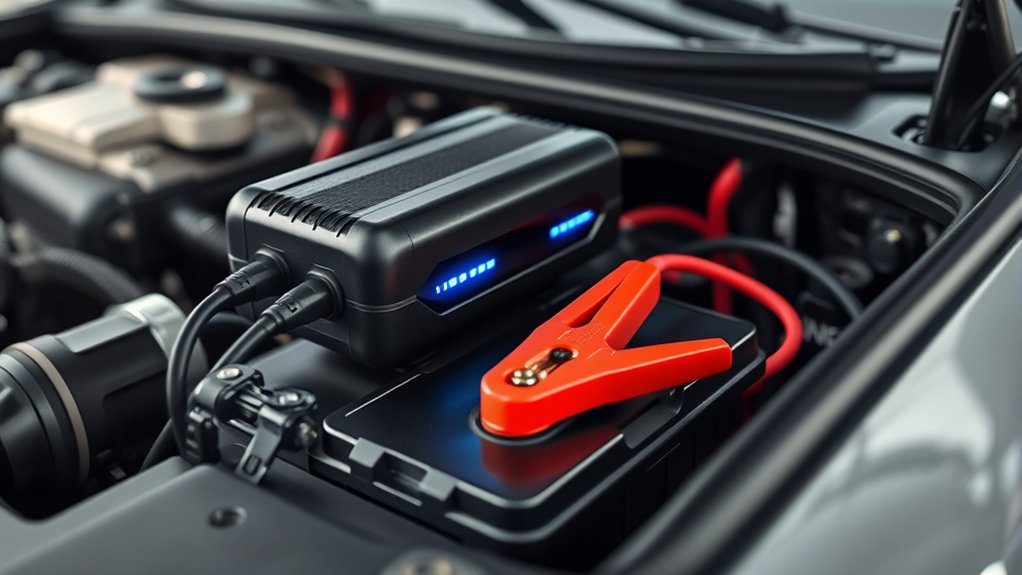
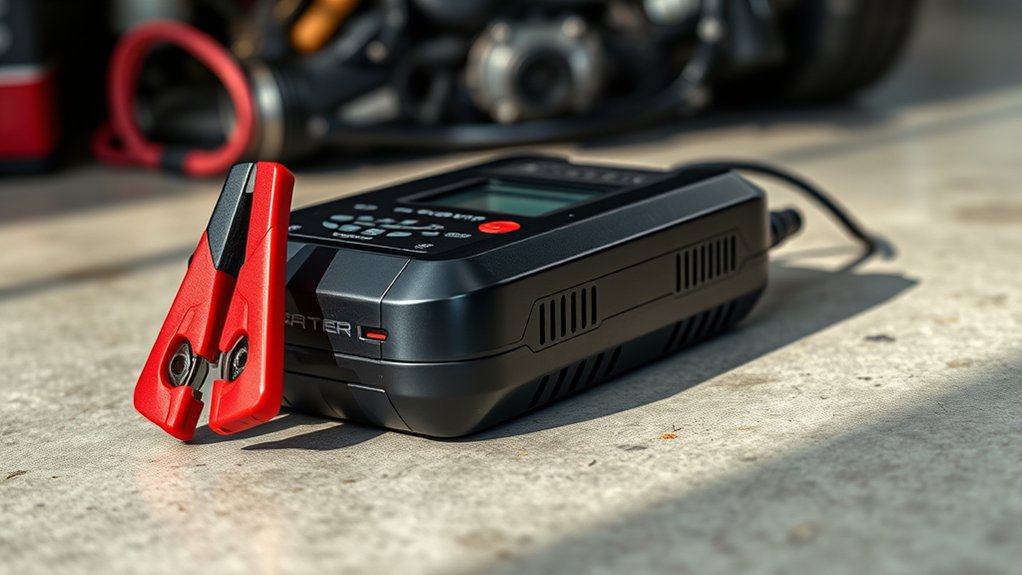
A car battery charger is a device designed to restore electrical energy to a vehicle’s battery by supplying it with a controlled electric current. When you consider what’s a battery, it’s essentially a chemical energy storage unit that converts chemical reactions into electrical power.
The charger’s charge mechanism carefully regulates voltage and current to safely replenish the battery’s depleted charge without causing damage. By monitoring the battery’s voltage, the charger adjusts the current flow to optimize charging efficiency and protect against overcharging.
This precise control ensures the battery regains its full capacity and maintains longevity. Understanding this process helps you appreciate how the charger interacts with the battery’s internal chemistry, restoring energy so your vehicle operates reliably when needed.
Types of Car Battery Chargers
Choosing the right type of car battery charger depends on your specific needs and the battery’s specifications. Chargers come in various forms, each designed for different applications. Avoid confusing this with an irrelevant topic like unrelated idea discussions about car maintenance; focus strictly on charger types.
| Charger Type | Description |
|---|---|
| Trickle Charger | Delivers low current for slow, safe charging. |
| Fast Charger | Provides higher current for rapid charging. |
| Smart Charger | Automatically adjusts charging based on battery condition. |
| Solar Charger | Uses solar power; ideal for remote locations. |
Knowing these options helps you select a charger that matches battery capacity and usage patterns efficiently.
Essential Features of a Car Battery Charger
Understanding the different types of car battery chargers sets the stage for identifying the features that make a charger effective and reliable. When selecting a charger, you need to focus on essential features such as automatic voltage detection, multi-stage charging, and compatibility with various battery types (lead-acid, AGM, gel).
Safety indicators are critical. They alert you to issues like reverse polarity, overcharging, and short circuits, preventing damage to both the battery and the vehicle’s electrical system. Additionally, look for chargers with temperature compensation to adjust charging rates under different environmental conditions.
A clear digital display or LED indicators help you monitor charging progress precisely. By prioritizing these essential features and safety indicators, you ensure efficient, safe, and optimized charging performance every time.
How to Choose the Best Charger for Your Vehicle
You’ll want to select a charger that offers adjustable charging speeds to match your vehicle’s needs and prevent battery damage.
Ensure the charger is compatible with your battery type, whether it’s lead-acid, AGM, or lithium-ion. Matching these factors optimizes charging efficiency and extends your battery’s lifespan.
Charging Speed Options
How quickly do you need your car battery charged? Charging speed varies among chargers, typically ranging from slow (trickle) to fast (rapid) modes. Slow chargers deliver low amperage over extended periods, preserving battery health and minimizing overheating risks.
Fast chargers provide higher amperage for quick energy replenishment but require careful monitoring to avoid damage or reduced battery lifespan. When selecting a charger, balance your need for speed with safety considerations. Rapid charging generates heat that can degrade battery plates or cause thermal runaway if not managed properly.
Look for chargers with built-in safety features like automatic shutoff, temperature sensors, and voltage regulation. These safeguards ensure efficient charging while protecting your battery and vehicle’s electrical system from overcharging or short circuits. Choose a charging speed that fits your schedule without compromising battery integrity.
Compatibility With Batteries
Which type of battery does your vehicle use? Understanding this is crucial because compatibility concerns arise from differing battery chemistries like lead-acid, AGM, or lithium-ion.
Each chemistry requires a charger tailored to its specific charging profile to avoid damage or reduced lifespan. When choosing a car battery charger, verify it explicitly supports your battery chemistry.
Chargers designed for lead-acid batteries, for example, often apply different voltage and current levels than those for lithium-ion batteries. Using an incompatible charger can cause overheating, undercharging, or overcharging.
Additionally, some advanced chargers automatically detect battery type and adjust settings accordingly, enhancing safety and efficiency.
Always consult your vehicle’s manual and the charger’s specifications to ensure optimal compatibility with your battery chemistry. This approach guarantees safe, effective charging and prolongs battery life.
How to Use a Car Battery Charger Safely
When charging a car battery, where you place the charger’s clamps and how you connect them considerably impact safety and effectiveness. Always attach the positive clamp to the battery’s positive terminal first, then connect the negative clamp to a grounded metal part away from the battery to avoid sparks.
Never connect clamps in reverse polarity; this can cause damage or injury. Avoid discussing unrelated topics or off-topic ideas during the process to maintain focus and prevent mistakes.
Ensure the charger is off when connecting clamps, then turn it on after secure connections. Work in a well-ventilated area to disperse gases emitted during charging.
Wearing safety goggles and gloves further protects you from acid splashes or electrical hazards. Follow manufacturer instructions strictly to guarantee safe usage.
Troubleshooting Car Battery Charger Problems
If your charger isn’t working properly, start by checking for common issues like faulty connections or a dead power source. You’ll want to inspect the cables and terminals for corrosion or damage that can cause charging failures.
Understanding these problems helps you apply the right fixes and get your battery charging efficiently again.
Common Charger Issues
Why does your car battery charger sometimes fail to deliver the expected results? Common issues often stem from poor connections, incorrect charger settings, or a faulty battery rather than an unrelated topic such as unrelated vehicle components. Avoid irrelevant discussion about external factors that don’t affect charging performance directly.
Check for corroded or loose terminals, as these impede current flow. Ensure the charger’s voltage and current settings match the battery specifications; mismatches cause ineffective charging or damage. Some chargers have internal faults, such as blown fuses or defective circuits, that prevent operation.
Additionally, ambient temperature extremes can compromise charger functionality. By focusing strictly on these technical aspects, you isolate the root cause without being distracted by unrelated topics, ensuring efficient troubleshooting and a better understanding of your charger’s common issues.
Fixing Charging Failures
Although diagnosing charging failures can seem complex, you can systematically identify and resolve common charger problems by following a step-by-step troubleshooting process. First, ensure the charger’s connections are secure and free from corrosion.
Next, verify the power source is functioning properly. Then, check the battery’s voltage to rule out unrelated issues like a completely dead battery. Avoid off topic discussion or unrelated topic distractions during troubleshooting to maintain focus.
Finally, inspect the charger’s internal components for damage or wear.
- Confirm charger clamps are tight and clean
- Test outlet or power supply integrity
- Measure battery voltage with a multimeter
- Examine charger circuitry for visible faults
How to Maintain Your Car Battery Charger
Proper maintenance guarantees your car battery charger operates efficiently and extends its lifespan. First, regularly inspect the charger for damaged cables or connectors, as these can cause faulty charging indicators, misleading you about the battery’s status.
Regularly inspect your car battery charger to ensure accurate charging indicators and optimal performance.
Clean the terminals and connectors to prevent corrosion, which may lead to quick battery disposal due to improper charging. Store the charger in a dry, cool place to avoid moisture damage to internal components.
Periodically test the output voltage with a multimeter to confirm consistent performance. Avoid overcharging by using chargers with automatic shutoff features.
Finally, follow the manufacturer’s guidelines for usage and servicing to prevent operational issues. Taking these steps ensures reliable charging and protects both the charger and your car battery from premature failure.
Frequently Asked Questions
Can I Use a Car Battery Charger on Other Types of Batteries?
You can’t charge all battery types with a car charger. Can other battery types be charged with a car charger? Compatibility considerations matter. Different chemistries and voltages require specific chargers to avoid damage or safety risks.
How Long Does It Take to Fully Charge a Car Battery?
Charging time typically ranges from 4 to 24 hours, depending on your charger’s amperage and battery health. A slow, steady charge preserves battery health, while rapid charging may reduce lifespan or cause overheating.
Are Solar-Powered Car Battery Chargers Effective?
Yes, solar-powered chargers can be effective if you prioritize solar efficiency and panel durability. You’ll need high-quality panels that withstand weather and provide consistent power.
This ensures reliable charging even under varying sunlight conditions.
Can a Charger Damage My Car’s Electrical System?
Imagine you use a charger without matching battery compatibility; it risks overcharging, which can damage your car’s electrical system.
Always select chargers with safeguards to prevent this risk and ensure proper voltage regulation for safety.
Do Car Battery Chargers Work in Extreme Weather Conditions?
Yes, car battery chargers work in extreme weather, but performance varies with battery chemistry. Lithium-ion batteries handle cold better, while lead-acid types may charge slower.
Always check your charger’s specs for temperature limits to ensure safety and efficiency.
Conclusion
By understanding your car battery charger’s types, features, and safe usage, you’ll keep your vehicle powered efficiently. For example, imagine you choose a smart charger with temperature compensation for your AGM battery. It adjusts charging rates automatically, preventing damage and extending battery life.
Regular maintenance and troubleshooting ensure reliability. With this knowledge, you’ll confidently select and operate the right charger, avoiding common pitfalls.
Ensuring your battery stays healthy and ready when you need it most begins with choosing the right car battery charger.