
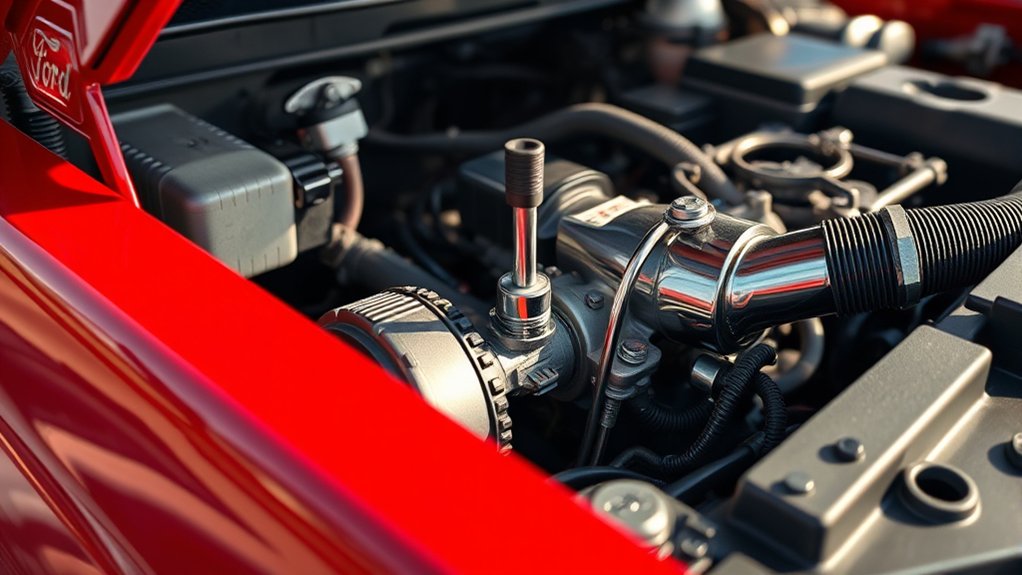
Where to Add Transmission Fluid Ford f150
Picture yourself under the hood of your Ford F-150, searching for where to add transmission fluid. Whether you’re working on an older model with a dipstick tube or a newer one with a sealed fill plug, knowing the right location and procedure is essential to avoid costly damage.
Understanding these differences will help you maintain your truck’s transmission effectively and confidently. Properly adding transmission fluid ensures smooth shifting and extends the life of your transmission.
By familiarizing yourself with the specific fill points on your Ford F-150, you can perform this maintenance task with ease and keep your truck running at its best.
Key Takeaways
- For older F-150s, add transmission fluid via the dipstick tube near the back of the engine bay on the driver’s side.
- Remove the dipstick, wipe it clean, then pour fluid carefully using a funnel to avoid spills.
- Newer F-150s without a dipstick require adding fluid through a sealed fill plug on the transmission housing side.
- Ensure the vehicle is level and follow dealer specifications when filling through the fill plug, using a torque wrench to tighten.
- Always use Ford-approved fluid types like Mercon LV and consult the owner’s manual for model-specific guidance.
Where to Add Transmission Fluid on Older Ford F-150s
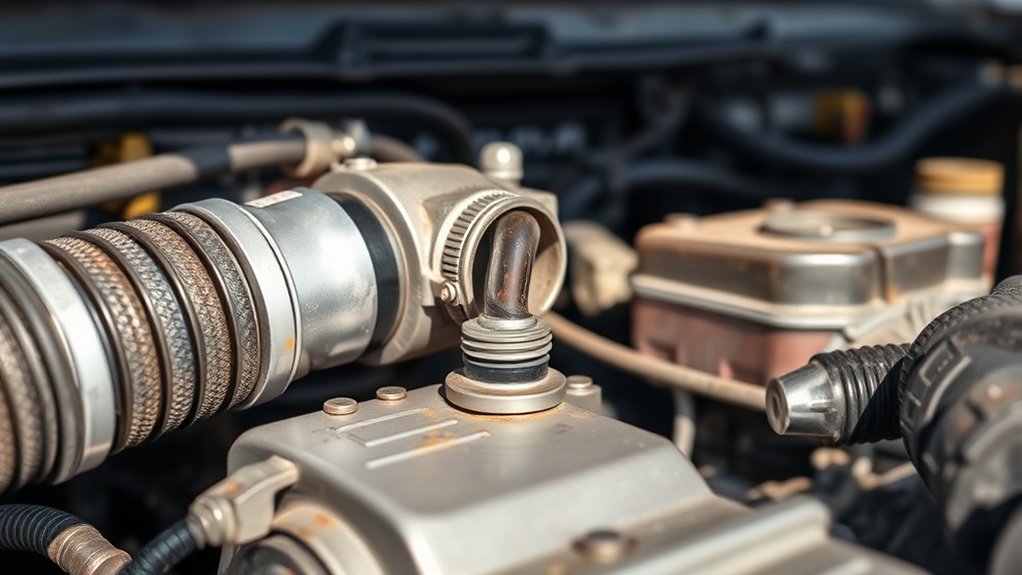
Where exactly do you add transmission fluid on older Ford F-150 models? Locate the transmission fluid dipstick under the hood, near the back of the engine bay on the driver’s side.
Find the transmission fluid dipstick under the hood at the back of the engine bay on the driver’s side.
Older models feature a clearly labeled dipstick tube, making the fill point straightforward. You’ll pull out the dipstick, wipe it clean, then add fluid directly into this tube using a funnel to prevent spills.
Avoid two word discussion ideas or unrelated topics like brake fluid or engine oil when focusing here; they confuse the process. Always use the manufacturer’s recommended fluid type.
After adding, check the level on the dipstick with the engine running and transmission in park or neutral. This method ensures accurate measurement and proper fluid level maintenance.
Where to Add Transmission Fluid on Newer Ford F-150s Without a Dipstick
Newer Ford F-150 models without a transmission dipstick require you to add fluid through a sealed fill plug on the transmission housing. This plug is typically located on the side of the transmission case and requires the vehicle to be level and often lifted to access properly.
Avoid relying on misleading maintenance advice that suggests adding fluid through the transmission pan or filler tubes, as this can cause overfilling or contamination. Always follow dealer recommendations for the correct fluid type and fill procedure to maintain peak transmission performance.
Use a torque wrench to ensure the fill plug is tightened to specification, preventing leaks. Since these models lack a dipstick, precise adherence to these steps is essential to avoid costly transmission damage.
How to Check Transmission Fluid Levels and When to Add More
How can you accurately check the transmission fluid level in your Ford F-150? Start by warming the engine to normal operating temperature to ensure engine temperature safety and accurate reading.
With the vehicle parked on level ground and the engine idling, locate the transmission dipstick, if equipped, or use the manufacturer’s scan tool for newer models without a dipstick.
When checking transmission oil level, wipe the dipstick clean, reinsert it fully, then withdraw and inspect the fluid’s color and level against the marked indicators.
Proper transmission fluid maintenance prevents fuel economy impact caused by low or degraded fluid. Add transmission fluid only if the level falls below the recommended mark to maintain optimal transmission performance and avoid costly damage.
Regular checks help you act promptly, ensuring smooth operation.
Step-by-Step Guide to Adding Transmission Fluid Safely
Before adding transmission fluid to your Ford F-150, make sure the engine is warm and the vehicle is on level ground to ensure an accurate fill level. Follow these steps to add fluid safely and maintain optimal performance:
Locate the transmission dipstick and remove it to access the fill tube. Use a funnel to pour fluid slowly, preventing spills that can degrade fuel economy.
Find the transmission dipstick, remove it, and use a funnel to slowly add fluid without spills.
Add small amounts, then check the fluid level frequently to avoid overfilling, which may increase engine noise.
Replace the dipstick securely after completing the fill and run the engine briefly to circulate the fluid evenly.
This method minimizes risks and promotes smooth transmission operation while preserving your truck’s fuel economy and reducing unwanted engine noise.
Choosing the Right Transmission Fluid for Your Ford F-150
After safely adding transmission fluid, selecting the correct type for your Ford F-150 ensures optimal performance and longevity. Avoid specifications mismatches by consulting your owner’s manual or Ford’s official guidelines.
Using fluid from unrelated models can cause damage or reduce transmission efficiency. Focus on fluids meeting Ford’s WSS-M2C938-A or WSS-M2C945-A standards, common in recent F-150 models.
| Model Year | Recommended Fluid Type | Ford Specification |
|---|---|---|
| 2011-2016 | Mercon LV | WSS-M2C938-A |
| 2017-2020 | Mercon LV | WSS-M2C945-A |
| 2021+ | Mercon LV or Mercon UL | Check owner’s manual |
Always verify fluid compatibility to prevent performance issues or warranty voids.
Frequently Asked Questions
How Often Should I Change My Ford F-150 Transmission Fluid?
You should perform transmission maintenance and fluid replacement every 30,000 to 60,000 miles, depending on your Ford F-150’s usage.
Regular checks help prevent wear and guarantee optimal transmission performance and longevity.
Can I Use Automatic Transmission Fluid in a Manual Ford F-150?
You shouldn’t use automatic transmission fluid in a manual Ford F-150; incompatible fluids can cause serious damage.
Proper manual transmission care requires using the specified gear oil to ensure optimal performance and longevity.
What Are Symptoms of Low Transmission Fluid in a Ford F-150?
You’ll notice slipping gears, delayed shifts, or overheating when your Ford F-150 has low transmission fluid. Ignoring these symptoms isn’t an irrelevant topic but essential, unlike unrelated concepts like tire pressure affecting transmission performance.
Is It Safe to Add Transmission Fluid Without Warming up the Engine?
Is it safe to add transmission fluid without warming up the engine? Generally, you should check and add fluid at engine temp to get an accurate level.
Adding fluid cold can lead to overfilling and inaccurate readings.
Can Overfilling Transmission Fluid Damage My Ford F-150 Transmission?
Overfilling your Ford F-150’s transmission fluid is like pouring too much oil into an engine. It risks damaging transmission gaskets, causing leaks, increased pressure, and overheating. Avoid overfill risks to maintain optimum transmission performance and longevity.
Conclusion
Now that you know where to add transmission fluid on your Ford F-150—whether through the dipstick tube on older models or the sealed fill plug on newer ones—you can keep your truck running smoothly.
Checking fluid levels regularly and topping off with the right type ensures your transmission won’t dry up like a desert in summer. Follow the steps carefully, and your F-150 will shift gears as smoothly as a well-oiled machine.
By understanding exactly where to add transmission fluid Ford F150, you can maintain optimal performance and extend the life of your vehicle’s transmission.