How to Remove Tonneau Cover Clips
When removing tonneau cover clips, you need to start by accurately identifying the clip type and gathering the right tools for the job. Applying improper force or using incorrect tools can easily damage your cover or mounting points. Understanding how each clip functions and the safest way to disengage it is crucial to avoid costly repairs.
Before you proceed, it’s important to prepare both your truck bed and cover for a smooth, damage-free removal process. Taking these preliminary steps ensures that the clips come off without causing any harm to your tonneau cover or vehicle. Proper preparation is key to a successful removal.
Key Takeaways
- Identify the clip type by inspecting material, shape, and attachment method before removal.
- Use a flathead screwdriver or pry tool to gently disengage snap-on clips by prying upward under the edge.
- Loosen screws or knobs before sliding off clamp clips to avoid bending or breaking components.
- Peel Velcro clips apart at a low angle to minimize fiber stress and use clip lubrication if sticky.
- Wear protective gloves and safety glasses, and ensure tools match clip fasteners to prevent damage.
How to Identify Your Tonneau Cover Clips
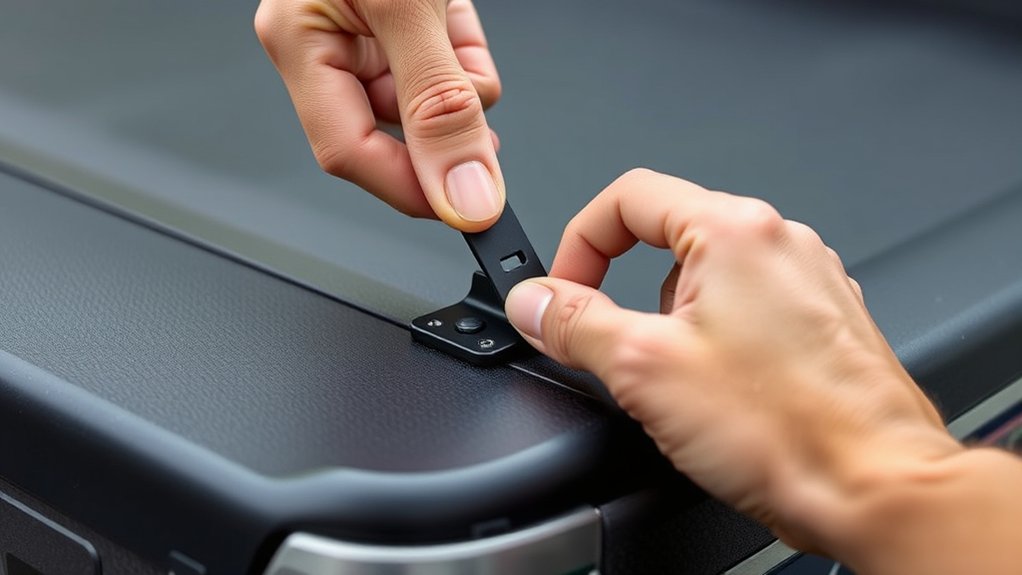
How can you quickly identify the type of clips securing your tonneau cover? Begin by closely inspecting the clip’s material, shape, and attachment method. Most tonneau clips are metal or plastic, designed specifically for automotive use; avoid confusing them with unrelated hardware such as household clamps or non vehicular topics like curtain hooks.
Look for features like snap-on mechanisms, sliding locks, or bolt-on fasteners that are unique to tonneau covers. Take note of any branding or part numbers stamped on the clips, as these can help confirm the type.
Tools You’ll Need to Remove Tonneau Clips
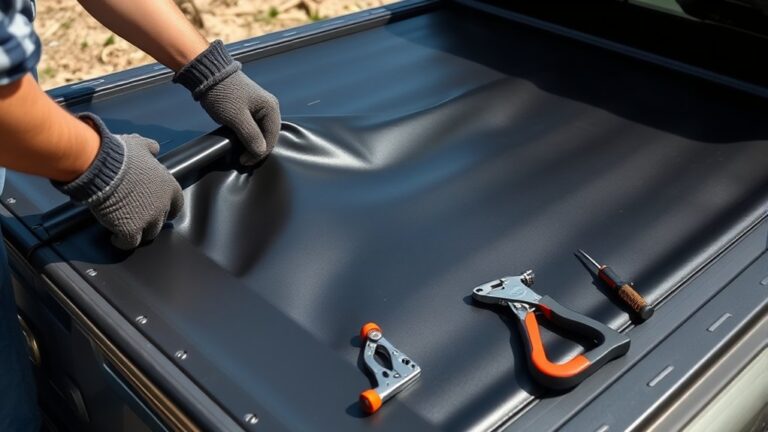
You’ll need a few essential hand tools like screwdrivers and pliers to start removing tonneau cover clips. Some clips require specialty removal devices designed for specific fasteners.
Don’t forget safety gear such as gloves and eye protection to prevent injury during the process.
Essential Hand Tools
Which tools are indispensable for removing tonneau cover clips efficiently? You’ll need a set of precision screwdrivers, a flathead pry tool, and needle-nose pliers. Screwdrivers must match clip fasteners to prevent stripping, ensuring proper clip maintenance.
A flathead pry tool helps gently disengage clips without damaging surfaces, while needle-nose pliers provide firm grip and control during removal. Prioritize tools with ergonomic handles to reduce hand fatigue and improve leverage, especially during repetitive tasks.
High-quality materials resist wear, maintaining tool integrity and safeguarding clips from deformation. Avoid makeshift tools that compromise clip condition or increase injury risk. By selecting essential hand tools with attention to tool ergonomics and clip maintenance, you streamline the removal process, preserving both your tonneau cover and your hands.
Specialty Removal Devices
Why settle for basic tools when specialty removal devices can make clip extraction faster and safer? Using the right device minimizes the risk of damaging your tonneau cover, which can pose a security risk or void warranty considerations. These tools are designed to apply precise leverage and prevent unnecessary stress on clips and mounting points.
| Device | Purpose | Benefit |
|---|---|---|
| Clip Removal Pliers | Grip and pull clips safely | Reduces clip damage |
| Trim Removal Tools | Pry clips without scratching | Preserves surface integrity |
| Spring Hook Tool | Extract spring-loaded clips | Controls clip tension |
| Multi-Tool | Versatile for various clip types | Streamlines removal process |
Opt for specialty devices to maintain your tonneau cover’s integrity and uphold warranty terms.
Safety Equipment Needed
Proper safety equipment considerably reduces the risk of injury and damage when removing tonneau cover clips. You’ll need gloves to protect your hands from sharp edges and safety glasses to shield your eyes from debris.
A sturdy, slip-resistant mat can prevent accidental slips while working. Ensure the tools you use, such as pliers or specialty removal devices, match the clip compatibility specified by your tonneau cover manufacturer to avoid damage.
Using incompatible tools can void warranty considerations, so always consult your owner’s manual before beginning. Additionally, have a flashlight handy for better visibility in tight spaces.
Prioritizing proper safety gear and tool selection ensures a smooth removal process without compromising your cover’s integrity or your personal safety.
Prepare Your Truck Bed and Cover for Safe Removal
Start by clearing your truck bed to guarantee unobstructed access and prevent damage during removal.
Next, inspect the tonneau cover for any wear or damage that could affect the process. Finally, gather all necessary tools within reach to streamline the task.
Clear Truck Bed Area
How do you ensure a safe and efficient removal of your tonneau cover clips? Start by thoroughly clearing the truck bed area to eliminate any debris, tools, or objects that could obstruct your work or cause damage.
Inspect the bed surface carefully for tiny burrs or rough spots that might scratch the cover or accelerate paint wear during removal. Use a soft brush or cloth to remove dust and dirt, ensuring a clean environment.
Position adequate lighting to highlight imperfections or contaminants. Removing clutter also prevents accidental trips or falls while handling the cover.
Inspect Cover Condition
Why is it essential to inspect your tonneau cover’s condition before removal? Identifying wear, damage, or tension issues prevents further harm and guarantees a safe process. Skipping this step can lead to unexpected problems, turning removal into an unrelated topic or irrelevant discussion.
Focus on these key areas:
- Check fabric or vinyl for tears, cracks, or brittleness that may affect clip detachment or cover integrity.
- Examine the frame and rails for bends, rust, or loose components that could complicate removal.
- Assess clip condition. Verify they’re not broken or overly corroded, as damaged clips might require special handling.
Gather Necessary Tools
Several essential tools guarantee a smooth and safe removal of your tonneau cover clips. Before you start, prepare your truck bed and cover by gathering these items to avoid damage and assure proper fabric care. Also, keep insurance notes handy in case of accidental damage during removal.
| Tool | Purpose | Notes |
|---|---|---|
| Screwdriver Set | Remove screws or clips | Phillips and flathead |
| Pliers | Grip and pull clips | Needle-nose preferred |
| Trim Removal Tool | Prevent fabric tears | Essential for delicate edges |
| Cleaning Cloth | Wipe dirt and debris | Protects fabric integrity |
| Protective Gloves | Hand safety | Avoids cuts and improves grip |
Having these tools ready streamlines the process, minimizes fabric damage, and aligns with insurance requirements.
How to Remove Snap-On and Clamp Tonneau Clips
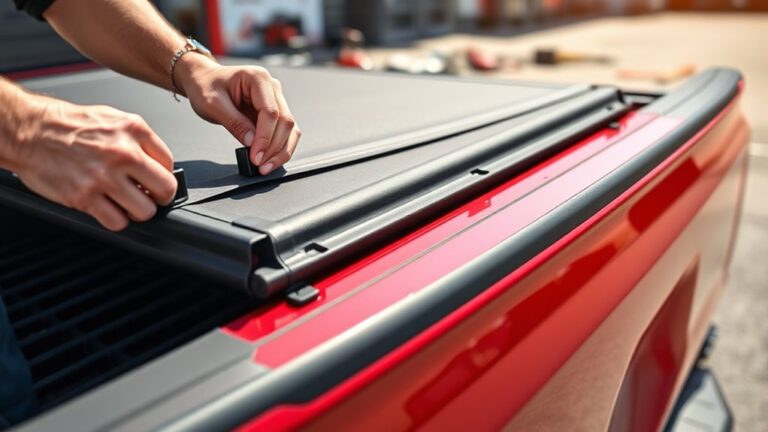
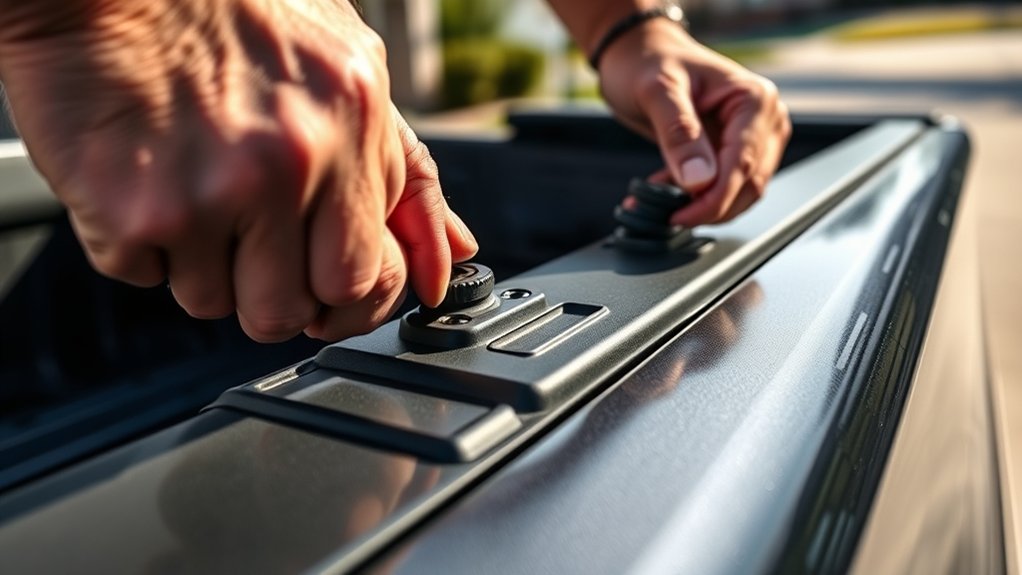
Although snap-on and clamp tonneau clips differ in design, both require careful handling to avoid damage during removal. Start by inspecting the clips for clip corrosion, as rust prevention is essential for maintaining their integrity. Use a flathead screwdriver or pry tool to gently disengage snap-on clips by inserting it under the clip’s edge and levering it upward.
For clamp clips, loosen the clamp screw or knob before carefully sliding the clip off the rail.
- Identify clip type and check for corrosion or rust buildup.
- Use appropriate tools to gently pry or loosen clips without force.
- Remove clips steadily, ensuring you don’t bend or break any components.
Handle each clip with care to prolong its lifespan and maintain rust prevention standards.
How to Detach Velcro and Hook-and-Loop Tonneau Clips
How do you effectively detach Velcro and hook-and-loop tonneau clips without damaging their fastening surfaces? Begin by gently peeling the hook-and-loop strips apart at a low angle to minimize stress on the fibers. Avoid pulling straight upward, which can weaken the adhesive backing.
If clips feel sticky or resist separation, apply a small amount of clip lubrication specifically designed for fabric fasteners to reduce friction. This preserves the integrity of the attachment and assures ease of future removal. Regular maintenance using clip lubrication also aids rust prevention on any metal components near the clips.
After detaching, inspect the Velcro for debris or wear, cleaning it with a soft brush if necessary. Proper handling extends the life of your tonneau cover clips and maintains secure fastening.
Tips for Loosening Stubborn or Rusted Tonneau Cover Clips
Why do some tonneau cover clips become difficult to loosen over time? Exposure to moisture and dirt causes rust buildup and stiffness in the clip mechanisms. To tackle this, follow these tips:
- Apply rust removal solution directly to the affected areas and allow it to penetrate for 10-15 minutes to dissolve corrosion.
- Use a stiff brush or fine steel wool to gently scrub away loosened rust, avoiding damage to the clip surface.
- After rust removal, apply clip lubrication to all moving parts to reduce friction and prevent future seizing.
These steps help restore clip flexibility and extend their lifespan. Always work carefully to avoid harming the clips’ metal or plastic components during rust removal and lubrication.
How to Unlock Clips Safely Without Damage
After treating rust and lubricating your tonneau cover clips, you’ll need to open them carefully to avoid damage. Begin by releasing any locking tabs or levers slowly, applying steady pressure with a flathead screwdriver or a plastic pry tool to prevent scratching or bending.
Avoid forcing clips open, as this can cause permanent deformation. If a clip resists, apply a bit more lubricant and wait a few minutes before trying again.
Keep track of the clips you remove, as some can be recycled; check local recycling guidelines for plastic or metal components. For damaged clips that can’t be salvaged, find out where to buy replacements by consulting your tonneau cover manufacturer or automotive parts suppliers. This ensures proper fit and function when reassembling.
Checking Clips and Mounting Points After Removal
When was the last time you inspected your tonneau cover clips and mounting points for wear or damage? After removal, perform a thorough check to ensure everything’s intact. First, use clip identification to verify each clip’s model matches your cover’s specifications.
Second, examine mounting points for corrosion, cracks, or deformations that could affect secure reattachment. Third, select appropriate tools to test clip engagement and mounting stability without causing damage. Follow these steps:
- Visually inspect clips and mounting hardware under bright light for defects.
- Use a magnifying glass or inspection mirror for hard-to-see areas.
- Employ hand tools like pliers or screwdrivers to gently test clip tension and mounting integrity.
This precise evaluation prevents future failures and helps maintain your tonneau cover’s performance.
How to Store or Replace Tonneau Cover Clips
Once you’ve confirmed the condition of your clips and mounting points, decide whether to store them properly or proceed with replacement. For clip maintenance, clean each clip thoroughly to remove dirt and debris, then dry completely to prevent corrosion.
After inspecting clips and mounting points, clean and dry them thoroughly before storing or replacing as needed.
Use dedicated storage solutions such as labeled containers or compartmentalized organizers to keep clips secure and accessible. Avoid exposure to extreme temperatures and direct sunlight during storage to maintain material integrity.
If clips show signs of wear, cracking, or deformation, replace them with manufacturer-approved parts to ensure proper fit and function. Proper clip maintenance and organized storage solutions extend clip lifespan and facilitate easier installation when reinstalling your tonneau cover.
Prioritize inspection and timely replacement to maintain optimal sealing and performance.
Troubleshooting Common Problems When Removing Clips
Why do some clips resist removal despite following standard procedures? Often, it’s due to differences in materials, clip aging, or overlooked maintenance contracts specifying handling methods. Start by identifying materials. Metal clips corrode, while plastic ones may become brittle.
When troubleshooting, focus on:
- Inspecting clips for corrosion or brittleness that impedes removal.
- Reviewing any maintenance contracts for prescribed removal techniques or tool requirements.
- Applying appropriate solvents or lubricants compatible with the clip material to ease detachment.
Frequently Asked Questions
Can I Use a Heat Gun to Loosen Tonneau Cover Clips?
Yes, you can use a heat gun to loosen tonneau cover clips by applying thermal expansion carefully. Ensure the heat gun’s temperature suits the clip material to avoid damage, maintaining proper tool compatibility for safe, effective removal.
Are Tonneau Cover Clips Universal for All Truck Models?
Tonneau cover clips don’t have universal compatibility; you’ll need model-specific clips matching your truck’s design. If clips are stubborn, applying heat-induced loosening carefully can help, but always check manufacturer guidelines to avoid damage.
How Often Should I Replace Tonneau Cover Clips?
Like clockwork in the age of chariots, you should check your tonneau cover clips every six months. Replacement intervals depend on wear, exposure, and tension.
Inspect regularly and replace clips showing cracks, rust, or loss of grip to maintain security.
Can Tonneau Cover Clips Cause Damage to My Truck Bed?
Yes, clip damage can occur if clips are improperly installed or worn, causing scratches or dents. Additionally, heat risk may weaken clips, increasing potential damage to your truck bed, so inspect and replace them regularly.
Are There Waterproof Tonneau Cover Clips Available?
Yes, you’ll find waterproof options among clip types designed for tonneau covers. Focus on clip fitment and corrosion-resistant mounting hardware to ensure durability and secure attachment in wet conditions.
This enhances your truck bed’s protection.
Conclusion
Now that you’ve mastered removing tonneau cover clips, you’re ready to tackle the job with precision and care.
Remember, treating clips like delicate puzzle pieces guarantees they stay intact for reuse or replacement. Always inspect mounting points for wear and store clips properly to avoid losing any essential parts.
With these steps, removing clips will be as smooth as a well-oiled hinge—efficient, safe, and damage-free every time.
By following these guidelines, your process of removing tonneau cover clips will be both effective and reliable.