
How to Fix Active Air Dam System Fault Ford f150
Imagine you notice your Ford F-150’s active air dam system fault causing the air dam to not lower at highway speeds. This issue can trigger a warning light and reduce your vehicle’s fuel efficiency.
To address this problem, start by methodically checking fault codes with an OBD-II scanner. Next, inspect the sensors, wiring, and actuators involved in the active air dam system.
Make sure to verify the mechanical function of the air dam itself. Identifying the root cause precisely is essential before recalibrating or replacing any components. This ensures the system operates as intended and helps prevent further issues.
Key Takeaways
- Diagnose the fault by checking dashboard warnings and using an OBD-II scanner to read air dam system error codes.
- Inspect the air dam for physical obstructions, damage, and ensure it moves freely without hindrance.
- Test sensors, wiring, and the actuator for faults, corrosion, loose connections, or motor failures affecting operation.
- Perform a system reset by cycling the ignition and brake pedal to clear faults and recalibrate the air dam module.
- After repairs, use a scan tool to verify sensor signals and recalibrate the system for proper communication and function.
How to Identify Active Air Dam Faults on Your Ford F-150
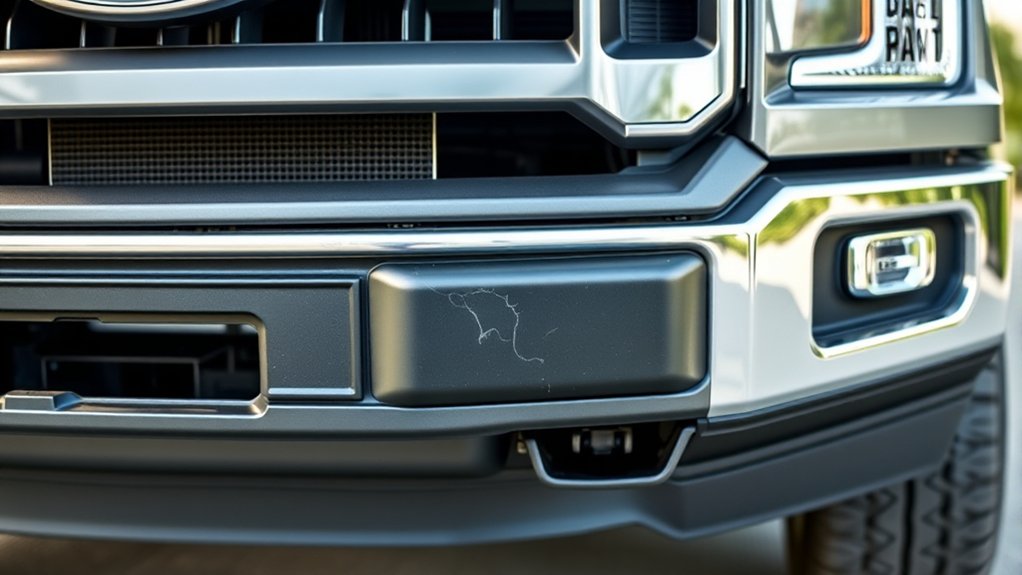
How can you tell if your Ford F-150’s active air dam system is malfunctioning? Begin by conducting a non technical inquiry: observe if the air dam fails to deploy or retract during normal operation.
Check for warning indicators on your dashboard related specifically to the air dam system. Avoid confusing symptoms caused by unrelated maintenance issues, such as tire pressure or suspension faults, which do not affect the air dam.
Use a diagnostic scanner to read error codes linked to the active air dam module for precise identification. Physically inspect the air dam for obstructions or damage that might impede movement.
Common Causes of Active Air Dam Problems on Ford F-150
Why does your Ford F-150’s active air dam system fail to operate correctly? Common causes include sensor malfunctions, motor failures, or wiring issues. Dirt, debris, or corrosion can impede the air dam’s movement, causing it to stick or respond slowly.
Sensor issues, motor faults, wiring problems, and debris buildup commonly cause active air dam failures on Ford F-150s.
A non technical overview reveals that mechanical wear and environmental factors often disrupt the system’s operation. Additionally, software glitches in the control module might misinterpret signals, leading to faults.
Understanding these causes helps you anticipate repair needs and manage cost considerations effectively. Replacing sensors or motors can be costly, so identifying the precise issue prevents unnecessary expenses.
Regular inspection and cleaning minimize failures, ensuring the system functions as intended and maintains your F-150’s aerodynamic efficiency.
When and How to Use Diagnostic Tools for Air Dam Issues
When should you reach for diagnostic tools to address active air dam issues on your Ford F-150? Use these tools immediately if the air dam fails to deploy, retracts erratically, or triggers a system fault warning.
Idea one: connect a compatible OBD-II scanner to retrieve specific fault codes related to the air dam actuator and control module. This precise data helps isolate electrical or sensor malfunctions.
Idea two: employ a live data stream to monitor actuator response during activation commands, verifying mechanical movement and electrical signals in real time. Always ensure the diagnostic tool firmware is up to date for accurate readings.
How to Reset the Active Air Dam System on Your Ford F-150
Resetting the active air dam system on your Ford F-150 often resolves faults caused by temporary glitches or sensor miscommunication. To reset, start by turning the ignition on without starting the engine.
Next, press and hold the brake pedal, then cycle the ignition off and on three times. Finally, release the brake and allow the system to recalibrate. Avoid unrelated topic or off topic discussion during this process to maintain focus.
| Step Number | Action | Purpose |
|---|---|---|
| 1 | Turn ignition on | Power system without engine run |
| 2 | Hold brake pedal | Engage system reset mode |
| 3 | Cycle ignition off/on 3x | Trigger system recalibration |
| 4 | Release brake pedal | Complete reset sequence |
| 5 | Wait for system response | Confirm fault clearance |
Inspecting and Repairing Active Air Dam Components
Start by checking the air dam sensor for proper operation and any signs of damage. Next, inspect all wiring and connectors for corrosion, loose connections, or breaks.
Finally, test the actuator’s function to ensure it moves smoothly and responds correctly to control signals.
Air Dam Sensor Check
How do you determine if the air dam sensor is functioning correctly? Start by locating the air dam sensor on your Ford F 150, typically mounted near the active air dam assembly. Use a diagnostic scan tool compatible with Ford vehicles to read real-time sensor data and check for error codes related to the air dam sensor.
Verify the sensor’s voltage and signal output against factory specifications using a multimeter. Inspect the sensor housing for physical damage or contamination that could affect its operation. If the readings fall outside the acceptable range or the sensor shows visible wear, replace it promptly.
After replacement, recalibrate the sensor using the scan tool to ensure proper communication with the active air dam control module. This methodical approach guarantees accurate diagnosis and repair.
Wiring And Connector Inspection
After confirming the air dam sensor’s functionality, turn your attention to the wiring and connectors that link the sensor and active air dam assembly to the control module. Perform a thorough wiring inspection, looking for cuts, abrasions, or signs of corrosion.
Equally, conduct a detailed connector inspection to ensure pins are clean, straight, and seated properly. Use a multimeter to check continuity and resistance across the wiring harness. Address any damaged wires or loose connectors immediately.
Focus on these critical points:
- Look for melted insulation or burnt smells
- Check for moisture or corrosion inside connectors
- Wiggle connectors gently to detect intermittent faults
- Verify all wiring follows the factory routing without tension
- Replace any damaged connectors or wires with OEM parts
This methodical approach ensures reliable active air dam operation.
Actuator Function Testing
The actuator is the mechanical heart of the active air dam system, controlling the movement that optimizes airflow and vehicle efficiency. To test its function, start by visually inspecting for physical damage or binding.
Next, apply voltage to the actuator and observe its response. Use a multimeter to verify electrical continuity and resistance values. Avoid getting sidetracked by unrelated topic errors or random discussion threads; focus strictly on actuator diagnostics.
| Test Step | Expected Result | Troubleshooting Tip |
|---|---|---|
| Visual Inspection | No damage or obstruction | Clean or replace damaged parts |
| Voltage Application | Smooth movement | Check wiring if static |
| Resistance Check | Manufacturer spec range | Replace actuator if out of range |
Maintenance Tips to Prevent Active Air Dam Problems
Why should you prioritize regular maintenance for your Ford F150’s active air dam system? Neglecting upkeep can lead to vacuum leaks and compromised engine mounts, both of which reduce system efficiency and cause faults.
To prevent issues, follow these essential maintenance tips:
- Inspect vacuum lines regularly for cracks or leaks.
- Check engine mounts to ensure secure, vibration-free operation.
- Clean actuator components to avoid debris buildup.
- Lubricate moving parts to maintain smooth motion.
- Perform system diagnostics periodically to catch faults early.
Frequently Asked Questions
Will a Faulty Air Dam Affect My Ford F-150’s Fuel Efficiency?
Yes, a faulty sensor or damaged air dam wiring can cause the air dam to malfunction, reducing aerodynamic efficiency and increasing drag. This negatively impacts your Ford F-150’s fuel efficiency by forcing the engine to work harder.
Can Weather Conditions Cause Active Air Dam System Faults?
Yes, weather conditions can cause active air dam system faults by altering wind resistance and tailwind effects. Moisture, ice, or debris can interfere with sensors or mechanisms, disrupting system operation and triggering faults you’ll need to address.
Is It Safe to Drive With a Malfunctioning Active Air Dam?
You can drive with a malfunctioning active air dam, but it’s not ideal. Avoid irrelevant chatter or random tangents; focus on diagnosing the issue promptly.
This will help prevent reduced fuel efficiency or potential component damage over time.
Do Aftermarket Parts Affect the Active Air Dam System?
Yes, aftermarket influence can affect the active air dam system’s performance. You’ll need to contemplate installation considerations carefully, ensuring compatibility and proper calibration to avoid faults or sensor misreads that disrupt system operation.
How Does the Active Air Dam System Improve Vehicle Aerodynamics?
By smoothly guiding airflow, the active air dam system reduces drag, delivering aerodynamic benefits that improve fuel efficiency and stability.
You’ll enhance system reliability by ensuring sensors and motors function correctly, maintaining precise aerodynamic control.
Conclusion
If you ignore an active air dam fault, your Ford F-150 might feel like it’s dragging a brick wall at highway speeds. By methodically diagnosing with an OBD-II scanner, inspecting sensors, wiring, and actuators, and recalibrating the system, you’ll restore smooth, efficient airflow control.
Staying precise and thorough guarantees your air dam operates flawlessly, preventing fuel waste and maintaining peak performance. Don’t let a small fault snowball into a giant mechanical headache—fix it right the first time.
Addressing the issue promptly is key to keeping your truck running efficiently. Follow these steps carefully to fix the active air dam system fault on your Ford F-150 and enjoy improved fuel economy and performance.